
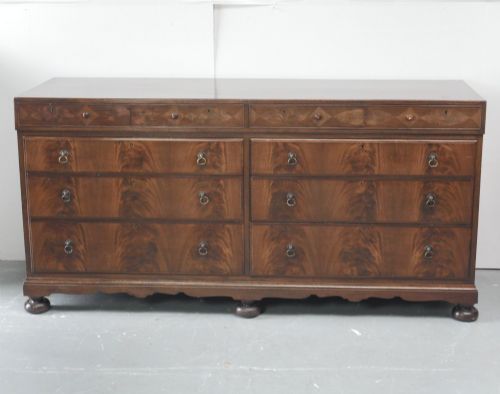
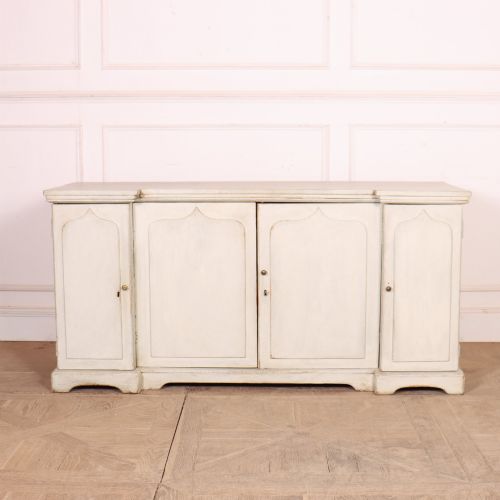
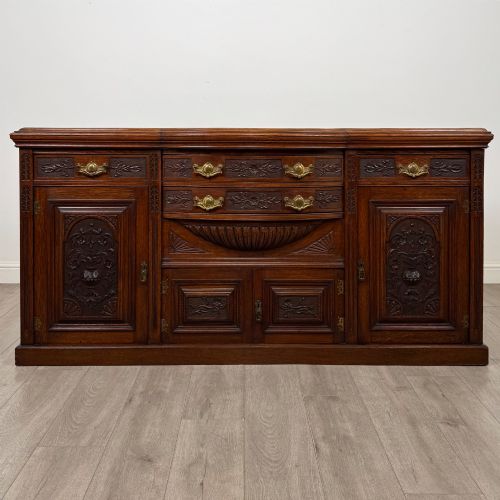
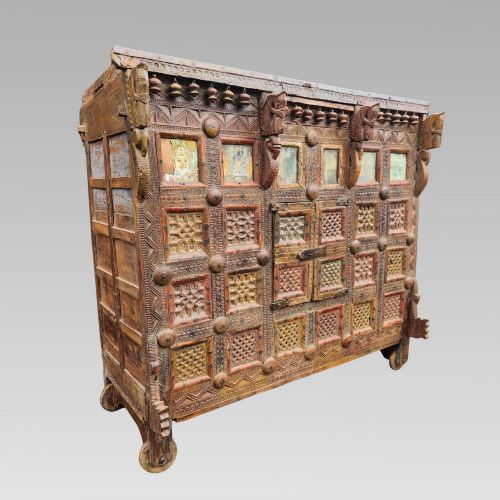


Large Wooden Storage Sideboard
These large wooden storage sideboard examples offer substantial domestic storage through periods ranging from the eighteenth century to the twentieth.
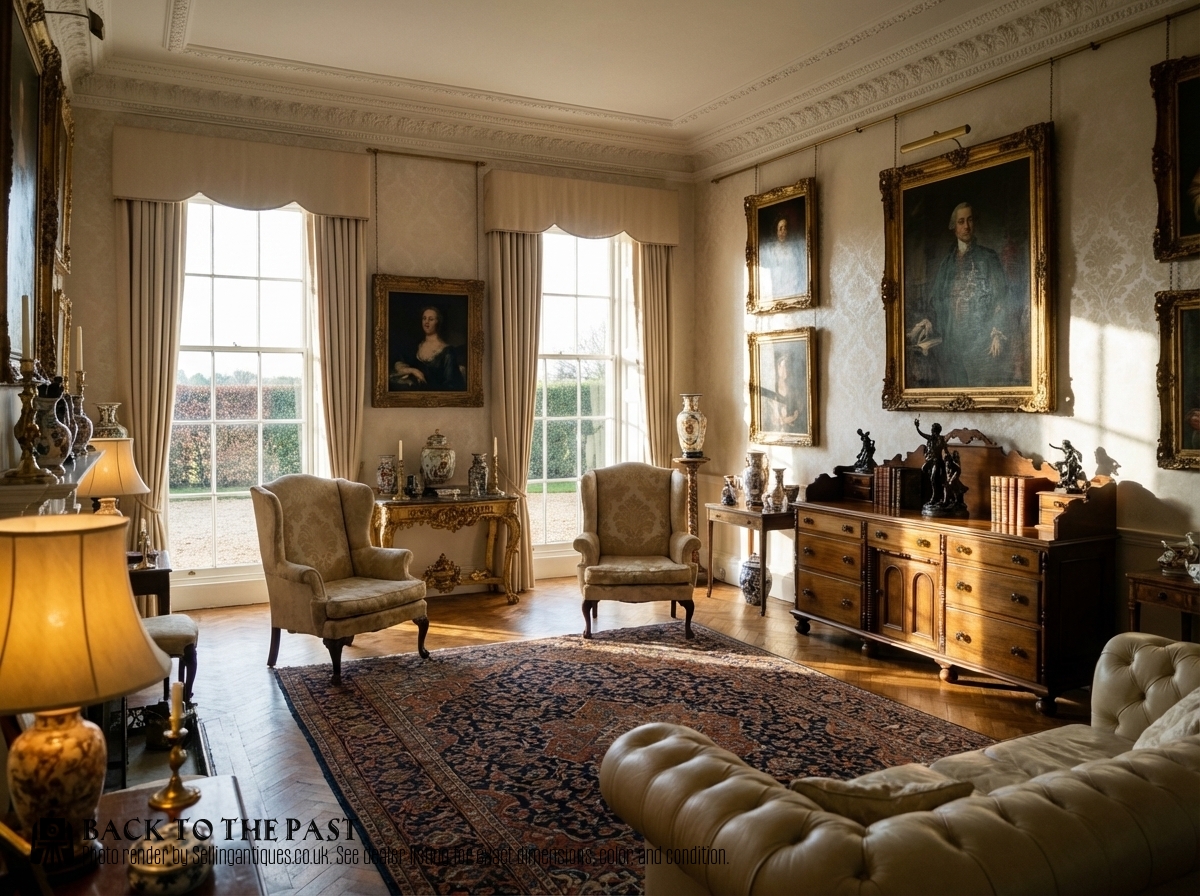
Large Wooden Storage Sideboard
A large wooden storage sideboard serves as a fundamental piece for dining rooms and hallways, combining surface display with deep internal capacity. When exploring large wooden storage sideboard options, buyers encounter traditional forms such as breakfront dresser bases, housekeeper cupboards, and multi-door server units.
The selection spans robust English country pieces in pine and oak alongside formal mahogany designs from the Georgian and Victorian eras. Regional furniture traditions emerge clearly through vernacular formats like West Country housekeeper cupboards and Lancashire drawer chests.
Revival styles add further architectural presence, drawing on Jacobean, Chippendale, and George III motifs. These heavy-set storage pieces anchor a room while providing practical utility for modern homes.
Materials and construction methods
Cabinet makers relied primarily on solid oak, pine, and mahogany, often enhanced with figured veneers or boxwood stringing on formal pieces. Structural integrity depended on traditional joinery, including hand-cut dovetails for drawers and pegged framing for heavy carcasses.
Secondary timbers such as deal or ash appear in internal partitions and drawer linings, reflecting standard workshop practices of the period. Surface finishes range from waxed natural grain and bleached oak to painted coatings on utilitarian kitchen and farmhouse furniture.
Hardware typically incorporates cast brass handles and escutcheons, securing heavy panelled doors and deep drawers designed to withstand daily domestic use.
Listings incorporate nineteenth-century Victorian pieces alongside eighteenth-century George III designs, utilising oak, mahogany, pine, and painted wood.
Distinctions in craftsmanship and condition
Superior examples demonstrate meticulous selection of timber, particularly in figured mahogany or quarter-sawn oak where grain patterns align harmoniously across large door panels and drawer fronts. The crispness of hand-carved detailing, such as applied mouldings and linenfold panels, separates master workshop output from simpler vernacular work.
Internal integrity dictates long-term value, with original drawer bottoms, clean timber linings, and smoothly operating locks indicating careful preservation. Alterations to feet, surface stripping, or replacement hardware subtly shift a piece from original collector status to a restored domestic furnishing.
Whytock And Reid·Otto Schulz·Boet·Howard And Sons
The Large Wooden Storage Sideboard Glossary
- Dresser base
- A low utilitarian cabinet featuring drawers and cupboards, originally used in kitchens or dining rooms for food preparation and storage.
- Breakfront
- A cabinet design where the central section projects forward from the flanking wings, creating architectural depth.
- Boxwood stringing
- A narrow inlay of contrasting pale wood used to outline drawer fronts and panels on formal furniture.
- Housekeeper cupboard
- A tall, large-scale storage unit traditionally used in country houses to store linens, preserves, and dry goods.
- Court cupboard
- An antique enclosed cupboard featuring multiple tiers, often heavily carved with architectural motifs.
Large Wooden Storage Sideboard: Frequently Asked Questions
What rooms suit large sideboards?
These substantial storage pieces function best in spacious dining rooms, large hallways, or open-plan kitchens where their proportions do not overwhelm the floor space. They provide exceptional capacity for tableware, linens, and household items.
Positioning them against a primary wall allows the architectural details and timber grain to become a focal point without obstructing daily movement through the room.
How do I care for antique wood?
Maintaining these surfaces requires consistent application of traditional beeswax and avoiding direct placement near heat sources or strong sunlight. Regular dusting with a soft, dry cloth preserves the patina built over centuries.
Moisture control remains essential to prevent timber movement, particularly with large oak and mahogany panels that respond to changes in household humidity.
Are these pieces suitable for daily use?
Solid construction in dense hardwoods makes these sideboards highly durable for modern storage requirements. Deep drawers and sturdy interior shelving accommodate contemporary items securely.
Using protective mats on the top surface prevents water rings and scratches from daily serving or display use.
How do I distinguish eighteenth and nineteenth century pieces?
Earlier eighteenth-century examples often display hand-sawn secondary timbers, pegged joinery, and simpler vernacular proportions associated with country workshops. Nineteenth-century pieces frequently introduce more complex mahogany veneers, machine-sawn components, and formal revival styling.
Examining the drawer linings and interior construction reveals the manufacturing techniques typical of each specific era.