


Large Wooden Low Table
A large wooden low table anchors a room with presence, offering a practical surface drawn from centuries of craftsmanship.
Large Wooden Low Table
A large wooden low table brings substantial scale and sturdy utility to a living space, often repurposed from earlier domestic or industrial forms. Buyers seek these pieces to anchor a room with natural timber grain and low proportions that suit modern seating layouts.
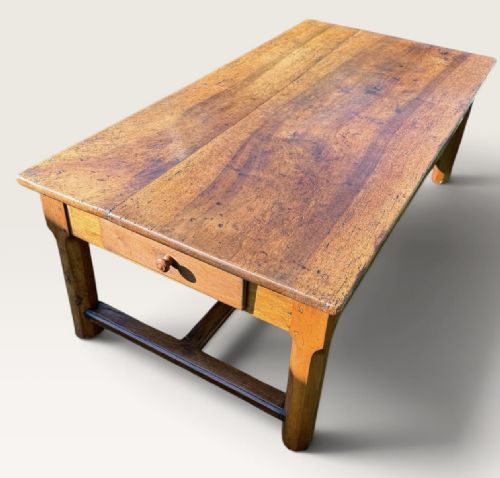
The selections available range from rustic 18th-century elm and oak examples to refined Victorian mahogany designs and utilitarian cheese press or pig bench conversions. Walnut, hardwood, and teak also appear frequently across various styles.
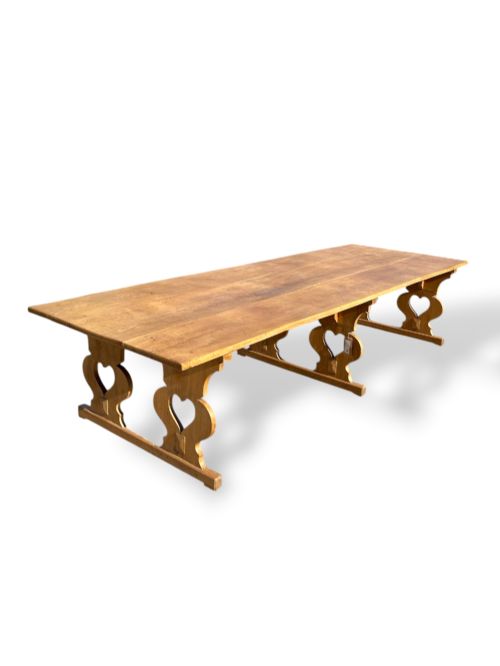
Many of these tables originate as functional items like dressers, benches, or carts before finding new life as low tables. This adaptable history means forms vary widely from trestle tables to octagonal centre tables.
Materials and construction
Construction relies heavily on traditional solid timbers such as oak, elm, mahogany, and walnut, chosen for durability and rich figuring. Artisans joined these heavy boards using time-honoured joinery techniques suited to hard daily wear.
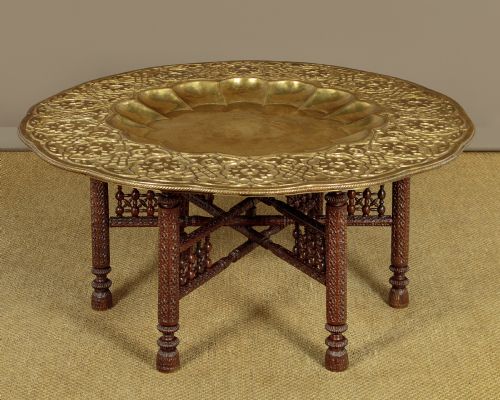
Metal elements in brass and iron appear as structural reinforcement, decorative carving, or operational hardware on pieces adapted from industrial or utilitarian origins. Hand carving distinguishes specific regional styles like Anglo-Indian and African works.
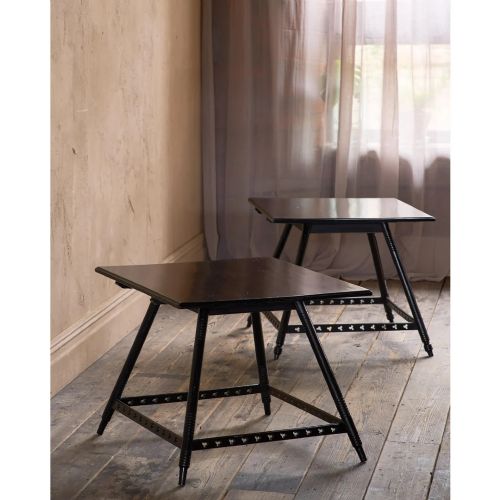
Surfaces show the natural patina of age, enhanced through historical hand finishing, wax polishing, or ebonising. These traditional treatments protect the timber while highlighting the natural grain.
Periods represented stretch from the 18th century through the Victorian era and into the early 20th century.
Assessing quality and character
Quality rests primarily on the integrity of the timber and the honesty of the conversion or manufacture. Superior pieces retain their original structural timber without excessive modern intervention.
Fine carving, balanced proportions, and careful integration of older elements such as dresser bases or cheese presses elevate a piece. The depth of the natural patina and the preservation of original hardware further distinguish finer examples.
The Large Wooden Low Table Glossary
- Dresser base
- The lower section of a traditional kitchen dresser featuring cupboards or drawers. These sturdy units are frequently repurposed into low tables.
- Cheese press table
- A heavy utilitarian table utilising the mechanical elements of a cheese press. They offer robust timbers and unusual operational detailing.
- Pig bench
- A long, low agricultural bench made from solid oak or hardwood. Their rustic proportions make them ideal for conversion into coffee tables.
- Ebonising
- A chemical or pigment treatment applied to timber to imitate ebony. This dark finish gained popularity in the 19th century for a dramatic look.
- Centre table
- A freestanding table finished on all sides designed to sit in the middle of a room. These often feature octagonal or circular tops.
Large Wooden Low Table: Frequently Asked Questions
What is a large wooden low table used for?
These large low tables serve primarily as substantial coffee tables in spacious living rooms, holding books, drinks, and decorative objects while anchoring the seating arrangement.
Because many were originally benches, presses, or dressers, they also bring a strong sense of historical narrative and tactile warmth to an interior.
How do I care for antique wooden tables?
Regular dusting with a soft, dry cloth keeps the surface clean without damaging the historic finish. Applying a quality beeswax occasionally nourishes the timber and maintains the patina.
Avoid placing these tables in direct sunlight or near heat sources to prevent the solid wood from splitting or warping over time.
Are these tables made from original antiques?
The selection includes both tables made in their current low form during earlier periods and historical items like benches or dresser bases adapted into low tables. Each listing reflects authentic period materials and construction.
This blend of original period furniture and thoughtful conversion gives every piece a distinct character not found in modern reproductions.
How do I choose the right size?
Consider the scale of your seating and the clearance needed around the table to allow comfortable movement. A large table requires adequate surrounding floor space to let its proportions breathe.
Measure both the length and height carefully to ensure the surface sits comfortably relative to your sofa or chairs.