
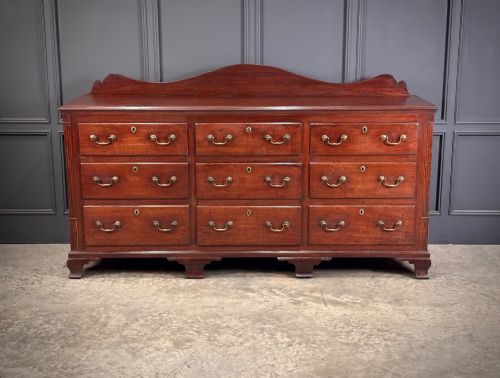
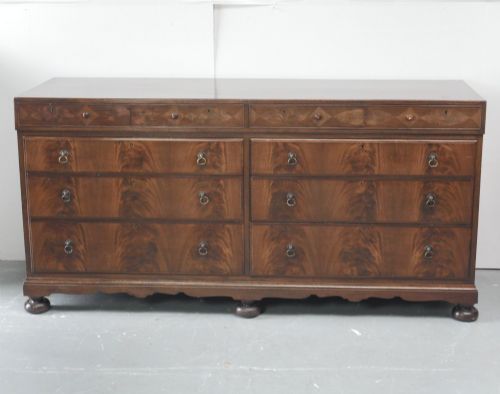
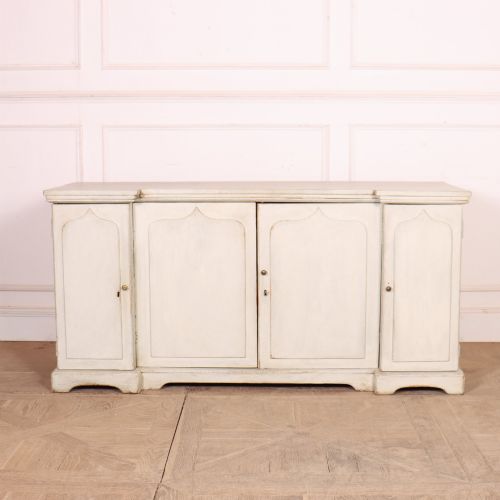
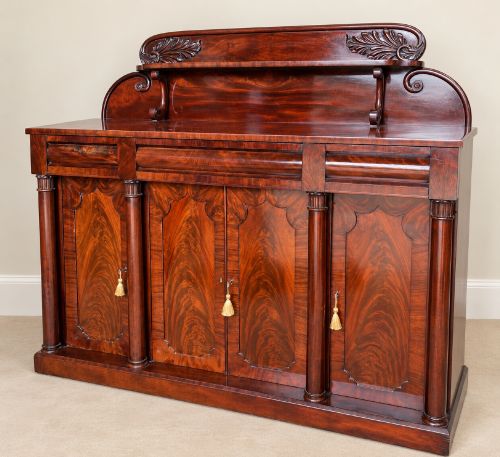
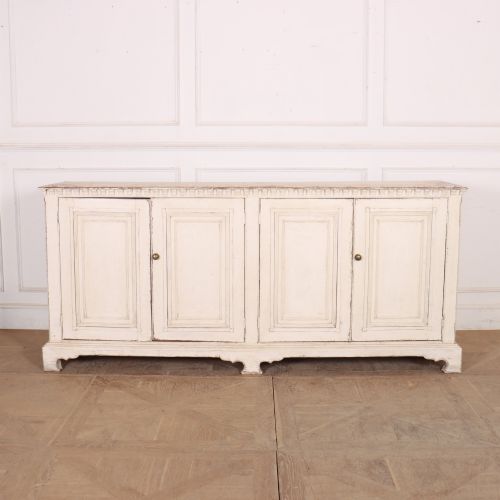


Large Wooden Credenza
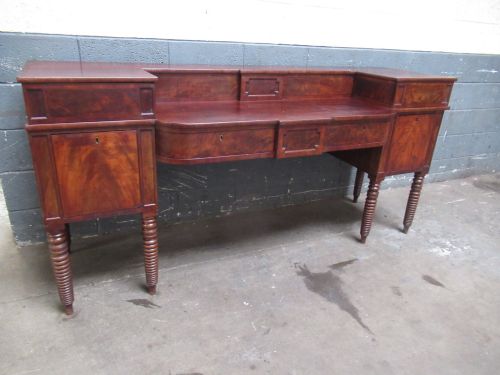
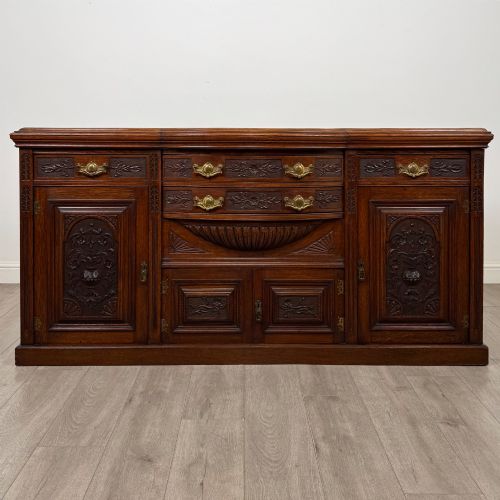
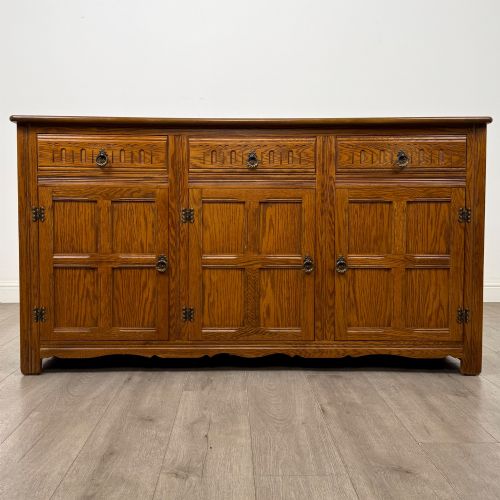
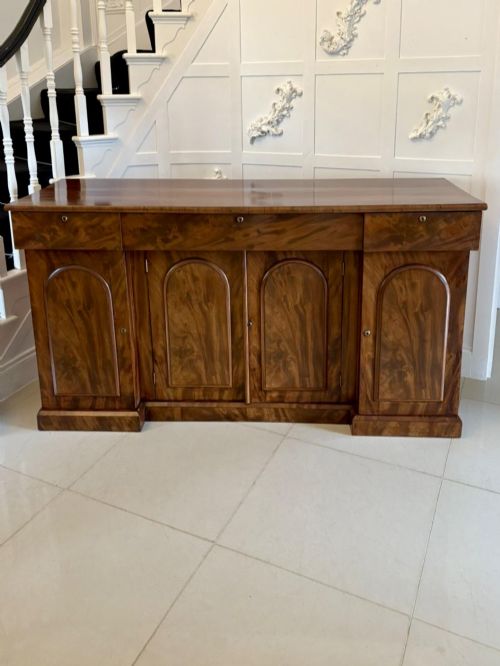
A large wooden credenza offers substantial storage and presence, bringing period craftsmanship and rich timber into a room.
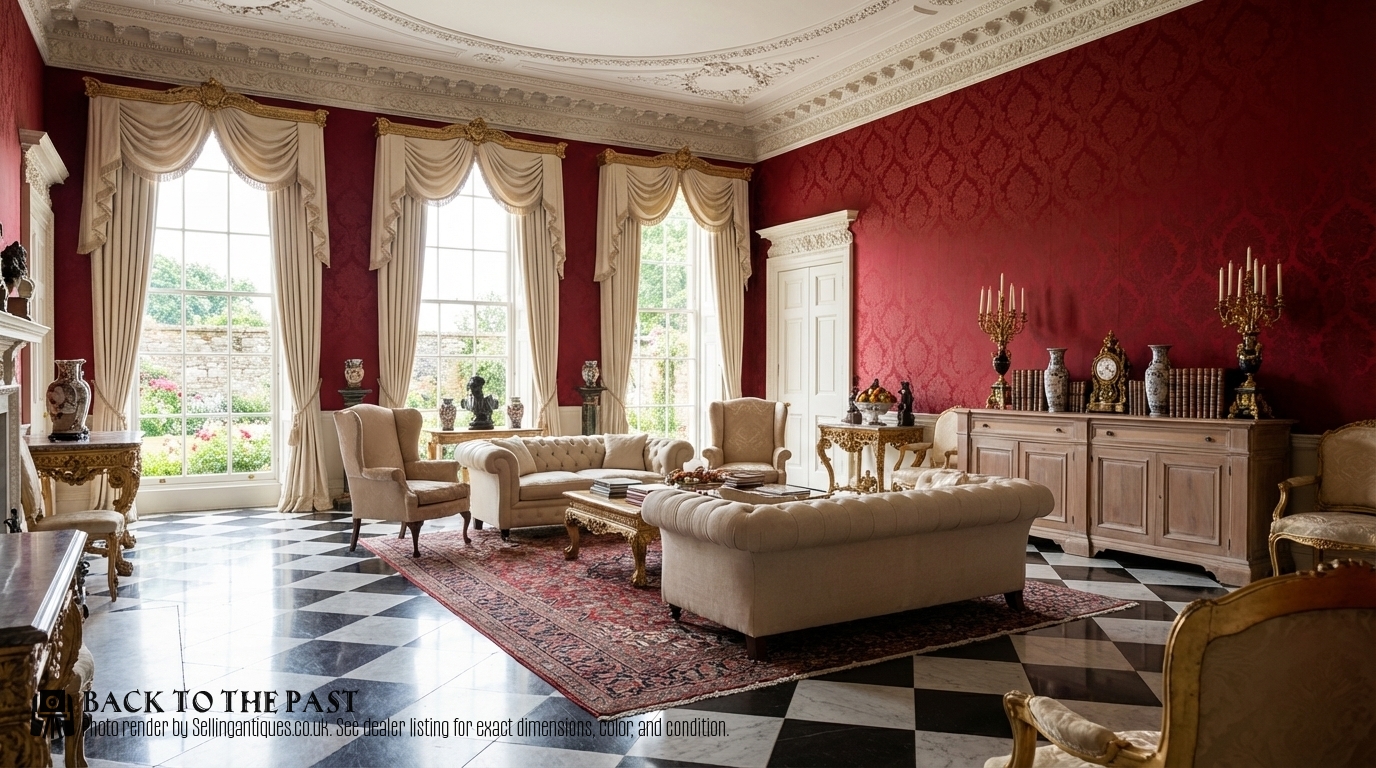
Large Wooden Credenza
A large wooden credenza encompasses heavy storage furniture built across the eighteenth and nineteenth centuries, taking forms such as sideboards, dresser bases, and enfilades. These pieces serve large dining rooms or hallways, providing extensive surface space and interior capacity.
The versions most common here are nineteenth-century and Victorian mahogany sideboards, alongside Georgian and Regency inlaid dining pieces. Cabinetmakers built these items to anchor large rooms, combining deep drawer banks with shelved cupboards.
Makers utilised native and imported hardwoods to construct these grand items, often incorporating brass hardware and intricate veneers. Regional English, Scottish, and Italian workshops each developed distinct proportions and decorative vocabulary.
How they were made
Cabinetmakers constructed these large frames primarily in solid mahogany, oak, and walnut, frequently applying flame mahogany veneer to primary surfaces for visual depth. Secondary timbers like pine provided internal framing and drawer linings.
Joiners employed traditional mortise and tenon framing alongside dovetail joints for drawer construction, ensuring structural stability under heavy loads. Brass handles, escutcheons, and occasional mother-of-pearl inlay finished the exteriors.
What varies in quality
The selection of timber dictates the visual impact, with figured mahogany and book-matched flame veneers standing above plain stock. Cabinetmakers who chose grain patterns deliberately created pieces with superior depth and harmony.
Carving depth and sharpness separate standard production from exhibition pieces, where crisp hand-carved acanthus leaves or intricate boxwood stringing demonstrate superior workshop skill. Structural integrity, clean interior drawer construction, and original hardware further elevate a piece.
Whytock & Reid·Robson & Sons
The Large Wooden Credenza Glossary
- Credenza
- A sideboard or cabinet designed for storage and serving, originating in Italy and adopted across nineteenth-century British homes.
- Breakfront
- A piece of furniture where the central section projects forward from the flanking outer cabinets. This configuration adds architectural depth to large sideboards.
- Flame mahogany veneer
- A thin slice of wood cut from the branch junction of a mahogany tree, displaying a characteristic flickering flame pattern. Cabinetmakers laid this across drawer fronts and doors.
- Dresser base
- A low wooden unit featuring drawers and cupboards, historically used in country houses for food preparation and storage.
- Boxwood stringing
- Thin inlaid lines of contrasting pale boxwood set into dark timber surfaces to outline panels and borders.
Large Wooden Credenza: Frequently Asked Questions
Where did people use large wooden credenzas?
These large storage units found their primary homes in grand dining rooms, entrance halls, and country house drawing rooms. Staff utilised them to store table linens, heavy silver, and glassware before service.
In domestic settings, the broad top surface served as a sideboard during formal meals. They anchored large walls in high-ceilinged period properties.
How do I tell a Georgian piece from a Victorian one?
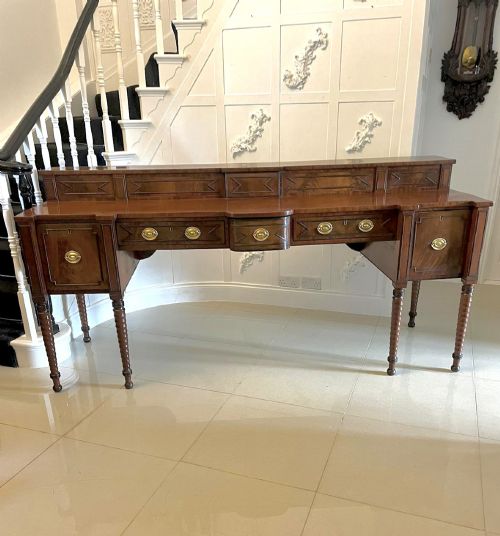
Georgian and Regency examples typically exhibit restrained classical proportions, architectural stringing, and tapered legs or subtle bracket feet. Mahogany and satinwood predominate in these earlier centuries.
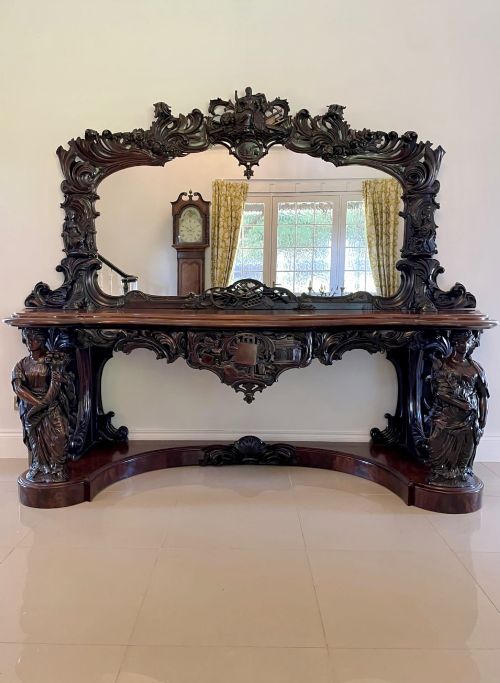
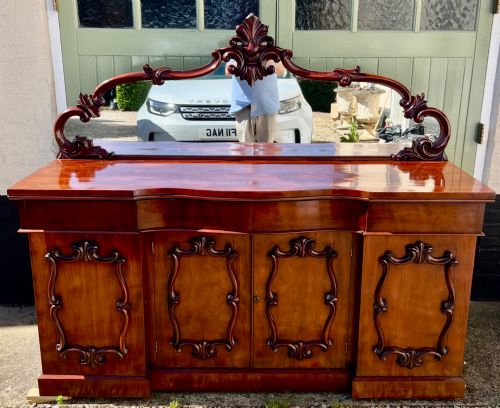
Victorian pieces often display heavier proportions, deeper carving, mirrored backs, and more robust plinth bases. Walnut and figured mahogany gained immense favour during the later nineteenth century.
Will a large wooden credenza fit in a modern home?
These pieces require significant floor space and solid wall capacity due to their substantial depth and length. Measuring access routes through doorways and stairwells is essential before placement.
Their deep cupboards and numerous drawers offer practical modern storage for clothing, media, or dining ware. They act as strong focal points in rooms with high ceilings.
What is the difference between a credenza and a sideboard?
Historically, sideboards evolved specifically for British dining rooms to serve food and store dining accessories. Credenzas originated as lower Italian cabinets with distinct architectural styling.
In modern usage, the terms often overlap, though items labelled as credenzas frequently feature enclosed cupboards across the entire front rather than central cutlery drawers.