




Antique Long Sideboard
An antique long sideboard grounds a generous room with timber presence, offering sturdy surface space and storage built to outlast generations.
Antique Long Sideboard
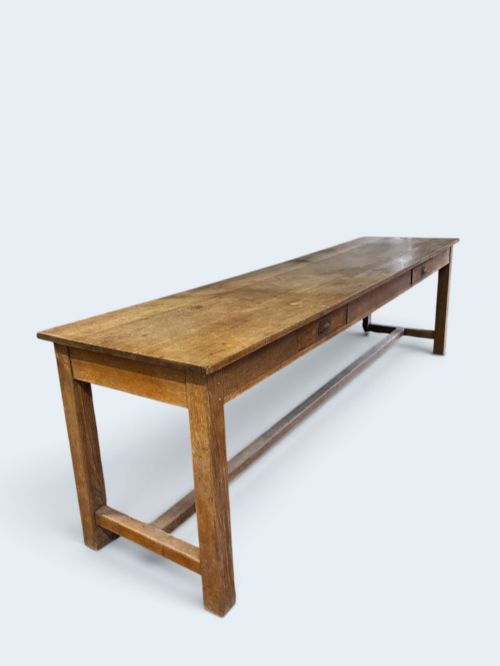
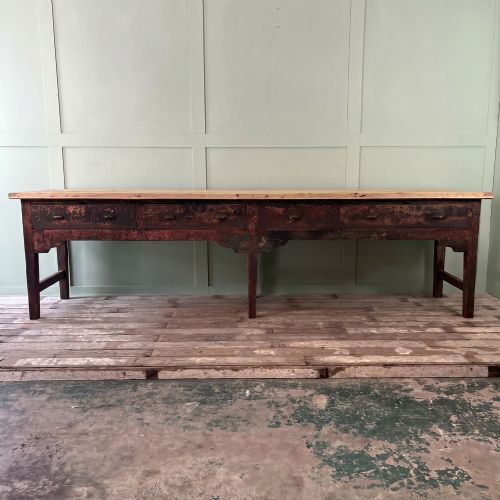
When you search for an antique long sideboard, you encounter substantial serving tables, dresser bases, console tables, and enfilades spanning the eighteenth, nineteenth, and early twentieth centuries. These long formats emerge primarily in English country house, French provincial, and rustic farmhouse traditions where scale served domestic and culinary labour.
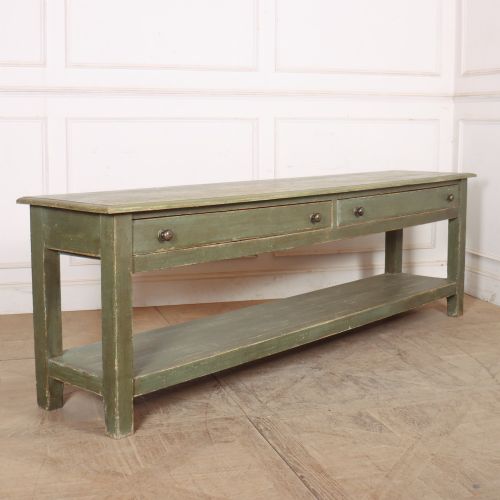
The version you meet most often on this page is a nineteenth century pine, oak, or mahogany serving table and dresser base featuring deep proportions and potboard shelves. English country pieces and French drapers tables dominate the selection, bringing considerable length and functional drawer arrangements into domestic spaces.
Materials and construction methods
Cabinetmakers constructed these pieces using solid timbers like oak, pine, mahogany, and pitch pine, often housing heavy top boards above banks of drawers or open pot-shelves. Iron and brass hardware, from drop handles to key escutcheons, secure the functional joints and operational drawers.
Surfaces frequently carry original paint, bleached finishes, or polished wood grains that reflect heavy utilitarian use in country houses and commercial drapers shops. Joinery relies on traditional pegged mortise and tenon frames designed to bear immense weight without racking.
Some nineteenth-century drapers tables still retain subtle indigo dye stains embedded deep within the grain from measuring bolts of cloth.
What separates examples
Quality rests in the integrity of the timber selection, such as solid oak or dense pitch pine, and the preservation of original painted or bleached surfaces. Pieces retaining their structural potboards, original brass or iron hardware, and uncompromised drawer linings command greater architectural presence.
Proportion and scale dictate the success of these long forms, where balanced drawer alignments and honest patination from decades of use separate workaday furniture from exceptional country house examples.
The Antique Long Sideboard Glossary
- Potboard
- An open lower shelf fitted beneath a serving table or dresser base, traditionally used for storing pots and heavy kitchen equipment. This lower tier anchors the legs and adds structural rigidity.
- Dresser base
- The lower section of a kitchen or dining dresser, comprising a solid work surface above rows of drawers and cupboards. These form the sturdy foundation for serving food or storing household goods.
- Enfilade
- A long cabinet or sideboard format, frequently originating from French traditions, featuring a continuous row of doors or drawers across a linear facade. They provide substantial uninterrupted surface and interior capacity.
- Drapers table
- A long utilitarian counter or console table originally utilised in textile shops for measuring and folding cloth. Their exceptional length and narrow proportions translate well into modern domestic hallways and dining rooms.
- Serving table
- A long, often un-cupboarded table designed specifically for holding dishes during large meals in country houses. They frequently incorporate drawers for linen and cutlery alongside open lower storage.
Antique Long Sideboard: Frequently Asked Questions
Where should I put a long sideboard?
These extended pieces suit large dining rooms, long hallways, or spacious open-plan kitchens where their substantial length anchors the surrounding walls. They also function effectively behind sofas or along wide corridor spaces.
Ensure you measure both the wall length and the clearance for opening drawers or doors fully before positioning the piece in your room.
How do I clean a painted wooden sideboard?
Dust the timber regularly with a dry, soft cloth to prevent grit accumulation on delicate painted surfaces or aged wood finishes. Avoid harsh chemical cleaners that can strip historic paint or dry out antique timber.
Apply a microcrystalline wax sparingly if the unpainted wood requires nourishment, buffing gently to maintain a soft sheen without creating buildup.
Can I use a drapers table as a sideboard?
These narrow, elongated tables serve exceptionally well as sideboards in dining areas or living spaces where standard cabinets prove too deep. Their height and length match the functional requirements of serving food or displaying objects.
Keep in mind that drapers tables often lack enclosed cupboard storage, relying instead on drawers and open shelves for organising items.
How do I date an antique wooden sideboard?
Examine the timber species, tool marks inside the drawers, and construction methods such as hand-cut dovetails or pegged joints to gauge the manufacturing era. Secondary woods used in drawer linings and backboards often provide clear clues regarding regional origin and period.
Compare the overall design proportions and hardware styles against established historic periods like the Georgian era or the nineteenth century.