

Large Wooden Cabinet
A large wooden cabinet anchors a room with substantial storage, uniting eighteenth-century craftsmanship with nineteenth-century utility across diverse domestic interiors.
Large Wooden Cabinet
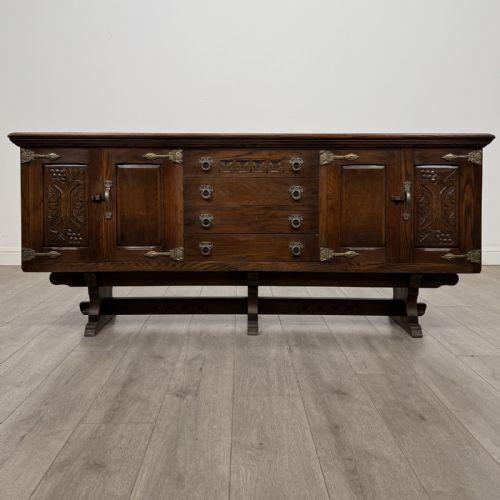
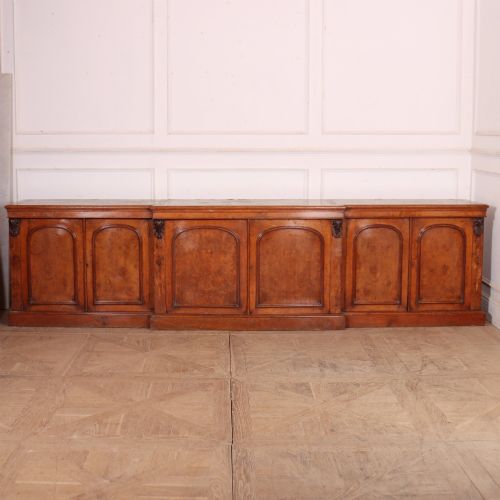
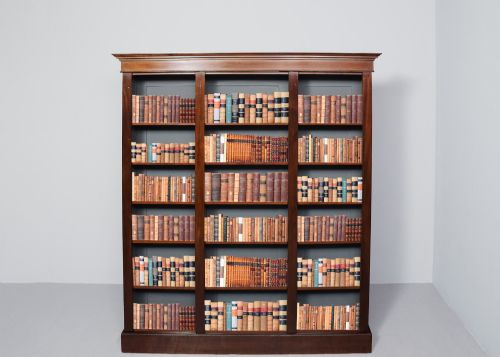
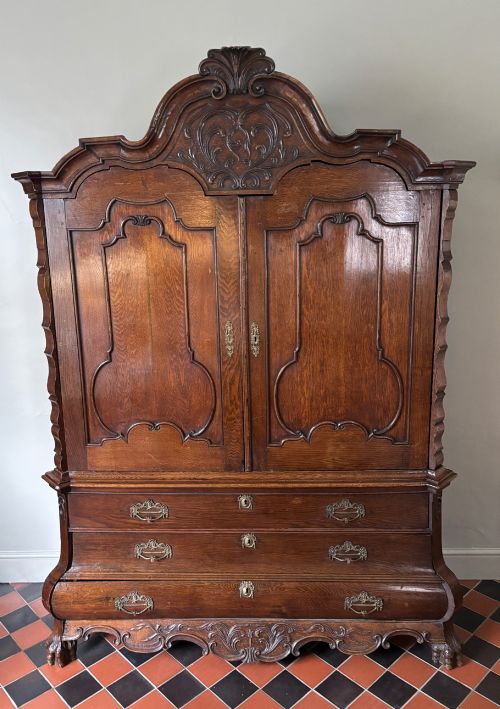
When you search for a large wooden cabinet, you encounter significant storage furniture spanning the eighteenth, nineteenth, and early twentieth centuries. These pieces encompass bookcases, sideboards, linen presses, wardrobes, armoires, and multi-drawer banks designed for substantial household storage.
The versions most common on this page date from the Victorian and Edwardian eras, alongside Georgian and eighteenth-century examples. They emerge from English, French, Dutch, Scottish, and Continental workshops, reflecting regional preferences in scale and proportion.
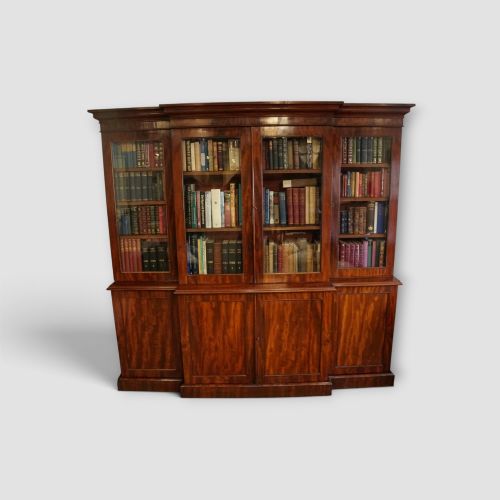
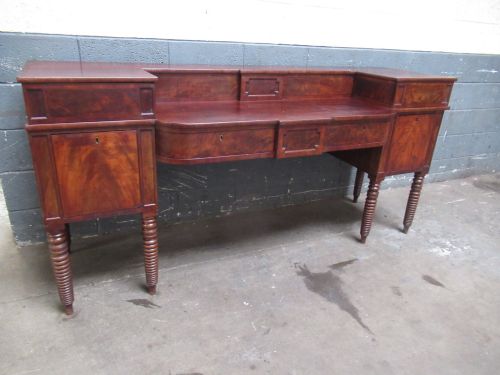
Forms range from breakfront bookcases and open library shelves to multi-tiered dressers and compartmentalised cabinets. Each type serves a distinct organisational function, whether displaying volumes, housing linens, or storing provisions.
Materials and construction
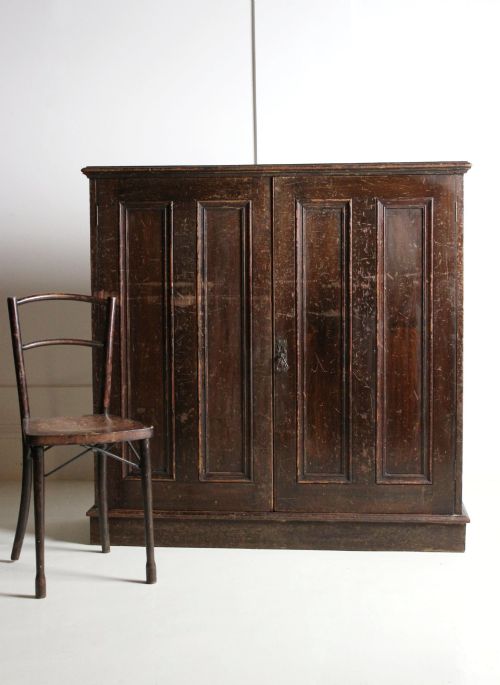
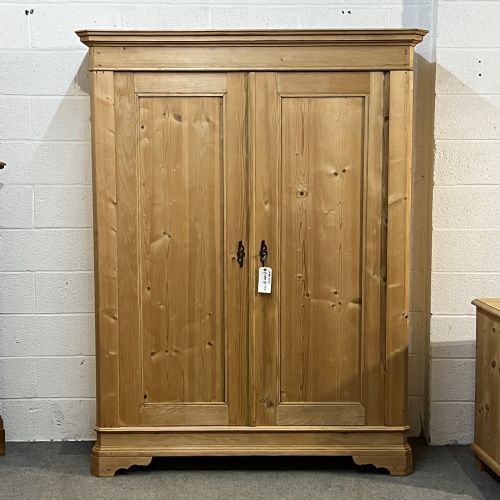
Cabinet makers built these pieces primarily using solid timbers and decorative veneers such as mahogany, oak, walnut, pine, cherry, and teak. Selected woods provided structural integrity while displaying natural grain patterns.
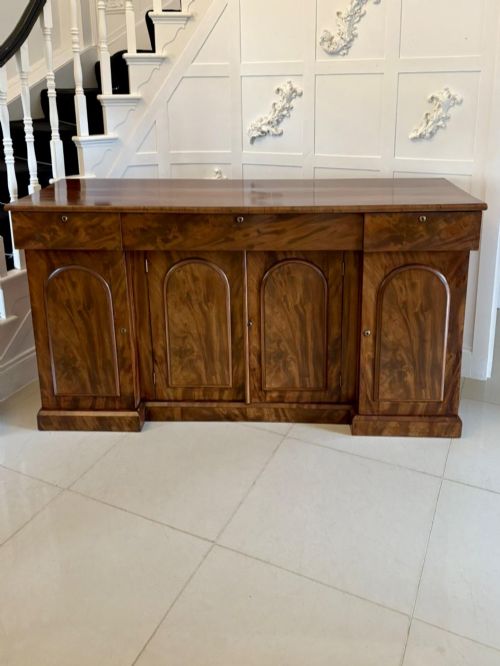
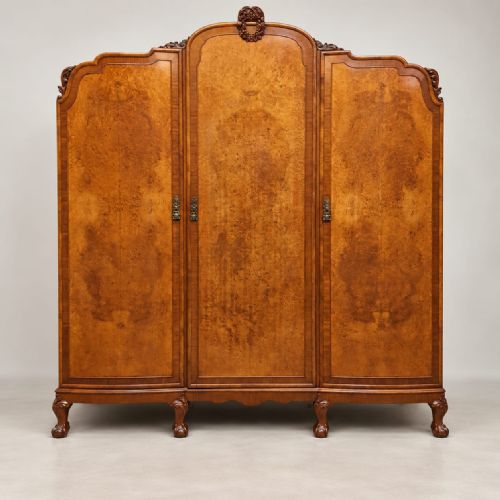
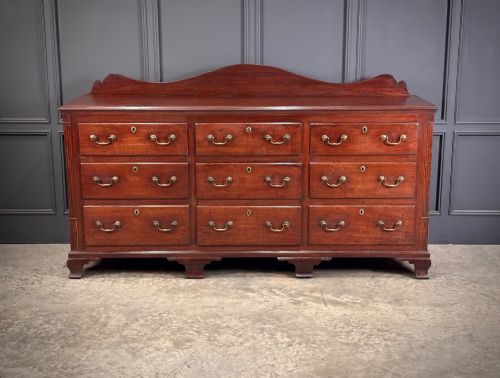
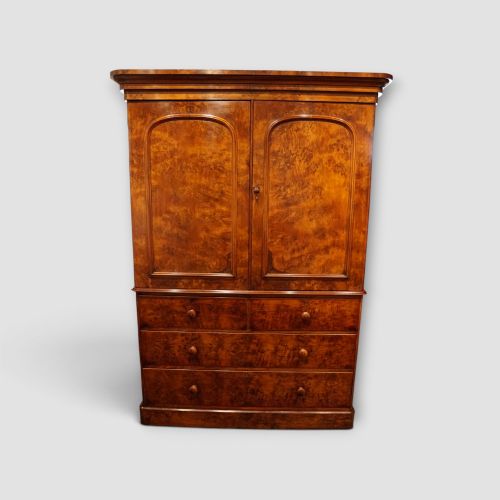
Surfaces frequently incorporate flame mahogany veneer or burr walnut to create visual depth on doors and drawer fronts. Secondary woods and structural frames rely on sturdy pine or oak, joined with traditional carpentry techniques.
Additional detailing incorporates brass hardware for handles and escutcheons, alongside glass panes fitted into bookcase doors. Certain regional pieces also display hand-carved ornamentation or painted finishes.
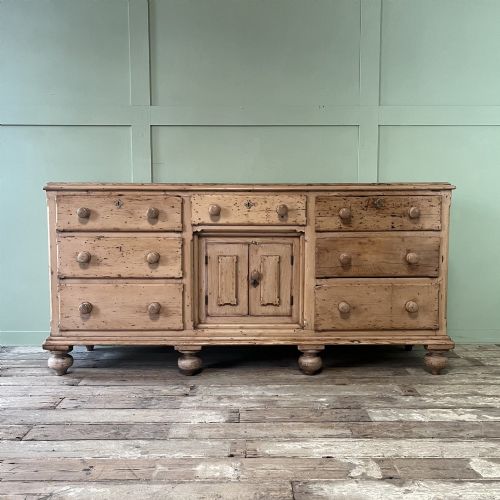
Some nineteenth-century chemist shop fittings survive as massive banks of drawers that once held endless rows of apothecary ingredients.
Factors of quality
Quality rests upon the selection of cabinet timbers and the skill applied to grain matching across large surfaces. Superior pieces employ figured veneers and solid hardwoods that retain stability and visual richness over centuries.
Construction methods define durability, visible in the precision of drawer dovetailing, panel fitting, and structural joinery. Finer examples maintain smooth operation in doors and drawers despite changes in humidity.
Proportion and architectural detailing distinguish standard utility items from exceptional commissions. Cornices, mouldings, and integrated shelving reflect the deliberate intent of the original maker.
The Large Wooden Cabinet Glossary
- Breakfront
- A cabinet design where the central section projects forward from the flanking wings. This configuration creates architectural depth and accommodates varied internal storage.
- Linen Press
- A tall storage piece featuring upper cabinet doors enclosing sliding trays or shelves above a base of multiple drawers. Originally designed for storing household linens flat.
- Compactum
- A multi-functional wardrobe combining hanging space, shelving, and drawers within a single unified footprint. It offers comprehensive garment storage in a substantial frame.
- Enfilade
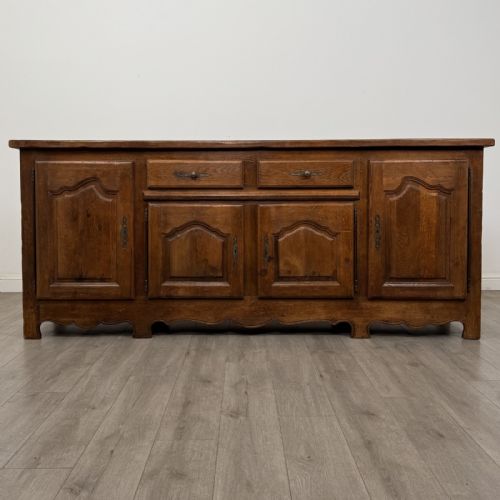
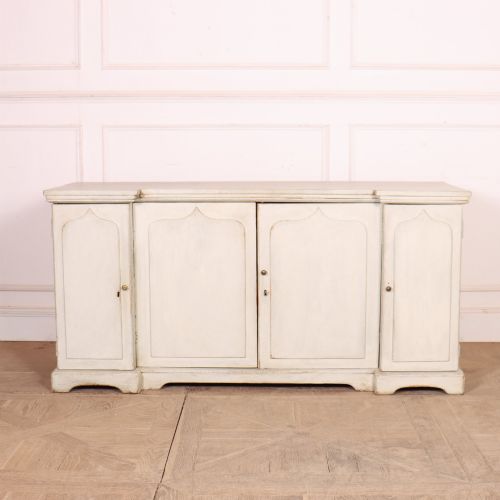
- A long sideboard or cabinet traditionally placed along a dining room wall for serving and storage. Continental versions often feature multiple doors and drawers.
- Damchiya
- An ornate storage cabinet originating from India, traditionally used as a dowry chest. These pieces often feature intricate carved woodwork and specialised compartments.
Large Wooden Cabinet: Frequently Asked Questions
How do I date a large wooden cabinet?
Dating relies on observing construction methods, hardware types, and secondary timbers used inside drawers and back panels. Hand-cut dovetails and native hardwoods typically point towards earlier eighteenth and nineteenth-century origins.
Stylistic cues such as Georgian breakfront proportions or Edwardian inlay provide further chronological markers. Comparing the piece against documented examples from specific periods confirms its approximate era of manufacture.
Where should I place a large wooden cabinet?
These substantial pieces require generous wall space and structural support capable of bearing heavy timber construction. Libraries, dining rooms, and spacious hallways offer appropriate settings for bookcases and sideboards.
Positioning furniture away from direct heat sources and strong sunlight protects polished timber and delicate veneers. Adequate clearance allows doors and drawers to open fully without obstruction.
How do I care for antique wood surfaces?
Maintain polished finishes by dusting regularly with a soft, dry cloth to prevent abrasive particle buildup. Avoid silicone sprays and modern chemical polishes that can degrade historical wax or shellac coatings.
Apply traditional beeswax periodically to nourish dry timber and preserve the natural lustre of mahogany, oak, or walnut. Maintaining stable room humidity prevents wood from warping or splitting.
What is the difference between a linen press and a wardrobe?
A linen press specifically pairs upper shelving or sliding trays with a lower bank of drawers for folded textiles. Wardrobes focus primarily on vertical hanging space for garments enclosed by full-length doors.
While both serve as large storage cabinets, their internal architecture reflects distinct historical domestic chores. Linen presses prioritized flat storage for household fabrics, whereas wardrobes accommodated tailored clothing.