



Georgian Glazed Breakfront Bookcase
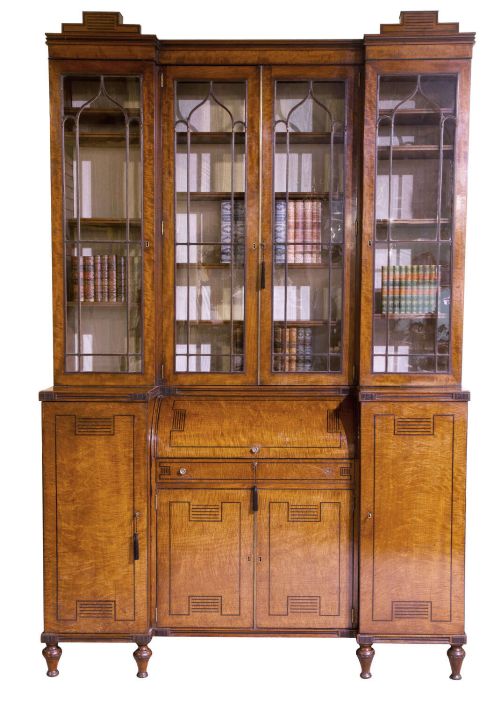
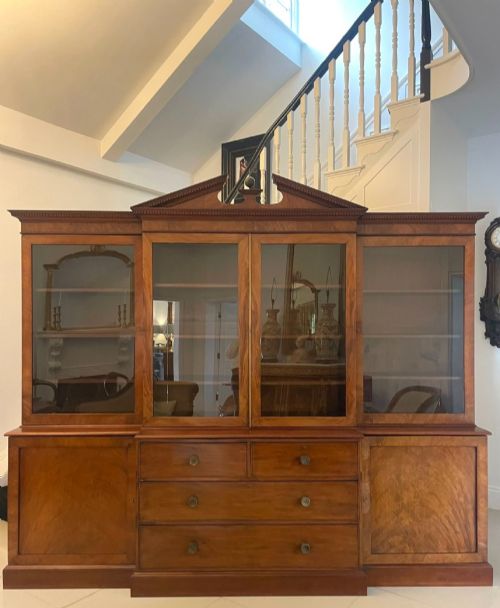
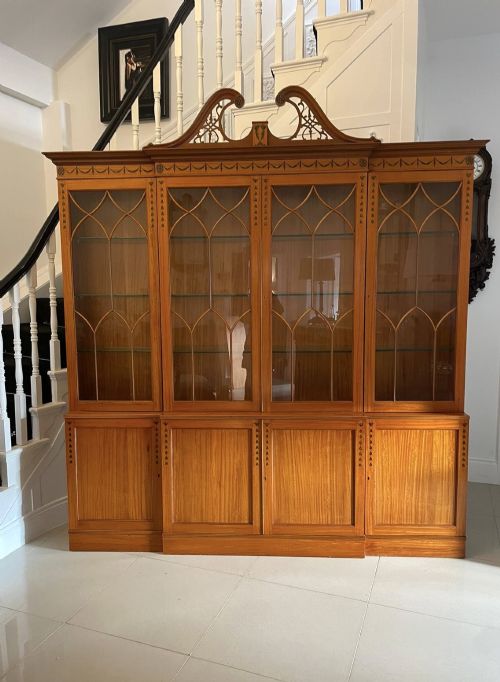
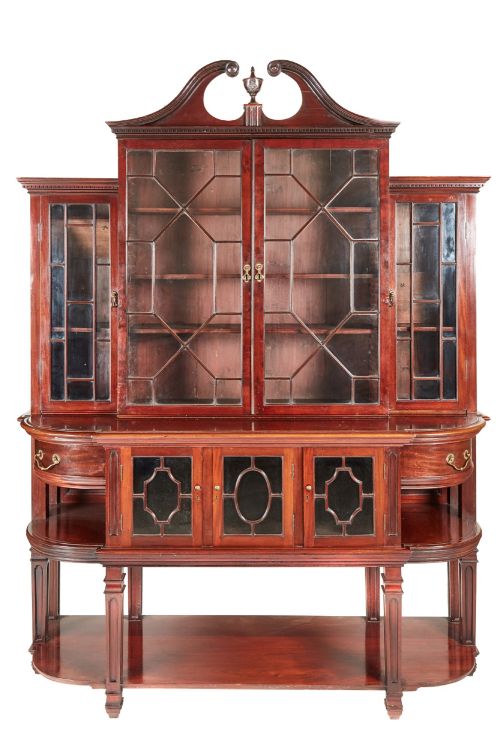
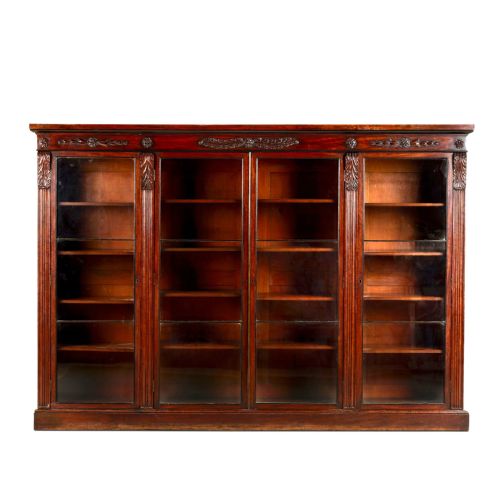
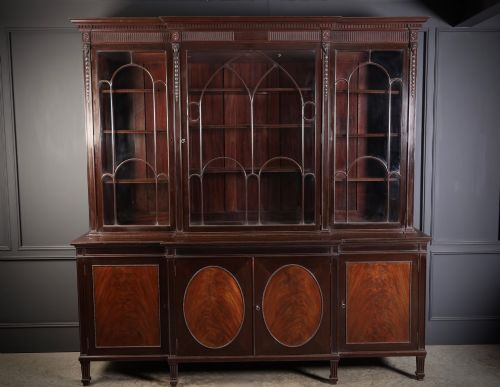
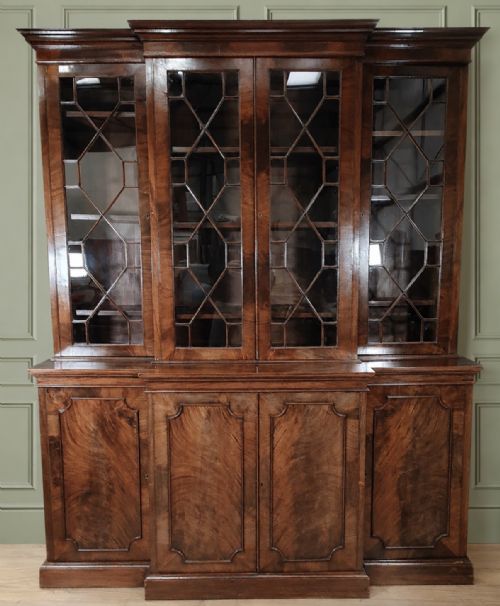
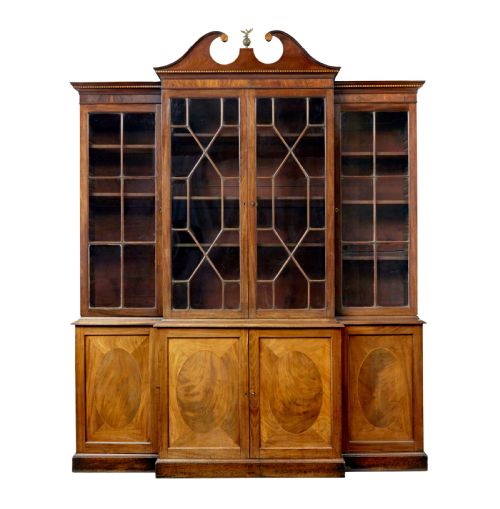
A georgian glazed breakfront bookcase brings architectural authority and commanding display space to a room, structured with a central projecting section.
Georgian Glazed Breakfront Bookcase
A georgian glazed breakfront bookcase stands as a monumental piece of furniture designed for large libraries and principal rooms. The form is defined by a central section that extends forward from the flanking wings, creating a pronounced architectural rhythm across the facade. Pieces seen range from authentic examples of the period to later revival interpretations made in subsequent centuries.
The glazing of the upper doors typically employs intricate wooden framing to divide the glass into smaller panes. Beneath these glazed doors, solid timber cupboards form a substantial base that anchors the entire composition. Surviving examples frequently utilise mahogany as the primary timber, occasionally accented with satinwood or fine inlay work.
How they were made
Cabinetmakers built these large carcasses using dense hardwoods, most notably mahogany, selected for stability and rich grain. Flame mahogany veneer and satinwood appeared on premium surfaces to create dramatic figural patterns across the drawer fronts and cupboard doors. Brass hardware secured the doors and drawers while adding metallic contrast to the timber.
Glazing bars were painstakingly shaped by hand to support individual panes of glass within the large upper doors. Inlay and painted decoration were applied to specific surfaces to introduce delicate colour and linear detail. Joinery methods relied on traditional housing joints and dovetails to sustain the immense weight of books and display items.
Some country house bookcases required entire teams of strong people just to shift them away from the library wall.
What varies in quality
The selection of timber dictates much of the initial visual impact, with figured mahogany and finely grained flame veneers marking out superior pieces. The precision of the glazing bar assembly reveals the skill of the original workshop, where slender, crisp mouldings signify high craftsmanship. Furthermore, the presence of original painted decoration or subtle wood inlay elevates a piece beyond standard utility.
Proportion and scale govern the architectural presence of each cabinet, with balanced breakfront sections commanding higher regard. The integration of functional elements such as secretaire drawers demonstrates advanced interior planning by the maker. Period authenticity and the retention of original hardware further separate standard workshop production from exceptional examples.
The Georgian Glazed Breakfront Bookcase Glossary
- Breakfront
- A cabinet facade where the central section projects forward from the two side sections. This architectural arrangement creates depth and breaks up the linear expanse of large library furniture.
- Astral glazing
- Glass doors divided into multiple small panes by slender wooden bars called astragals. This technique provided structural rigidity while allowing clear visibility of the book collection inside.
- Flame mahogany
- Timber cut from the fork of the mahogany tree to produce a distinctive flickering flame pattern. Cabinetmakers reserved this highly figured veneer for prominent door and drawer surfaces.
- Secretaire
- A desk drawer fitted with a drop-front panel that conceals small pigeonholes and writing surfaces. It allowed a large library bookcase to double as a working station without adding extra furniture.
- Satinwood
- A pale, lustrous timber imported from the tropics and used for fine inlay and banding. Its golden hue contrasted sharply with darker woods like mahogany.
Georgian Glazed Breakfront Bookcase: Frequently Asked Questions
How do I date a breakfront bookcase?
Dating relies on examining the construction methods of the carcass, the timber selection, and the style of the glazing bars. Earlier pieces often exhibit hand-cut dovetails and subtle Georgian proportions.
Later revival pieces from the Victorian era or the twentieth century tend to use standardised fixings and heavier internal framing. Comparing the secondary woods inside the drawers provides additional clues to the era of manufacture.
What rooms suit a breakfront bookcase?
These large cabinets require substantial wall space and high ceilings to accommodate their imposing architectural presence. They work best in principal libraries, formal studies, or spacious drawing rooms.
Because they combine glazed display space with deep base cupboards, they serve well for both storing a book collection and exhibiting decorative objects.
How should I care for mahogany timber?
Mahogany requires stable room humidity and protection from direct sunlight to prevent the timber and veneers from drying out. Dusting with a soft, dry cloth maintains the surface without the buildup of heavy waxes.
Harsh chemical polishes should be avoided entirely in favour of traditional beeswax applied sparingly. Keeping the piece away from direct heat sources preserves the integrity of the antique joinery.
What is the difference between Georgian and revival pieces?
Original pieces date from the eighteenth and early nineteenth centuries, carrying the direct stylistic hallmarks of the period's leading designers. Revival interpretations were made later, during the nineteenth and twentieth centuries, often copying earlier Chippendale or Sheraton aesthetics.
Examining the internal construction timber and the wear patterns helps distinguish the original period pieces from later cabinetmaking.