





Large Wooden Book Shelves
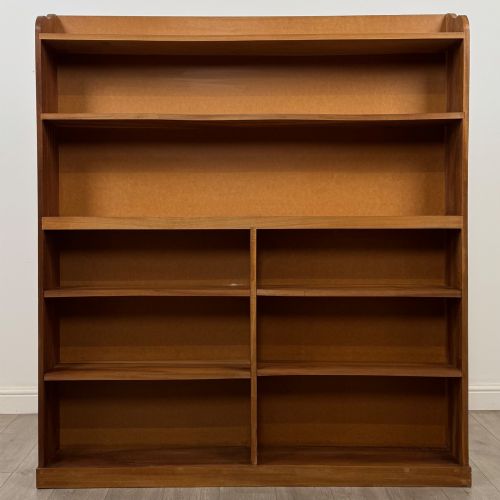
Large wooden book shelves bring substantial character to a room while holding a serious library.
Large Wooden Book Shelves
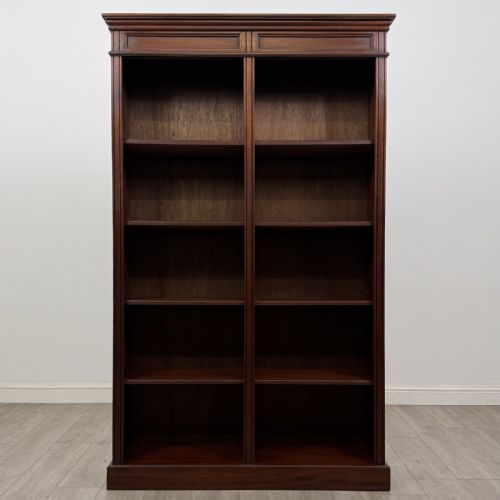
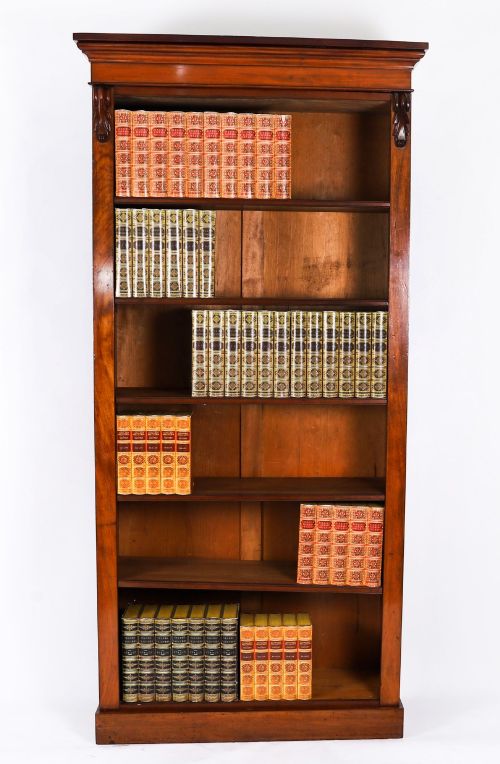
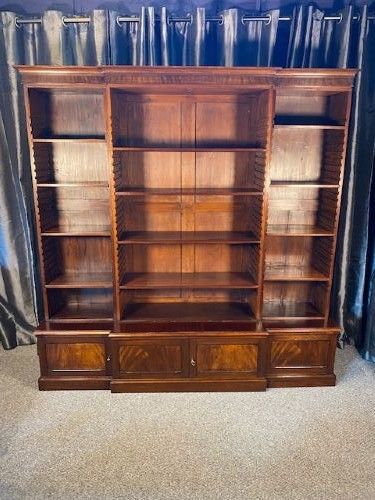
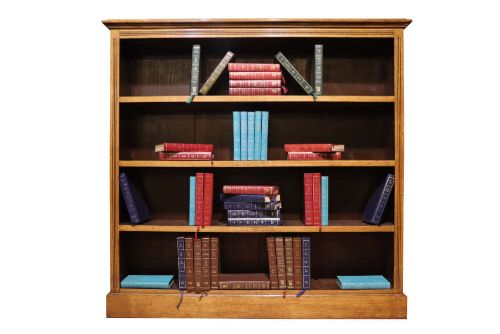
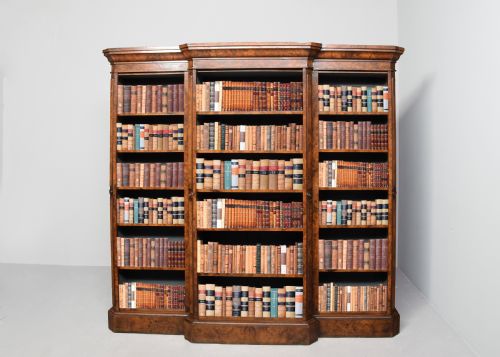
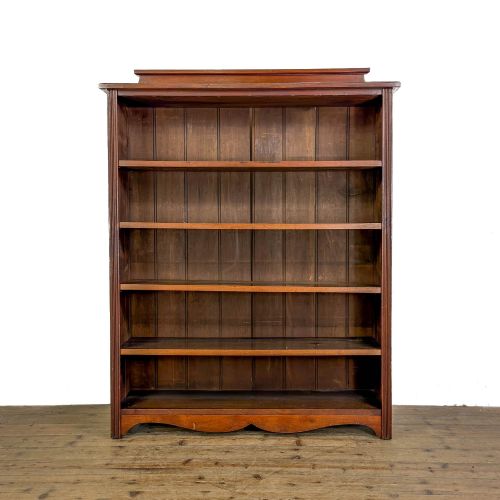
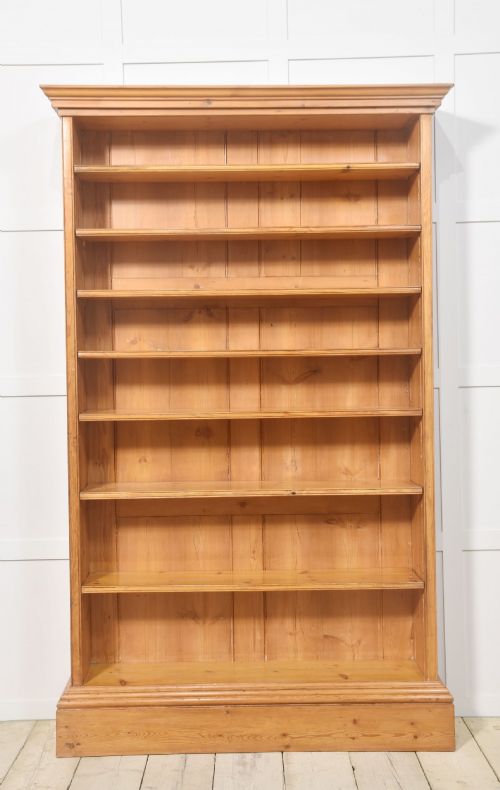
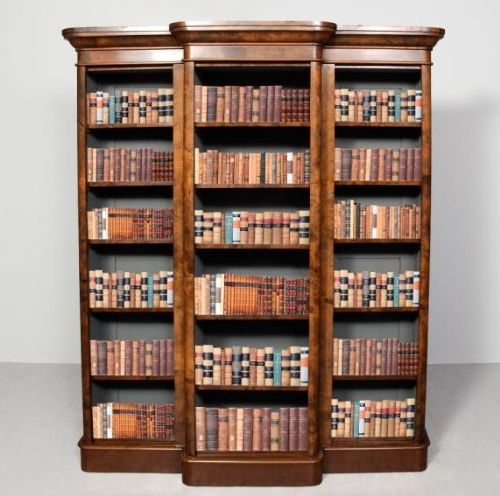
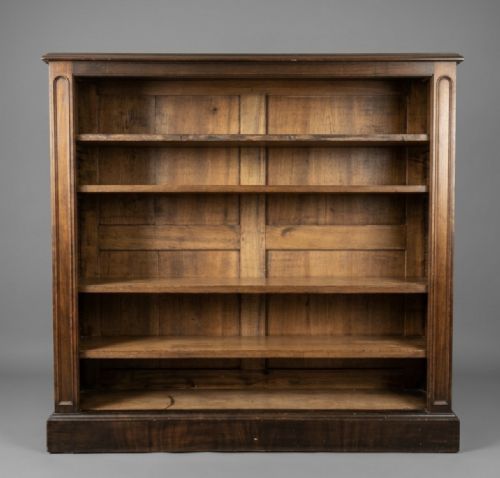
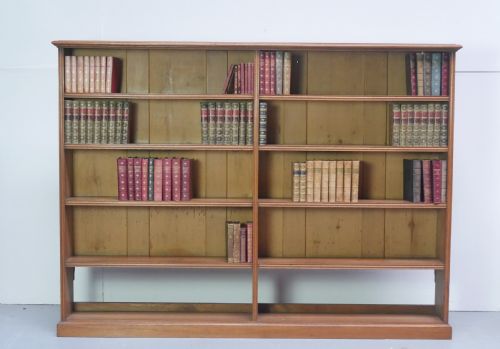
Large wooden book shelves span distinct architectural forms, from tall open front bookcases and breakfront cabinets to revolving stands and table troughs. Buyers seeking large wooden book shelves will encounter mostly open front designs intended for immediate access to volumes.
The pieces emerge from the nineteenth century through the Edwardian era and into the nineteen-thirties, reflecting Victorian robustness and Edwardian refinement. Walnut, mahogany, oak, and pine dominate the forms, supplemented by softer deal wood and elm.
Stylistic variation runs from rustic country pine and Black Forest carvings to Arts and Crafts simplicity and formal breakfront proportions. Many examples incorporate adjustable shelves, while specific variants feature glazed doors or inlaid decoration.
Materials and construction
Cabinet makers utilised dense hardwoods such as Spanish mahogany, burr walnut, and oak alongside softer timbers like pine and deal. These woods were chosen for their structural strength and capacity to support heavy rows of books over extended spans.
Construction techniques focus on practical utility, evidenced by adjustable shelving systems and multi-section breakfront builds. Decorative details rely on natural wood figures like flame mahogany, alongside inlaid motifs and occasional brass or glass elements.
Large Wooden Book Shelves Retail Price Guide 2026
Typical asking prices for large wooden book shelves among the pieces listed under this phrase on Sellingantiques today, from the lower quarter to the upper quarter. They describe what is for sale here now, not the wider market.
An amusing pair of carved wooden owls watches over the library from a perch of Black Forest bookends.
Standards of craftsmanship
Distinctions in quality rest on the selection of timber veneers, such as burr and flame walnut or mahogany, and the precision of the cabinet work. Superior pieces display harmonious grain matching across large breakfront surfaces and finely integrated adjustable shelf mechanisms.
Proportion and stylistic cohesion set exceptional examples apart from utilitarian storage. Refined edge moulding, subtle inlay work, and robust multi-section construction denote workshops operating at a higher level of execution.
The Large Wooden Book Shelves Glossary
- Breakfront
- A cabinet design where the central section projects forward from the flanking wings. This architectural arrangement creates depth and visual rhythm in large room settings.
- Adjustable shelves
- Shelving supported on movable pegs or tracks, allowing the interior height to shift. This mechanism accommodates volumes of varied sizes without permanent fixing.
- Ebonised
- Timber treated with a chemical stain or black finish to simulate ebony. This technique gained favour for creating dramatic contrast in nineteenth-century furniture.
- Inlaid
- Ornamentation created by fitting contrasting materials into carved recesses on the wood surface. Common insertions include lighter woods or brass elements.
- Deal wood
- A traditional British term for softwood timber cut from pine or fir trees. It served as a sturdy, economical material for utilitarian shelving and cabinetry.
Large Wooden Book Shelves: Frequently Asked Questions
How do I adjust the shelves?
Most period open bookcases utilise wooden support pegs, brass shelf studs, or notched interior vertical strips. You simply lift the shelf off its supports and reposition the pegs into alternative holes.
Heavier breakfront bookcases may require two people to safely handle longer timber shelves during adjustment to avoid damaging the interior veneer.
Are these shelves suitable for heavy books?
Period bookcases constructed from dense hardwoods like oak, mahogany, and walnut provide robust structural support for extensive collections. Thick solid timber shelves resist sagging under the weight of large volumes.
Pine and softer deal wood versions handle everyday libraries well, though very heavy academic texts may require checking the span and thickness of individual shelves.
How do I identify a Victorian bookcase?
Victorian pieces frequently feature rich Spanish mahogany or burr walnut timbers, often built in large breakfront configurations with generous proportions. Deep mouldings and substantial plinth bases are characteristic of the period.
Earlier nineteenth-century examples lean towards formal classical lines, while later Victorian items occasionally adopt Arts and Crafts or simpler vernacular influences.