


Large Walnut Shelving
Large walnut shelving brings rich grain and warmth to a room, offering substantial storage through bookcases, credenzas, and cabinets built to last.
Large Walnut Shelving
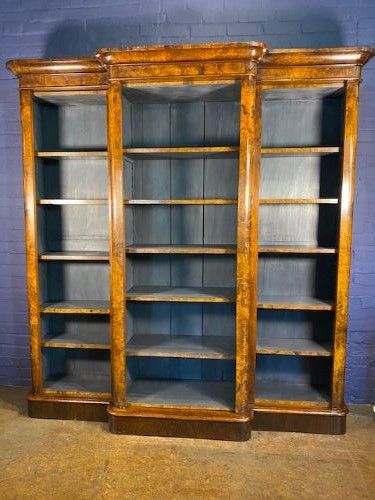
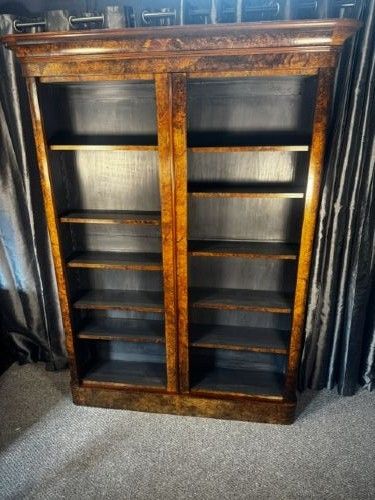
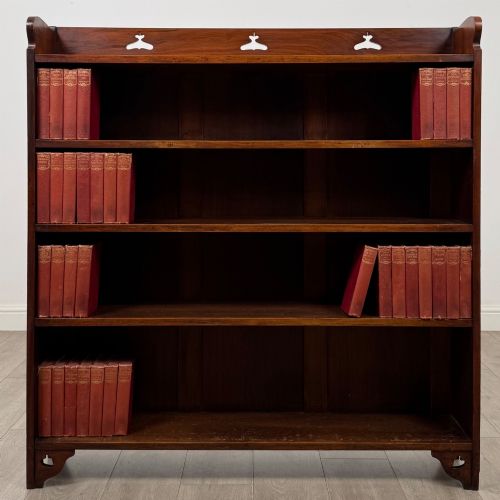
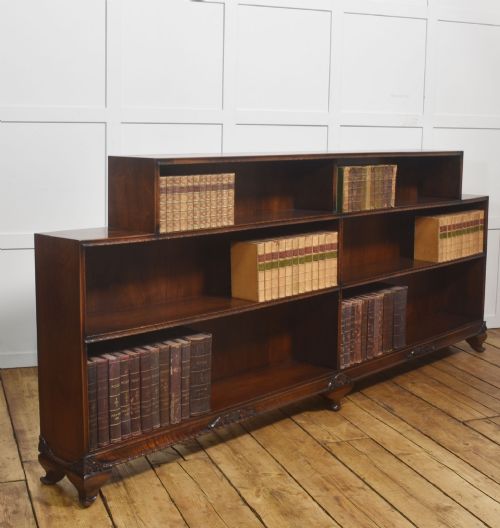
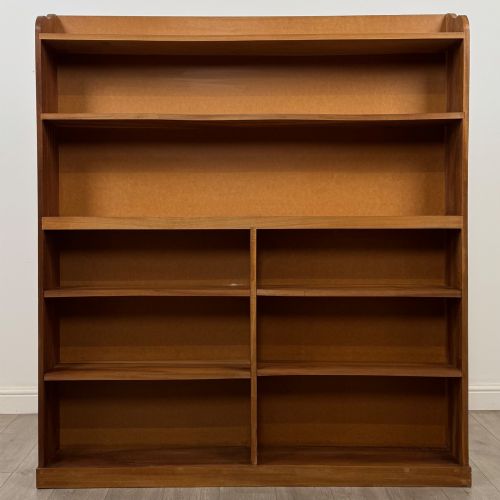
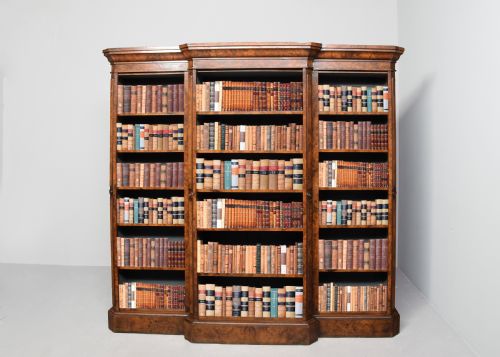
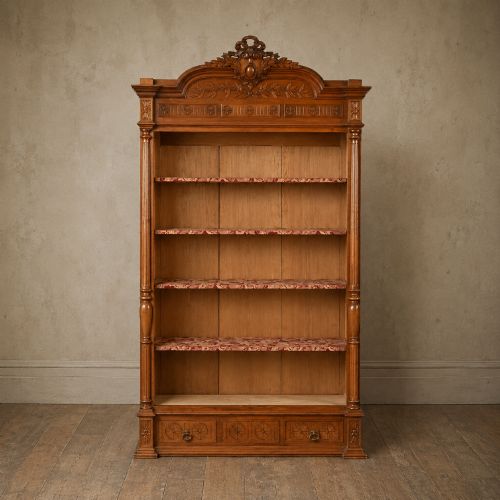
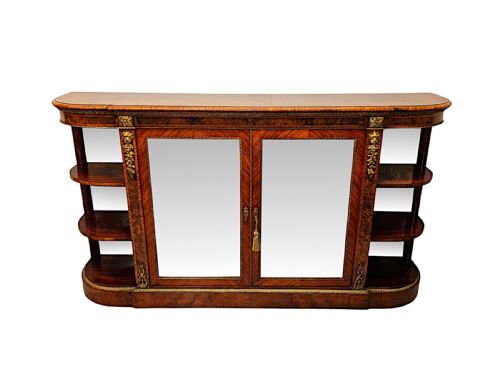
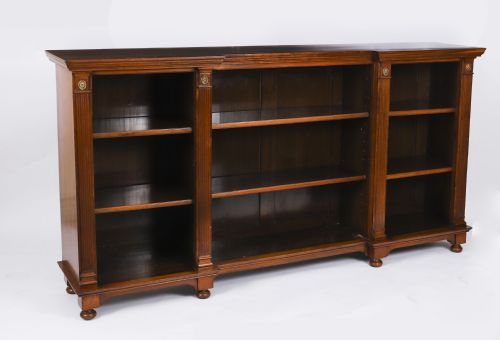
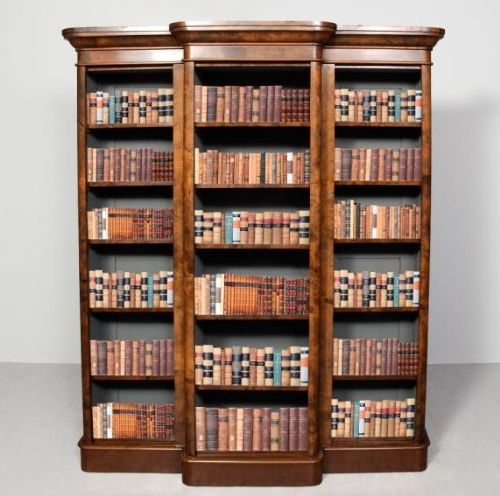
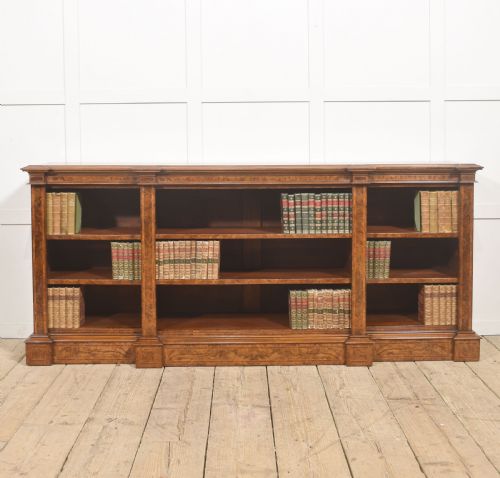
When you search for large walnut shelving, you are looking at substantial storage furniture designed to hold libraries and display prized objects. The pieces that appear most frequently on this page take the form of breakfront bookcases, open bookcases, and credenzas dating from the nineteenth and early twentieth centuries.
These items originate from periods such as the Victorian era, the Edwardian years, and the twentieth century, with continental and English workshops represented. You will encounter open library shelving alongside glazed cabinets and wall-mounted variations, all utilising walnut timber.
The scale of these items demands presence in a room, often featuring multi-section breakfronts or tall proportions. They span various stylistic revivals, including Jacobean and Italian Baroque, while maintaining practical shelving functions.
Materials and construction methods
The makers of these large pieces relied heavily on walnut and burr walnut veneer applied over solid timber substrates to create striking figured surfaces. This method allowed craftsmen to display the swirling patterns of the grain across wide breakfront facades and cabinet doors.
Metal mounts in ormolu and brass frequently appear alongside carved wooden friezes and barley twist columns to add architectural detail. Glazed doors utilise timber frames to protect contents while maintaining visibility for display purposes.
Listings feature periods spanning from 1850 through the Edwardian era to the 1920s, incorporating materials such as brass, glass, and burr walnut.
Distinguishing quality in walnut furniture
The selection of the burr walnut veneer determines the visual impact of the piece, with tightly swirled figures commanding attention. Higher quality examples exhibit careful matching of these veneers across expansive breakfront doors and cornices.
Structural complexity also sets pieces apart, particularly the inclusion of adjustable shelving systems, multi-section breakfronts, and integrated ormolu mounts. The crispness of carved friezes and the integration of barley twist columns reflect the skill applied during manufacture.
Gillows·Druce & Co
The Large Walnut Shelving Glossary
- Breakfront
- A piece of furniture with a central section that projects forward from the flanking wings. This configuration breaks up the flat facade of large bookcases.
- Burr Walnut
- Wood taken from a tree growth or wart, yielding complex, swirling grain patterns. It is sliced into thin veneers for decorative surfaces.
- Ormolu
- Gilt bronze applied to furniture mounts and decorative accents. It provides a bright metallic contrast to dark walnut timber.
- Pier Cabinet
- A low display cabinet designed to fit against the wall space between windows. These often feature glazed doors and decorative mounts.
Large Walnut Shelving: Frequently Asked Questions
How do I clean walnut shelves?
Dust the timber regularly with a soft, dry cloth to prevent dirt accumulation. Avoid harsh chemical cleaners that can damage the polish or dry out the wood.
Feed the walnut periodically with a suitable furniture wax to maintain the lustre of the grain. Keep the shelving away from direct sunlight and extreme temperature changes to prevent warping.
Are the shelves adjustable?
Many of the large bookcases and shelving units feature adjustable shelves to accommodate books of varying heights. This flexibility was common in nineteenth-century library furniture.
Check individual descriptions to confirm whether the particular piece utilises wooden supports or metal pins for shelf adjustment. Fixed shelves also appear in certain wall cabinets and specialised credenzas.
How do I identify Victorian walnut?
Victorian walnut furniture typically displays deep brown tones with intricate grain patterns, particularly when burr veneer is utilised. Pieces from this era often incorporate revival styles such as Italian Baroque or Jacobean elements.
Look for construction markers like hand-cut dovetails and solid timber secondary woods inside drawers. Ormolu mounts and carved barley twist columns are also common indicators of mid-nineteenth-century manufacture.
Where should I place a credenza?
A credenza suits dining rooms, hallways, or living spaces where surface display and enclosed storage are both required. Their low profile makes them ideal for placing beneath large mirrors or artwork.
Ensure the room has adequate floor space to allow doors to open fully without obstruction. Positioning the piece away from radiators protects the walnut timber and delicate veneer work.