

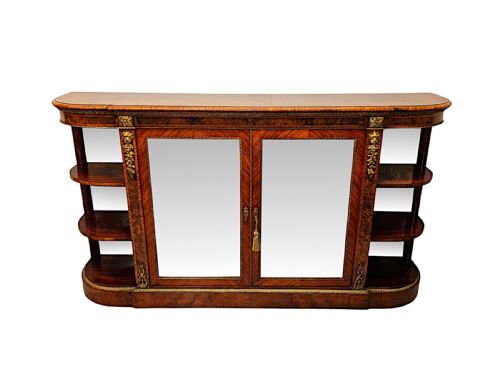
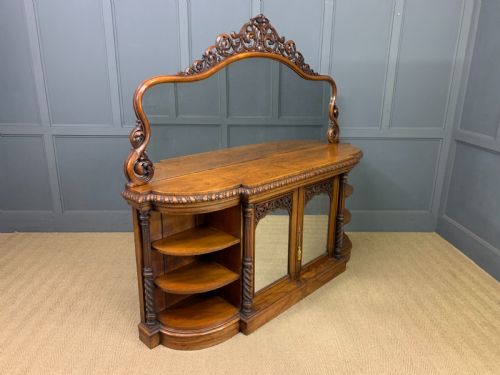


Large Walnut Credenza
A large walnut credenza commands a room with rich grain, polished ormolu mounts, and architectural scale, offering serious presence and storage.
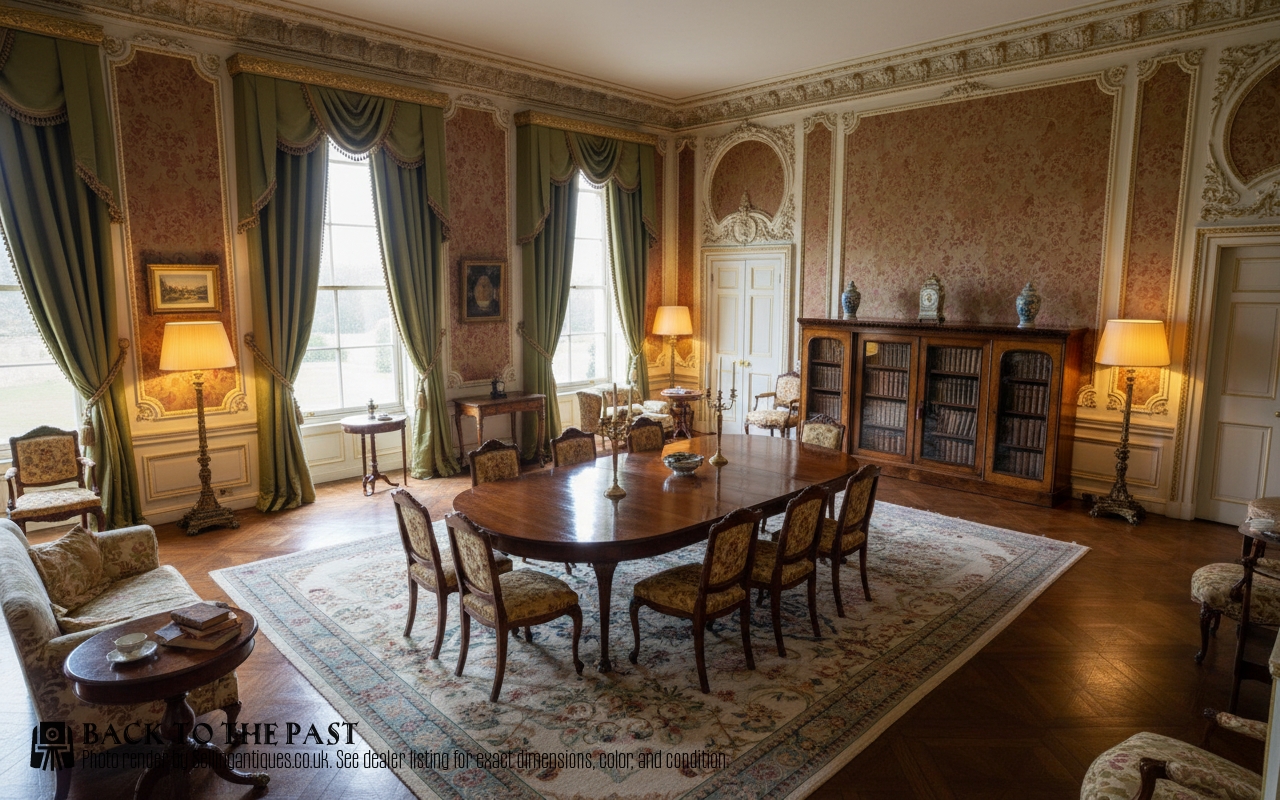
Large Walnut Credenza
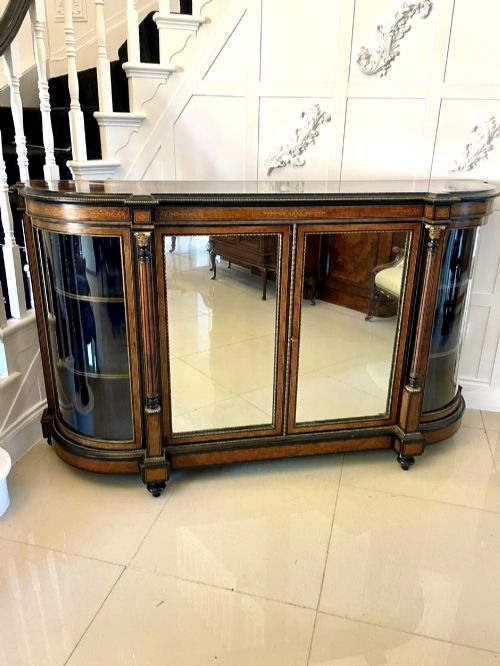
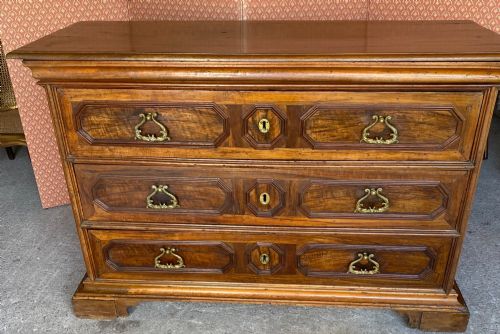
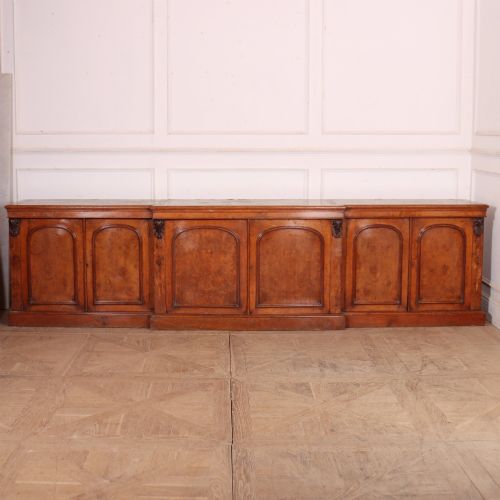
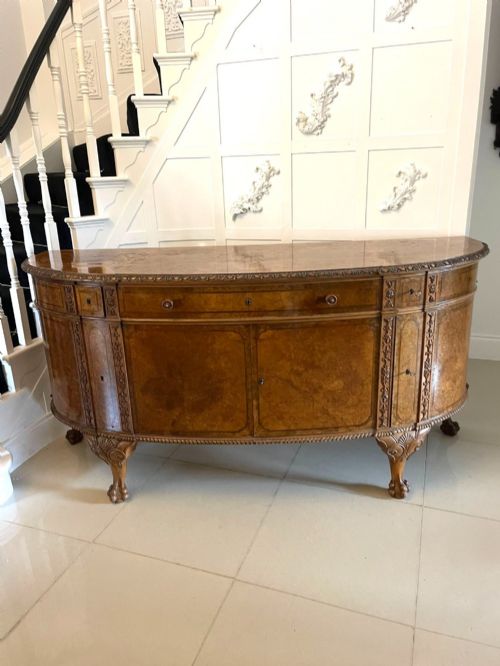
When you search for a large walnut credenza, you look at substantial low storage furniture built primarily during the nineteenth and eighteenth centuries. These pieces function as decorative focal points in dining rooms and grand hallways, often featuring flat, breakfront, or serpentine facades.
You will most frequently meet Victorian examples on this page, particularly those finished in burr walnut with floral marquetry and glazed doors. Alongside traditional British designs, Italian and French pieces appear, showing regional interpretations like marble tops, porcelain plaques, or heavy carved details.
How they were made
Cabinetmakers built these pieces using solid walnut and pine carcases overlaid with highly figured burr walnut veneers to create striking symmetrical patterns across doors and panels. Marquetry details in boxwood and amboyna added contrasting floral and geometric decoration.
Metalwork played a structural and decorative role, with cast ormolu mounts framing glass panels and protecting corners. Interior fittings often included velvet-lined shelving, drawers, and glazed compartments designed to display fine ceramics or silver.
Large Walnut Credenza Retail Price Guide 2026
Typical asking prices for large walnut credenza among the pieces listed under this phrase on Sellingantiques today, from the lower quarter to the upper quarter. They describe what is for sale here now, not the wider market.
Some credenzas incorporate secret drawers behind decorative mouldings, built for hiding family silver or private correspondence from visiting guests.
What varies in quality
The choice of veneer dictates visual impact, with tightly swirled burr walnut and crisp boxwood marquetry separating standard production from exceptional examples. The intricacy of cast ormolu mounts and the precision of their integration into the timber show the workshop's standard.
Construction methods determine durability, visible in the weight of the timber, the thickness of the marble or timber tops, and the finish of secondary woods inside drawers and cabinets. Stamped signatures from established makers add documented pedigree to the physical build.
Gillows·Maple & Co·Druce & Co
The Large Walnut Credenza Glossary
- Burr walnut
- A figured timber harvested from the abnormal growth of a walnut tree, prized for its swirling grain patterns. Cabinetmakers sliced it into thin veneers for decorative door fronts.
- Ormolu
- Gilded bronze used for decorative mounts, feet, and borders on nineteenth-century furniture. It provides a bright metallic contrast against dark timber.
- Marquetry
- Inlaid wood veneers arranged in pictorial or floral patterns on a contrasting background. It requires precise cutting of different coloured timbers.
- Credenza
- A low dining or reception room cabinet, typically enclosed by doors and sometimes flanked by glass-fronted side cabinets. It evolved from a fifteenth-century Italian serving table.
- Serpentine
- A front contour that curves outward in the centre and inward at the sides in a gentle S-shape. This fluid form demands advanced carpentry skills.
Large Walnut Credenza: Frequently Asked Questions
Where did people use a large walnut credenza?
These large cabinets stood primarily in formal dining rooms and drawing rooms to store silver, linen, and glassware. Their flat or marble tops also served as surfaces for displaying lamps, sculptures, and decorative bowls.
In larger Victorian homes, they anchored long walls in reception rooms where guests gathered. The glazed side compartments allowed owners to showcase porcelain collections while keeping them protected from dust.
How do I identify a Victorian credenza?
Victorian examples frequently combine burr walnut veneers with gilt ormolu mounts, floral marquetry, and curved serpentine fronts. Many incorporate central glazed doors flanked by bowed side cabinets.
Look for interior adjustments like velvet-lined shelves and maker stamps on the drawer linings or timber backs. These design elements typically date the piece to the mid-nineteenth century.
Are Italian pieces different from English ones?
Italian credenzas often feature heavier carved walnut details, Renaissance Revival motifs, or integrated marble tops rather than delicate marquetry. They rely on architectural proportion and solid timber presence.
English and French versions from the nineteenth century lean towards lighter decorative effects, using contrasting boxwood inlay and polished porcelain plaques. The regional origin shapes both the carving depth and the silhouette.
How do I care for walnut veneer?
Keep walnut furniture away from direct sunlight and heat sources to prevent the burr veneer from drying and lifting. Dust regularly with a dry cloth and apply a quality beeswax sparingly to nourish the grain.
Avoid placing damp items directly on the polished timber or marble surfaces to protect the historical finish from water marks. Gentle maintenance preserves the depth of the wood colour.