





Large Walnut Armoire
A large walnut armoire provides monumental clothes storage and grounds a bedroom with rich, figured grain.
Large Walnut Armoire
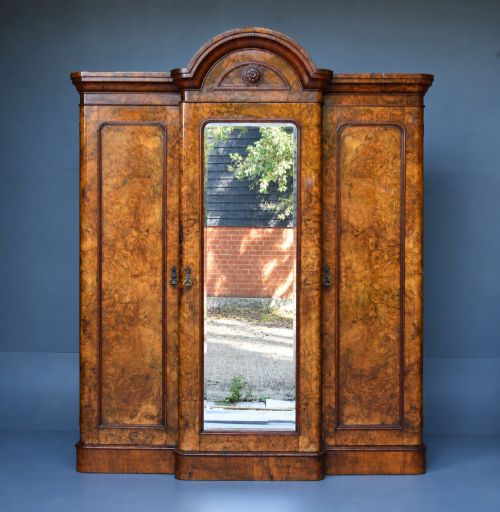
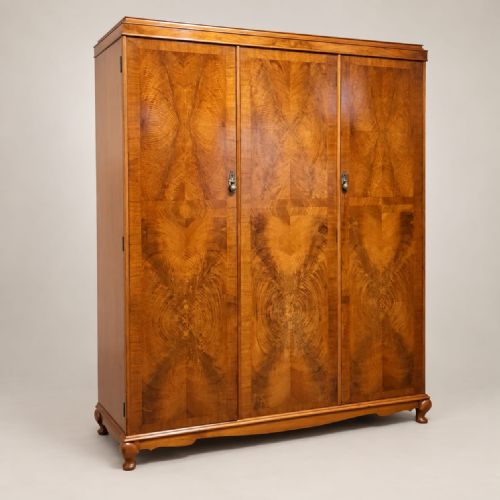
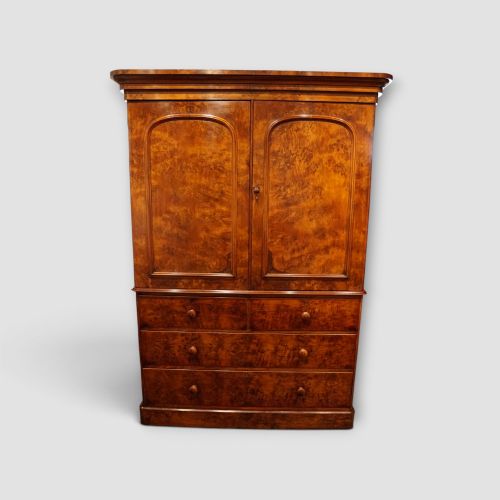
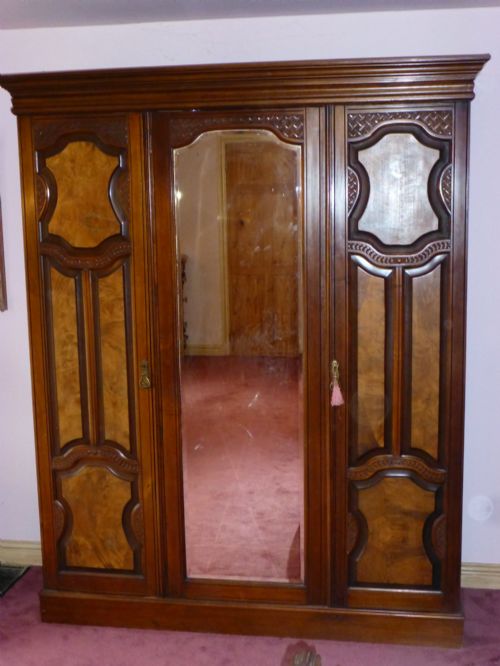
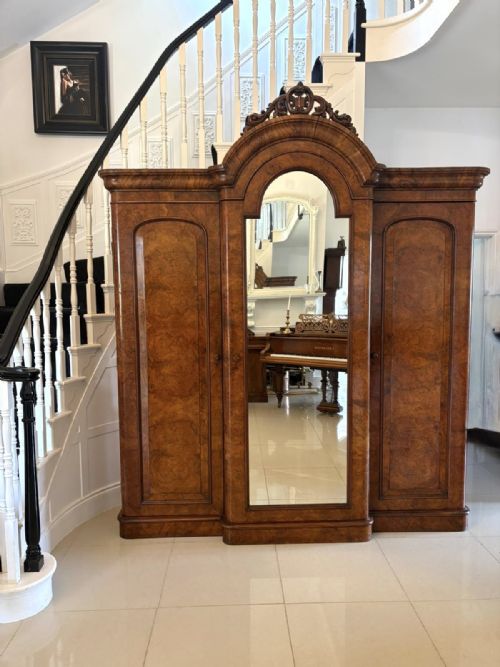
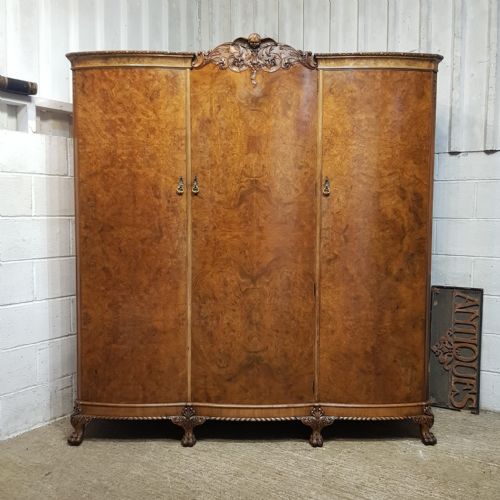
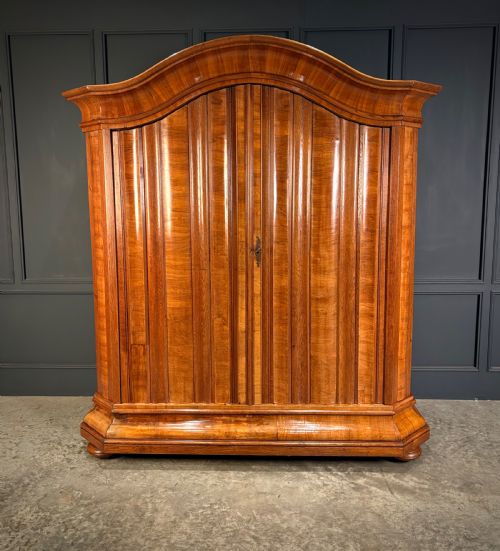
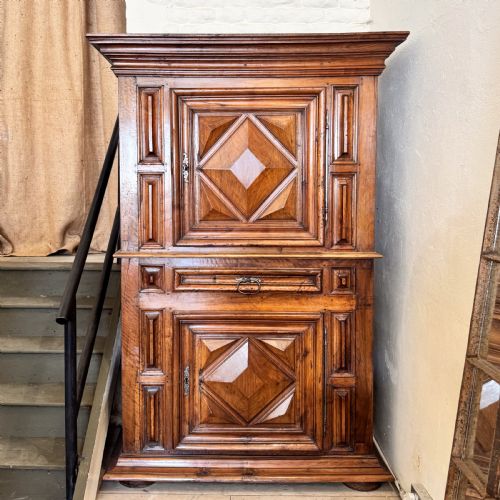
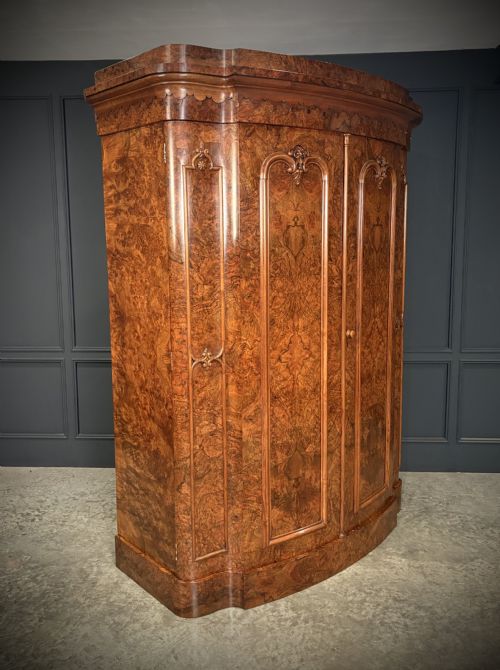
A large walnut armoire appears primarily as a grand triple wardrobe, a compactum with interior drawers, or a tall continental press spanning the nineteenth century and the early twentieth. Victorian triple wardrobes and French armoires dominate the selection, bringing substantial proportions and deeply figured timber into domestic spaces.
Buyers encounter variations ranging from serpentine and bow-fronted triple formats to carved Dutch and Italian cabinets. These massive storage pieces combine hanging compartments with linen presses, serving as architectural anchors for period bedrooms.
Materials and Construction
Cabinetmakers built these large carcasses using solid walnut and structural oak, applying figured burr walnut veneers to the principal exterior surfaces. The dramatic patterning of the wood relies on careful slicing of burls and stump wood to create symmetrical grain matches across large doors.
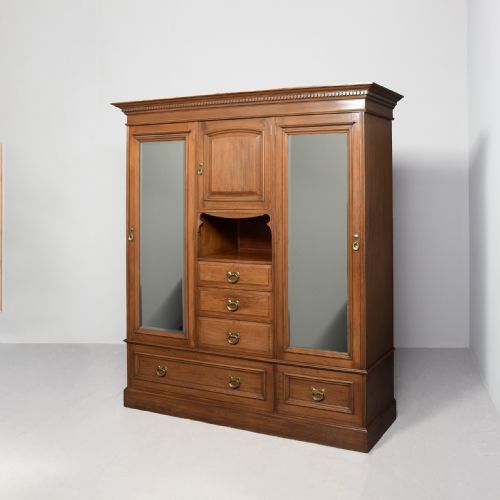
Secondary elements incorporate brass hardware, iron fittings, and bevelled mirror glass set into door panels. Carved ornamentation, applied moulding, and marquetry inlay provide surface enrichment on continental and revival pieces without compromising the robust framework.
Listings feature Victorian, Edwardian, and Art Deco eras, constructed primarily from burr walnut, plain walnut, oak, and mirrored glass.
Judging Quality
Quality rests upon the selection and matching of the burr walnut veneers across expansive door panels. Superior examples exhibit continuous grain patterns that flow logically across multiple sections rather than random piecing.
Construction depth defines the better specimens, seen in heavy panelled backs, substantial mahogany or oak drawer linings, and original working brass locks. Integrated architectural carvings and crisp serpentine moulding separate standard production from exceptional cabinetmaking.
Holland and Sons
The Large Walnut Armoire Glossary
- Burr Walnut
- Timber featuring intricate, swirling grain patterns formed by growth deformations on the tree. This highly decorative veneer appears on the most ambitious Victorian and Edwardian wardrobe facades.
- Compactum
- A fitted wardrobe interior combining hanging space, linen shelves, and internal drawers. This multi-purpose layout maximises storage capacity within a single large carcass.
- Serpentine
- A front profile curving outward in the centre and inward toward the edges. This flowing shape demands advanced woodworking skill to execute cleanly on heavy cabinet doors.
- Breakfront
- A cabinet design where the central section projects forward from the flanking wings. This architectural arrangement adds depth and shadow lines to large wardrobes and armoires.
- Sentry Box
- A narrow wardrobe configuration designed for single-person garment hanging. The compact footprint preserves floor space while maintaining vertical storage.
Large Walnut Armoire: Frequently Asked Questions
How do I fit a large armoire into a modern room?
Most large wardrobes and armoires dismantle into modular sections including a heavy cornice, a base plinth, and separate door or side panels. This modular breakdown allows for transport and assembly within rooms with standard ceiling heights.
Position the cabinet away from direct heat sources to prevent the walnut veneer from drying out or splitting. Ensure the floor is level so the large doors hang square and latch correctly without binding.
What is the difference between an armoire and a wardrobe?
An armoire traditionally denotes a large continental cupboard used for general storage, often featuring adjustable shelving or linen presses behind deep doors. A wardrobe specifically prioritises vertical garment hanging rails.
Many nineteenth-century English pieces combine both formats into a triple compartment layout. This combination serves modern buyers needing mixed storage for hanging garments and folded textiles.
How do I care for walnut veneer surfaces?
Dust the exterior regularly with a soft, dry cloth to prevent abrasive particles from settling into the grain. Avoid silicone-based polishes that build up a hazy film over the polished finish.
Apply a traditional beeswax sparingly once or twice a year to nourish the timber and maintain the natural sheen of the burr walnut. Keep the room humidity stable to protect the antique glue and wood joints.
How can I tell a Victorian piece from an Edwardian one?
Victorian examples typically display heavy proportions, deep cornices, and dark, highly figured burr walnut veneers with robust carved details. Edwardian pieces often exhibit slightly lighter framing and more restrained decorative motifs influenced by transitional revival styles.
Examine the interior woodwork and drawer construction for clues, as Victorian workshops favored solid oak linings while later pieces introduced secondary softwood elements.