
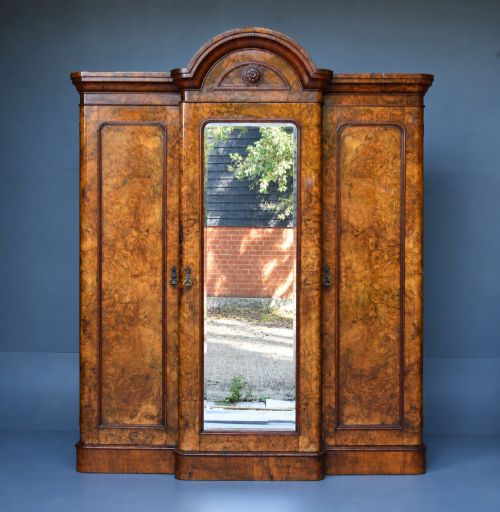
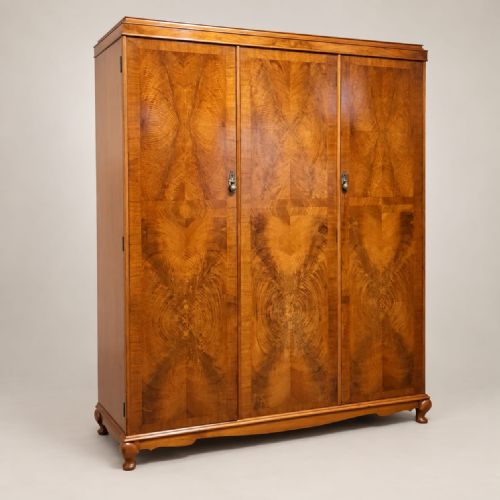
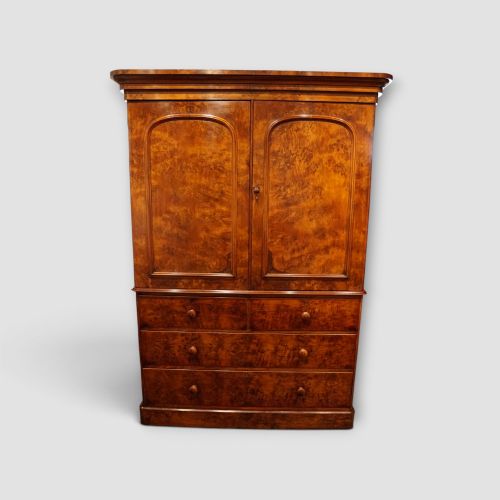
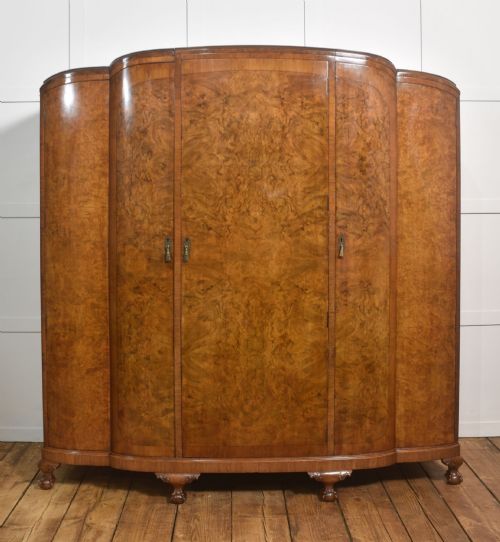

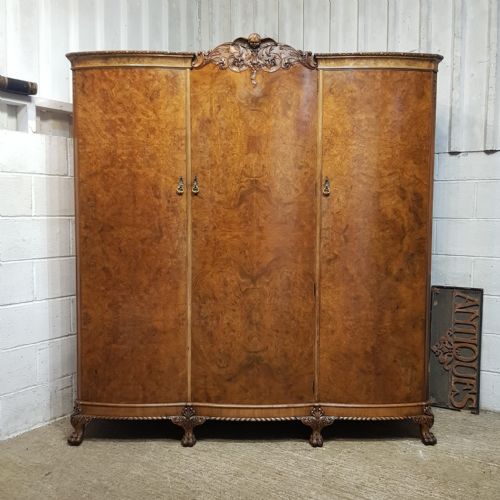
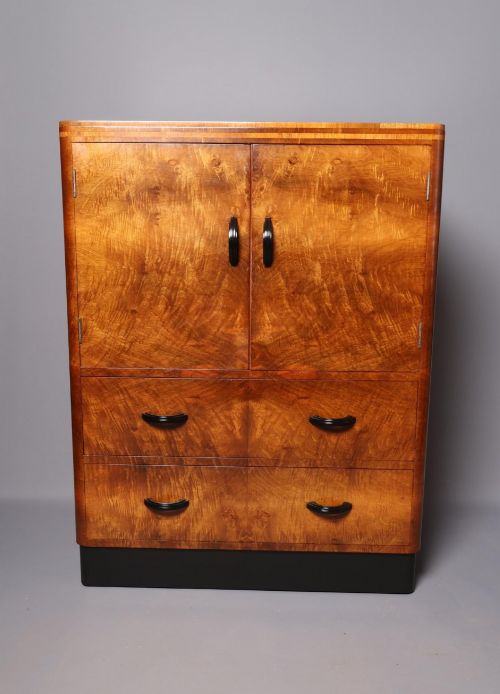

Burr Walnut Bedroom Armoire
A burr walnut bedroom armoire brings rich timber grain and substantial storage to a room, spanning Victorian and Art Deco eras.
Burr Walnut Bedroom Armoire
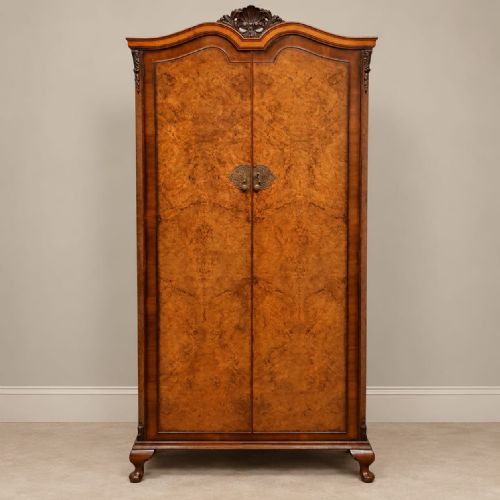
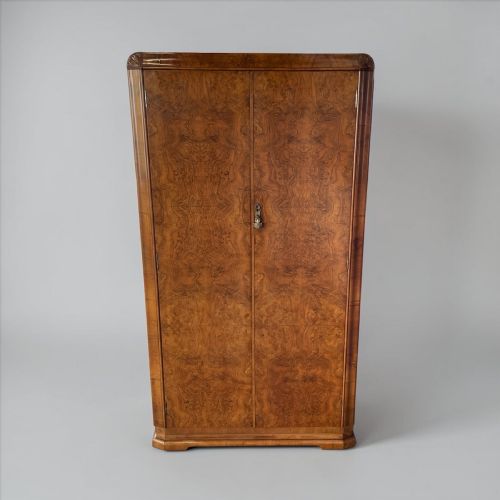
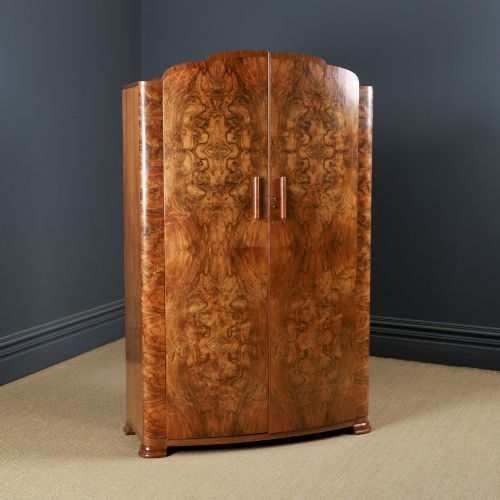
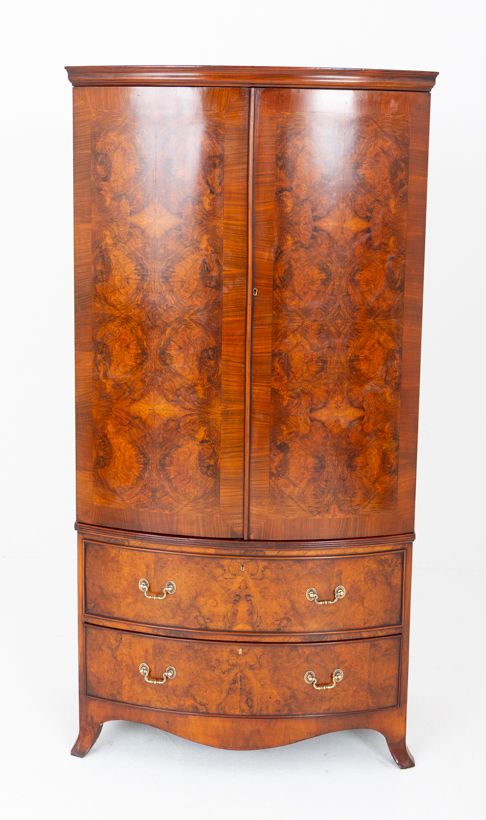
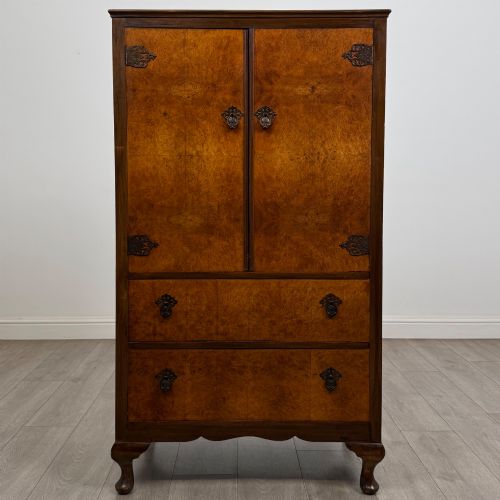
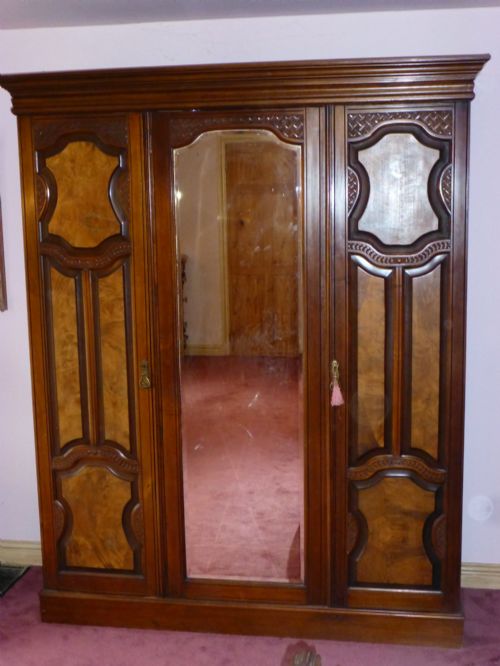
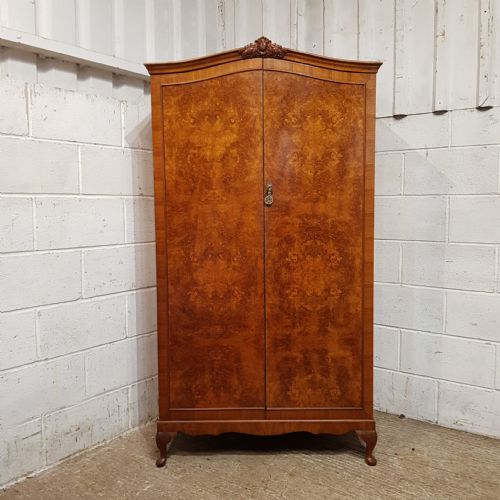
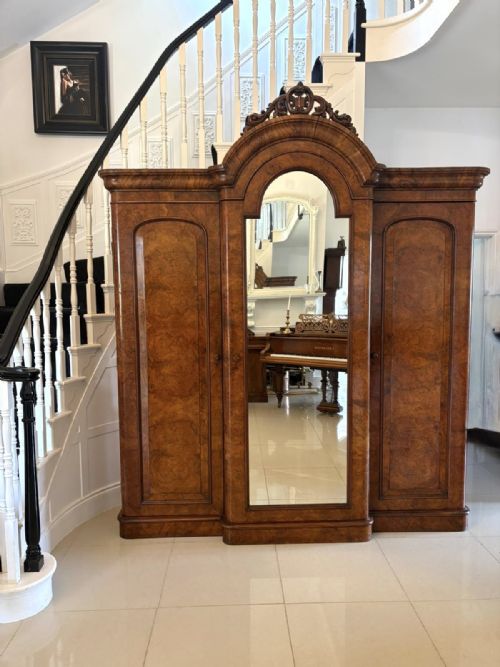
When you search for a burr walnut bedroom armoire, you encounter large storage furniture designed for clothes and linen, spanning the Victorian period, the Edwardian era, and the 1930s. The selection ranges from imposing triple wardrobes and compactums to serpentine fronted and bow fronted cabinets.
The pieces appearing most frequently on this page combine generous proportions with fitted interior shelving and hanging space. You will find examples reflecting Revival styles alongside streamlined Art Deco designs and French influences.
Originating from British workshops and continental makers, these wardrobes often form part of larger bedroom suites or stand alone as focal storage pieces. The combination of structural timber and decorative grain defines the visual character across all periods represented.
Materials and construction methods
Cabinet makers utilised solid walnut frames overlaid with burr walnut veneer to create the distinctive swirling grain patterns across the doors and panels. Brass hardware, glass panels, and occasional ormolu mounts complete the exterior detailing.
Interior construction typically incorporates secondary timbers configured into sliding trays, linen presses, and hanging compartments. Veneering techniques required precise matching of timber slices to achieve symmetrical patterns on large wardrobe facades.
Listings span the nineteenth and twentieth centuries, featuring Victorian, Edwardian, and Art Deco eras alongside French regional styles.
Distinctions in craftsmanship and design
The selection of the burr walnut veneer dictates much of the visual appeal, where tighter and more symmetrical grain patterns distinguish finer examples from plain timber surfaces. Cabinet makers who invested time in book matching veneers across multiple doors achieved a superior aesthetic balance.
Structural complexity also marks the upper tier of pieces, seen in serpentine or bow fronted profiles, intricate carvings, and fully fitted internal compartments. Maker attribution and robust internal joinery further separate standard production wardrobes from exceptional masterworks.
Holland and Sons·Harry and Lou Epstein
The Burr Walnut Bedroom Armoire Glossary
- Burr walnut
- A figured timber obtained from the gnarled growth on walnut trees, prized for its complex, swirling grain patterns. It is sliced into thin veneers for furniture facades.
- Compactum
- A multi-functional wardrobe featuring a combination of hanging space, drawers, and linen shelves within a single unit. This form maximises storage efficiency in bedroom furniture.
- Linen press
- A tall storage cabinet historically used for flat linens, typically featuring sliding trays enclosed by upper doors above a chest of drawers. Victorian examples often utilise burr walnut veneers.
- Breakfront
- A cabinet design where the central section projects forward from the flanking outer sections. This architectural arrangement creates depth and visual rhythm on large wardrobe facades.
- Serpentine front
- A furniture front characterised by a wavy contour, curving convexly in the centre and concavely at the ends. Executing this shape in burr walnut veneer requires advanced woodworking skill.
Burr Walnut Bedroom Armoire: Frequently Asked Questions
How do I fit a large wardrobe?
Many Victorian and Art Deco wardrobes are constructed to dismantle into modular sections including cornices, base plinths, and side panels to facilitate transport and room placement.
Checking internal depth and door swing clearance ensures the cabinet functions practically within your bedroom space.
What is a compactum wardrobe?
A compactum integrates hanging space, shelving, and internal drawers into one comprehensive storage unit, often divided into multiple internal compartments.
This format became popular for combining the functions of a wardrobe and a chest of drawers.
How do I date an armoire?
Stylistic markers such as carved ornamentation point to Victorian origins, whereas clean geometric lines and blonde finishes typically indicate 1930s Art Deco production.
Internal construction details and lock types also provide reliable clues regarding the manufacturing period.
Are these wardrobes supplied dismantled?
Larger multi-door wardrobes and compactums are frequently designed with knock-down construction to allow movement through standard doorways.
Sellers usually specify whether a piece separates into modular components for assembly on site.