



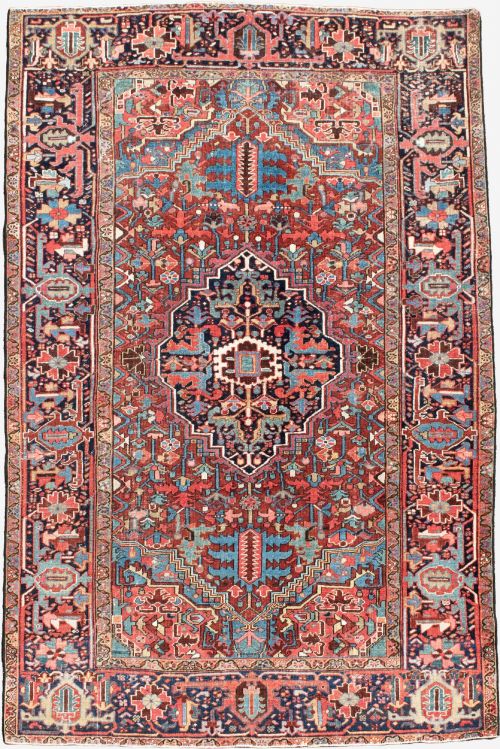
Large Vintage Oriental Rug
A large vintage oriental rug anchors a room with dense patterns and deep history, drawn from nineteenth and early twentieth century weaving traditions.
Large Vintage Oriental Rug
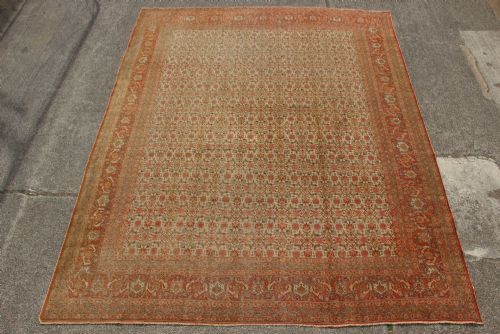
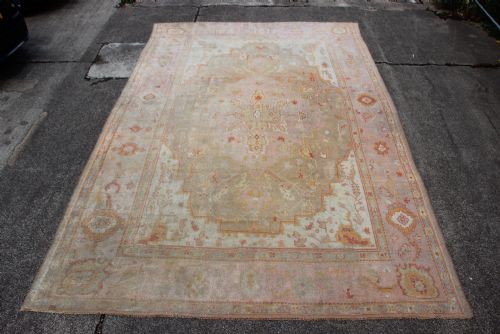
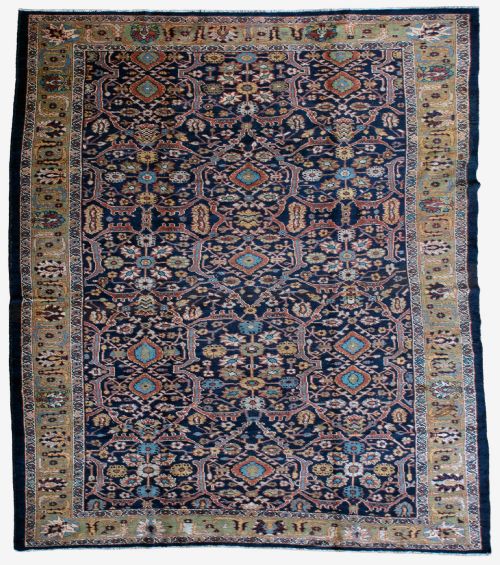
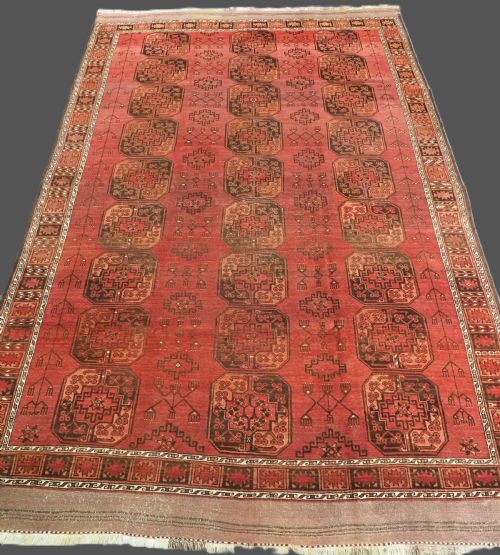
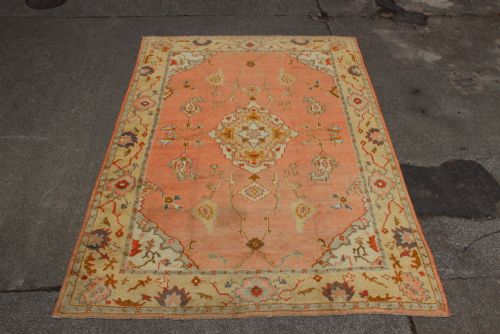
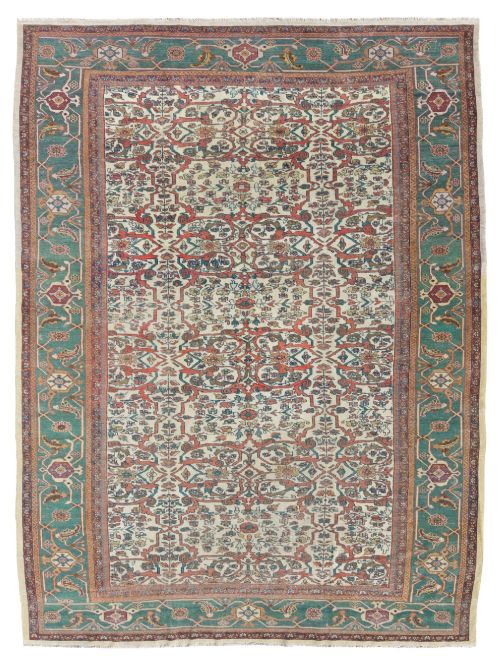
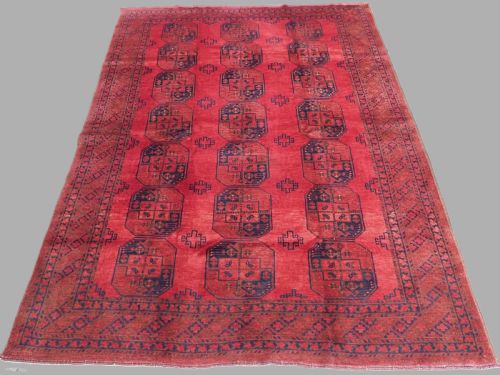
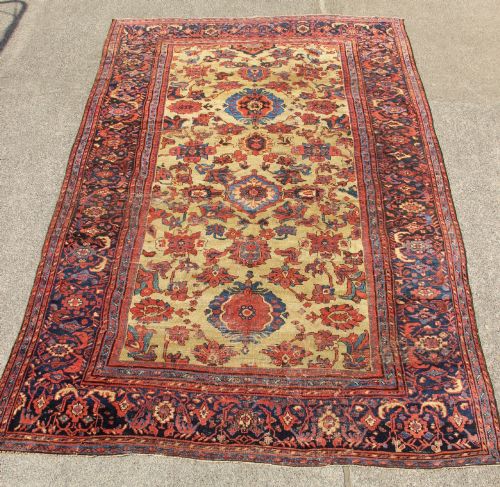
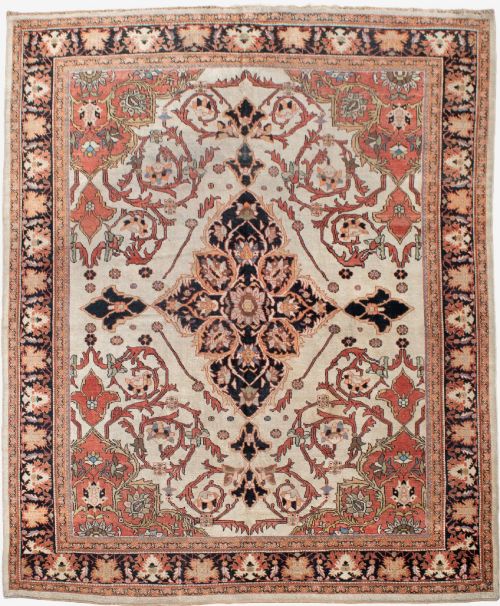
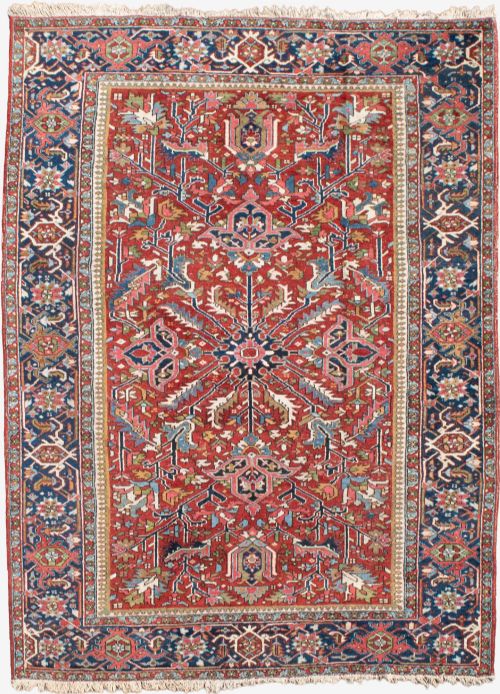
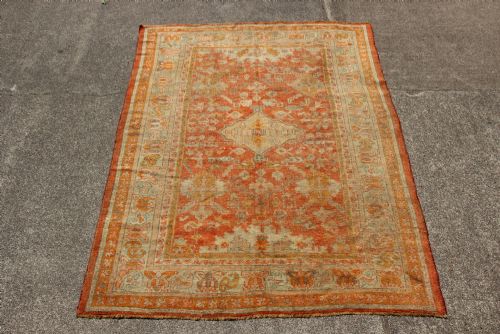
A large vintage oriental rug encompasses room-sized carpets and area rugs woven across Persian, Anatolian, and Turkmen regions from the mid-nineteenth century through the 1940s. These pieces include specific regional styles such as Heriz, Oushak, Mahal, and Sultanabad, alongside village and tribal formats like Ersari, Afshar, and Luri.
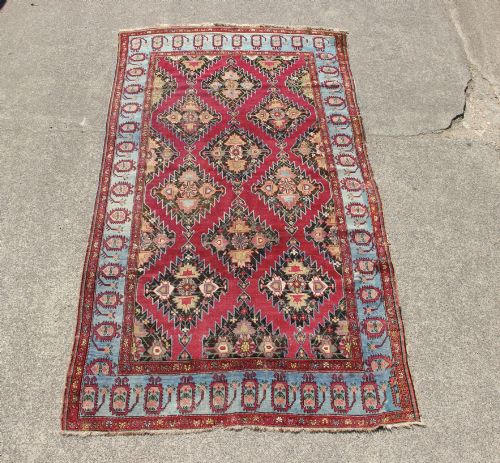
Buyers seeking this phrase encounter room-sized carpets from the 1880s, 1900s, and 1920s, which were produced in towns, villages, and nomadic camps. The inventory leans heavily toward large Persian carpets featuring traditional geometric and all-over designs.
The format serves substantial living spaces, country house reception rooms, and hallways, utilising grand proportions that often exceed four metres in length.
Materials and construction
These carpets are constructed with hand-knotted wool pile set onto a sturdy cotton or wool foundation, utilising traditional upright looms. Natural dyes yield warm reds, pale blues, and ivory grounds that soften gracefully over decades of use.
The density of the knotting and the preparation of the fibres dictate the drape and structural resilience of each piece, whether woven in a city workshop or a village tent.
Nomadic weavers frequently incorporated small spontaneous irregularities into their geometric borders, leaving a personal signature in the wool.
Evaluating individual pieces
The calibre of a rug rests upon the harmony of its palette, the crispness of the drawing in the geometric or floral motifs, and the integrity of the foundation. Master weavers in centres like Tabriz or Heriz achieved greater precision and depth of colour compared to simpler village productions.
Distinction also arises from the scale of the design relative to the format of the carpet, where balanced proportions and well-executed borders elevate the presence of the piece within a room.
The Large Vintage Oriental Rug Glossary
- Heriz
- A Persian carpet style from the north-west region, known for bold geometric medallions and robust, durable wool. These rugs frequently feature large-scale corner spandrels and strong architectural motifs.
- Oushak
- An Anatolian carpet type originating from western Turkey, characterised by softer pastel palettes and large-scale floral designs. They are woven with a looser knot and relaxed texture.
- Main carpet
- A large primary tribal rug format produced by Turkmen groups such as the Ersari, traditionally utilised for domestic and ceremonial purposes within nomadic tents.
- Foundation
- The structural base of a carpet, consisting of warp and weft threads, typically made from cotton or wool in these vintage pieces.
- Spandrel
- The triangular corner area of a rug design, situated between the outer border and the central medallion.
Large Vintage Oriental Rug: Frequently Asked Questions
How do I clean a large vintage oriental rug?
Professional specialist cleaning is essential for these delicate wool and cotton textiles to protect the natural dyes and historical fibres.
Regular gentle vacuuming without a rotating brush bar helps remove surface dust without disturbing the hand-knotted pile.
Where were these rugs made?
These pieces originate from weaving centres, villages, and nomadic communities across Persia, Anatolia, and surrounding regions.
Towns like Heriz, Oushak, Tabriz, and Sultanabad each developed distinct regional designs and knotting techniques.
How do I date an antique rug?
Dating relies on examining the structural materials, the chemical or natural composition of the dyes, and stylistic indicators within the border and field.
Comparisons with documented pieces from the nineteenth and early twentieth centuries help narrow down the period of production.
Are wool rugs durable for high-traffic areas?
Wool possesses natural oils that provide inherent resilience, making these dense hand-knotted carpets well-suited for everyday living spaces.
Using a quality underlay helps absorb foot traffic impact and prevents the rug from slipping on hard floors.