

Large Vintage Carpet
A large vintage carpet anchors a room with floor-spanning pattern, bringing generous scale and dense wool or cotton texture to an interior.
Large Vintage Carpet
A large vintage carpet is a substantial floor covering woven in wool or cotton, originating from traditions across Persia, Anatolia, China, and the Caucasus. These pieces include grand room-size carpets as well as long hallway runners, spanning periods from the mid-nineteenth century through the mid-twentieth century.
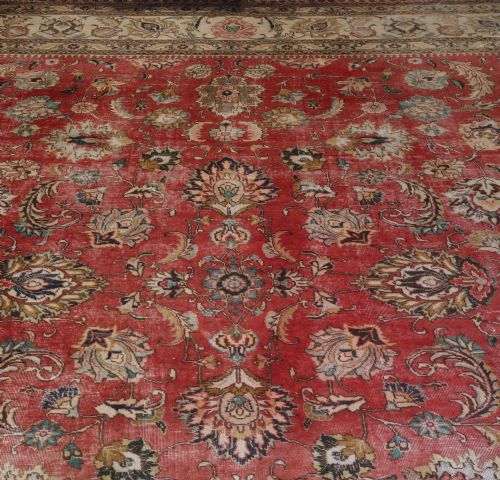
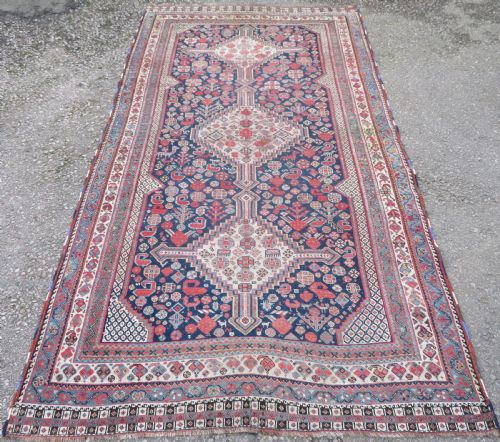
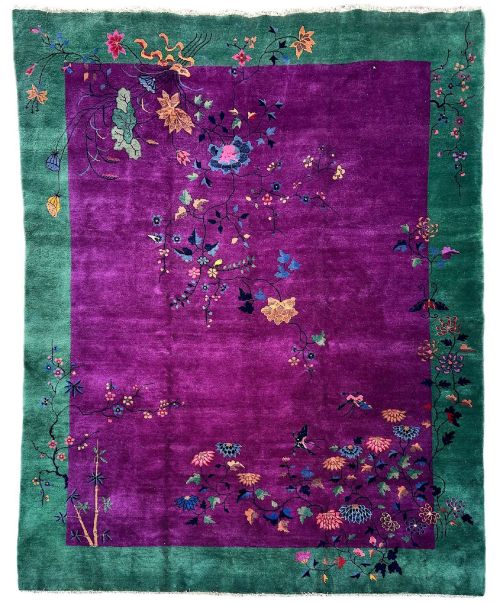
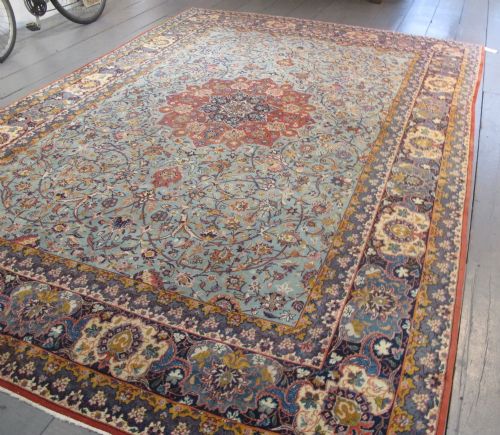
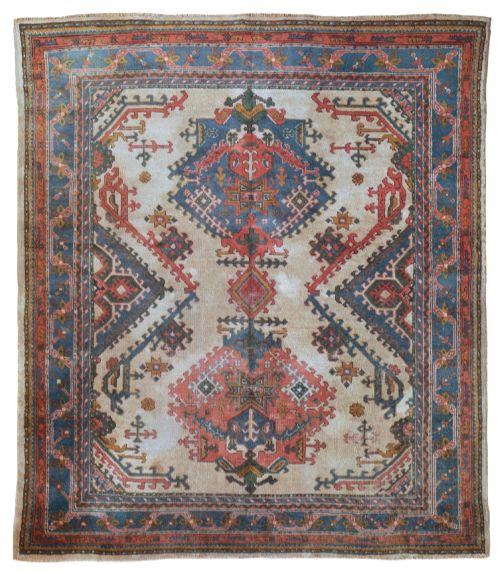
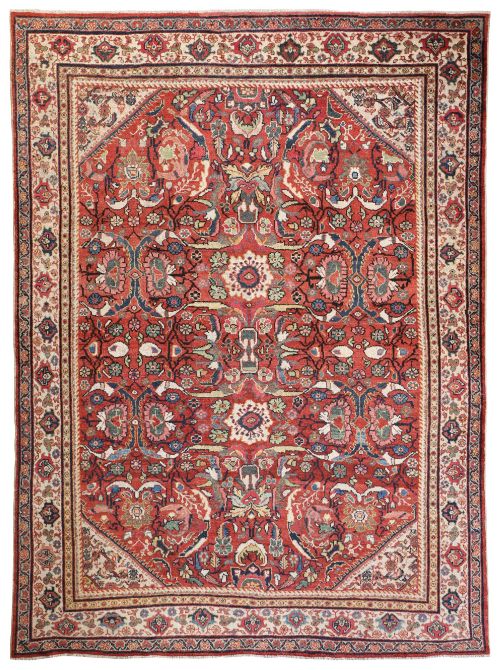
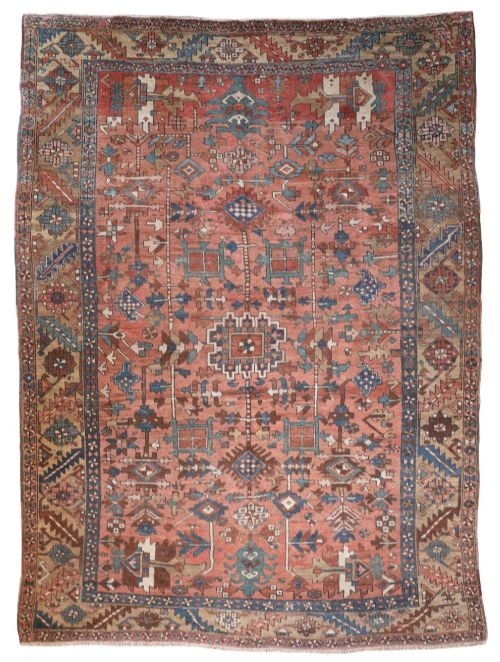
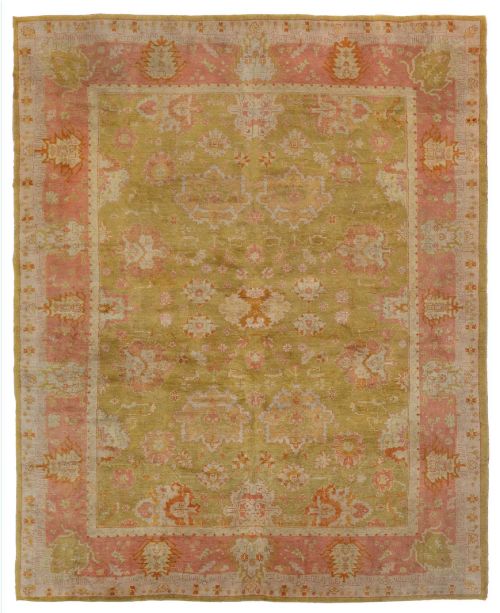
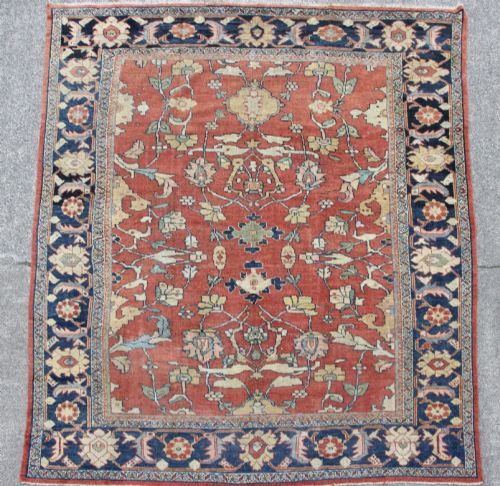
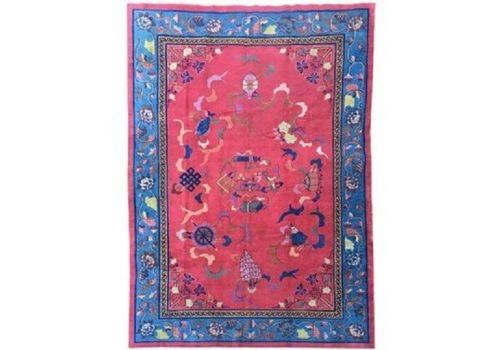
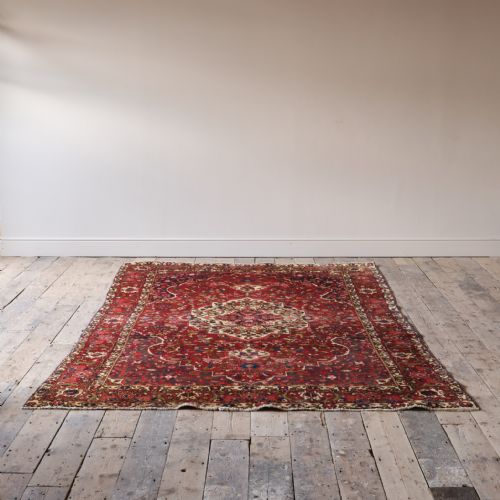
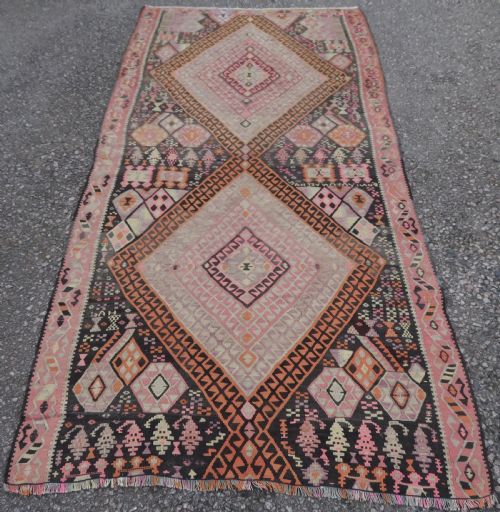
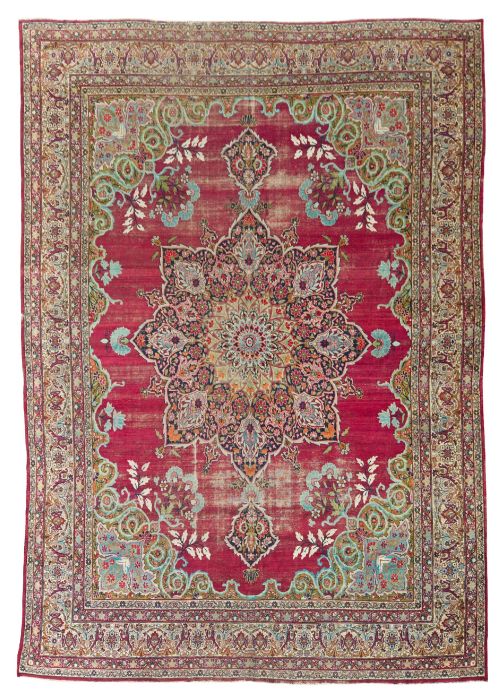
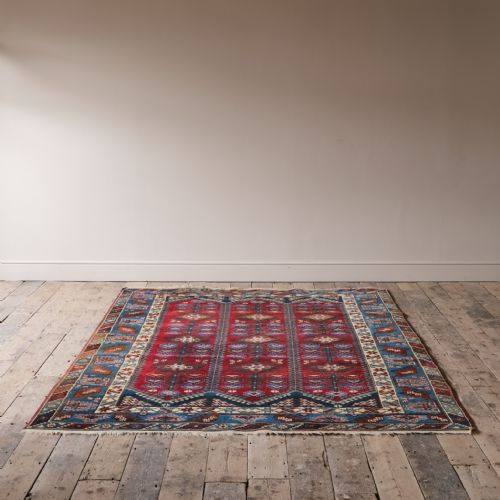
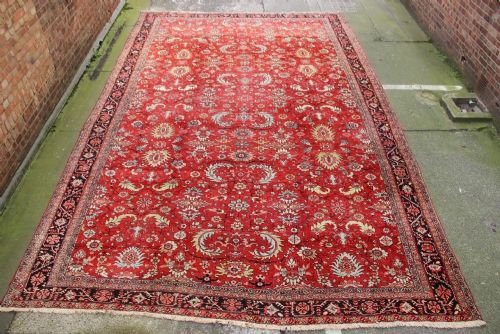
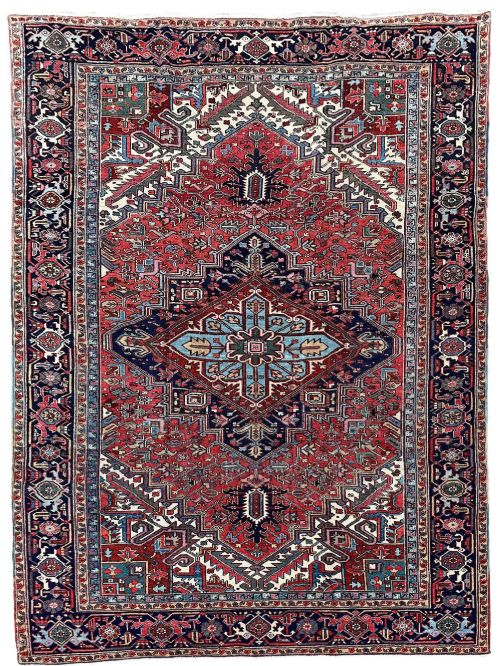
The inventory on this page consists predominantly of room-sized Persian weaves such as Heriz, Mahal, Ushak, and Tabriz carpets, alongside Chinese Art Deco pieces, Turkish kilims, and Turkmen tribal main carpets. These large formats were made to define substantial spaces, bringing complex geometric or floral compositions to drawing rooms and country house interiors.
What varies in quality
Quality rests in the precision of the weave, the clarity of the design proportions, and the depth of the palette. Finer knots and tightly packed foundations yield crisper geometric lines in Heriz pieces and more fluid floral curves in Tabriz or Ushak examples.
The handling of the wool also distinguishes the output, with some carpets showing a dense, lustrous pile that wears evenly, while others display timeworn repairs and patinated surfaces that reflect decades of active domestic use.
Large Vintage Carpet Retail Price Guide 2026
Typical asking prices for large vintage carpet among the pieces listed under this phrase on Sellingantiques today, from the lower quarter to the upper quarter. They describe what is for sale here now, not the wider market.
Some carpets carry the faded signature of the master weaver knotted directly into the border, quietly claiming authorship across a century.
The Large Vintage Carpet Glossary
- Kilim
- A flatwoven carpet or rug made without a pile, produced across Anatolia and other weaving regions. These textiles rely on interlocking weft threads to create sharp geometric patterns.
- Main carpet
- A large tribal format traditionally woven by Turkmen and related groups for ceremonial or domestic use. These pieces often feature repeating güll motifs across a deep red field.
- Pile
- The upright yarn loops or cut ends that form the soft surface of a carpet. Pile height varies depending on whether the piece is a heavy village weave or a finely knotted city carpet.
- Foundation
- The underlying structure of warp and weft threads that supports the knots of a carpet. Cotton foundations provide dimensional stability for large room-size formats.
- Flatweave
- A textile constructed by interlacing warp and weft threads without adding knotted pile. This technique creates a thinner, reversible floor covering.
Large Vintage Carpet: Frequently Asked Questions
How do I choose the right size?
Measure your room to allow a uniform border of exposed floorboards or surround between the edge of the carpet and the skirting boards. A large format should ideally sit beneath the primary furniture group to anchor the seating arrangement.
Consider the traffic patterns in the space. Hallway runners suit narrow corridors, while broad room-sized carpets work best in open reception rooms where heavy furniture rests partially or fully on the pile.
How do I care for a vintage carpet?
Vacuum the surface regularly on a low suction setting without a rotating brush roll to prevent pulling the wool pile. Professional cleaning by a specialist in antique textiles removes embedded grit safely.
Rotate the carpet periodically to ensure even exposure to foot traffic and sunlight. Placing a quality underlay beneath the piece prevents slipping and cushions the foundation against hard floors.
How can I tell different regional styles apart?
Regional styles reveal themselves through distinct palette choices, structural densities, and motif structures. Heriz carpets typically display bold geometric medallions with large corner spandrels, whereas Ushak pieces favour softer, open fields with large floral palmettes.
Tribal weaves from the Caucasus, Turkmen groups, or Anatolia often incorporate repeating geometric symbols, hooked polygons, and saturated red or indigo grounds rather than flowing city-style floral scrolls.
Where were these carpets originally used?
Many of these large formats were produced for grand country houses, urban reception rooms, and formal dining spaces where floor coverings projected status and warmth. Smaller tribal and village carpets served domestic functions in nomadic tents or rural dwellings.
European and American markets also commissioned specific sizes and palettes from workshops in Tabriz, Ushak, and Amritsar during the late nineteenth and early twentieth centuries to suit Western interior fashions.