
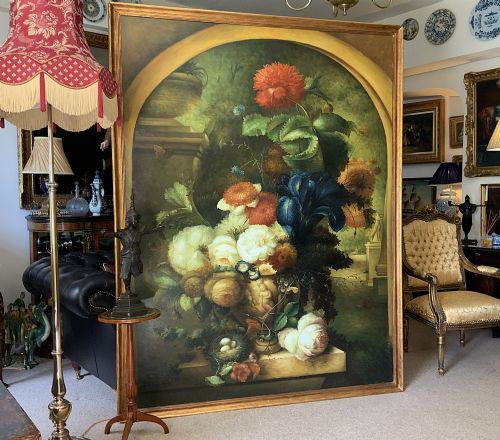
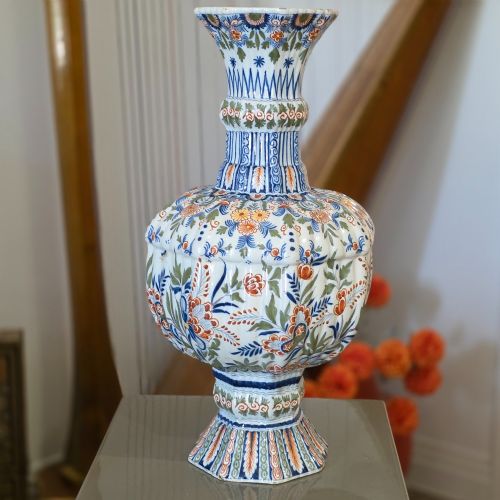
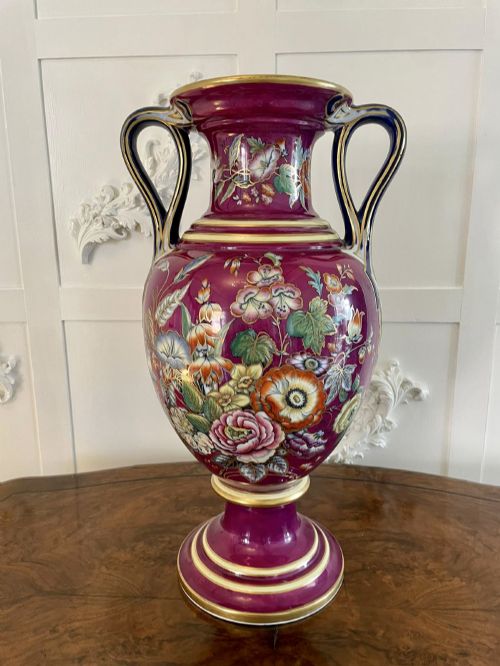
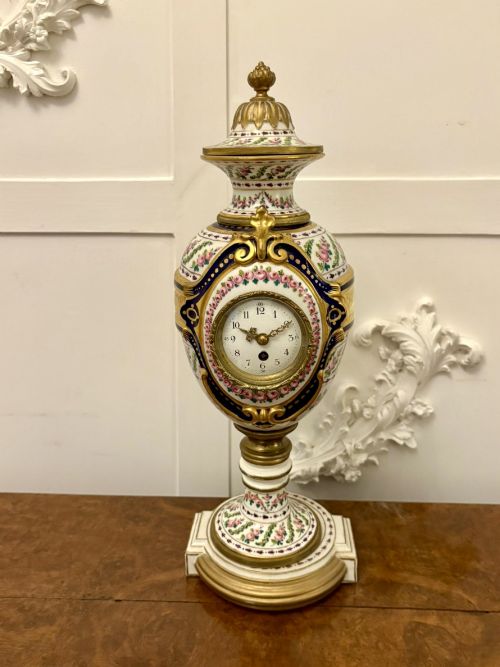
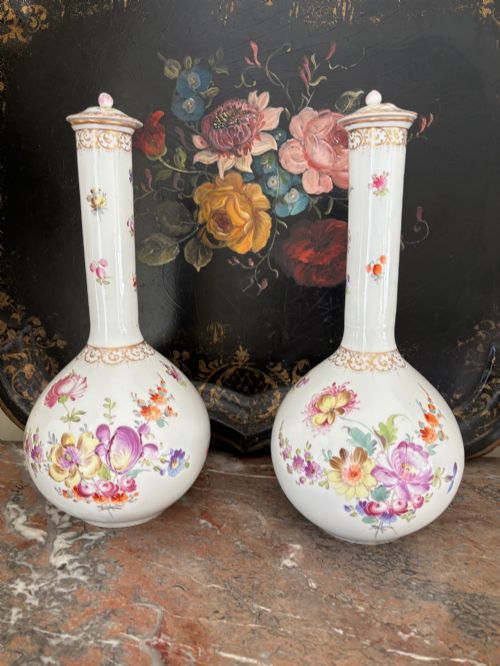
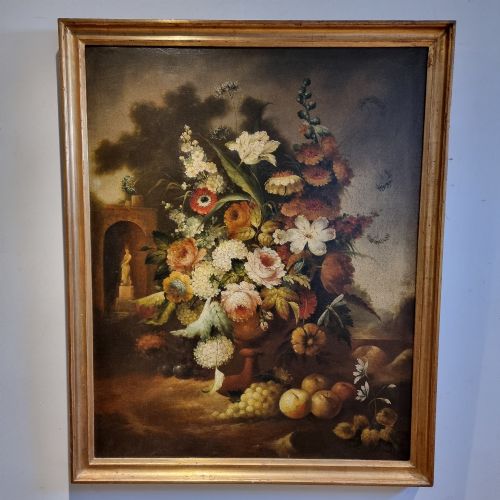
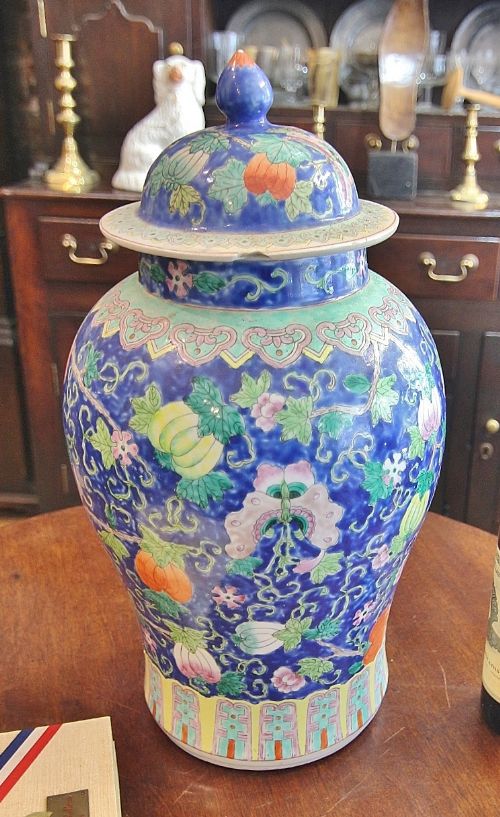


Large Urn Floral Painting
These large urn floral painting examples bring striking scale and botanical hand-painted detail into a room.
Large Urn Floral Painting
When searching for a large urn floral painting, buyers encounter substantial decorative vessels, mantel clocks, and painted panels originating across the nineteenth and twentieth centuries. These objects combine significant physical scale with botanical or still life painted motifs across diverse international traditions.
The pieces on this page lean heavily toward nineteenth-century European porcelain and earthenware alongside Japanese ceramic forms from the Meiji period. Vases and lidded urns dominate the selection, frequently featuring hand-painted floral decoration upon glazed surfaces.
European factories and Japanese makers alike produced these sizeable display pieces to anchor principal reception rooms. Collectors today select them for their commanding presence and the intricacy of their painted botanical subjects.
Factors of quality
Quality rests upon the precision and artistic merit of the hand-painted floral decoration across the ceramic surface or panel. Superior examples display confident, nuanced brushwork with careful attention to botanical form and colour harmony.
The ambition of the form itself dictates distinction, separating standard production vessels from exceptional twin-handled urns, lidded jars with crown covers, and integrated mantel clocks. Heavier moulding and sophisticated finishing on handles and rims elevate certain pieces above simpler counterparts.
Some Victorian pot pourri jars still retain a faint whisper of dried rose petals after more than a century.
Sitzendorf·Kinkozan·Royal Doulton·Poole Pottery·Burmantofts Faience·Royal Worcester
The Large Urn Floral Painting Glossary
- Porcelain
- A hard, fine-grained ceramic fired at high temperatures until vitrified. It provides a smooth, white canvas ideal for detailed hand-painted floral decoration.
- Imari
- A traditional Japanese style of ceramic decoration defined by a distinctive palette of cobalt blue, iron red, and gilding. These wares were widely produced for export during the nineteenth century.
- Ewers
- Pitcher-like vessels featuring an elongated spout and a grand handle. They serve primarily as decorative display items in this scale.
- Pot pourri jar
- A lidded vessel perforated to diffuse fragrance from dried flowers and spices. They often feature elaborate crown covers and hand-painted rose motifs.
- Gilding
- The application of gold leaf or powdered gold paint to ceramic or wooden surfaces. It highlights structural details and adds luminous contrast to painted panels.
Large Urn Floral Painting: Frequently Asked Questions
Where were these large painted urns displayed?
These sizeable decorative objects traditionally stood on mantelpieces, pedestals, or large side tables in nineteenth-century drawing rooms and parlours.
Their substantial scale allowed them to serve as architectural focal points within grand interior spaces.
How do I care for antique painted porcelain?
Clean surfaces gently with a dry or barely damp microfiber cloth to protect delicate hand-painted enamel and gold leaf details.
Avoid harsh chemical cleaners and keep these pieces away from direct, prolonged sunlight to prevent fading of the floral pigments.
What is the difference between Satsuma and Imari wares?
Satsuma ceramics typically feature a warm, ivory-crackled earthenware glaze decorated with polychrome enamels and dense gilding.
Imari wares utilise a harder porcelain or semi-porcelain body characterised by a strict palette of cobalt blue underglaze and iron red overglaze.
How are pot pourri jars different from standard vases?
Pot pourri jars incorporate pierced covers or crown lids designed specifically to release botanical scents into a room from dried contents.
Standard vases feature solid, sealed rims intended strictly to hold water and fresh stem arrangements or simply to stand empty as decorative art.