




Large Terracotta Rug
A large terracotta rug brings enduring warmth and grounding presence to a room, drawn from traditional Persian, tribal, and Anatolian weaving heritage.
Large Terracotta Rug
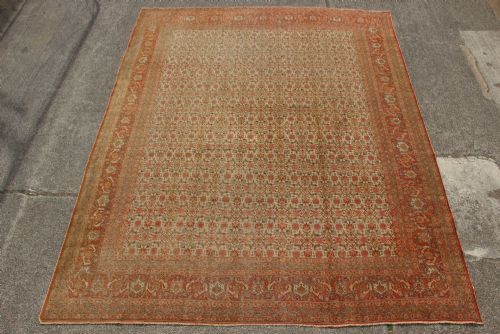
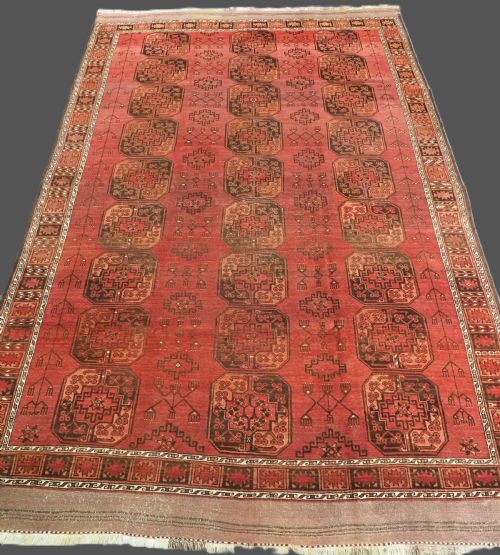
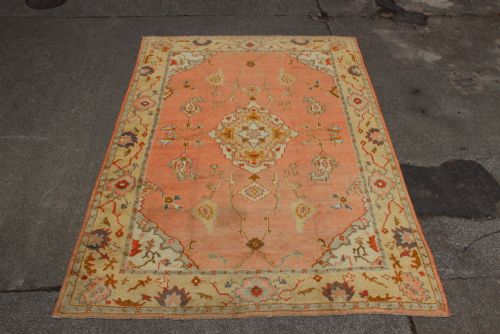
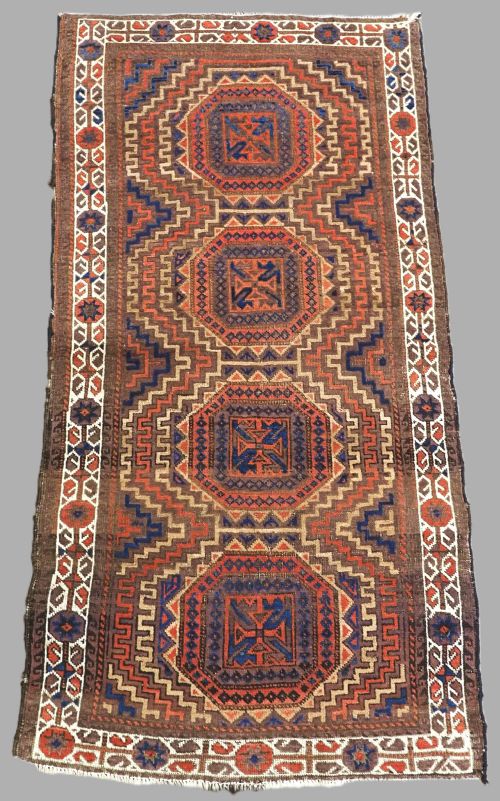
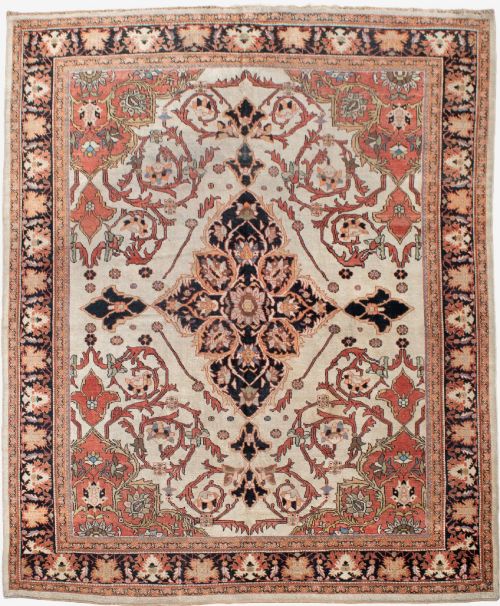
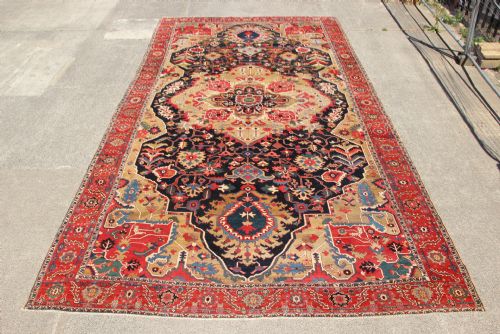
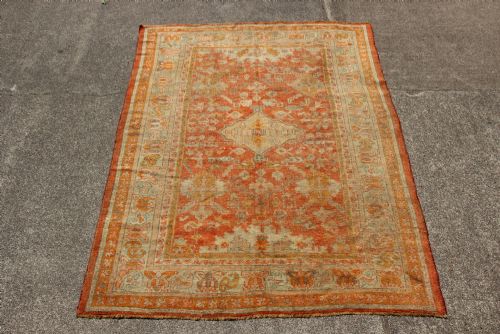
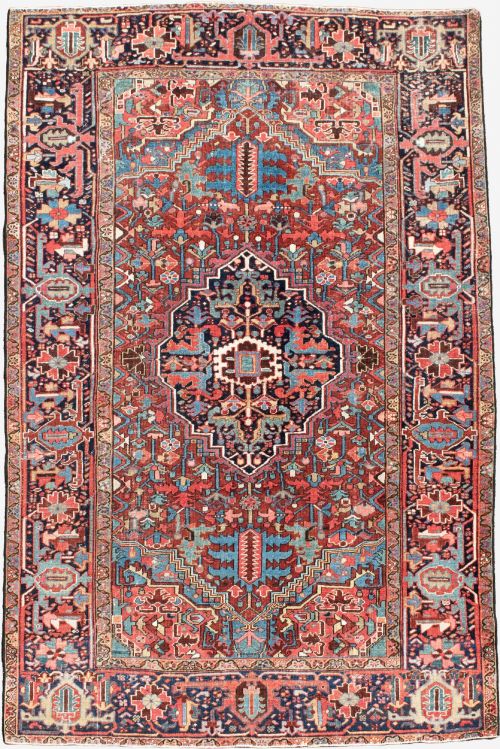
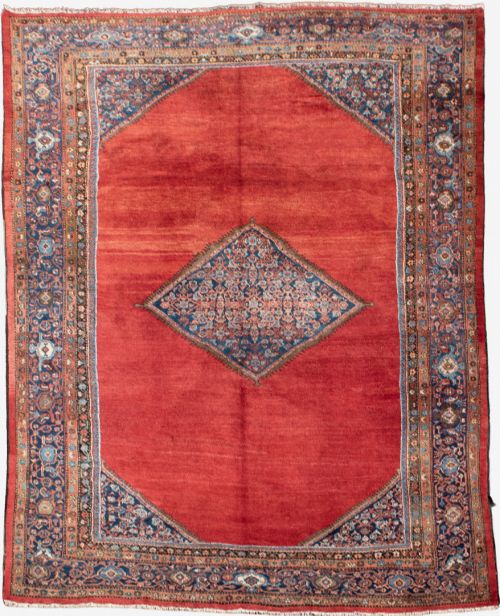
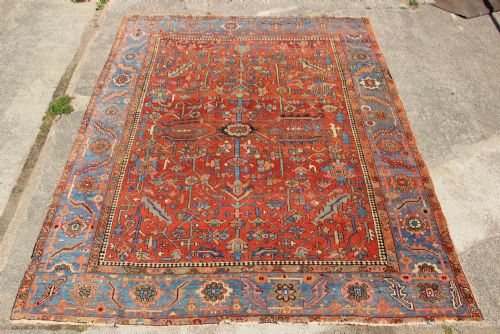
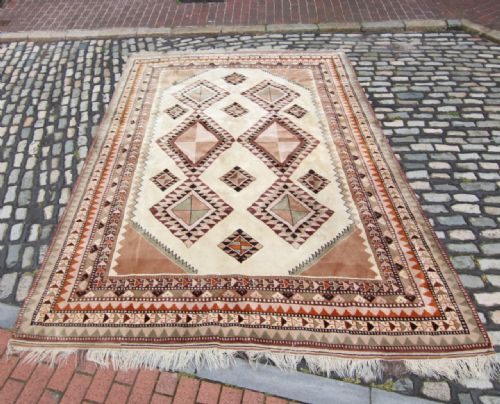
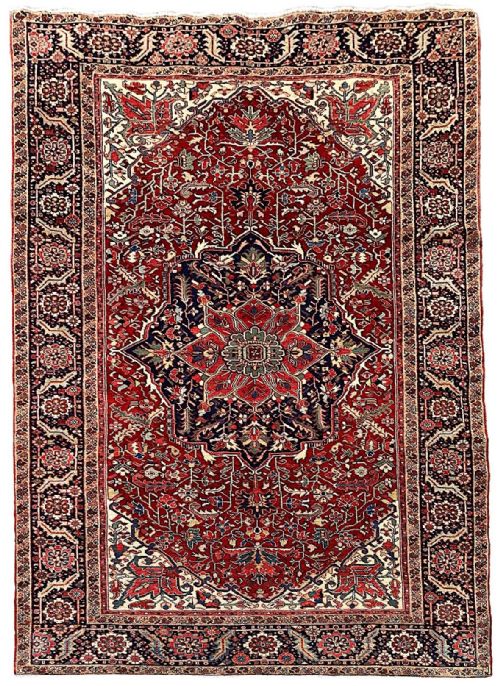
A large terracotta rug encompasses substantial floor coverings originating from the nineteenth and early twentieth centuries, dominated by rich earthy tones and brick-red grounds. These pieces include grand room-size carpets and runner formats designed for heavy domestic use in major reception spaces.
The selection centres heavily upon Persian and regional tribal weaving styles, with Heriz, Oushak, and Kurdish workshop products appearing frequently alongside Turkmen and Afghan pieces. Buyers encounter room-sized formats and oversize examples woven with medallion layouts or all-over geometric and floral schemes.
These floor coverings reflect the distinct aesthetic preferences of nineteenth and early twentieth-century village and city workshops across Persia, Turkey, and Central Asia. Each specimen serves as a tangible record of regional dyeing traditions and floor-loom construction methods.
What varies in quality
Quality rests upon the fineness of the knotting and the complexity of the pile work, which together determine how sharply the geometric or floral motifs are defined. Tighter construction and carefully prepared wool create greater durability and resilience under foot traffic.
The depth and consistency of the natural dye palette also dictate the visual strength of the piece, as rich madder-based terracotta tones display subtle variations in shade known as abrash. Artisans who maintained precise symmetry and balanced proportions produced pieces with superior structural integrity and aesthetic harmony.
Woven entirely by hand under nomadic tents and in village workshops, these carpets often carry the stray wool fibres of the family's livestock.
The Large Terracotta Rug Glossary
- Pile
- The upright yarn loops that form the soft surface of the rug. This upper layer absorbs wear and displays the woven design.
- Warp
- The vertical threads stretched tightly on the loom before weaving begins. These foundational strands run parallel from one end of the carpet to the other.
- Weft
- The horizontal threads passed across the warps between rows of knots. They bind the structure together and keep the tension firm.
- Gul
- A repeating medallion or octagonal motif found frequently in tribal weaving. These geometric emblems often identify specific regional clans or groups.
- Abrash
- A natural variation in colour shading caused by shifts in dye batches or hand-spun wool. This subtle tonal banding adds visual depth to the field.
Large Terracotta Rug: Frequently Asked Questions
How do I place a large terracotta rug?
Position the piece centrally within a large room, ensuring that furniture legs rest comfortably upon the field to anchor the seating arrangement.
Allow surrounding floorboards or borders to remain visible to frame the proportions of the carpet effectively.
Which regions produced these carpets?
Production spans traditional weaving centres across Persia, Anatolia, and Central Asia, including workshops in Heriz, Oushak, and Bidjar.
Tribal groups such as the Ersari Turkmen and Qashqai also contributed distinct geometric formats to this enduring tradition.
How do I care for antique wool carpets?
Vacuum the pile gently utilising a standard suction attachment without a rotating brush roll to prevent fibre distortion.
Rotate the floor covering periodically to distribute foot traffic evenly across the surface and balance natural light exposure.
How are different regional styles distinguished?
Examine the primary medallion structure, corner spandrels, and border arrangements to identify specific village or workshop origins.
Heriz carpets typically feature bold geometric medallions, whereas Oushak specimens display softer floral layouts with muted secondary tones.