

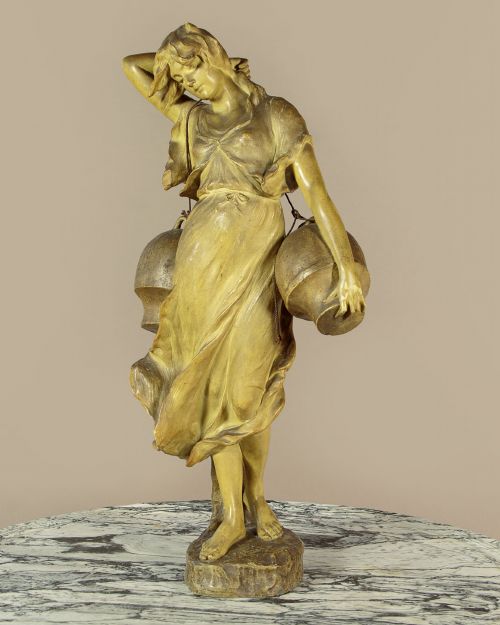


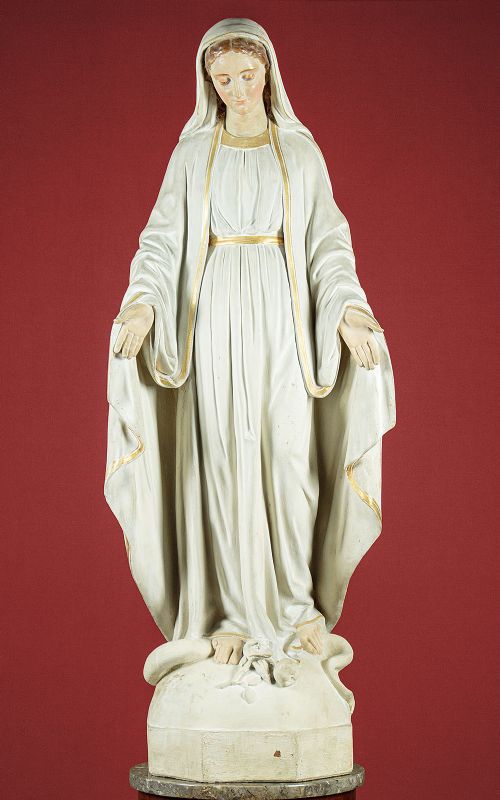


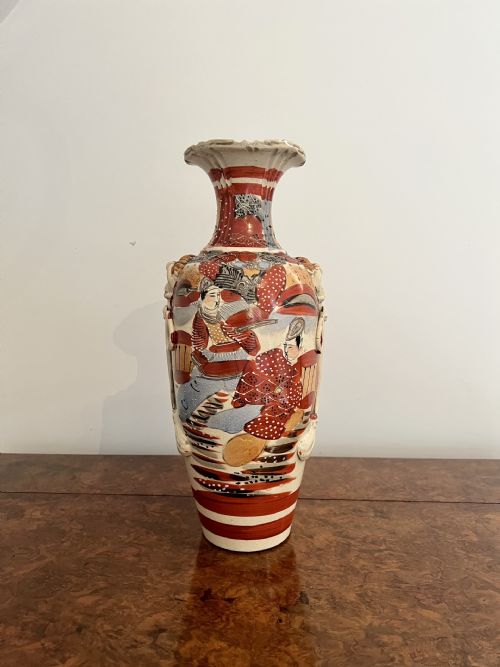
Large Terracotta Figure
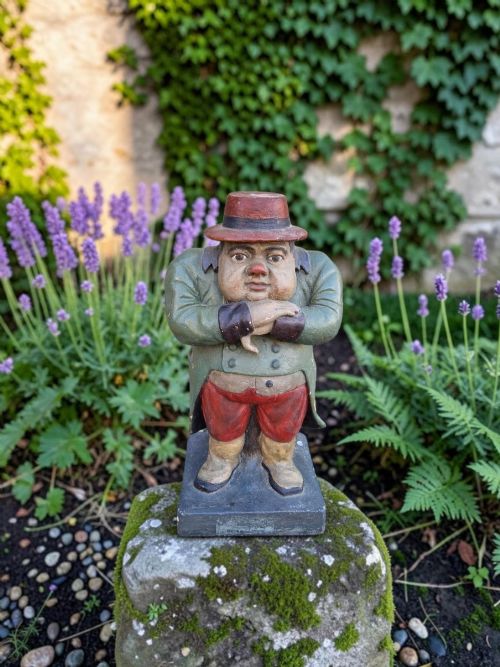
A large terracotta figure brings monumental presence to a room, cast in baked earth and finished with surface colour or glaze.
Large Terracotta Figure
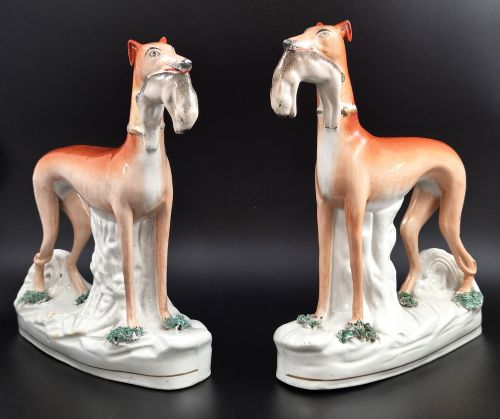
A large terracotta figure stands as a substantial sculptural work shaped from baked clay, often taking the form of humans, animals, or mythological subjects. When searching for a large terracotta figure, buyers encounter robust works spanning multiple centuries and aesthetic movements.
The selections on this page encompass varied global origins and periods, ranging from nineteenth-century European pottery to ancient styles. Forms stretch from architectural lions and dogs to classical figures, dancers, and religious subjects.
Makers utilised diverse regional traditions, resulting in pieces that function as garden ornaments, focal sculptures, or heavy bookends. Each object displays the distinct sculptural ambition of its era, whether Victorian, Art Nouveau, or Art Deco.
What varies in quality
Surface finish significantly dictates the character of the object, where expertly applied paint, glaze, or enamel remains crisp and harmonious with the underlying ceramic body. The preservation of original surface treatments reflects the care a piece has received over generations.
Large Terracotta Figure Retail Price Guide 2026
Typical asking prices for large terracotta figure among the pieces listed under this phrase on Sellingantiques today, from the lower quarter to the upper quarter. They describe what is for sale here now, not the wider market.
Listings feature works spanning from pre-sixteenth-century pottery to the Art Deco era, utilising terracotta, earthenware, porcelain, and gold leaf.
Goldscheider·Royal Dux·Bernard Bloch
The Large Terracotta Figure Glossary
- Terracotta
- A porous, brownish-red earthenware clay that is fired unglazed or painted, forming the primary medium for these sculptures.
- Earthenware
- Pottery fired at relatively low temperatures which remains porous unless glazed, providing the base material for many antique figures.
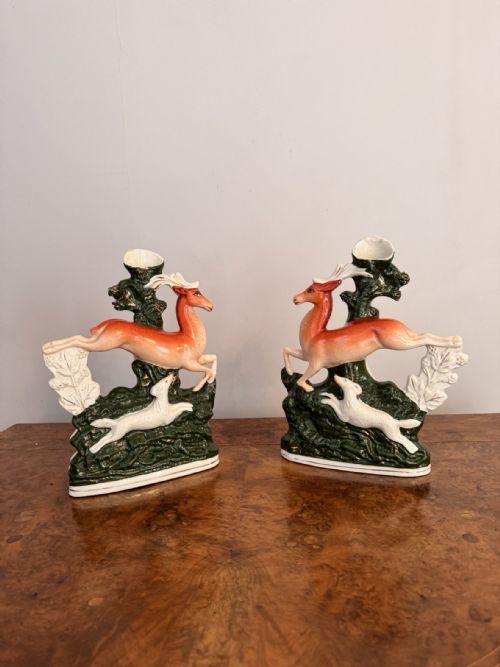
- Spill vase
- A hollow hollowed-out figure or vessel designed to hold taper spills for lighting fires or candles, common in nineteenth-century Staffordshire ceramics.
- Putti
- Depictions of chubby male infants, often winged, derived from classical art and frequently seen in Italian and Victorian decorative sculpture.
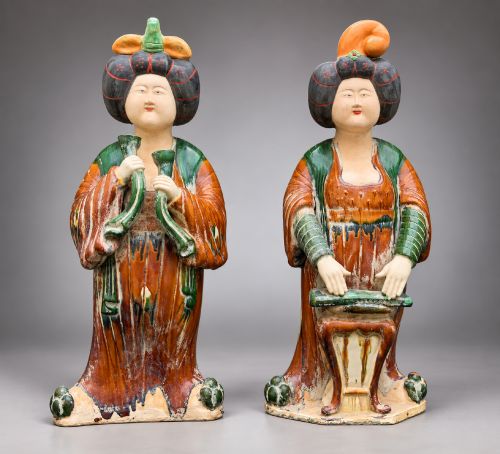
- Sancai
- A traditional type of Chinese three-colour glaze used on pottery, typically combining amber, green, and creamy white tones.
Large Terracotta Figure: Frequently Asked Questions
Where should I place a large terracotta figure?
These substantial pieces demand a stable surface or floor placement where their weight can be safely supported. They work effectively as focal points in hallways, living rooms, or sheltered garden spaces.
Because terracotta reacts to extreme moisture fluctuations, indoor placement is generally safest for painted or unglazed examples, while hardier fired ceramics can occupy protected outdoor areas.
How do I clean a terracotta figure safely?
Dust the surface regularly with a soft, dry brush to prevent particulate buildup in the crevices of the modelling. Avoid using water or liquid cleaners on painted or enamel surfaces, as moisture can lift historic finishes.
Glazed ceramic versions tolerate a gentle wipe with a barely damp cloth, provided the glaze is intact and free from hairline cracks.
How can I tell the period of a figure?
Examine the stylistic markers, such as the flowing organic lines characteristic of Art Nouveau or the geometric precision of Art Deco. The style of dress, hair, and the base execution often align with specific nineteenth or early twentieth-century manufacturing eras.
Look closely at the underside or back for impressed maker marks, registry numbers, or country stamps that pinpoint the origin and date.
Are terracotta figures heavy?
Baked clay possesses considerable density, and works of this scale require two people to lift and position them safely. The substantial mass prevents them from tipping easily during normal display.
When arranging furniture, ensure that pedestals or shelves are rated to hold heavy ceramic weights over long periods.