
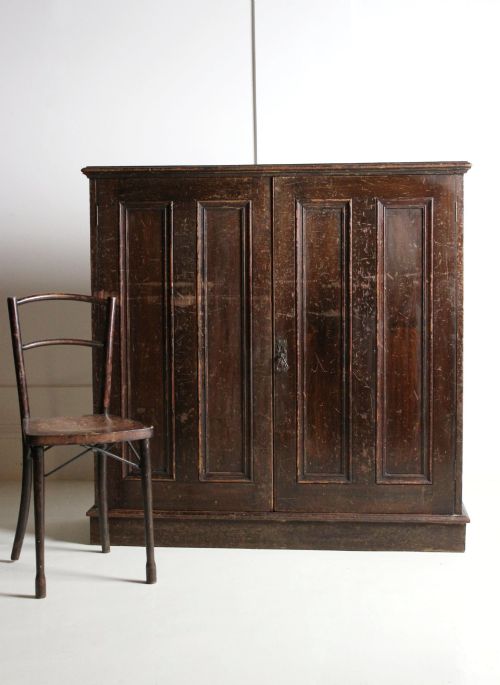
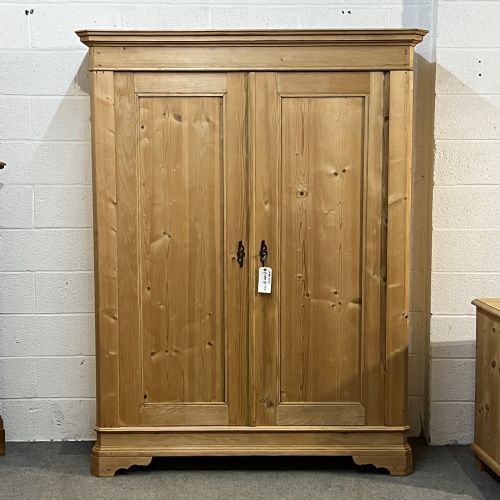
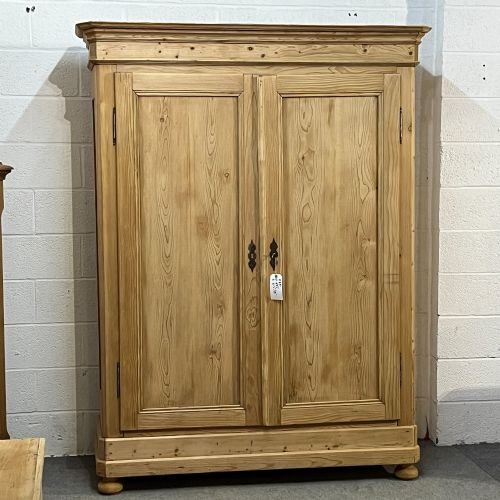
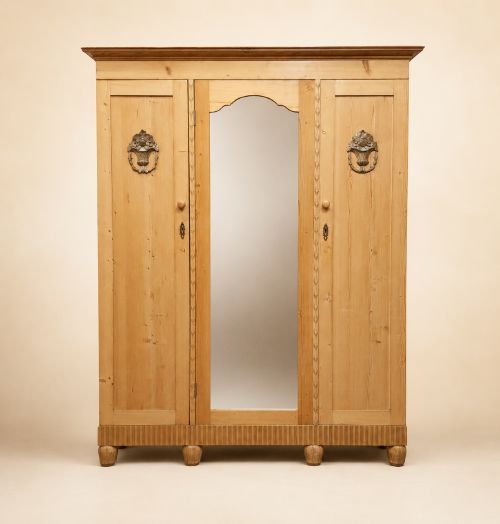
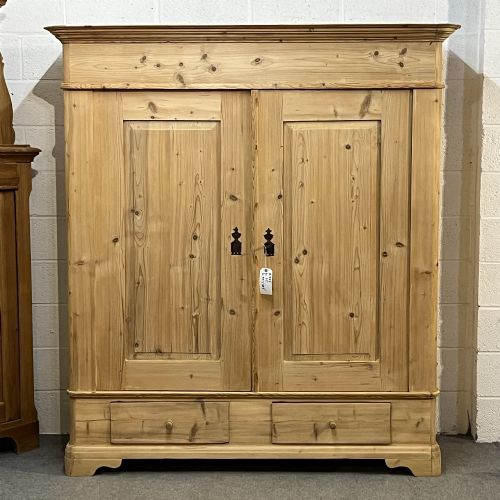
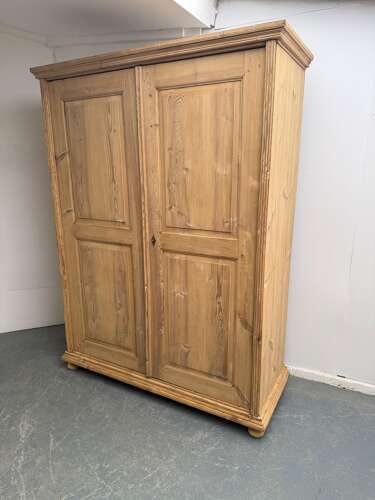
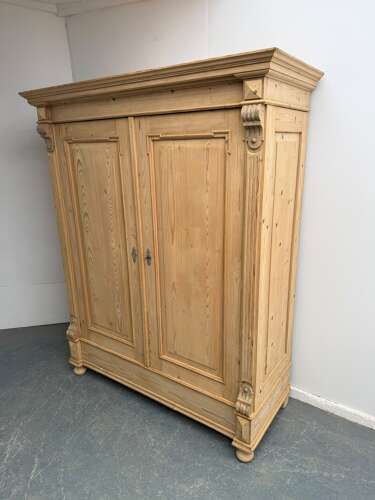
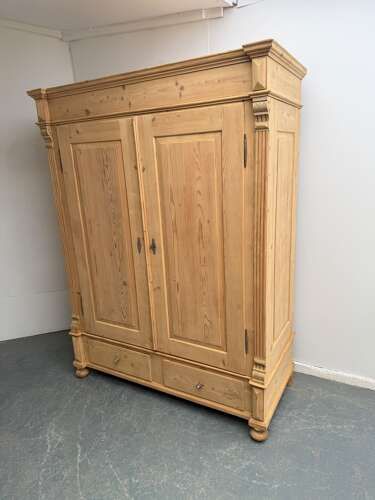
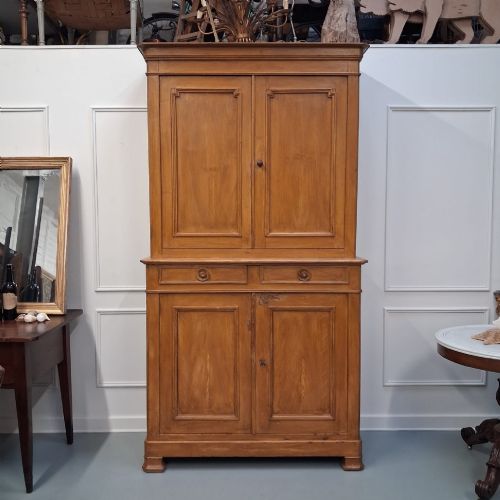
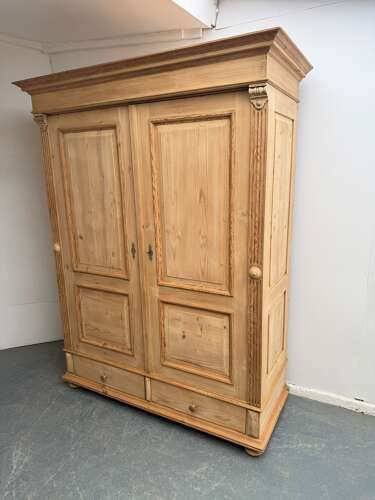

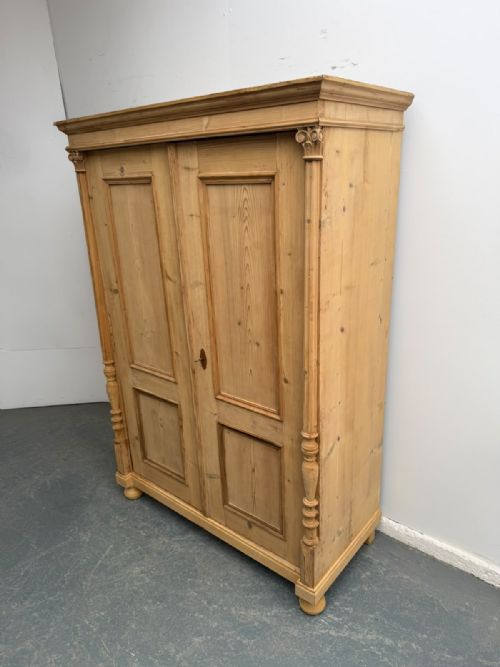
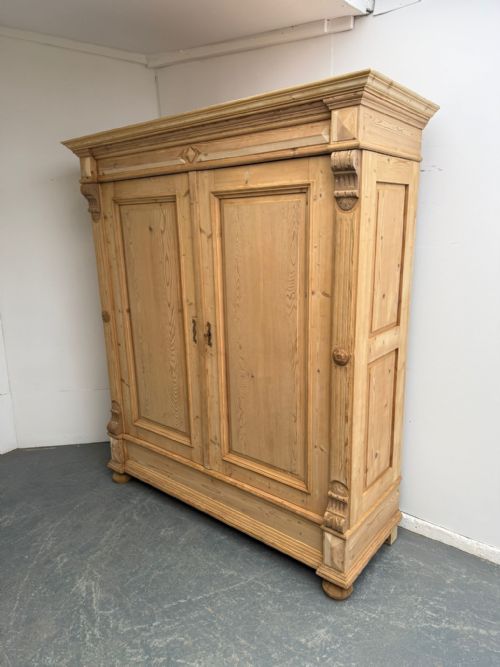
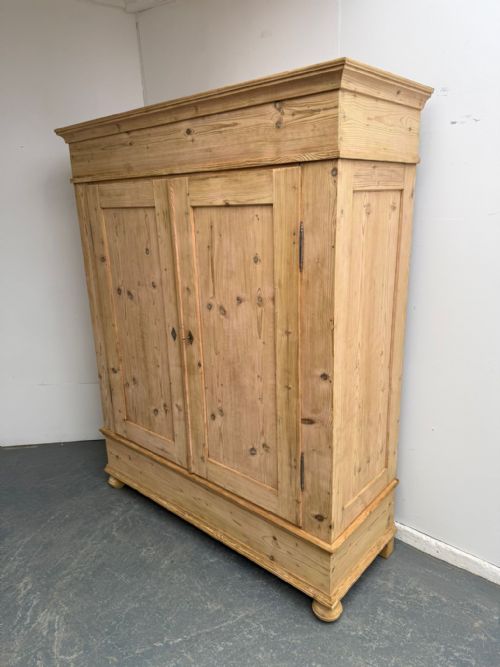


Large Pine Linen Press
A large pine linen press provides substantial storage while anchoring a room with honest domestic architecture.
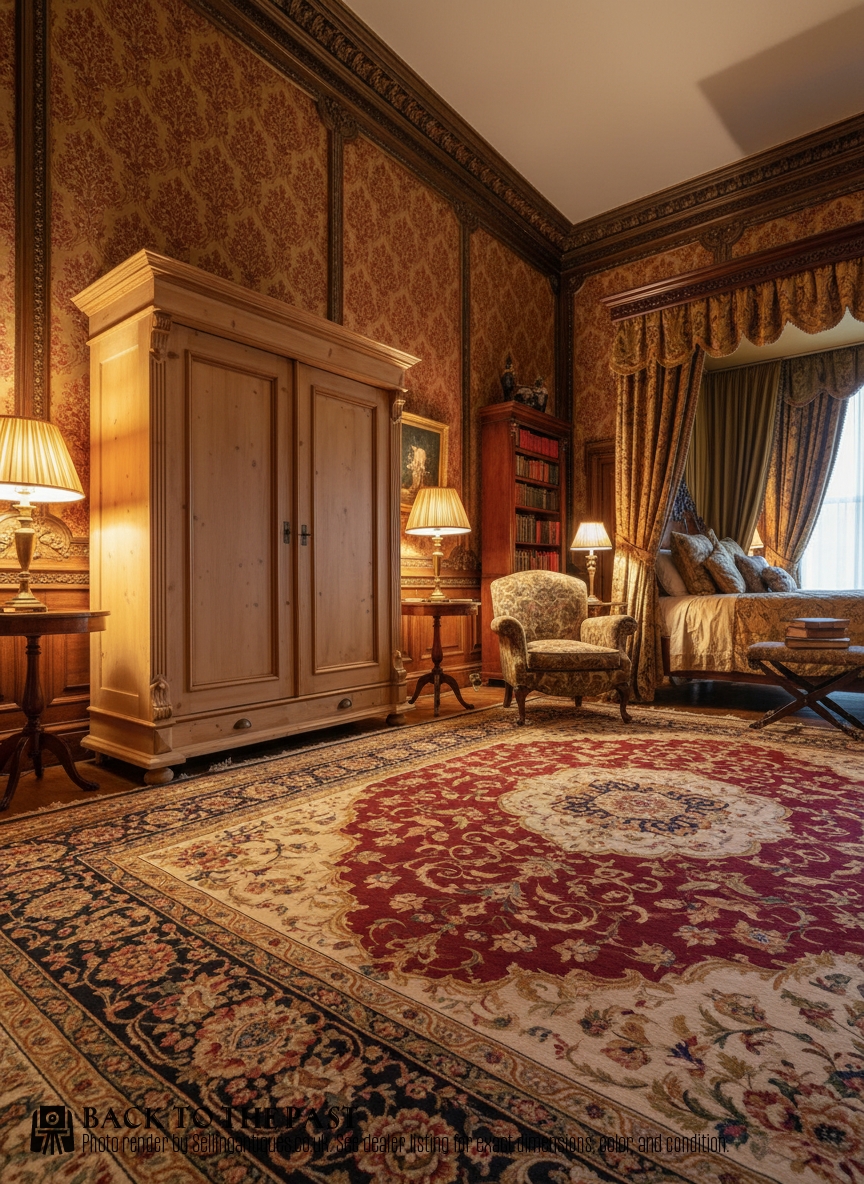
Large Pine Linen Press
A large pine linen press combines upper shelving or hanging compartments with lower drawer storage, designed for domestic organisation in country houses and town homes alike. When you search for a large pine linen press, you encounter substantial freestanding furniture pieces originating from Georgian, Victorian, and continental traditions.
Most examples found in trade span the eighteenth, nineteenth, and early twentieth centuries, constructed in regional British, Dutch, French, and Scottish workshops. The forms range from two-door knockdown wardrobes and housekeeper cupboards to architectural presses featuring deep lower drawer banks.
These pieces served utilitarian roles in large households, storing household linens, blankets, and garments before built-in closets became standard. Their generous scale demands dedicated wall space, making them a focal point in contemporary bedrooms, hallways, and dressing rooms.
How they were made
Carpenters utilised solid pine, ranging from pale European deal to dense pitch pine, alongside iron and brass hardware for hinges, handles, and locks. Many nineteenth-century versions employed a knockdown construction method using timber pegs and wedges, allowing large carcases to dismantle for transport between rooms and floors.
Surface finishes varied between natural waxing, plain or stained pine, and layers of historic paint, which protected the softwood and defined the regional aesthetic. Moulded cornices, panelled doors, and bracket or plinth feet were shaped by hand using traditional joinery techniques suited to working with softwood.
Large Pine Linen Press Retail Price Guide 2026
Typical asking prices for large pine linen press among the pieces listed under this phrase on Sellingantiques today, from the lower quarter to the upper quarter. They describe what is for sale here now, not the wider market.
The listings on this site feature pine, iron, glass, and painted wood across Georgian, Victorian, and early twentieth-century periods.
What varies in quality
Construction integrity dictates the upper tier of quality, seen in pieces that retain original knockdown pins, stable panelled doors, and unwarped timber carcases. Proportion and detailing also separate standard utility cupboards from finer architectural presses, with well-balanced cornices and harmonious drawer arrangements commanding greater visual presence.
Surface preservation marks another distinction, distinguishing examples retaining original nineteenth-century paint finishes or deep patinated wax from those stripped down to raw modern pine. Original internal shelving configurations and working brass or iron hardware preserve the functional integrity expected from regional workshops.
The Large Pine Linen Press Glossary
- Knockdown
- A piece of furniture designed to be taken apart into sections using wedges, bolts, or pegs for ease of transport. This method was essential for moving large wardrobes up narrow staircases in historic homes.
- Housekeeper cupboard
- A large storage cabinet traditionally used for provisions, tableware, or linens in large domestic service rooms. These cupboards often feature a combination of deep shelving and lower drawers.
- Cornice
- The decorative moulded projection that crowns the top of a cabinet or press. It provides a finished architectural transition between the tall carcase and the ceiling.
- Pitch pine
- A dense, resinous variety of pine timber often utilised in Victorian furniture for its distinct grain pattern and durability. It resists knocks better than softer deal varieties.
- Bombe
- A swollen or bulging profile characteristic of certain continental furniture bases, particularly Dutch presses. This curved shape requires advanced woodworking skill to form from solid timber panels.
Large Pine Linen Press: Frequently Asked Questions
How do I dismantle a knockdown wardrobe?
Knockdown wardrobes were engineered with internal wooden pegs, slot-in panels, and sometimes metal bolts that secure the top cornice, sides, and base together without permanent glue. By releasing these fixings carefully, the heavy carcase separates into manageable flat sections for relocation.
Label each component as you separate it to ensure the panels return to their exact original positions during reassembly. Having two people support the side panels prevents stress on the joints while the stabilizing pins are removed.
How do I clean and maintain waxed pine?
Waxed pine surfaces benefit from occasional feeding with a traditional beeswax polish applied with a soft cloth and buffed gently to maintain the sheen. Avoid using modern silicone-based sprays, which can build up on the soft wood and attract dust over time.
Keep antique pine furniture away from direct heat sources and strong sunlight, as rapid temperature fluctuations cause the softwood to dry out and split. Regular dusting with a dry lint-free cloth preserves the natural patina developed over generations of use.
What is the difference between a press and a wardrobe?
A traditional linen press specifically designates a tall piece of furniture featuring sliding trays or shelving in the upper section and a bank of deep drawers in the lower base. Wardrobes, by contrast, focus primarily on vertical hanging space behind full-length doors, though many nineteenth-century examples combine both storage styles.
Regional variations often blur these definitions, as Scottish, Dutch, and English cabinetmakers adapted standard carcases to suit local domestic storage requirements. Examining the interior configuration of shelves versus hanging rails clarifies how the original household utilised the piece.