
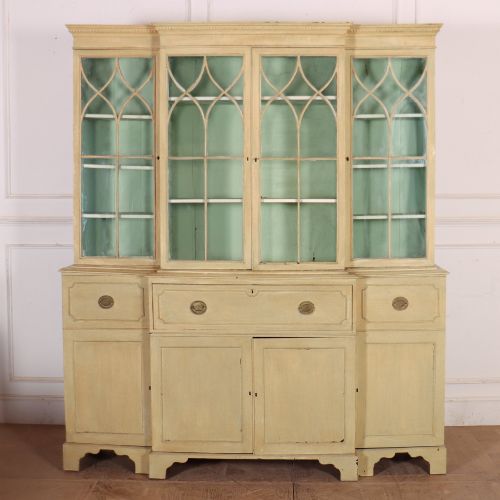
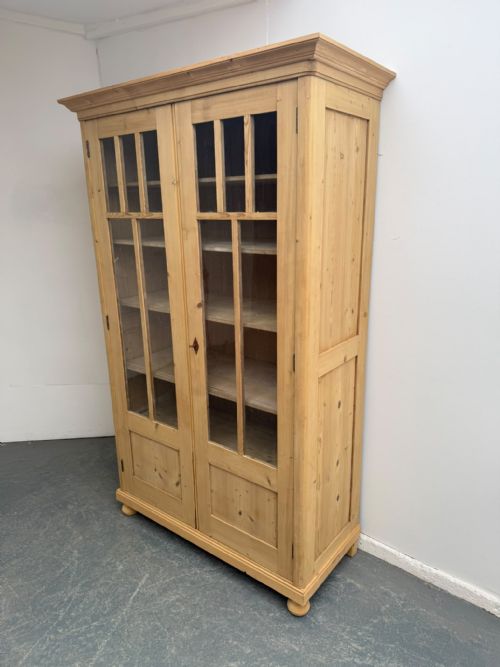


Large Painted Display Cabinet
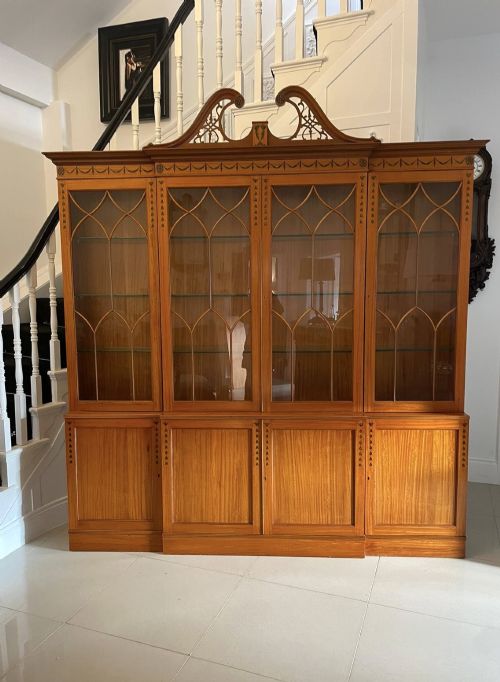
A large painted display cabinet holds books and porcelain behind glass, bringing colour and height to a room.
Large Painted Display Cabinet
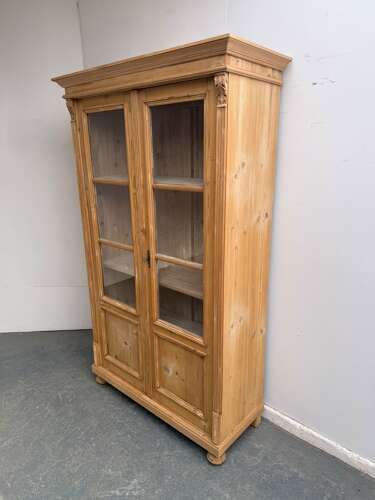
A large painted display cabinet combines substantial storage with glazed sections for showing books or ceramics. These pieces arrive from various origins including England, Scotland, Ireland, France, and Sweden, spanning the nineteenth century up to the nineteen-thirties.
The selection here leans heavily towards bookcases, library bookcases, and breakfront forms alongside glazed cupboards. Many pieces feature original painted decoration on timber such as satinwood, pine, or kingwood, often styled with Louis XVI or Sheraton Revival influences.
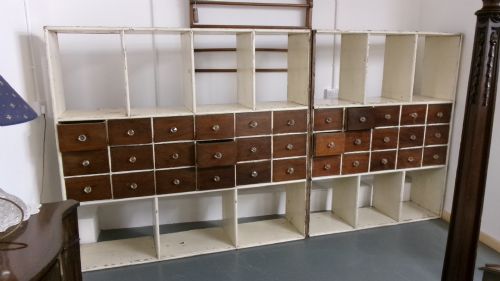
Buyers also encounter variations like architectural bookcases, shop fittings, and vitrines mounted with ormolu. Each item offers deep shelving and glazed doors designed to protect contents while maintaining visibility across the room.
Materials and construction
Makers built these cabinets using foundational timbers like pine and satinwood, applying paint, gold leaf, and wax finishes to the exterior surfaces. Glazing bars divide the glass panes, creating astral patterns or simple geometric grids across the front doors.
Joinery techniques include breakfront construction to give the facade depth and rhythm. Cabinetmakers incorporated brass hardware and occasionally mounted ormolu details to elevate the visual weight of the woodwork.
A good fifty-drawer shop fitting keeps even the most enthusiastic collector sorting buttons for weeks.
Assessing the standard
Quality rests in the preservation of original painted decoration and the precision of the timber joinery. Satinwood cabinets with intact painted motifs sit at a different level from standard pine pieces prepared for later paint.
The execution of glazing bars and the weight of the timber define the architectural presence of the cabinet. Finer examples display balanced breakfront proportions and carefully fitted glass rather than simple utility construction.
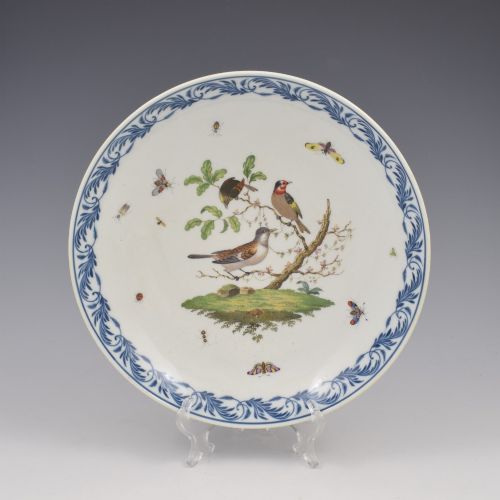
Meissen·Royal Worcester·Minton·Vienna Porcelain·Sevres
The Large Painted Display Cabinet Glossary
- Breakfront
- A cabinet design where the central section projects forward from the flanking wings. This configuration adds architectural depth and breaks up a flat wall.
- Astral glazed
- Door glass divided into small panes by narrow wooden bars, often forming complex geometric shapes. This method creates a lighter visual appearance than a single large sheet of glass.
- Vitrine
- A glass-sided display cabinet intended for porcelain and decorative objects. These items typically feature glazed panels on the sides as well as the doors to maximise light.
- Ormolu
- Gilt-bronze mounts applied to furniture for decorative effect. It appears frequently on pieces influenced by French styling.
- Vernis Martin
- A type of simulated Japanese lacquer developed in France, using translucent varnish over painted decoration. It provides a glossy, layered finish on high-end cabinets.
Large Painted Display Cabinet: Frequently Asked Questions
How do I style a large painted display cabinet?
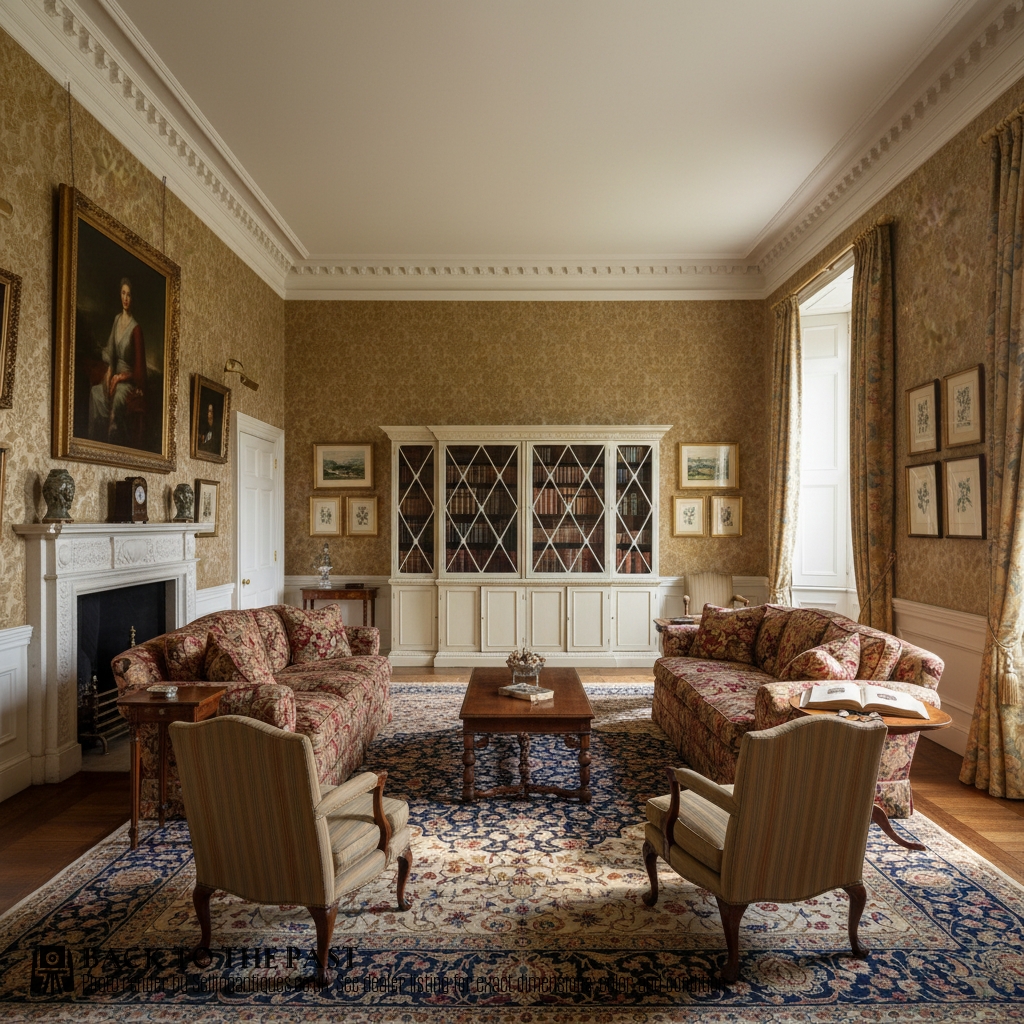
Position the cabinet against a neutral wall to let the painted finish and glass panels anchor the space. Use the interior shelves to display books, porcelain plates, or collected objects with adequate breathing room between items.
Keep surrounding furniture understated so the scale of the cabinet remains the visual focus of the room. Ensure the path of the doors remains clear of obstructions.
What periods do these cabinets come from?
The pieces span the nineteenth century through to the nineteen-thirties, encompassing Victorian workmanship and revival styles. You will find items representing English, Irish, Scottish, French, and Swedish cabinet-making traditions.
Design influences range from Georgian proportions and Sheraton Revival details to Louis XVI and French Provincial aesthetics.
Are the painted finishes original?
Some cabinets retain their original painted decoration applied during manufacture, while others are listed as prepared for wax or paint. Original finishes show appropriate patination and wear accumulated over decades of use.
Listings specify whether the paintwork is original to the piece or a later application.
How are these cabinets constructed?
Makers constructed the primary carcase from solid timbers such as satinwood, pine, or kingwood, frequently incorporating breakfront forms for added architectural dimension. Glazed doors utilise wooden glazing bars to hold individual panes of glass.
Hardware includes brass fixtures and occasionally ormolu mounts depending on the stylistic influence of the piece.