





Large Padded Footstool
These large padded footstool pieces combine generous proportions with plush upholstery, offering a commanding presence and substantial comfort for period interiors.
Large Padded Footstool
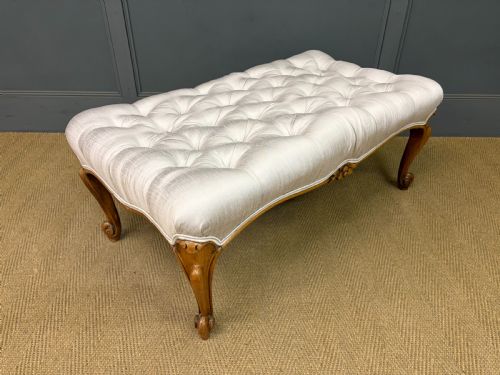
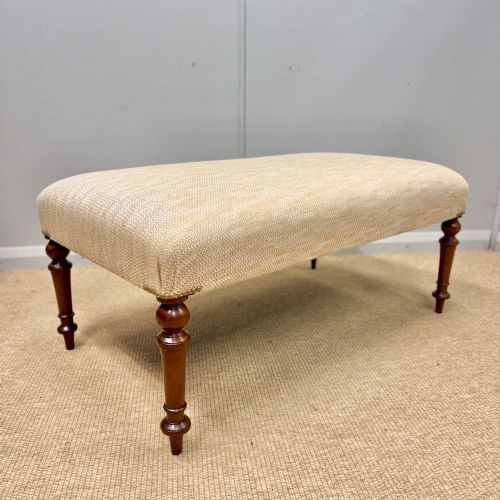
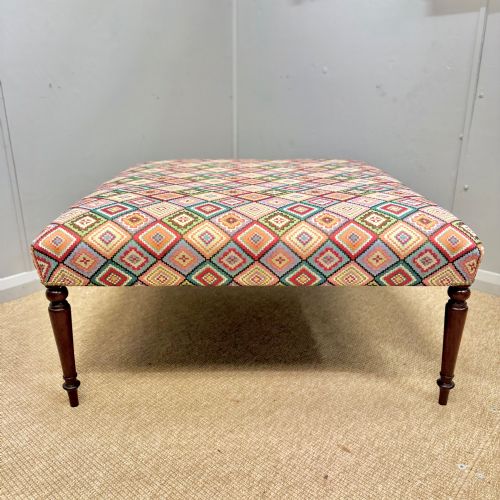
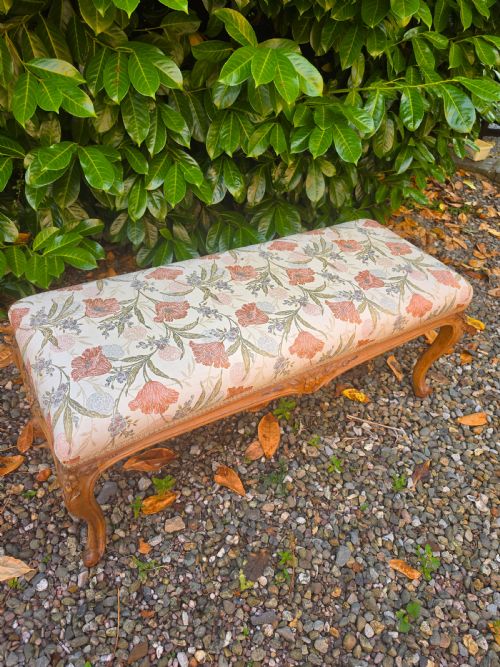
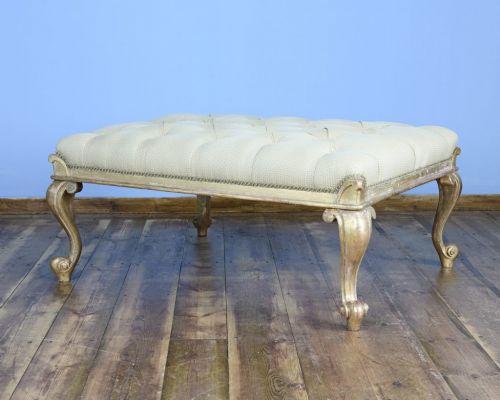
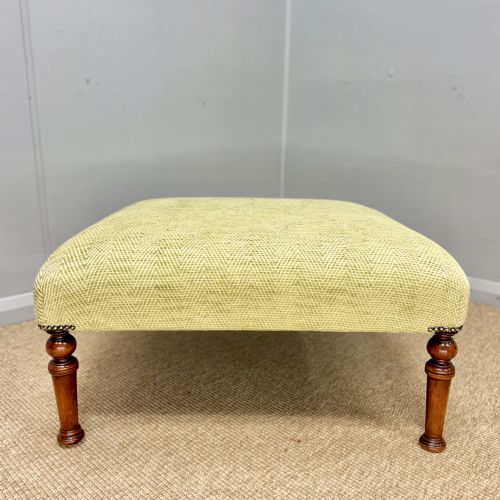
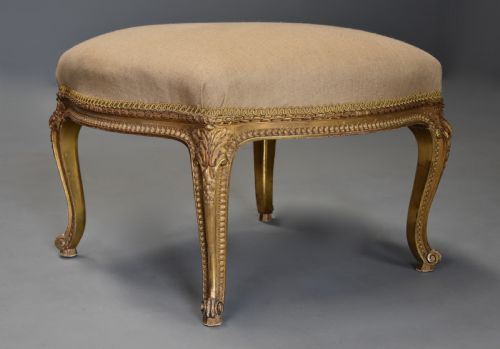
A large padded footstool is a substantial seating form designed to support the feet or serve as a low centre table, appearing frequently across Victorian and Georgian eras in various wood frames. Buyers searching for a large padded footstool will encounter diverse stylistic interpretations ranging from English country house ottomans to ornate French giltwood designs.
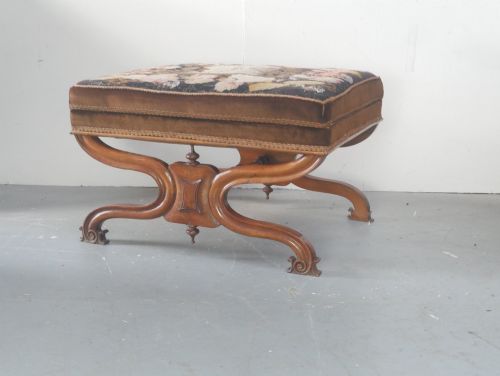
The selection includes rectangular, square, and oblong configurations resting on cabriole legs, brass castors, or cross stretchers. These pieces function as versatile centre stools, low hall seats, or expansive ottomans within traditional rooms.
Quality variations in large padded footstools
The standard of a large padded footstool depends upon the crispness of timber carving, the integrity of the frame construction, and the authenticity of period materials. Pieces featuring maker stamps or original needlework needlepoint demonstrate higher craftsmanship.
Subtle differences appear in the proportion of the wooden chassis, the weight of the underlying timber, and the refinement of decorative elements like cabriole legs or gilt finishes.
One exceptional 19th century piece includes a rocking mechanism designed specifically as a gout stool.
LOIDRAULT FRERES PARIS
The Large Padded Footstool Glossary
- Cabriole leg
- A furniture leg that bends outward and tapers downward to a foot, typical of period seating forms. This design derives from animal limbs and appears widely on antique stools.
- Gros-point
- A heavy, counted-thread embroidery stitch used for durable upholstery on antique needlework tops. It provides a textured surface suitable for heavy-use footstools.
- Ottoman
- A low, upholstered seat or footstool without arms or back, designed for domestic lounging. Large examples function as central seating or heavy foot rests.
- Cross stretcher
- Wooden bracing members connecting the legs of a stool near the base to increase structural stability. They often feature central bosses or decorative turnings.
- Parcel gilt
- A decorative technique where specific carved details of a wooden frame are partially covered in gold leaf. This highlights particular motifs against a dark wood or painted ground.
Large Padded Footstool: Frequently Asked Questions
What is a large padded footstool used for?
These pieces serve as generous foot rests, low occasional seating, or central tables when paired with a tray. Their substantial surface area accommodates multiple users in a drawing room.
They function equally well as low hall seats or broad ottomans placed centrally within large reception spaces.
How do I identify a Victorian footstool?
Victorian examples typically employ dense timbers like walnut and mahogany, often featuring deep buttoning, leather, or heavy upholstery. Construction focuses on robust proportions and practical additions like brass castors.
Stylistic revivals during this period frequently incorporate carved cabriole legs or elaborate needlework tops.
Are these footstools newly upholstered?
Some pieces retain original textiles such as gros-point needlework, while others arrive newly upholstered in contemporary or traditional fabrics. The upholstery method ranges from period-accurate padding to fresh covers suited to modern interiors.
Descriptions specify whether needlework or fabric is original to the piece.
What woods were used for these stools?
Craftsmen utilised sturdy hardwoods including mahogany, walnut, rosewood, and giltwood for the structural frames. These materials provided the necessary strength to support large padded tops and frequent daily use.
Secondary woods and applied gilt finishes appear depending on the specific regional style and period.