





Large Oak Wardrobe
A large oak wardrobe anchors a room with its substantial presence, offering generous storage through centuries of craftsmanship.
Large Oak Wardrobe
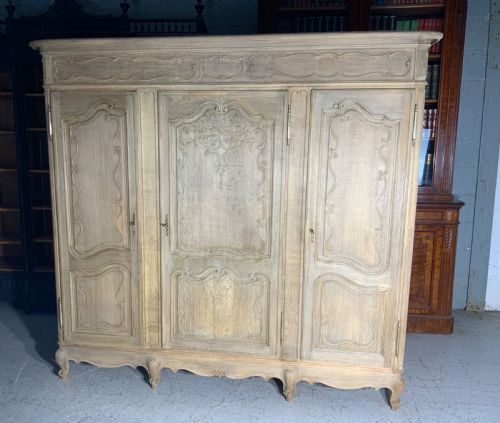
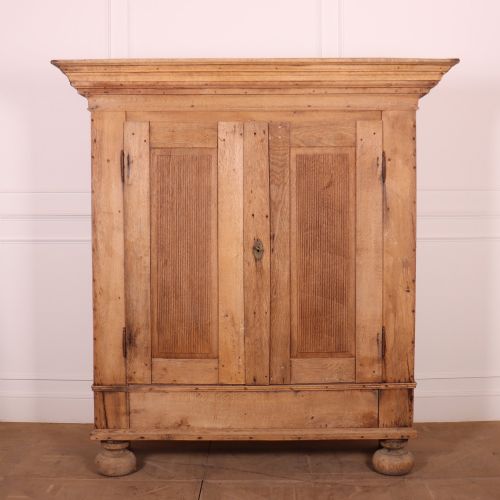
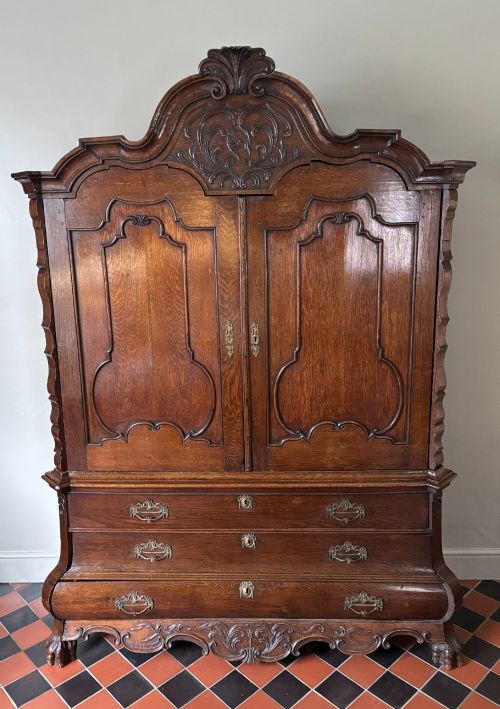
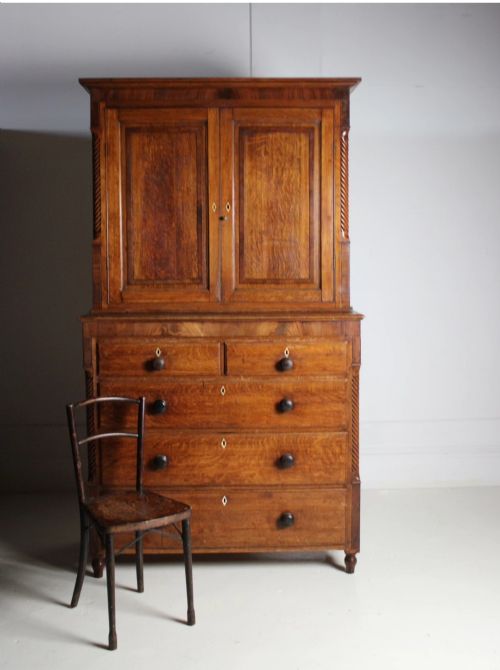
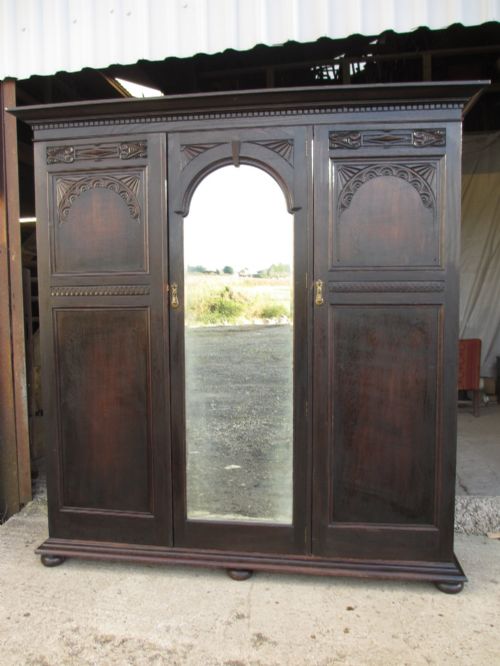
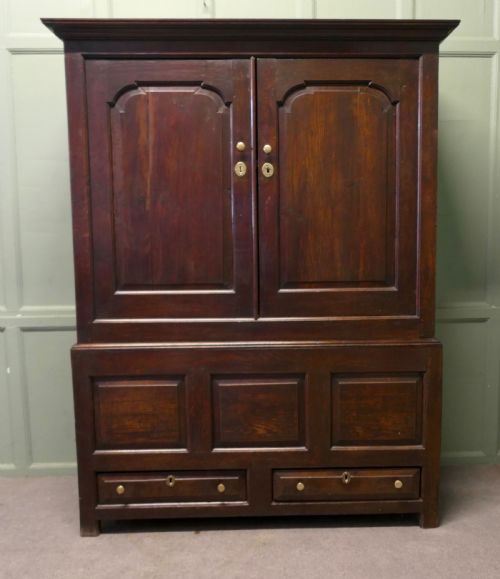
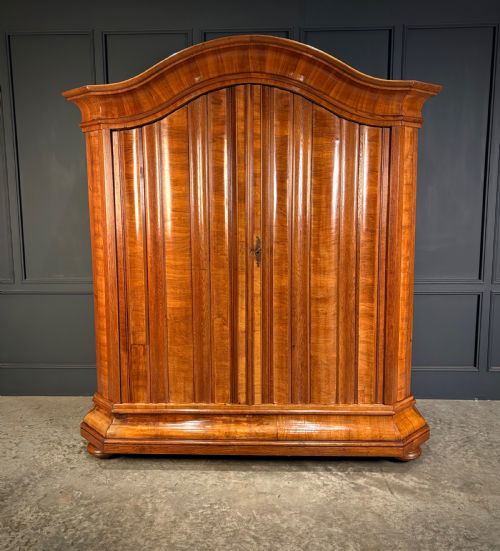
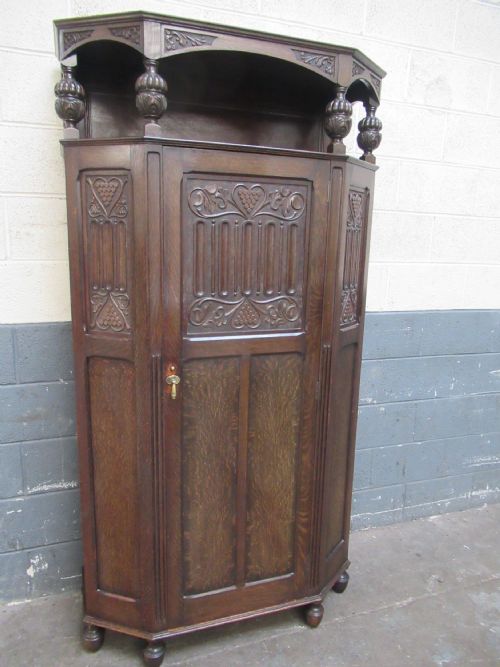
A large oak wardrobe serves as a commanding piece for storing garments and linens, appearing across various regional traditions and eras. When searching for a large oak wardrobe, buyers encounter forms ranging from Georgian linen presses and continental armoires to Edwardian and Arts and Crafts triple door designs.
The historical scope spans from seventeenth-century country pieces through eighteenth-century Georgian country houses to twentieth-century workshop productions. Many examples combine hanging space with linen storage, often utilising internal shelves, drawers, or combination compartments to organise belongings.
The scale of these items requires careful consideration of ceiling heights and access routes, as numerous period examples dismantle into sections for transport. Buyers frequently select these pieces for their robust construction and deep timber patination, which brings character to modern interiors.
How they were made
Makers constructed these cabinets primarily using solid oak timbers, occasionally incorporating secondary woods such as fruitwood, yew, or walnut for decorative contrast. Panels were typically held within heavy framed structures, allowing the timber to expand and contract naturally with atmospheric changes without splitting.
Surface ornamentation relied on hand carving, panel moulding, and polished finishes that highlighted the medullary rays within quarter-sawn oak. Iron, brass, and glass elements appeared in hinges, handles, and mirrored doors, while specialised knock-down joints allowed large armoires to be assembled on site.
Large Oak Wardrobe Retail Price Guide 2026
Typical asking prices for large oak wardrobe among the pieces listed under this phrase on Sellingantiques today, from the lower quarter to the upper quarter. They describe what is for sale here now, not the wider market.
Listings feature oak alongside brass, glass, iron, pollard oak, paint, walnut, and mother of pearl.
What varies in quality
Quality in these large cabinets lies in the selection of timber, the crispness of hand-carved detailing, and the integrity of the original joints and panels. Superior examples display thoughtful proportions where cornices, plinths, and doors align harmoniously, often bearing the identifiable hallmarks of notable makers or workshops.
The treatment of secondary timbers and interior fittings also distinguishes fine cabinetwork from utilitarian storage. Pieces that retain original brass hardware, working locks, and uncompromised internal configurations command greater interest from collectors.
Maple and Co·Heals of London·Gordon Russell
The Large Oak Wardrobe Glossary
- Armoire
- A large standing cupboard or wardrobe, often of continental European origin, utilised for hanging garments or storing folded textiles. These pieces frequently feature double doors and deep internal depths.
- Linen Press
- A tall storage piece comprising an upper section with sliding trays or shelves enclosed by doors, positioned above a base of graduating drawers. They were traditionally used to store household linens flat.
- Housekeepers Cupboard
- A capacious functional storage cabinet designed for domestic utility, commonly found in large country houses for storing provisions or household goods. They offer substantial internal capacity.
- Knock Down
- A method of construction where large furniture pieces dismantle completely into modular sections for ease of transport and assembly. This design was particularly common in continental armoires.
- Medullary Rays
- Natural ribbon-like cellular structures visible in quarter-sawn oak that create a distinctive silver flake pattern across the grain. Their prominence often indicates high-grade conversion of the timber.
Large Oak Wardrobe: Frequently Asked Questions
How do I care for antique oak furniture?
Maintaining oak timber involves keeping pieces away from direct heat sources and sudden humidity shifts that can cause wood to split. Regular dusting with a soft cloth preserves the surface finish without requiring heavy polishes.
Applying a traditional beeswax occasionally helps nourish dry timber and maintains the natural lustre of the grain. Avoiding synthetic cleaning agents protects the historic patination accumulated over centuries.
What is the difference between an armoire and a wardrobe?
Armoires traditionally served multiple storage functions, often housing shelves for linens alongside hanging space, and frequently originated in France or the Netherlands. Wardrobes specifically developed to accommodate hanging garments on hooks or rails within a tall cabinet.
Over time, the terms became interchangeable in the antiques trade, particularly for large European timber cabinets. Examining the interior configuration reveals whether the piece was designed primarily for hanging clothes or shelved storage.
How can I date an oak wardrobe?
Dating relies on observing construction techniques, hardware types, tool marks on the timber, and overall stylistic characteristics. Eighteenth-century pieces often display hand-planed surfaces and pegged joinery, while Edwardian and later examples utilise mechanical fixings and standardised mouldings.
Matching stylistic details such as carved panels or crown mouldings to documented periods helps narrow down the decade of production. Maker stamps and original paper labels provide definitive evidence of origin.