


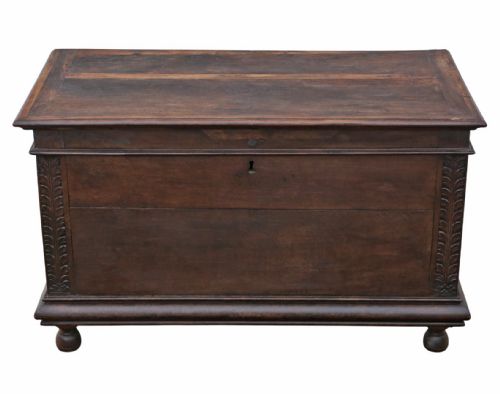


Large Oak Chest
When you search for a large oak chest, you uncover robust storage pieces crafted across multiple centuries to hold linens, valuables, and domestic goods.
Large Oak Chest
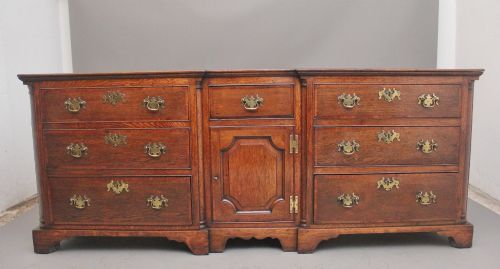
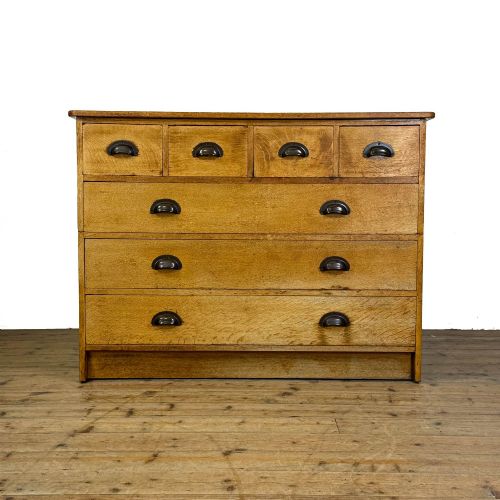
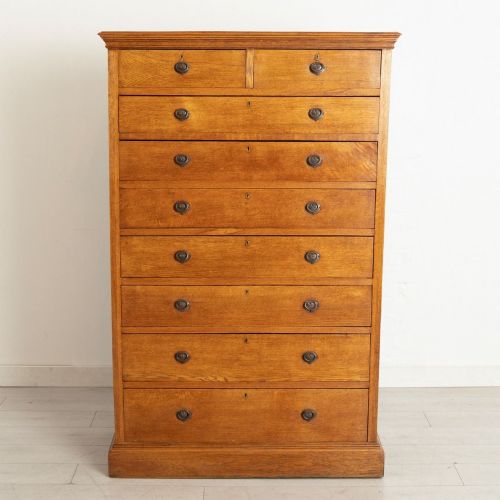
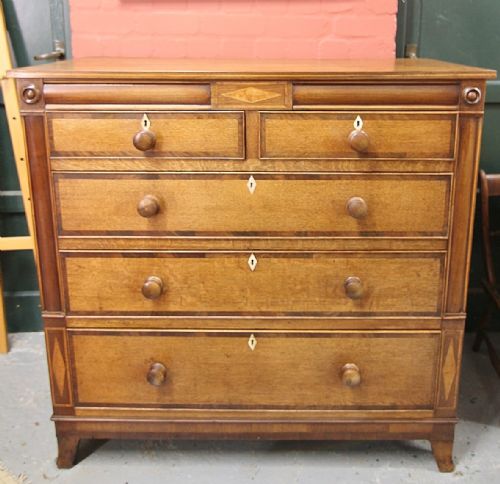
A large oak chest encompasses several distinct domestic forms spanning utilitarian storage trunks to refined bedroom furniture. Buyers searching this phrase most frequently encounter substantial seventeenth-century coffers, eighteenth-century mule chests fitted with lower drawers, and nineteenth-century iron-banded travel trunks.
Originating from English, Welsh, Scottish, and continental European workshops, these items serve as primary focal points for hallways, bedrooms, and living spaces. The selection includes multi-drawer chests, plan chests, and lift-lid blanket boxes designed for heavy everyday use.
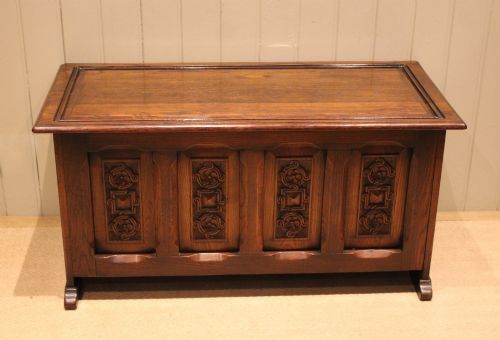
Earlier examples typically present as panelled coffers resting on floor rails, while later iterations incorporate banks of drawers or internal candle boxes. Each form reflects the domestic storage requirements of its respective period, ranging from rural farmhouse utility to urban merchant administration.
What Varies in Quality
The integrity of the timber selection and the precision of the primary joinery dictate the structural caliber of any given piece. Superior examples display tight, stable grain alignment in the oak panels alongside hand-cut dovetails on internal drawer construction.
Hardware authenticity and metalwork execution further distinguish higher grade items from standard utility pieces. Original forged iron straps, retaining contemporary locks and keys, elevate the standing of silver chests and travel trunks significantly.
Carving depth and decorative restraint separate master craftsmanship from provincial production. Crisp relief work on coffer panels and balanced proportions on mule chests indicate workshops operating at the height of their trade.
Several chests preserve secret compartments hidden behind false drawer bottoms, designed to outwit household thieves.
Heals of London
The Large Oak Chest Glossary
- Mule chest
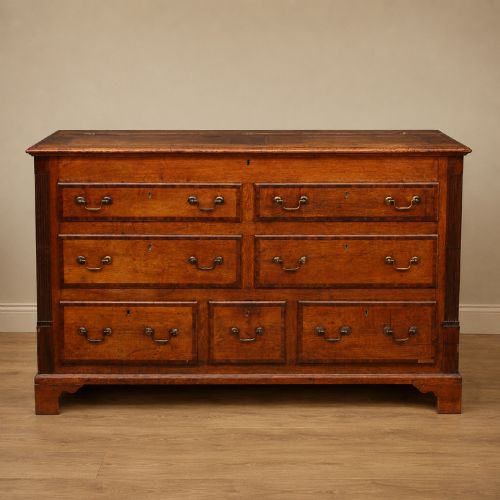
- A storage chest featuring one or more functional drawers built beneath the main lift-lid compartment. This hybrid form bridge the gap between the traditional coffer and the modern chest of drawers.
- Coffer
- A heavy wooden box with a hinged lid utilised primarily for storing valuables, textiles, and household provisions. Early specimens often display elaborate front panel carvings and sturdy stile feet.
- Silver chest
- A heavy travel trunk reinforced with iron straps and designed specifically to transport valuable plate and cutlery securely. These are frequently lined with baize and fitted with internal compartments.
- Crossbanding
- A decorative border technique where thin strips of veneer are laid perpendicular to the surrounding grain. This adds visual framing to drawer fronts and top surfaces on Georgian pieces.
- Plan chest
- A wide, shallow multi-drawer cabinet designed originally for storing architectural drawings and maps. These pieces utilise numerous thin drawers to keep large paper documents flat.
Large Oak Chest: Frequently Asked Questions
How do I tell a mule chest from a standard coffer?
A mule chest incorporates one or more functional drawers beneath the main storage well, whereas a traditional coffer consists solely of a lift-lid compartment accessed from the top.
This evolutionary step allowed owners to access frequently used items without disturbing the contents piled inside the upper chest cavity.
What were iron-banded oak chests used for originally?
Iron-banded trunks served primarily as secure silver chests and heavy travel luggage for transporting valuables during transit.
Their robust construction and reinforced corners protected contents against rough handling on ships, coaches, and early railways.
How do I care for antique oak furniture at home?
Maintain stable indoor humidity levels away from direct heat sources to prevent the solid oak panels from splitting or warping.
Apply traditional beeswax periodically to nourish the timber grain and preserve the historic surface patina without creating heavy chemical buildup.
How can I date an antique oak coffer?
Examine the construction joints, panel thickness, and tool marks visible on the interior surfaces to determine the period of manufacture.
Hand-split timber, pegged mortise and tenon joints, and board construction styles shift noticeably between the seventeenth, eighteenth, and nineteenth centuries.