
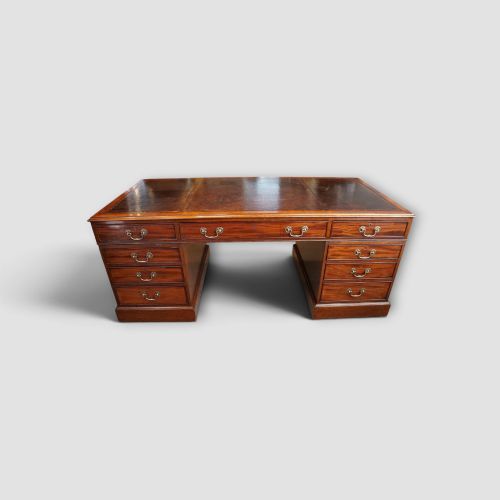
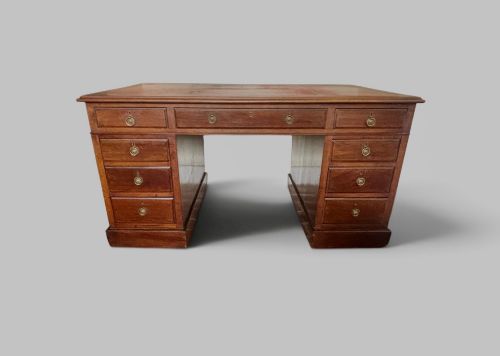
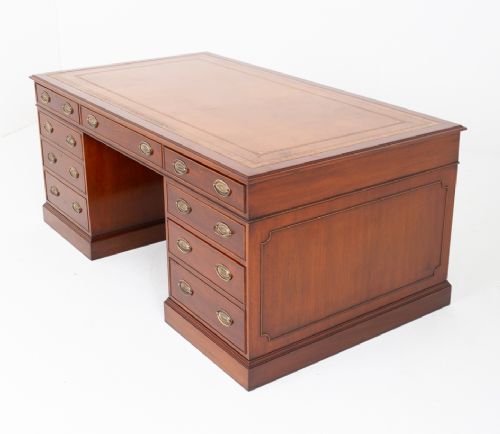
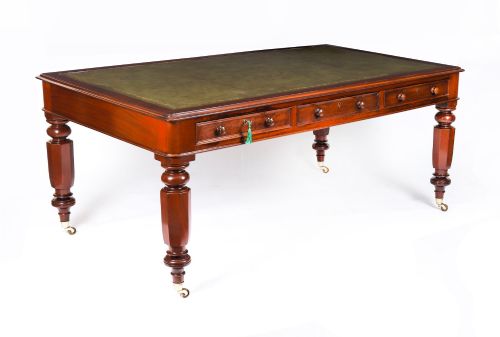




Large Mahogany Study Desk
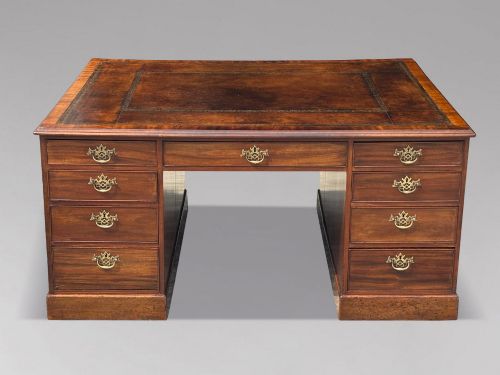
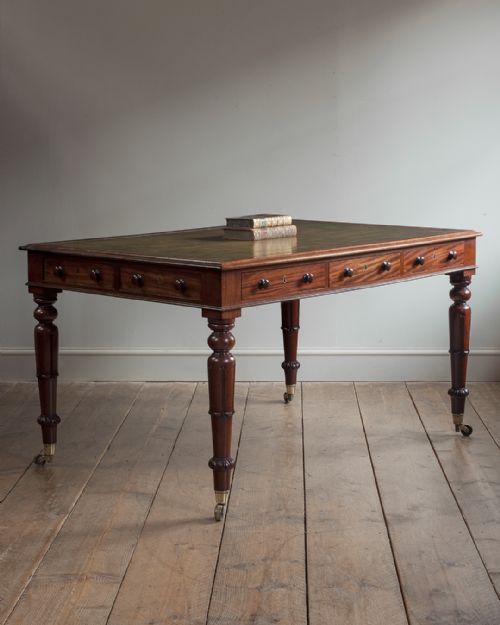
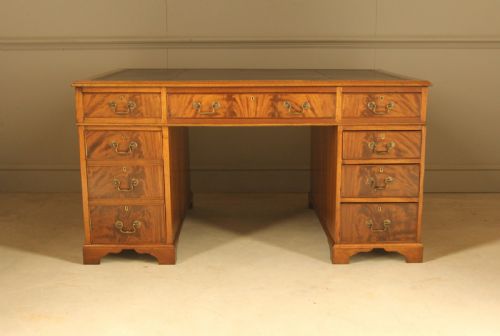
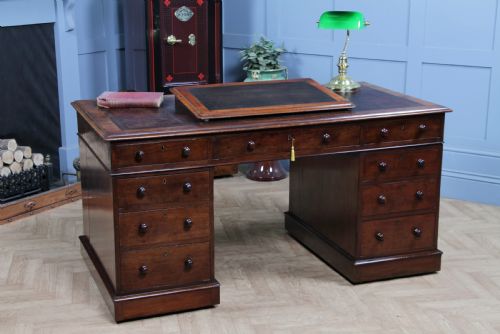
A large mahogany study desk is a substantial workspace designed for serious administration, pairing dense timber with generous surface area.
Large Mahogany Study Desk
A large mahogany study desk provides a commanding central focus for a home office or library, combining utilitarian scale with traditional cabinet-making. Buyers seeking a large mahogany study desk encounter sturdy pedestals, wide kneeholes, and expansive writing surfaces built for daily service.
The majority of pieces met on this page date from the nineteenth century and the Victorian era, alongside Georgian and Edwardian examples. These tables and pedestals frequently incorporate multiple drawers and functional writing slopes.
Partners configurations dominate the selection, offering simultaneous work spaces from opposite sides with opposing banks of drawers or cupboards. Supporting items include library tables and pedestal desks fashioned in revival styles.
Materials and construction
Makers utilised solid mahogany and figured veneers such as flame mahogany and curl-mahogany over secondary timbers to construct the carcases. Timber selection determined the visual depth of the writing surface and drawer fronts.
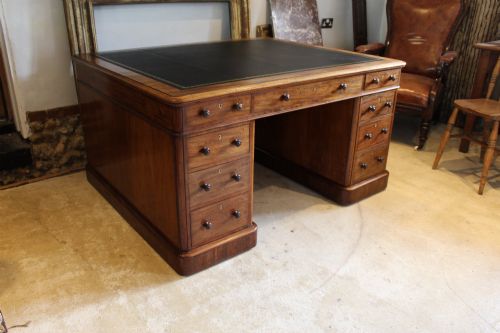
Working surfaces were inset with panels of tooled leather, providing a durable writing plane that contrasts with the polished wood surrounds. Drawer construction involved hand-cut dovetails and solid linings, while internal partitions accommodated stationery and ledgers.
Brass hardware, including drop handles, escutcheons, and occasional castors, provided functional accents and mobility for these heavy pieces. Secondary woods like fruitwood and walnut appear alongside burr walnut in specific revival and decorative variants.
Secret compartments in pedestal drawers occasionally emerge during routine restoration, once used for storing private ledgers.
Evaluating craftsmanship
Superior examples display continuous grain matching across drawer banks and harmonious timber selection throughout the carcass. Lesser pieces rely on disjointed veneers or substitute secondary timbers without regard for structural balance.
The sophistication of internal joinery and drawer lining timber separates standard production from workshop commissions. Hand-cut dovetailing and substantial timber thickness in framing indicate higher standards of manufacture.
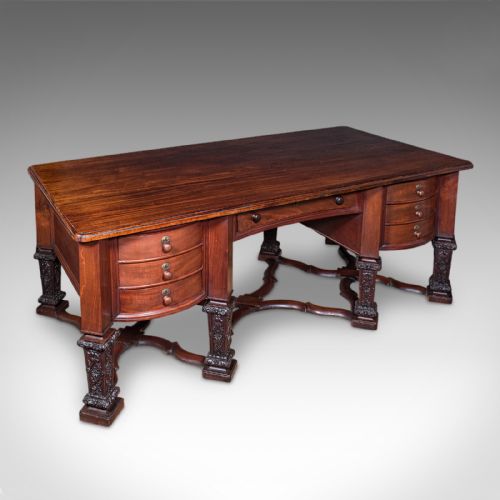
The integrity of the original leather insert and the crispness of carved mouldings or brass furnishings dictate the visual success of the piece. Workshops of notable renown applied rigorous standards to secondary elevations that remain hidden during daily use.
Charles Andrea Nosotti·Whytock & Reid·Holland & Sons·Gillows
The Large Mahogany Study Desk Glossary
- Partners desk
- A double-sided desk built with opposing drawers or cupboards, allowing two people to work opposite one another.
- Pedestal desk
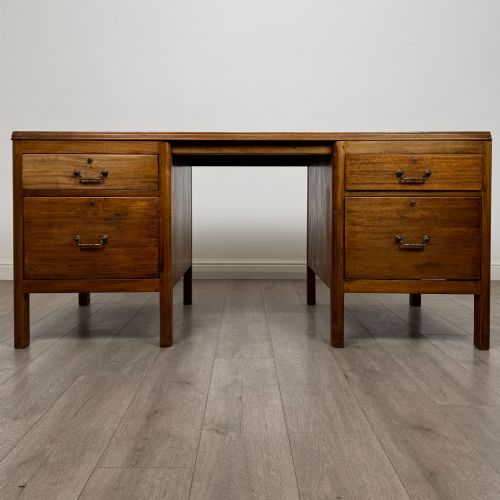
- A writing table supported by two vertical banks of drawers rather than four distinct legs.
- Flame mahogany
- Timber cut from the fork of the mahogany tree to produce a distinctive flickering grain pattern.
- Crossbanded
- A decorative border of veneer laid perpendicular to the main grain of the surrounding surface.
- Kneehole
- The open recess beneath the writing surface designed to accommodate the user's legs.
Large Mahogany Study Desk: Frequently Asked Questions
What is a partners desk?
A partners desk is a large double-sided writing table designed with drawer banks on both faces. This configuration allowed two individuals to sit opposite each other and work simultaneously.
Such desks formed the administrative centres of large nineteenth-century offices and libraries. They require substantial floor space to allow access to the drawers on both sides.
How do I care for leather desk tops?
Leather writing surfaces benefit from regular dusting with a dry cloth and occasional treatment with appropriate leather balms. Avoid excessive moisture and direct sunlight to prevent cracking.
Most historic desks retain replacement leather inserts applied during restoration. Keeping the leather conditioned preserves the traditional writing texture.
How do I date a mahogany desk?
Dating relies on examining construction methods, timber choice, and stylistic revival indicators. Hand-cut dovetails, secondary timbers, and hardware design offer primary clues.
Victorian and Edwardian pieces frequently feature heavier pedestal proportions and machine-assisted elements. Earlier George III examples display lighter framing and distinct cabinet-making techniques.
Can these desks be dismantled?
Many large pedestal desks separate into three main components comprising two drawer pedestals and a top surface. This modular construction assists with transport and placement in upper rooms.
Partners desks and library tables vary in disassembly potential depending on the specific period. Inspecting the underside reveals securing screws and brackets used by the original cabinet-makers.