

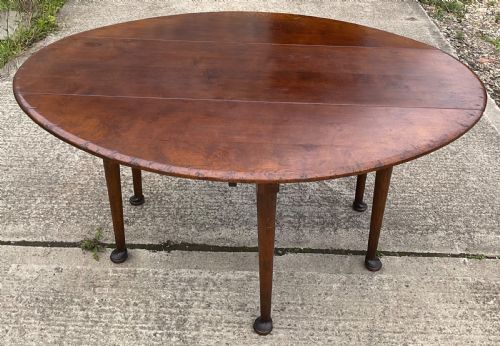


Large Mahogany Gateleg Table
A large mahogany gateleg table offers generous proportions and drop-leaf versatility, making it the practical centrepiece for traditional dining rooms.
Large Mahogany Gateleg Table
A large mahogany gateleg table provides substantial seating capacity for dining through hinged leaves supported by pivoting legs. These examples span the eighteenth and nineteenth centuries, taking Georgian, Regency, George II, George III, George IV, and William IV styles.
The pieces appearing on this page include oval and drop-leaf formats, with multiple items designed to seat eight people. Buyers encounter Irish wake tables and folding dining tables constructed from standard and Cuban mahogany.
Originating predominantly from the Georgian era through to the early twentieth century, these tables balance heavy timber construction with the flexibility of folding leaves. Most listings feature oval tops when fully opened, supported by swinging gate legs.
How they were made
Cabinetmakers constructed these tables primarily from solid mahogany and dense Cuban mahogany, occasionally incorporating brass and iron hardware for hinges and structural support. The choice of dense tropical hardwoods provided the necessary strength to support large, cantilevered drop leaves.
Joinery techniques relied on sturdy framing to bear the weight of extended leaves, utilising pivoting gateleg mechanisms that swing out to secure the dining surface. Surfaces were shaped into large ovals and polished to highlight the natural grain of the timber.
Large Mahogany Gateleg Table Retail Price Guide 2026
Typical asking prices for large mahogany gateleg table among the pieces listed under this phrase on Sellingantiques today, from the lower quarter to the upper quarter. They describe what is for sale here now, not the wider market.
The listings span multiple periods from the eighteenth century through to nineteen twenty, utilising mahogany, Cuban mahogany, brass, and iron.
What varies in quality
Quality rests upon the selection of timber, particularly the choice between standard mahogany and highly figured Cuban mahogany, alongside the scale and proportion of the frame. Superior examples demonstrate thoughtful design in their large oval top construction and the stability of their gate mechanisms.
The integrity of the structural joints and the retention of original timber patination separate the finest period examples from later reproductions. Proportions and the clever integration of folding leaves define the distinction between utilitarian items and those of superior craftsmanship.
The Large Mahogany Gateleg Table Glossary
- Gateleg table
- A table with hinged leaves supported by legs that swing outward like gates. This design allows the table to fold down compactly when not in use.
- Cuban mahogany
- A dense, dark timber harvested in the Caribbean, prized for its rich grain and deep colour. Cabinetmakers utilised this material for high-status furniture during the eighteenth century.
- Drop-leaf table
- A table featuring a fixed central section and hinged flaps on either side. These flaps raise to expand the usable surface area.
- Pad foot
- A simple foot where the leg terminates in a flattened, rounded pad resting directly on the floor. This foot style appears frequently on eighteenth-century furniture.
- Wake table
- An exceptionally large drop-leaf table designed to accommodate numerous guests for communal gatherings or feasts. These pieces often feature multiple legs for extra support under wide leaves.
Large Mahogany Gateleg Table: Frequently Asked Questions
How many people do they seat?
These large tables frequently accommodate up to eight diners when fully extended.
The folding leaves allow the surface area to adjust depending on the dining requirements.
Where should I place it?
Position the table in a dining room or large open space where the leaves can drop down freely.
Leaving sufficient clearance around the perimeter ensures the gate legs can swing outward without obstruction.
How do I care for the surface?
Maintain the mahogany timber by dusting regularly with a soft, dry cloth and avoiding excessive moisture.
Applying occasional appropriate wax preserves the sheen and protects the grain from drying out.
How do I identify the period?
Examine the timber density, the colour of the mahogany, and the structural form of the legs and hinges.
Stylistic markers such as pad feet or Georgian proportions help distinguish eighteenth-century examples from later nineteenth-century pieces.