
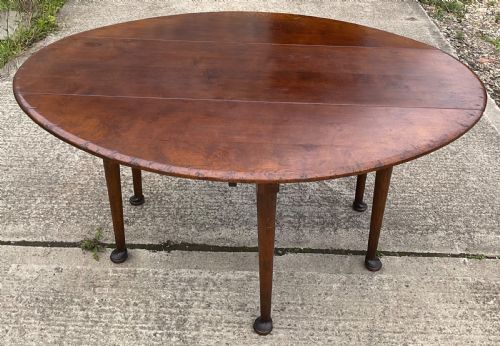


Georgian Mahogany Dropleaf Table
A georgian mahogany dropleaf table offers folding leaves and rich timber surfaces, making it a flexible folding table for compact dining and daily use.
Georgian Mahogany Dropleaf Table
A georgian mahogany dropleaf table is a versatile folding table designed with hinged flaps that drop down at the sides to save space when not in extended use. These tables appear in various forms across this page, ranging from large dining tables seating six to eight people down to small occasional, side, and Pembroke tables.
The material origins trace back primarily to the Georgian, Regency, and William IV periods, spanning the eighteenth and nineteenth centuries, alongside later nineteenth and twentieth-century interpretations. Common configurations include oval dining tops, pedestal bases, and fitted drawers for storage.
Most examples found here date from the core Georgian era around eighteen hundred, showing deep brown mahogany timber and gateleg or pedestal supports. Buyers frequently encounter smaller Pembroke versions fitted with boxwood inlay, satinwood details, or brass hardware.
How they were made
Makers constructed these pieces using solid mahogany and mahogany veneers applied over secondary timbers, often selecting dense Cuban mahogany for early pieces. Cabinetmakers utilised hinged wooden gates, swing legs, and pedestal pillars to support the folding leaves.
Decorative elements involve contrasting stringing and banding using satinwood and boxwood inlay to frame the table tops and drawer fronts. Brass castors, hinges, and drawer pulls frequently complete the construction of both pedestal and four-leg variants.
Listings span multiple eras from the early eighteenth century through the Regency period and into twentieth-century revivals.
What varies in quality
The distinction between standard examples and finer pieces rests upon timber selection, figure density, and grain matching across the folding leaves. Superior construction shows careful attention to the joinery of the hinge mechanisms and stability in the gateleg or pedestal supports.
Subtleties in secondary detailing, such as precise boxwood and satinwood inlay work or original brass hardware, elevate the execution of a piece. Proportion and scale also define the hierarchy, with smaller, well-balanced Pembroke and occasional tables commanding particular attention.
The Georgian Mahogany Dropleaf Table Glossary
- Dropleaf table
- A table featuring a fixed central section and one or two hinged flaps that fold down when unsupported. These leaves allow the furniture to alter its footprint quickly for dining or storage.
- Pembroke table
- A small rectangular or oval table equipped with two short drop leaves and usually one or two small drawers. Thomas Chippendale and other eighteenth-century makers popularised this versatile domestic form.
- Gateleg table
- A table supported by leg frames that swing outward like gates to hold the folding leaves in place. This ancient framing method provides robust support beneath extended timber tops.
- Satinwood
- A durable, yellowish-tinted exotic wood utilised extensively for contrasting stringing, borders, and decorative inlay work on mahogany surfaces. Its pale shimmer contrasts sharply with dark mahogany timber.
- Cross-banded
- A method of veneer application where the grain runs perpendicular to the main surface edge, forming a neat border around the table top.
Georgian Mahogany Dropleaf Table: Frequently Asked Questions
How do I seat guests comfortably?
Raise both hinged leaves and extend the supporting swing legs or gate mechanism to create a stable dining surface.
Position chairs to allow clearance around the drop leaves and pedestal bases during meals.
Can I use these in small rooms?
Drop one or both leaves to fold the table flat against a wall or tuck it into an alcove when floor space is limited.
Pembroke and side variants provide practical surface space without dominating a modest interior.
How do I identify a Pembroke table?
Look for a rectangular or oval top flanked by short drop leaves on two opposing sides, accompanied by at least one fitted drawer.
These compact tables often feature slender legs and were traditionally moved easily around sitting rooms.
What is the difference between George III and Regency pieces?
George III furniture typically relies on straight or carved legs and rich brown mahogany timbers associated with eighteenth-century craftsmanship.
Regency examples often incorporate pedestal pillars, brass mounts, and classical motifs inspired by nineteenth-century design trends.