
Large Mahogany Display Cabinet
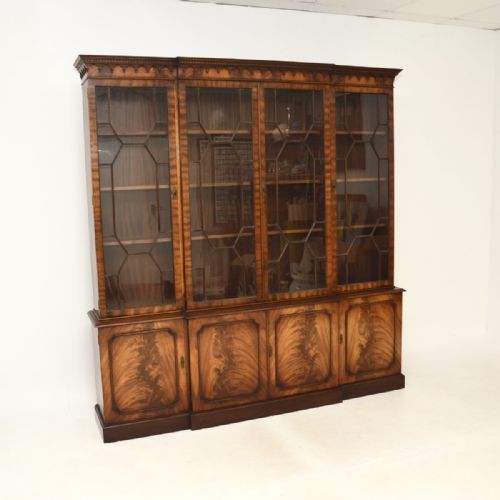
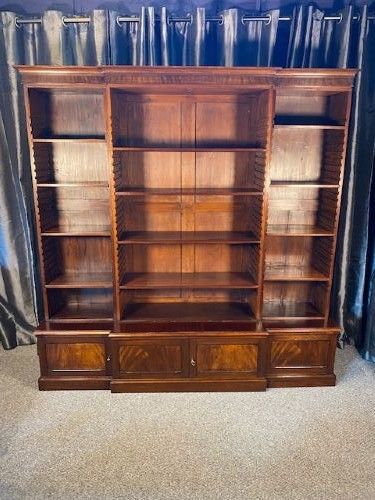
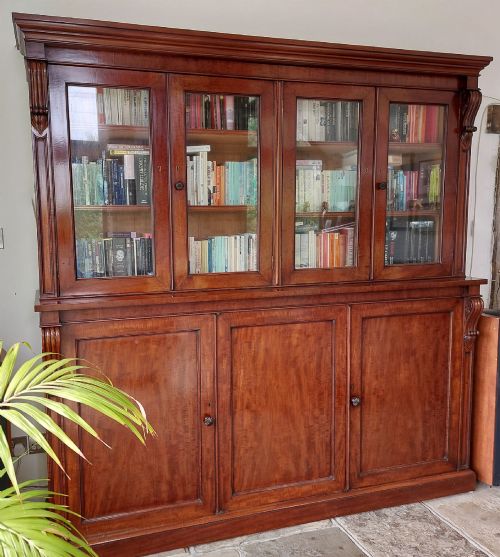
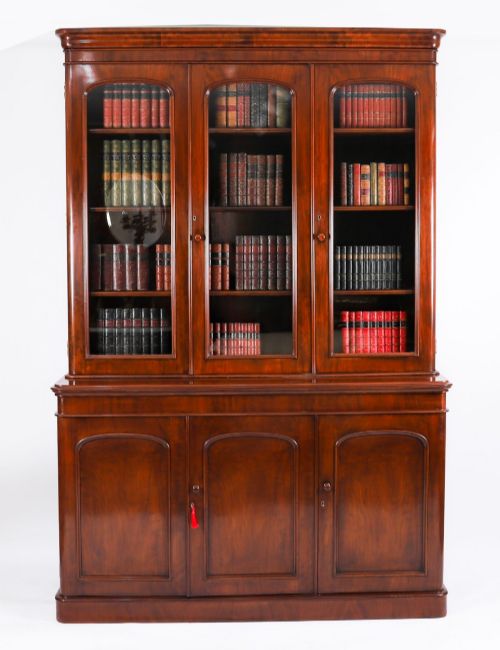
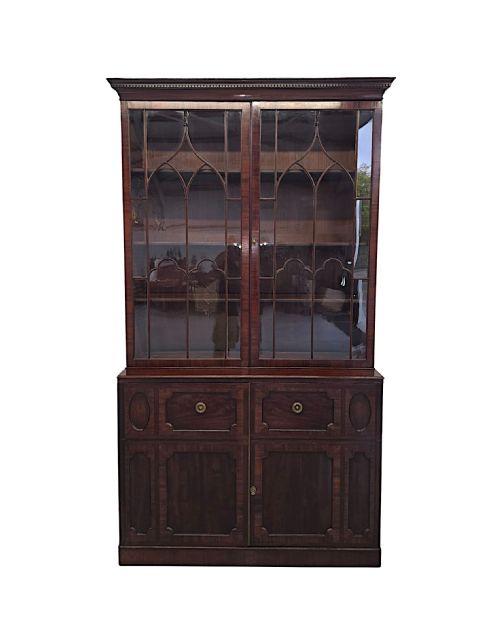
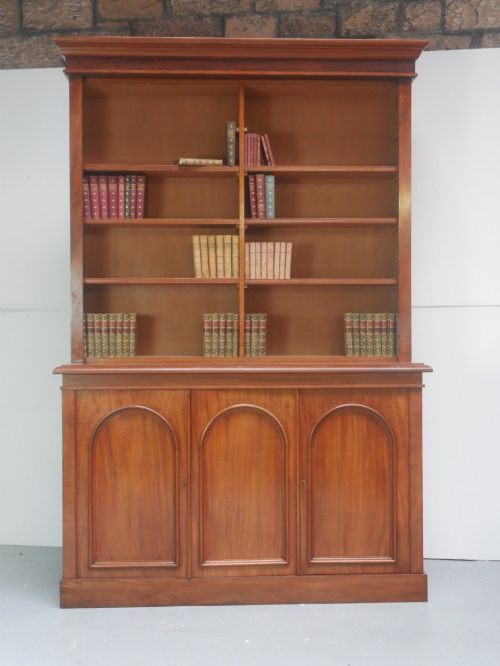
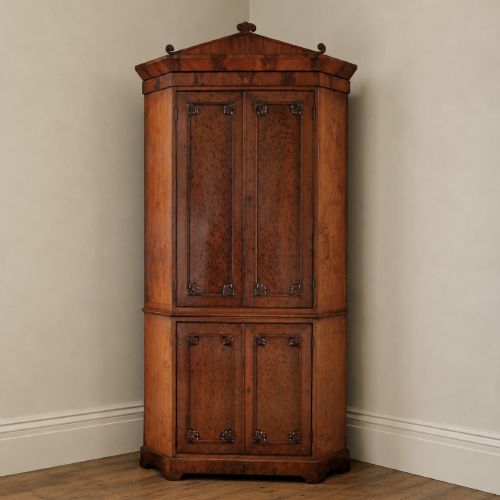
A large mahogany display cabinet combines generous proportions with glazed timber framing to exhibit and protect prized collections.
Large Mahogany Display Cabinet
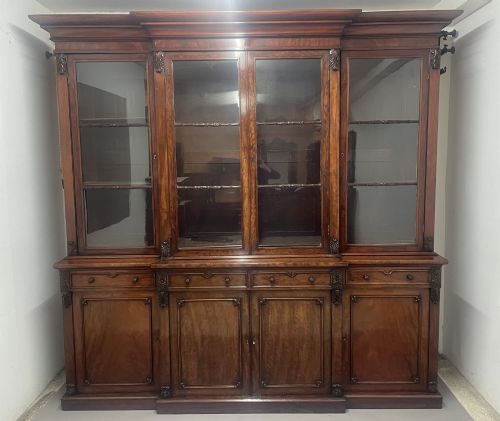
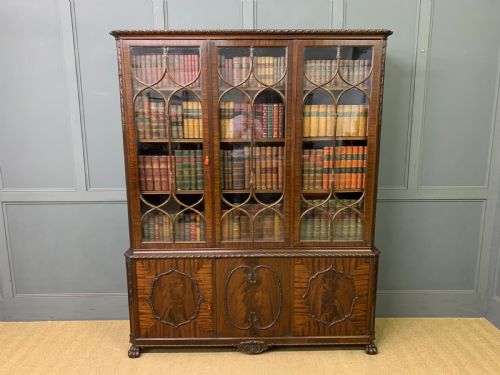
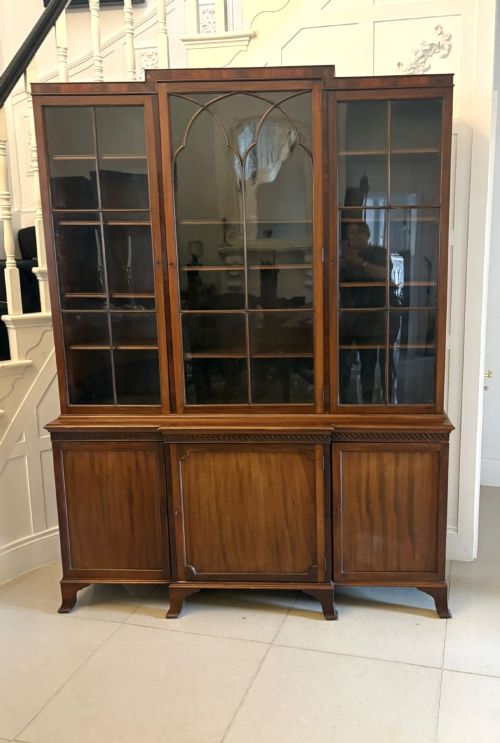
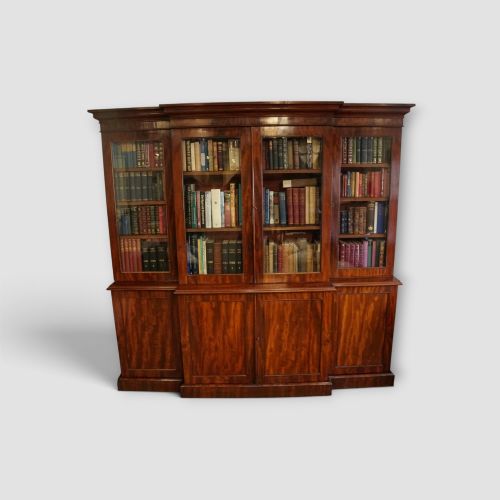
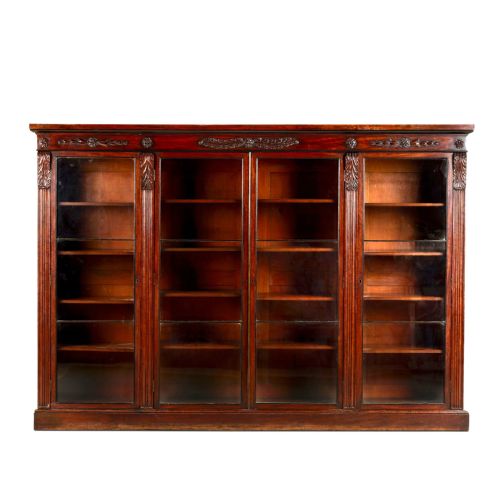
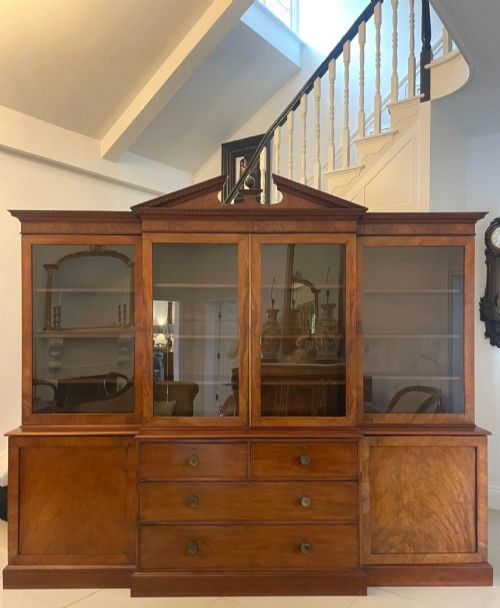
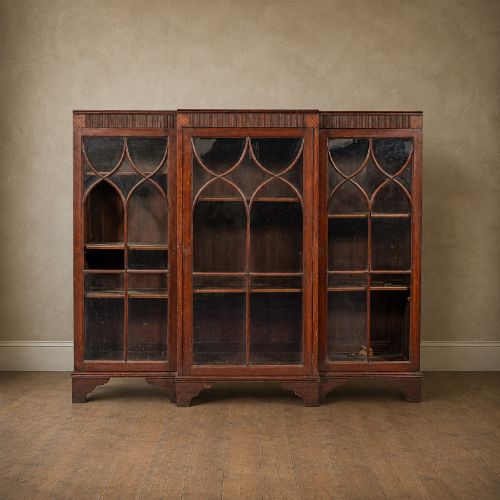
A large mahogany display cabinet typically manifests as a tall breakfront bookcase, a library cabinet, or a glazed shop fitting designed to house books and porcelain.
The pieces on this page span from the eighteenth century through the Victorian and Edwardian eras into the early twentieth century.
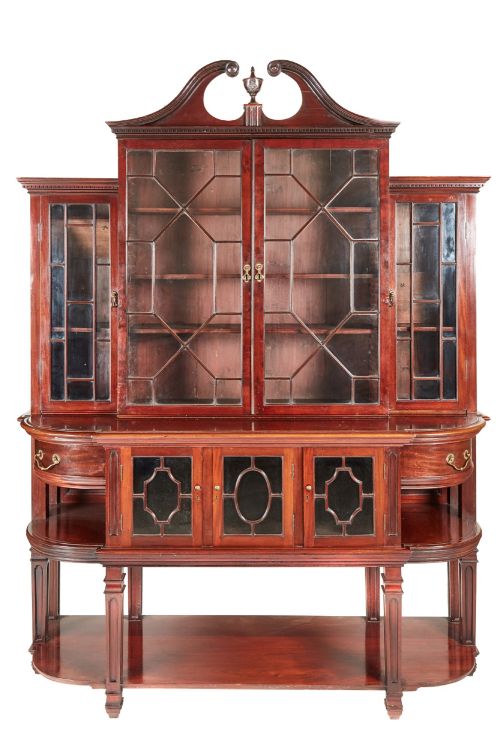
Breakfront configurations with astragal glazed doors dominate the selection, offering substantial storage alongside prominent visual display space.
Materials and construction
Cabinet makers utilised solid mahogany and figured veneers such as flame mahogany, often supported by secondary timbers like pine and oak.
Glazing relies on timber framing with individual glass panes, occasionally complemented by brass mounts, satinwood inlay, and bronze details.
Some historic cabinets served dual lives, transitioning from towering estate libraries to bustling Victorian chemist shops and museum display floors.
Gradations of craftsmanship
The distinction between standard utility furniture and superior pieces rests on the choice of timber figure, such as rich flame mahogany or contrasting satinwood inlay.
Refined craftsmanship appears in delicate astragal bar work, carved architectural details, and the integration of substantial breakfront cornices.
Gillows·Wylie and Lochhead·Maple and Co of London
The Large Mahogany Display Cabinet Glossary
- Breakfront
- A cabinet design where the central section projects forward from the flanking outer sections. This architectural arrangement creates depth and visual rhythm across large library pieces.
- Astragal glazed
- A method of securing window glass within a cabinet door using wooden glazing bars. These intersecting strips form geometric patterns across the frontage.
- Flame mahogany
- A veneer cut from the branch junction of the mahogany tree to reveal a fiery, undulating grain pattern. Makers prized this timber for principal display surfaces.
- Satinwood
- A pale, durable exotic wood utilised for contrasting stringing and marquetry inlays. It highlights the darker tones of primary mahogany cabinetry.
Large Mahogany Display Cabinet: Frequently Asked Questions
How do I care for mahogany?
Mahogany furniture benefits from stable indoor humidity and protection from direct sunlight to prevent the timber and veneers from fading. Regular dusting with a soft, dry cloth preserves the polished surface.
Avoid placing these large cabinets near direct heat sources which can dry out the timber and cause structural movement.
What is astragal glazing?
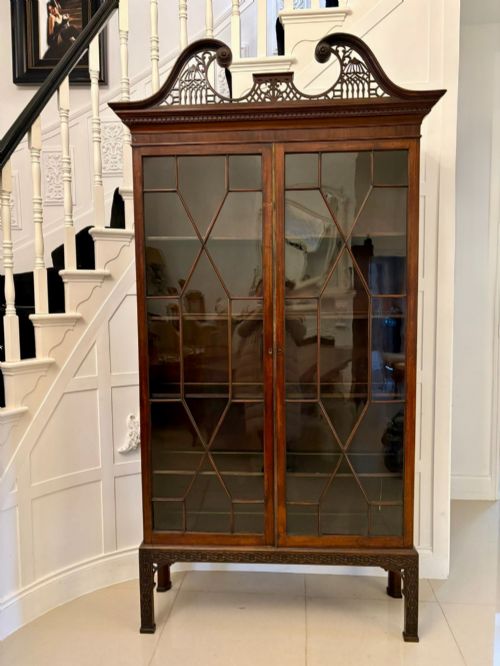
Astragal glazing refers to the narrow wooden bars that divide the glass in cabinet doors into smaller individual panes. These bars provide structural support while creating decorative geometric patterns.
Georgian and Victorian cabinet makers used this technique extensively on tall library bookcases and display furniture.
How are different periods identified?
Periods are distinguished by overall architectural style, construction methods, and decorative motifs such as satinwood inlay or carved Gothic details. Georgian pieces often display restrained classical proportions, while Victorian examples lean towards heavier breakfront scales and rich flame veneers.
Later Edwardian versions frequently incorporate lighter inlay work and refined display shelving.