
Large Mahogany Breakfront
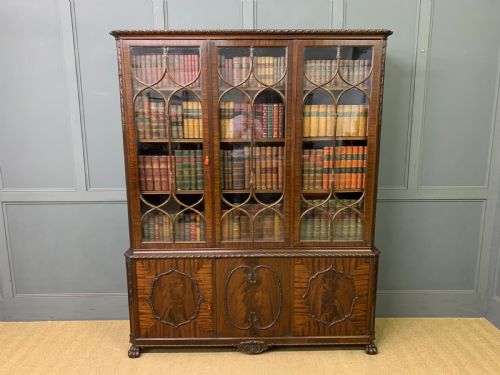
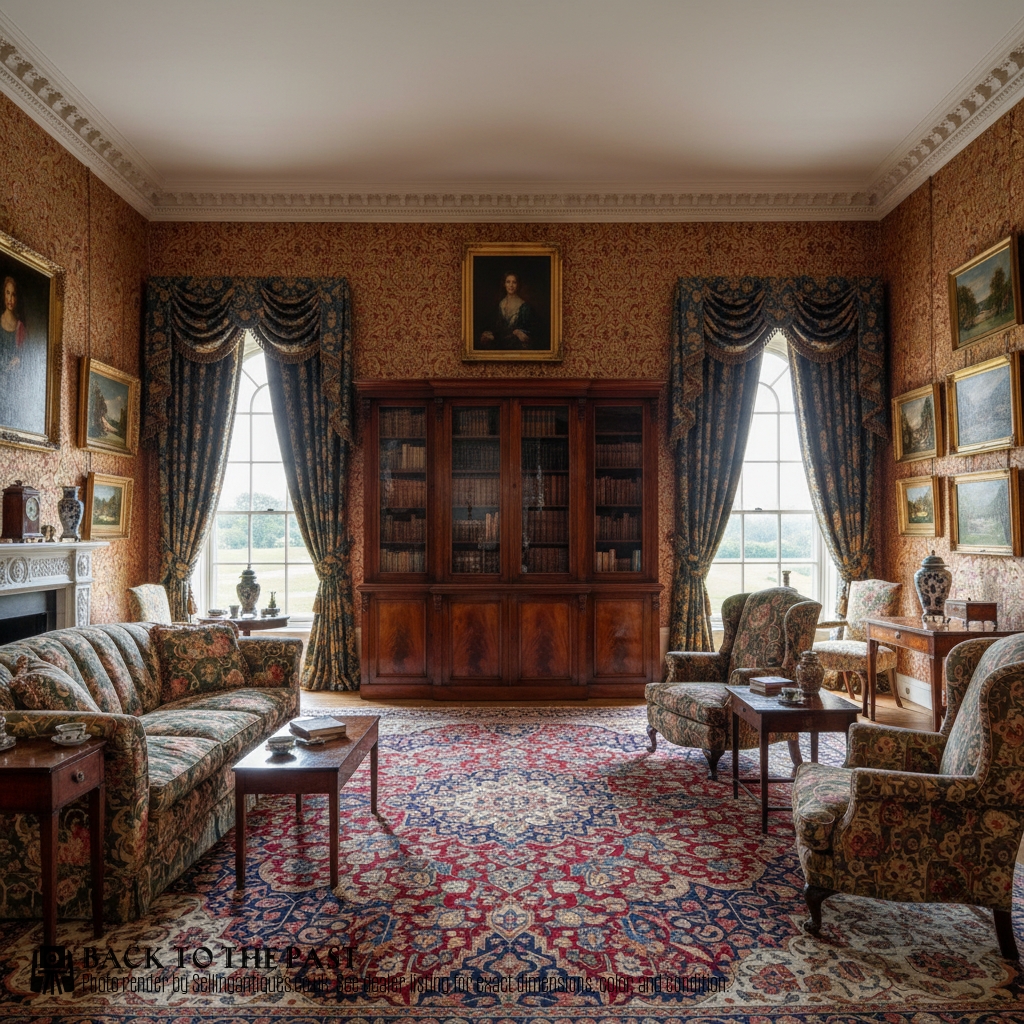
A large mahogany breakfront commands a room with its architectural projection, offering substantial storage and display space for serious collections.
Large Mahogany Breakfront
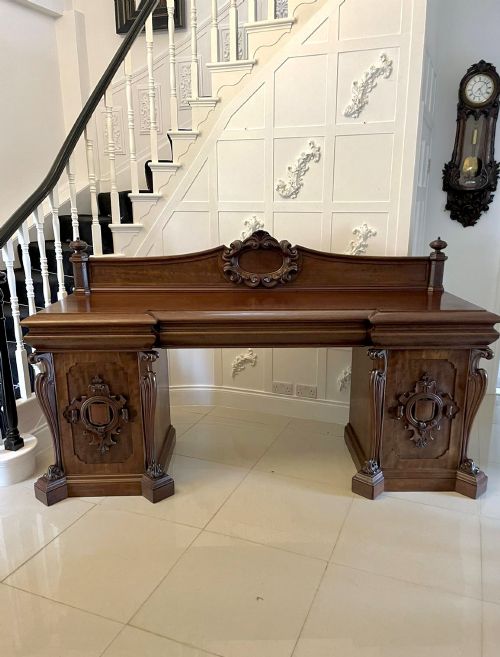
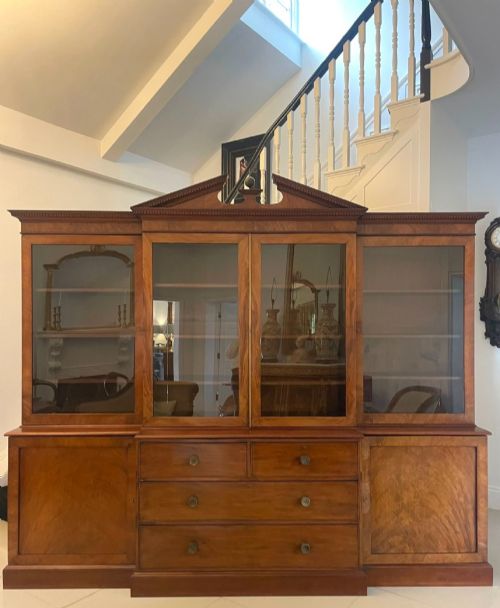
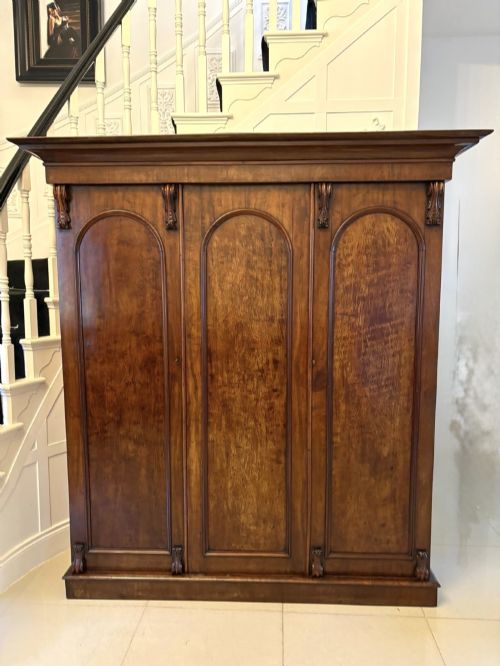
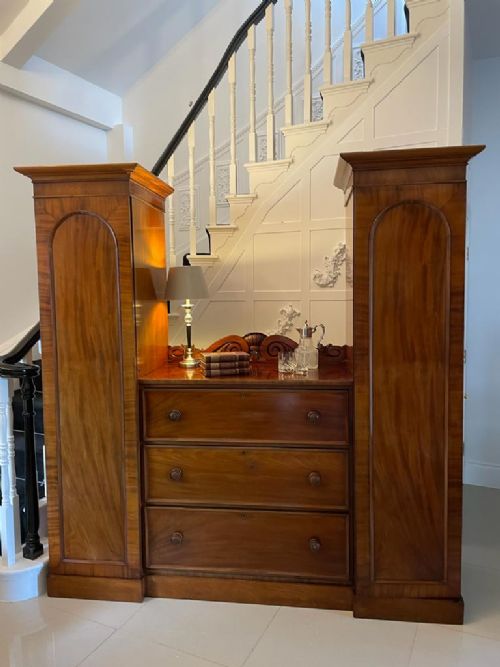
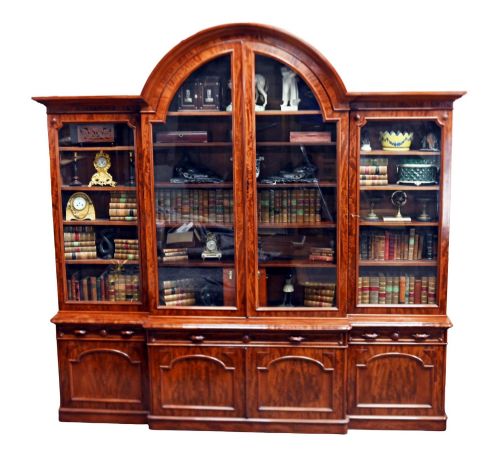
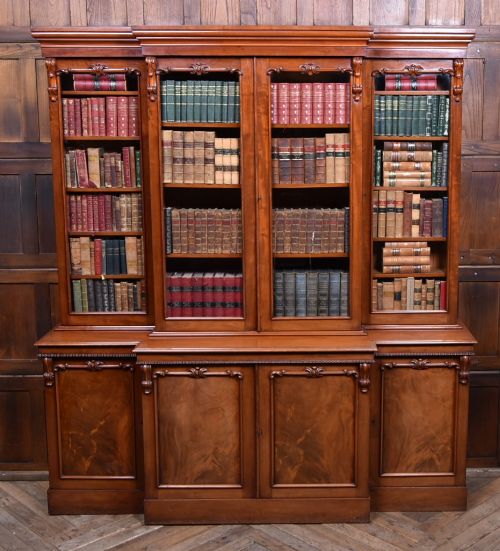
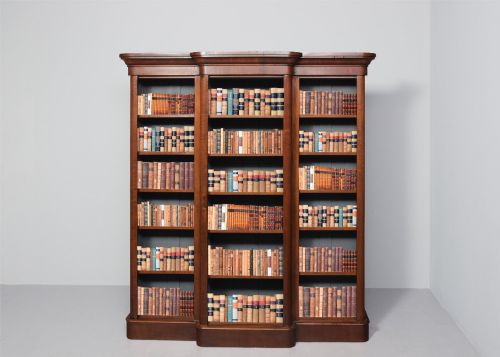
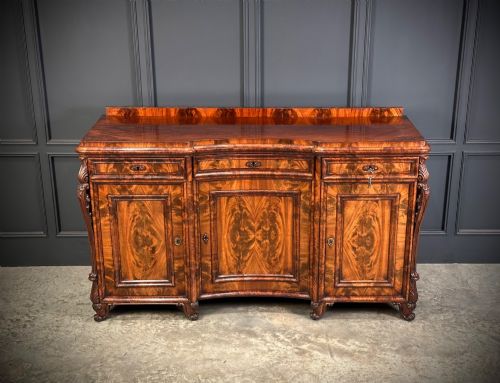
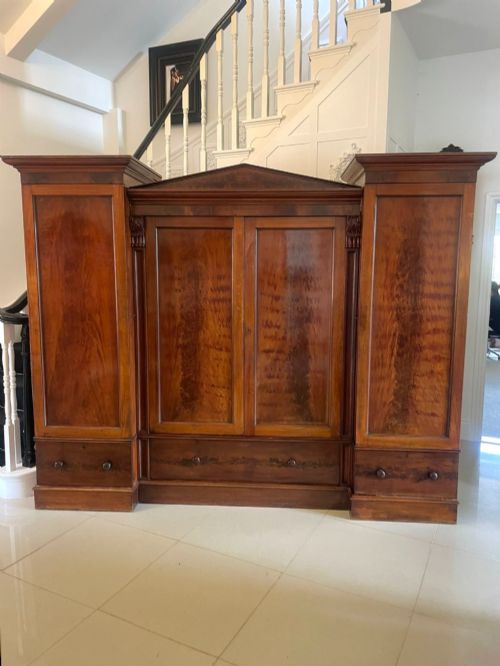
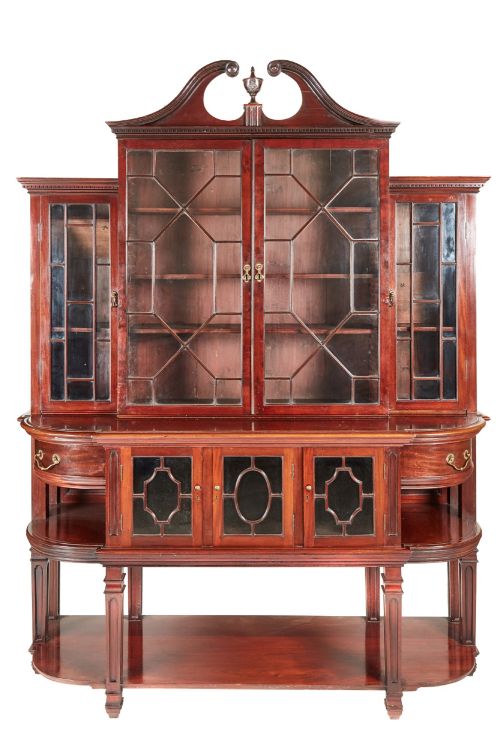
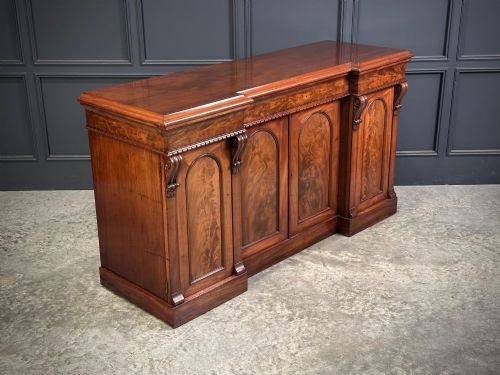
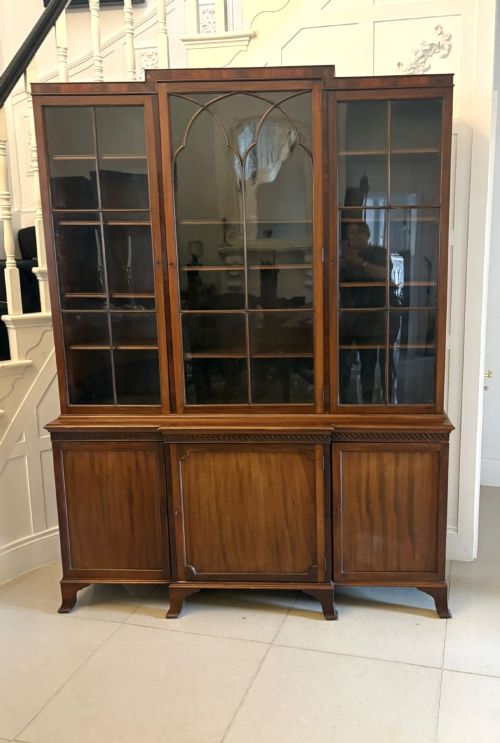
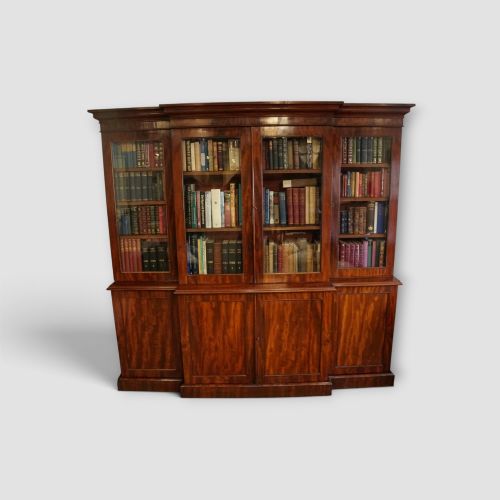
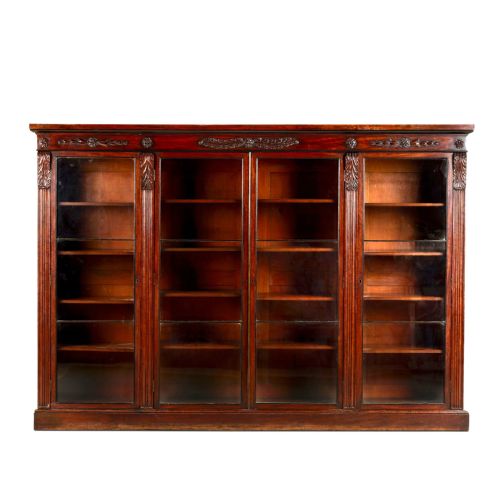
When searching for a large mahogany breakfront, buyers encounter prominent architectural furniture pieces designed with a central section that projects forward from the flanking wings. These grand items predominantly manifest as bookcases, display cabinets, sideboards, and large wardrobes spanning the Georgian, Victorian, and Edwardian eras.
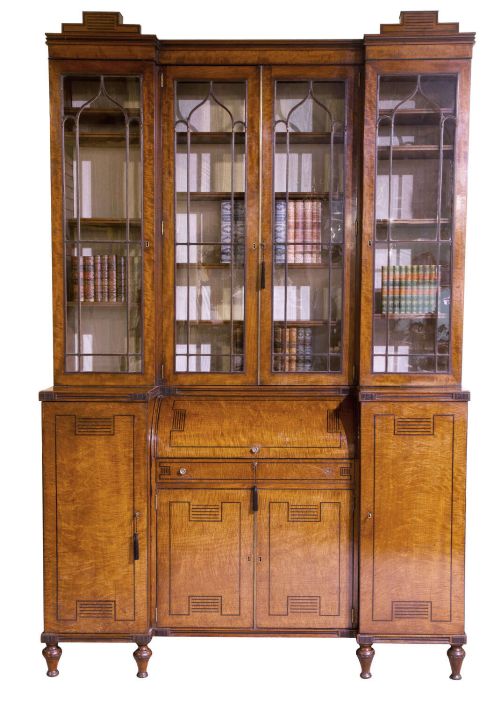
The bookcases and library cabinets on offer frequently feature glazed doors, sometimes with astragal bars, while sideboard and wardrobe variants utilise deep multi-door configurations. Most examples originate from the nineteenth century, reflecting the period's preference for imposing room furniture.
Makers working in the manner of Gillows or firms like Edwards and Roberts produced these substantial forms to anchor large country house interiors. Buyers are most likely to meet pieces scaled for spacious rooms, constructed with multiple sections that break down for transport.
What Varies in Quality
The quality of a large mahogany breakfront rests in the selection of the timber grain and the precision of the cabinetwork. Pieces featuring deeply figured flame mahogany veneers display superior visual depth compared to plain stock.
Architectural refinement separates standard production from exceptional workshops, visible in well-proportioned breakfront projections, crisp astragal glazing, and harmonious inlay work. The integration of functional hardware, such as original brass mounts and locks, maintains the integrity of the piece.
Listings feature breakfront forms spanning the Georgian, Regency, William IV, Victorian, and Edwardian periods, constructed in mahogany, flame mahogany, and oak.
Gillows·Edwards and Roberts·Richardson of Leeds
The Large Mahogany Breakfront Glossary
- Breakfront
- An architectural cabinet design where the central section projects forward from the flanking side sections. This layout creates visual depth and breaks up the linear expanse of large bookcases and sideboards.
- Astragal
- A moulded strip of wood used to hold panes of glass within a glazed door. These bars often form delicate geometric or Gothic patterns across large library bookcases.
- Compactum
- A multi-compartment wardrobe combining hanging space with drawers, shelves, and sliding trays. These fitted units offer comprehensive clothing storage within a single large frame.
- Flame Mahogany
- A veneer cut from timber where the branch meets the trunk, producing a rippling, flame-like pattern. Cabinetmakers reserved this highly figured wood for prominent exterior surfaces.
- Inlay
- A decorative technique where contrasting woods like satinwood are inserted into recesses cut into the primary mahogany surface. This method creates fine geometric borders and classical motifs.
Large Mahogany Breakfront: Frequently Asked Questions
How do I date a mahogany breakfront?
Dating relies on stylistic markers, construction methods, and prevailing design periods evident in the piece. Georgian and Regency examples display classical proportions and fine stringing, while Victorian iterations often incorporate heavier breakfront forms or Gothic Revival details.
Later Edwardian pieces frequently utilise revival styles and lighter internal framing while retaining traditional flame mahogany veneers. Examining the secondary timbers, such as oak drawer linings, provides further chronological clues.
Do large breakfront bookcases come apart?
Many large breakfront bookcases and wardrobes are constructed in modular sections to facilitate transport and installation in domestic spaces. These elements typically separate into a plinth, main carcass sections, and a cornice.
Larger country house library cabinets often dismantle into multiple vertical bays and distinct upper and lower tiers. This sectional construction was essential for moving heavy timber furniture through standard doorways.
Where were these pieces used?
These large mahogany pieces were traditionally commissioned for the principal rooms of country houses, town mansions, and substantial libraries. Bookcases lined the walls of studies and formal sitting rooms to house extensive private book collections.
Wardrobes and compactums served in large bedrooms, while sideboards anchored dining rooms for the display of plate and the storage of linens. Their imposing scale required the high ceilings typical of nineteenth-century architecture.