

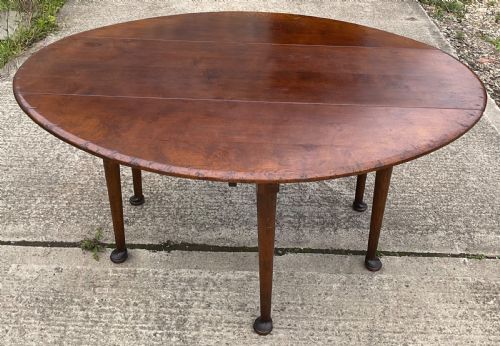

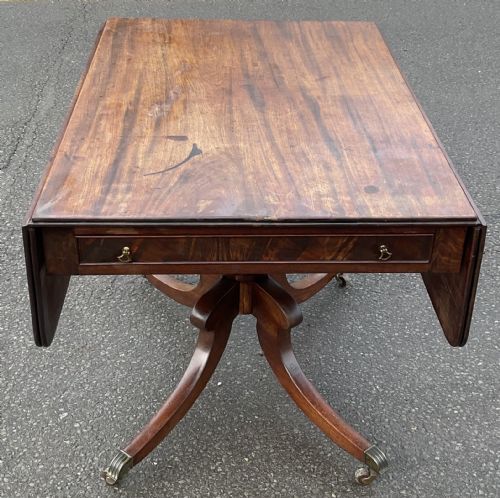


Large Mahogany Breakfast Table
A large mahogany breakfast table brings weight and presence to a room, offering a stable surface designed for morning meals and evening gatherings alike.
Large Mahogany Breakfast Table
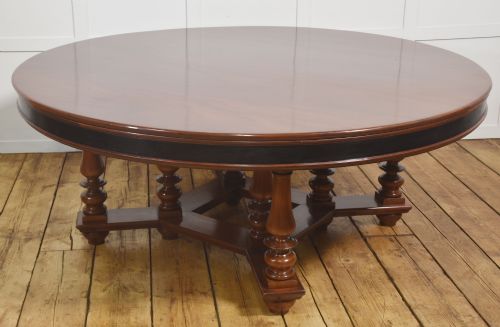
A large mahogany breakfast table is a substantial piece of furniture designed primarily for dining and social gatherings, frequently appearing in circular, oval, or drop-leaf configurations. When searching for this phrase, buyers encounter examples spanning from the Georgian and Regency periods through the Victorian era and into the early twentieth century.
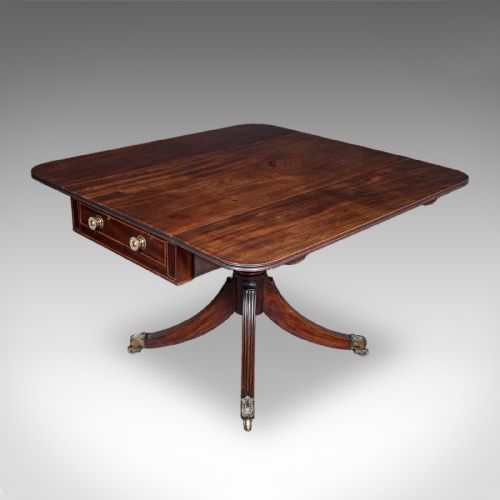
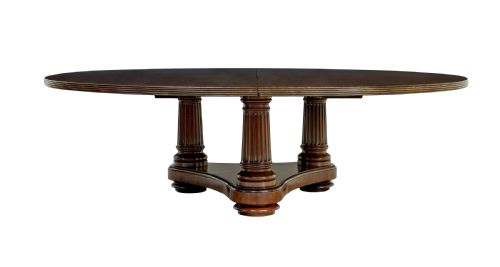
The pieces on this page heavily feature pedestal bases, tilt-top mechanisms, and ample seating capacity for six to eight people. They serve as both practical dining surfaces and striking architectural centrepieces within larger rooms.
How they were made
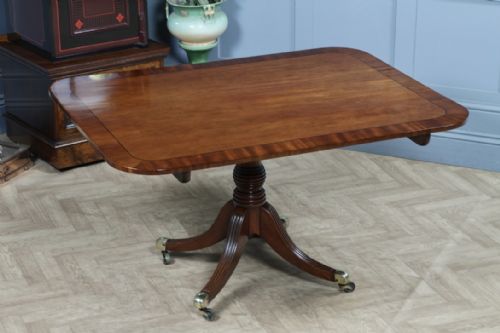
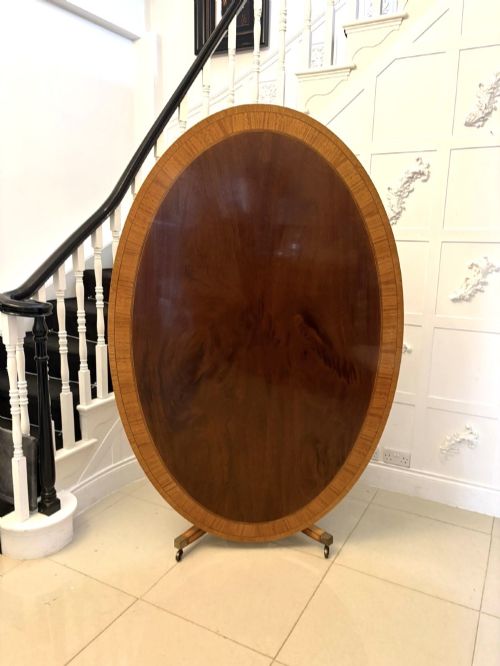
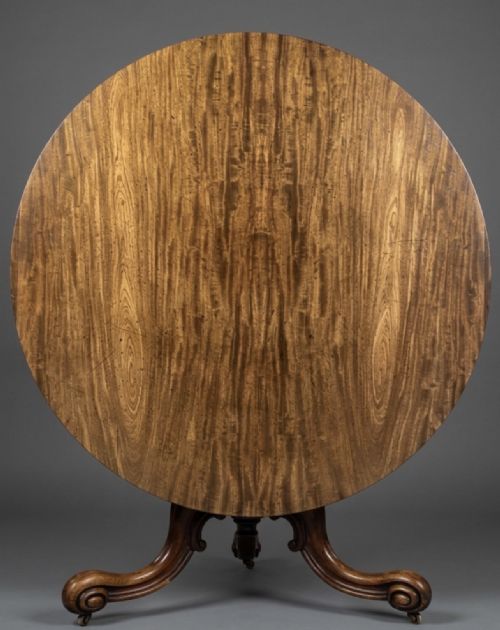
Cabinet makers utilised solid timber and rich veneers, frequently selecting flame mahogany to create striking grain patterns across the top surfaces. Workshops also incorporated contrasting woods such as satinwood for inlay and crossbanding.
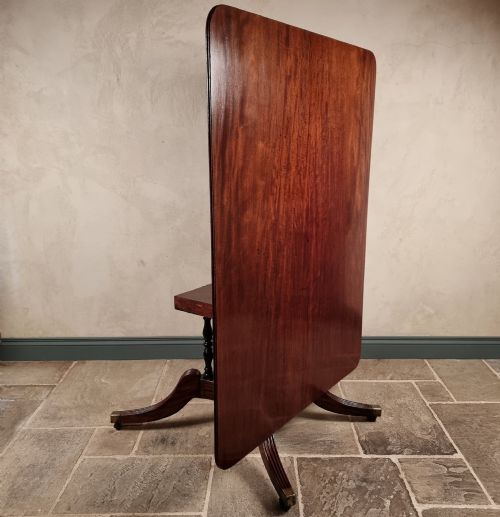
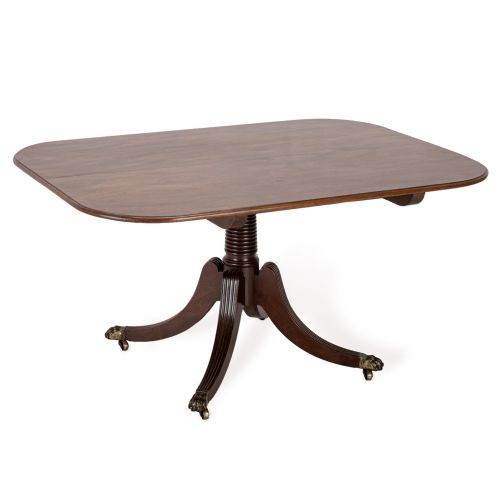
Many examples employ brass details, including castors on pedestal feet or intricate brass inlay set directly into the wood. Construction often included tilt-top mechanisms, allowing the heavy top to pivot and stow away when not in use.
Large Mahogany Breakfast Table Retail Price Guide 2026
Typical asking prices for large mahogany breakfast table among the pieces listed under this phrase on Sellingantiques today, from the lower quarter to the upper quarter. They describe what is for sale here now, not the wider market.
What varies in quality
Quality rests heavily on the selection of the timber and the depth of the grain figure visible across the top. Pieces utilising highly figured flame mahogany or precise satinwood crossbanding display a superior visual richness.
The structural execution of the pedestal base and the integrity of the tilt-top mechanism dictate the overall calibre of the piece. Well-balanced proportions and refined carving on the pedestal legs distinguish the finer examples from standard production.
Gillows
The Large Mahogany Breakfast Table Glossary
- Flame mahogany
- A veneer cut from timber where the branch meets the trunk, producing a distinctive, fiery grain pattern. This figure is prized for its decorative impact on large table tops.
- Crossbanding
- A narrow strip of veneer laid perpendicularly to the main grain around the border of a table. It creates a neat, framed edge often seen in contrasting timbers like satinwood.
- Tilt-top
- A hinged mechanism allowing the table top to pivot into a vertical position. This clever design enabled tables to be pushed against walls when space was required.
- Pedestal base
- A central column supporting the weight of the table top, typically branching into three or four legs. This design maximised legroom for diners seated around the perimeter.
- D-shaped
- A table configuration featuring a rounded end shaped like the letter D, often used in modular dining suites. These ends could be pushed together or separated with leaves.
Large Mahogany Breakfast Table: Frequently Asked Questions
How many people do these seat?
Most examples comfortably accommodate six to eight diners, depending on the diameter or length of the top. The absence of corner legs on pedestal versions makes adding extra chairs straightforward.
Larger formats provide generous elbow room, making them practical for daily meals as well as formal hosting.
Where should I place it?
These pieces demand space to breathe, working best as the visual anchor in the middle of a large dining room or a grand hall. Their substantial footprint requires adequate clearance for chairs to pull out comfortably.
Positioning them away from direct sunlight preserves the rich colour and finish of the mahogany timber.
How do I care for the surface?
Protect the polished wood by using placemats and coasters to prevent heat marks and moisture rings. Regular dusting with a soft, dry cloth maintains the natural lustre of the finish.
Avoid placing the table near heat sources or radiators, which can cause the timber to dry out and split over time.