



Flame Mahogany Centre Table
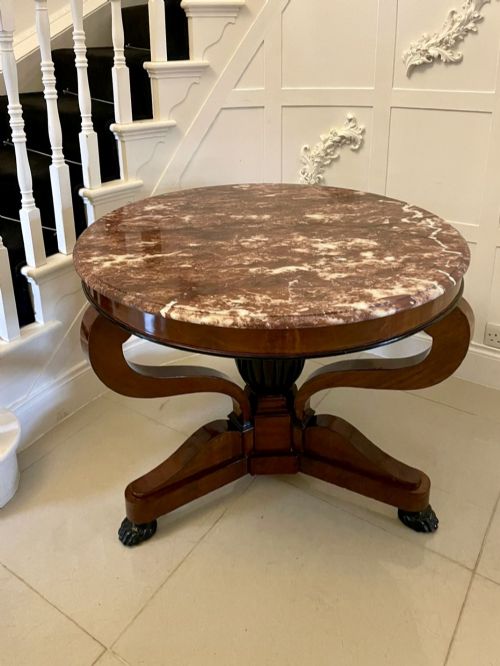
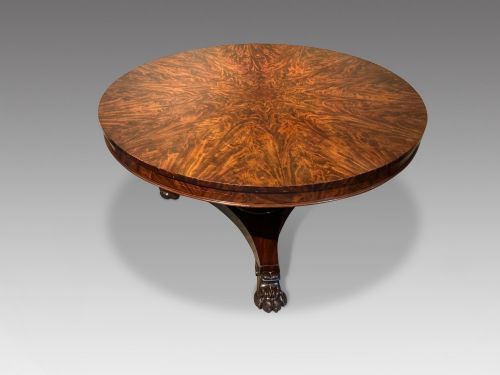
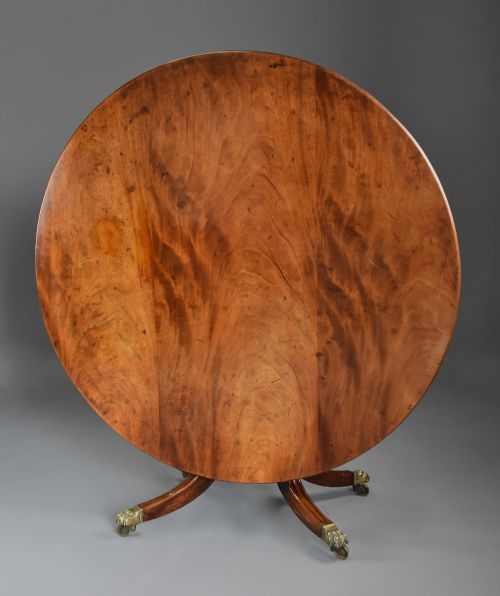
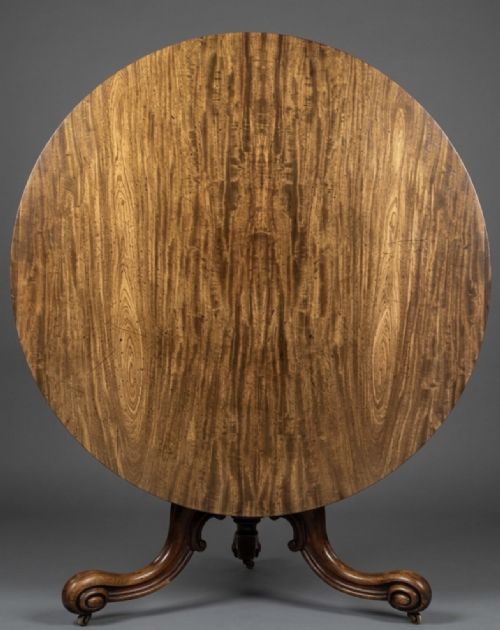
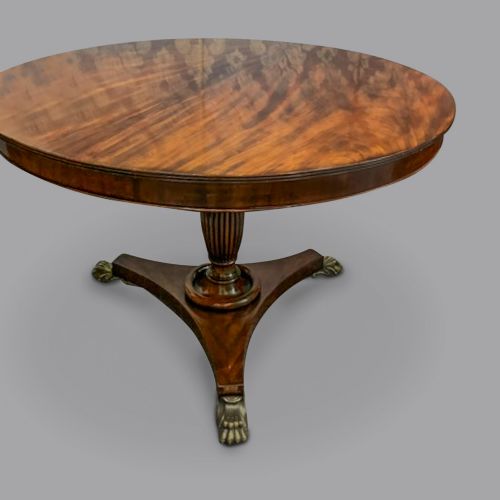
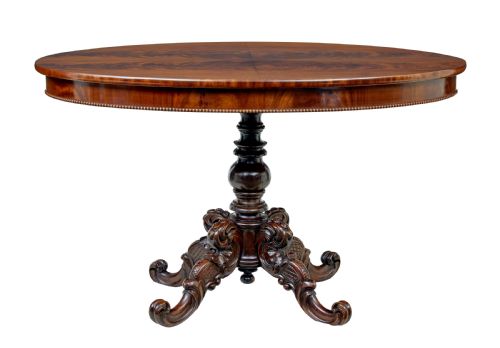
A flame mahogany centre table commands a room with its rich grain, offering a striking focal point for any traditional interior.
Identifying Flame Mahogany Centre Tables
A flame mahogany centre table brings together impressive timber work and versatile placement, often standing freely in the middle of a room. The search phrase covers forms ranging from circular breakfast tables to drum tables and larger dining pieces.
Examples on this page span the Georgian period, the nineteenth century including William IV and Regency eras, and later twentieth century revivals. Buyers frequently encounter circular designs, tilt-top mechanisms, and rectangular formats paired with mahogany, brass, and leather elements.
The recorded styles lean towards George III, Grand Regency, Regency Revival, and William IV aesthetics. These tables served various historical functions, acting as dining surfaces, writing desks, supper tables, and gueridons.
Materials and Construction
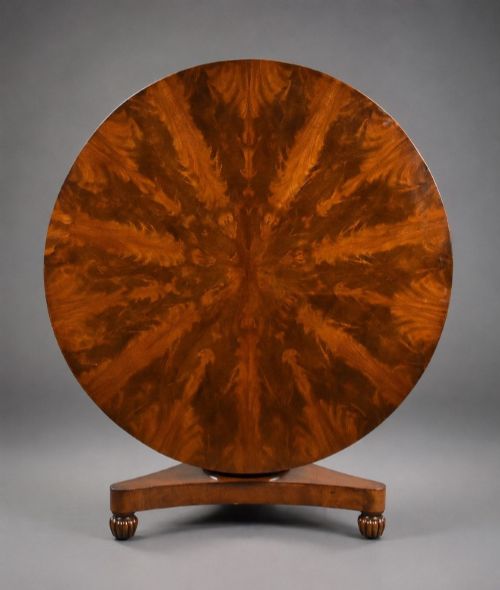
Cabinet makers utilised solid mahogany and applied carefully selected flame mahogany veneers to large surfaces to achieve dramatic, fiery grain patterns. Secondary materials such as maple appeared alongside the primary timber.
Metal components like brass hardware reinforced structural points or decorated the mounts, while specialised surfaces incorporated inset leather for writing or dining utility. Tilt-top and flip-top mechanisms required precise joinery to balance heavy timber tops on central pillars and pedestals.
Retail Price Guide 2026
Typical UK retail prices for flame mahogany centre table, calculated from the Sellingantiques database of over a million retail prices indexed since 2003. This retail price guide relies exclusively on Sellingantiques data; no external sources or auction records are used, so the figures do not describe the wider market.
Listings span the Georgian period, 1800, the 19th century, and 1920, incorporating mahogany, brass, flame mahogany, leather, and ebonised wood.
Assessing Quality and Execution
Superior examples distinguish themselves through the symmetry, depth, and book-matching of the flame mahogany veneer across the entire top. Lesser pieces show simpler grain selection or heavy secondary repairs.
The stability of the central pedestal, the precision of the tilt mechanism, and the crispness of the carving dictate the tier of craftsmanship. Better proportioned tables maintain structural balance without tipping during daily use.
The Flame Mahogany Centre Table Glossary
- Flame mahogany
- A wood veneer figure produced by slicing through boughs where branches join the trunk, creating wave-like, fiery patterns. This figure was prized for high-status furniture fronts and tabletops.
- Gueridon
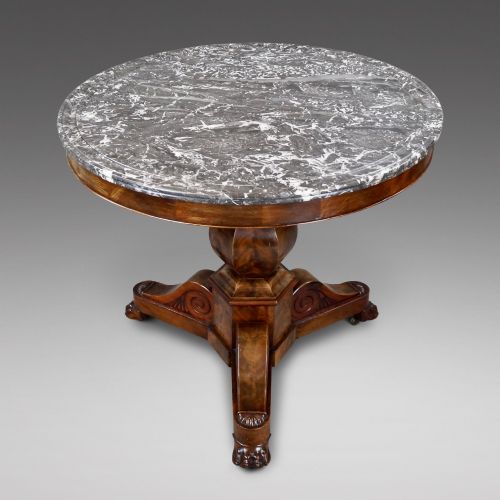
- A small occasional table, often round and supported by a single central pillar. French examples frequently feature flame mahogany veneers.
- Tilt-top
- A hinged tabletop mechanism that allows the surface to fold vertically when not in use. This design saved space in grand domestic interiors.
- Drum table
- A circular library or centre table with a deep frieze containing drawers, standing on a central pillar. These tables often incorporated inset leather writing surfaces.
Frequently Asked Questions
What is a flame mahogany centre table used for?
These tables served multiple domestic purposes throughout history, acting as dining surfaces, library desks, and decorative centrepieces.
Today, they function well in large reception rooms or entrance halls where their figured grain can be appreciated from all angles.
How do I date a flame mahogany centre table?
Dating relies on identifying stylistic markers associated with periods such as George III, Regency, William IV, or Victorian eras.
Construction methods, timber choices like the inclusion of maple, and edge profiles help narrow down the decade of manufacture.
What is a gueridon table?
A gueridon is a small circular table supported by a central column, frequently made in France using flame mahogany.
These pieces were originally designed to hold candlesticks or decorative objects.
How do I care for a mahogany tabletop?
Maintenance involves keeping the timber away from direct sunlight and sudden temperature shifts to protect the veneer.
Regular polishing with appropriate wax preserves the sheen of the mahogany and nourishes the historical finish.