


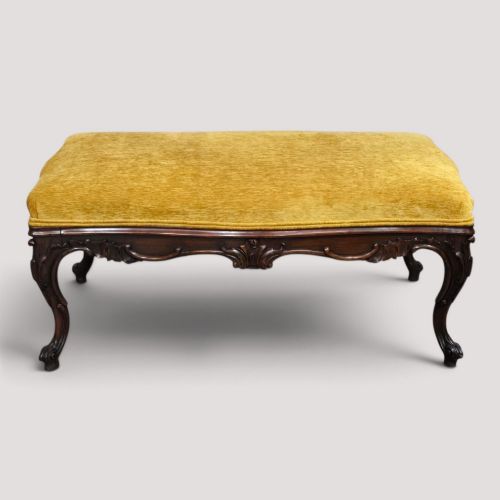
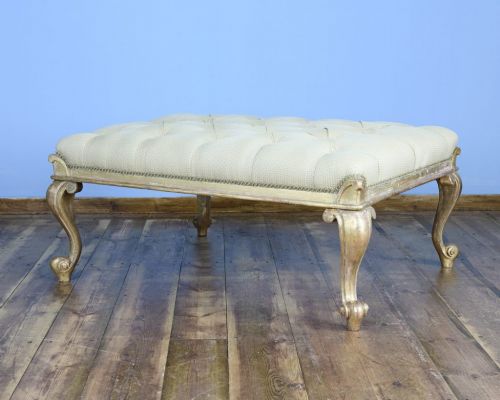


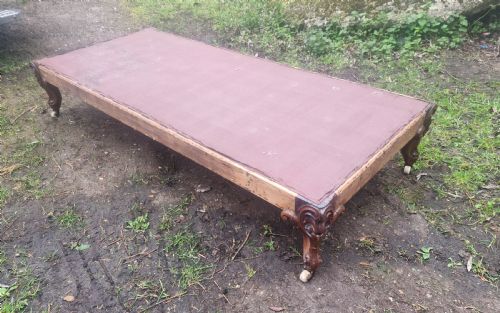


Large Low Ottoman
A large low ottoman provides deep comfort and versatile seating, bringing rich period character to a traditional sitting room.
Large Low Ottoman
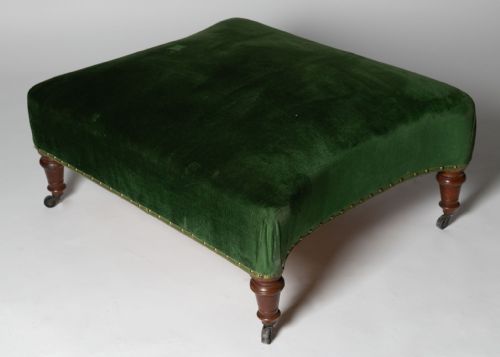
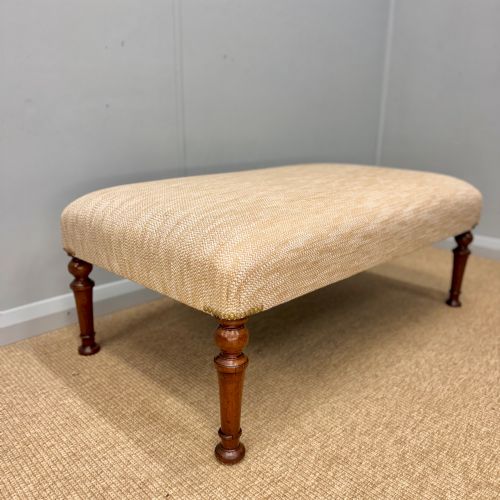
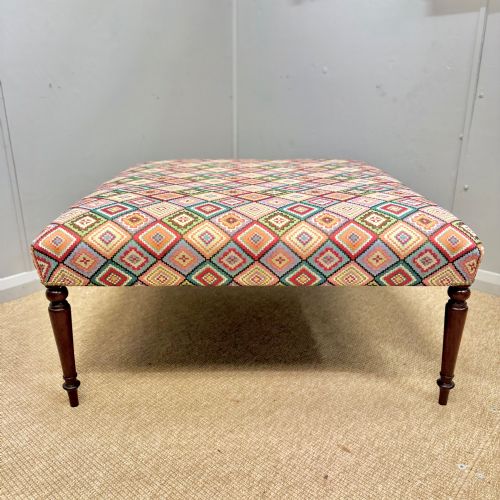
A large low ottoman serves as a generous footstool, centre stool or informal coffee table within a traditional interior scheme. When you search for a large low ottoman, you encounter substantial seating forms dating primarily from the nineteenth century alongside revival pieces.
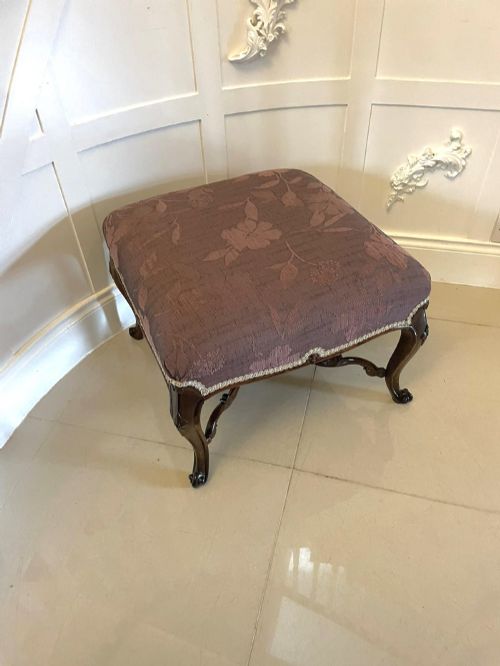
The surviving examples range from plain nineteenth-century footstools on brass castors to grand carved rosewood and giltwood centre pieces. Many items arrive newly upholstered or ready for fresh fabric, allowing them to anchor a room with distinct presence.
Makers and workshops across different eras adapted these large stools for English country houses, drawing rooms and dressing areas. Their low profiles and broad proportions make them exceptionally practical for modern living spaces.
Materials and construction
Frames rely on sturdy native and exotic timbers such as mahogany, walnut, rosewood, oak and giltwood. Cabinetmakers shaped these woods into substantial structures, often incorporating decorative carvings, cross stretchers or lions head details.
Many resting places feature brass castors to ease movement across heavy carpets and floorboards. Traditional upholstery foundations utilise webbing and stuffing beneath top layers of fabric, linen or tapestry.
Large Low Ottoman Retail Price Guide 2026
Typical asking prices for large low ottoman among the pieces listed under this phrase on Sellingantiques today, from the lower quarter to the upper quarter. They describe what is for sale here now, not the wider market.
Listings feature nineteenth-century walnut, mahogany, rosewood and giltwood frames alongside Edwardian oak examples.
Assessing quality and craftsmanship
The distinction between standard utility seating and exceptional pieces lies in the crispness of the timber carving and the scale of the frame. Heavier, denser woods and sophisticated stylistic revivals such as French Rococo or Scottish Baronial indicate higher ambition from the maker.
Original hardware, including solid brass castors and authentic structural joints, elevates the integrity of a piece. The presence of maker stamps or detailed regional joinery further separates ordinary workshop output from distinguished examples.
LOIDRAULT FRERES PARIS
The Large Low Ottoman Glossary
- Centre stool
- A large freestanding stool designed to sit in the middle of a room rather than against a wall. These pieces often feature decoration on all four sides.
- Cross stretcher
- An intersecting timber brace connecting the legs beneath a stool for added structural stability. This feature frequently displays decorative turning or carving.
- Giltwood
- Timber coated with a thin layer of gold leaf or metallic powder. It appears frequently on grand revival frames from the nineteenth century.
- Castor
- A small wheel attached to the base of a furniture leg to facilitate movement. Brass versions are common on nineteenth-century footstools.
- Upholstery
- The padded and fabric-covered components of a seat. Many antique frames are sold ready for new textile application.
Large Low Ottoman: Frequently Asked Questions
How were large low ottomans used originally?
These substantial pieces served primarily as footstools before heavy firesides or as centre tables in grand reception rooms. They provided comfortable resting places for feet or secondary seating during large gatherings.
Over time, households adapted them for multiple purposes, including impromptu low tables for books and trays. Their robust frames accommodated heavy use in busy country house environments.
Can I use an antique ottoman as a coffee table?
A firm, flat-topped upholstered stool functions admirably as a coffee table when paired with a stable wooden tray. The generous surface area handles books and decorative objects with ease.
Choosing a piece with durable fabric or leather ensures the top withstands daily use while maintaining its period charm.
How do I identify a nineteenth-century footstool?
Nineteenth-century examples typically exhibit dense timber frames, hand-cut joinery, and traditional stuffing materials beneath the fabric layer. Brass castors and period-specific stylistic details like carved rosewood or walnut further indicate this era.
Examining the underside reveals construction methods and tool marks characteristic of nineteenth-century workshop production.
Should I reupholster an antique stool?
Many antique stools are sold specifically for reupholstering to match contemporary interior colour schemes. Selecting a fabric that complements the wood tone and style of the frame preserves the visual balance of the piece.
Traditional upholstery techniques should be used during restoration to respect the integrity of the original construction.