


Large Living Room Rug
A large living room rug anchors a substantial room with woven pattern and generous scale.
Large Living Room Rug
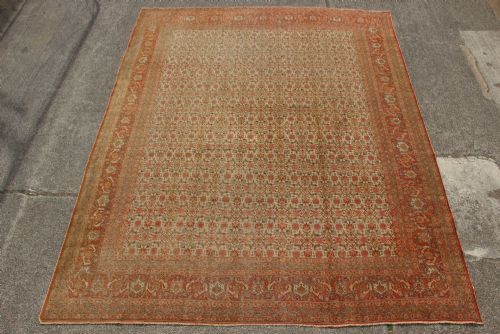
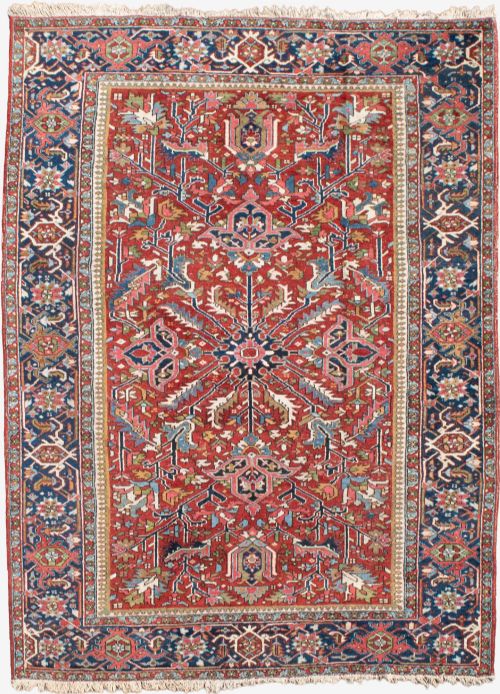
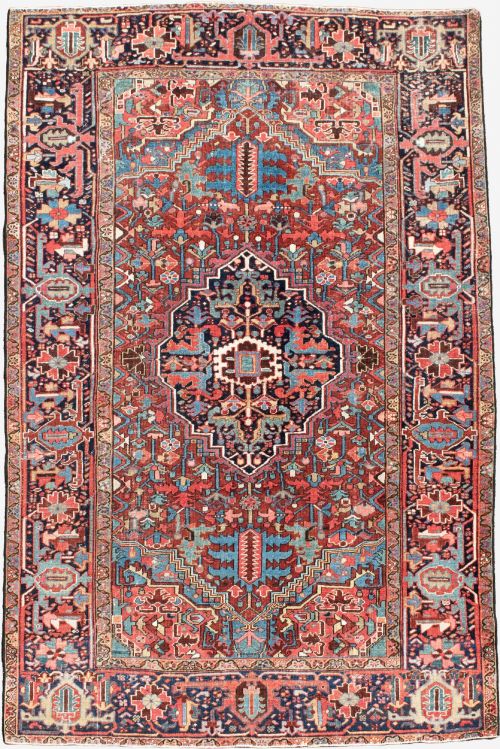
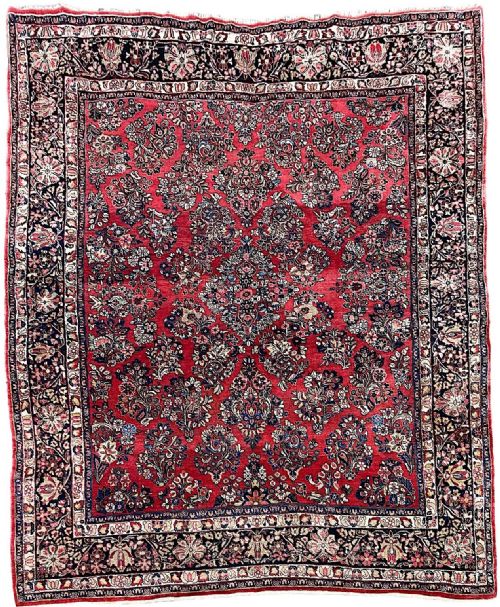
A large living room rug provides generous floor covering for principal rooms, often spanning three to five metres in length. These sizeable floor coverings appear predominantly as Persian and Turkish carpets from the late nineteenth and early twentieth centuries.
The selection centres on regional woven types such as Heriz, Tabriz, Oushak, and Mahal carpets. Buyers seeking this category encounter room-sized and oversized formats designed to define spacious interiors.
Materials and construction
These carpets rely primarily on hand-knotted wool pile foundation structures, frequently combined with cotton warps and wefts. Certain finer examples incorporate silk elements alongside wool to delineate intricate floral or geometric motifs.
Weaving techniques vary by origin, ranging from the robust, geometric knotting characteristic of north-west Persian workshops to the softer, expansive palettes found in Turkish Oushak productions.
Large Living Room Rug Retail Price Guide 2026
Typical asking prices for large living room rug among the pieces listed under this phrase on Sellingantiques today, from the lower quarter to the upper quarter. They describe what is for sale here now, not the wider market.
Listings feature traditional hand-knotted wool and cotton carpets spanning the nineteenth and early twentieth centuries.
Distinctions in quality
Quality rests upon the density of the hand-knotting, the integrity of the wool fibres, and the balance of the natural dye palette. Superior examples maintain crisp structural drawing within the medallion and field ornamentation.
Scale and proportion separate standard room-sized pieces from grand country house carpets. The preservation of original borders and pile depth across an expansive surface area determines the standing of an individual carpet.
Benlian·Maples
The Large Living Room Rug Glossary
- Medallion
- A central ornamental motif set into the middle of the carpet field. It usually takes a symmetrical geometric or floral form.
- Warp
- The vertical threads stretched lengthwise on the loom before knotting begins. Cotton or wool forms this foundational grid.
- Weft
- The horizontal threads passed across the warp strands between rows of knots to secure the pile. These threads bind the structure together.
- Pile
- The upright ends of yarn that form the usable surface of the rug. Knotting wool or silk around the warp creates this tactile layer.
- Field
- The main central area of the carpet enclosed by the border system. This space typically contains the primary pattern or medallion.
Large Living Room Rug: Frequently Asked Questions
How do I choose the correct size for my room?
Measure the floor space while leaving an even perimeter of exposed timber or stone around the edges. A large living room rug should sit beneath the front legs of main seating furniture to unify the arrangement.
Account for doorways and heavy furniture placement when selecting dimensions. Room-sized carpets generally require at least thirty centimetres of visible floor on all sides.
What is the difference between Heriz and Tabriz carpets?
Heriz carpets display bold, geometric medallion designs woven with robust wool intended for heavy domestic use. Their construction emphasises durability and strong primary colours.
Tabriz carpets tend to feature intricate curvilinear floral patterns with finer knot counts. These pieces often utilise softer pastel or ivory palettes derived from urban workshop traditions.
How should I care for an antique wool carpet?
Vacuum the carpet gently using suction attachment without a rotating brush roll. Regular rotation prevents uneven wear from foot traffic and sunlight exposure.
Professional cleaning by specialists in antique textiles remains essential every few years. Avoid excessive moisture and harsh chemical treatments that damage natural wool fibres.
Are these carpets suitable for high traffic areas?
Traditional room-sized carpets from origins like Heriz and Mahal were built for sustained domestic utility. Their dense hand-knotted wool construction withstands regular daily movement.
Placing a suitable underlay beneath the rug prevents sliding and cushions the foundation structure. This extra layer reduces friction between the wool pile and the hard floor.