







Large Japanese Ceramic Pair
A large japanese ceramic pair brings scale and matched symmetry to a room, drawing the eye with bold palettes and intricate hand-painted detail.

Large Japanese Ceramic Pair
A large japanese ceramic pair consists of matching vessels intended to balance a mantelpiece, sideboard or floor space. The search phrase covers substantial decorative items made for export and domestic display during the nineteenth and early twentieth centuries.
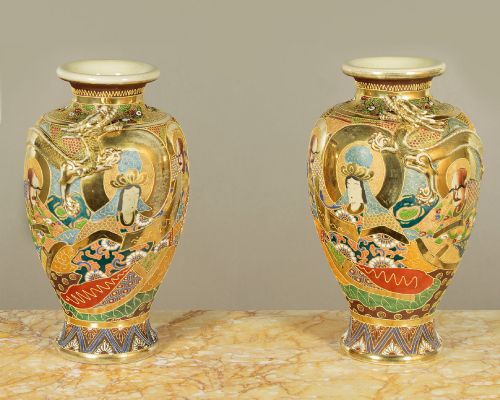
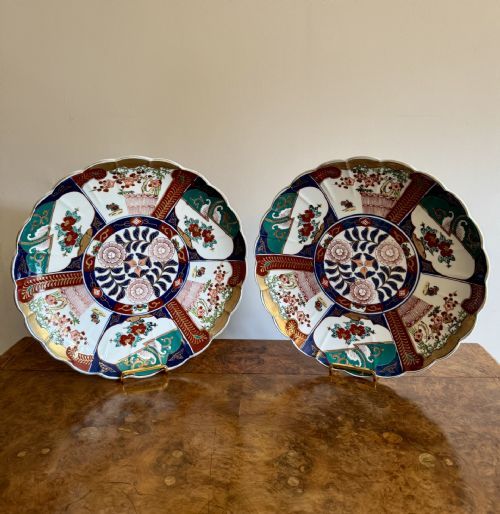
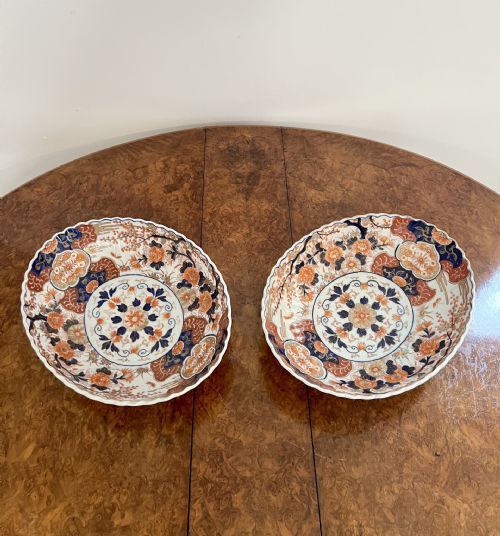
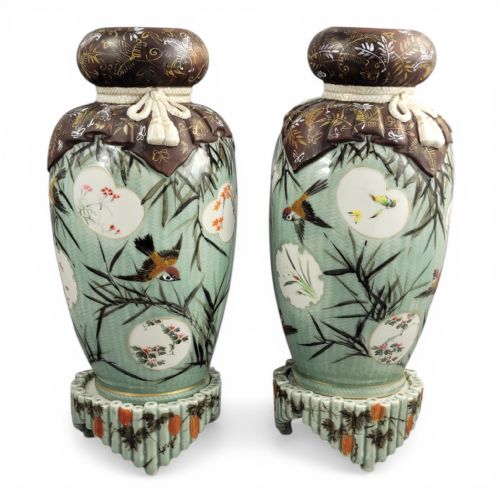
Vessels on this page lean heavily towards Imari chargers, Satsuma vases, and Kutani floor urns. Buyers encounter matching blue and white porcelain alongside heavily gilded earthenware designed to anchor a major interior scheme.
How They Were Made
Potters shaped high-fire porcelain and earthenware bodies on the wheel or in moulds before applying initial underglaze blue pigments. Artisans then layered overglaze enamels, intricate gilt work, and gold leaf highlights.
Kiln firing fused these mineral colours to the glaze, after which many pieces received secondary decoration or were mounted on wooden stands.
Some towering floor vases stand nearly a metre high, proving that Victorian interior decorators had zero fear of commitment.
What Varies in Quality
The precision of the brushwork and the density of the gilding set superior pairs apart from ordinary production wares. Finer examples display crisp detail in facial expressions, robes, and natural motifs without blurring or muddy enamel pooling.
The integrity of the matching pair matters greatly, as surviving sets that retain identical heights, corresponding panels, and original porcelain stands command higher regard than assembled pairs.
Kato Sanhei·Kinkozan
The Large Japanese Ceramic Pair Glossary
- Imari
- A traditional Japanese export style featuring a distinctive palette of underglaze blue, iron red, and gilt highlights. These wares were produced in Arita and shipped through the port of Imari.
- Satsuma
- An earthenware ceramic type with a crackle-glaze finish and dense polychrome and gilt decoration depicting figures and landscapes. It originates from the Satsuma province.
- Charger
- A large ornamental plate intended for display on a wall or sideboard rather than for dining. They measure considerably wider than standard dinner plates.
- Kutani
- A style of Japanese porcelain noted for bold, colourful pictorial designs, often incorporating greens, purples, and heavy gold. Production centres around the Kutani village area.
- Jardinière
- A large decorative pot or ceramic bowl designed to hold potted plants or floral arrangements. They frequently sit upon matching or associated wooden stands.
Large Japanese Ceramic Pair: Frequently Asked Questions
How were large japanese ceramic pairs used originally?
These imposing vessels served as focal points in grand reception rooms and hallways, often displayed on pedestals, hearths or heavy furniture.
They demonstrated household wealth and an appreciation for intricate Eastern craftsmanship during the Victorian and Edwardian eras.
How do I style a large ceramic pair at home?
Place matching floor vases in empty corners or frame a fireplace with tall matching urns to create symmetry and height. Smaller chargers and vases suit deep mantelpieces or console tables where the detailed painted panels can be appreciated closely.
Keep surrounding decor restrained so the bold colours and gold leaf of the ceramic pair remain the visual priority.
How do I distinguish Satsuma from Imari?
Satsuma wares feature a creamy, crackled earthenware body with dense pictorial enamel and gold scenes. Imari pieces utilise a hard porcelain body decorated in iron red, cobalt blue, and gilt.
Satsuma relies on matte, textured paint application, while Imari exhibits a smoother, glazed finish.
What periods do these ceramic pairs come from?
The pieces span the late Edo period, the Meiji period, and the subsequent Taisho and Showa eras. Many date from the late nineteenth century when Japanese export art gained immense popularity in Europe.
Victorian and early twentieth-century interpretations also appear frequently in the market.