




Large Imari Porcelain Vase
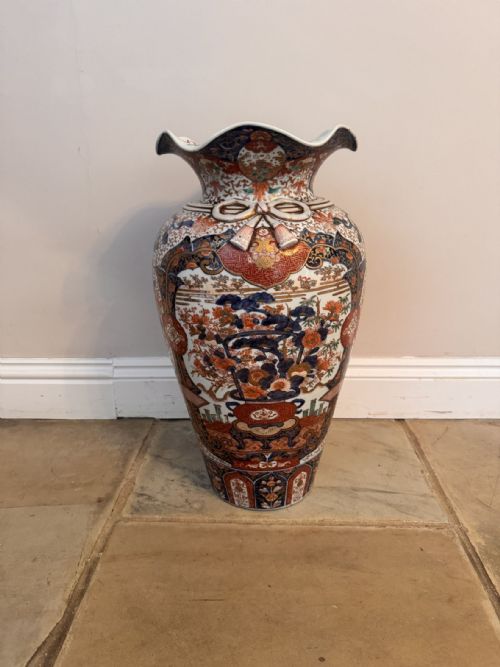
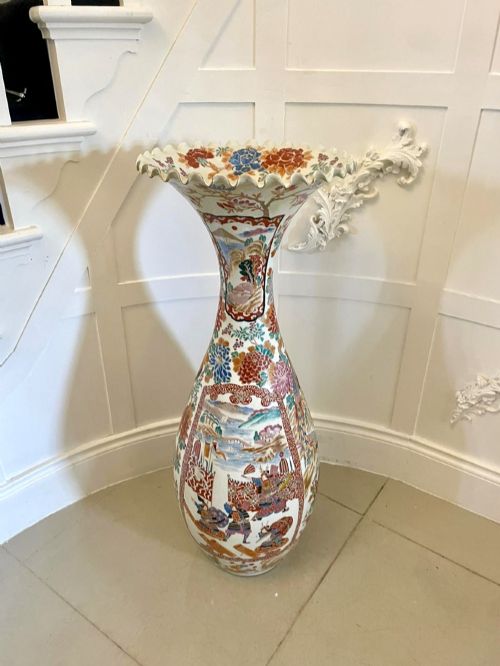
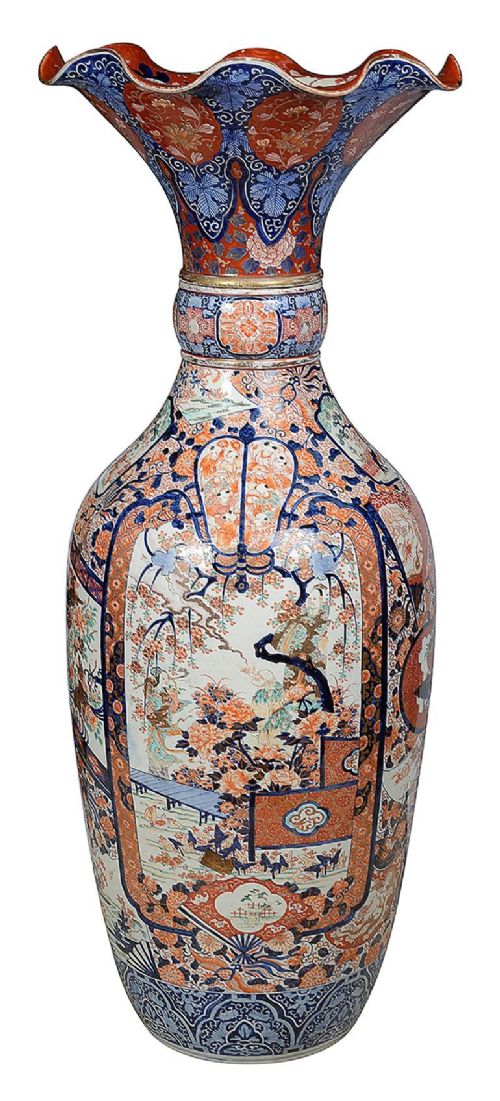
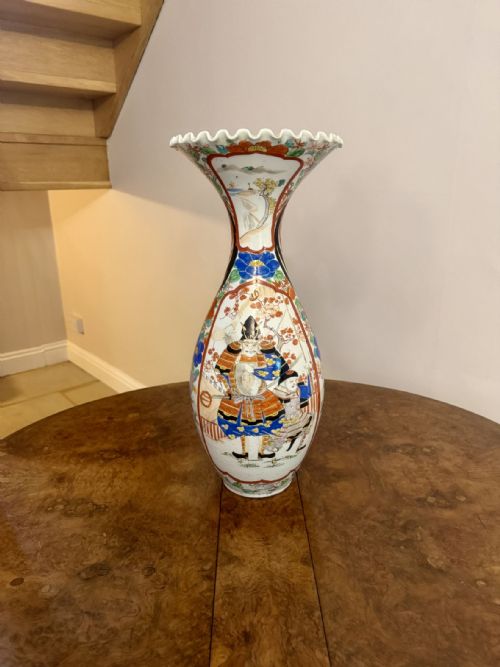
A large imari porcelain vase brings powerful iron-red, cobalt blue, and gilt decoration to an interior, drawing the eye with complex panelled designs.
Large Imari Porcelain Vase
When you search for a large imari porcelain vase, you encounter grand vessels originating predominantly from Japanese kilns during the Edo and Meiji periods, alongside select European interpretations. These statement pieces frequently appear as floor-standing jars, lidded vessels, or paired ornaments designed to anchor a room.
The selections available here span significant nineteenth-century production, featuring robust porcelain bodies painted with characteristic motifs. Lidded urns and spill vases dominate the forms, reflecting both traditional export wares and domestic decorative objects of the period.
How they were made
The makers utilised high-firing porcelain clay shaped into substantial bodies before applying underglaze cobalt blue pigments. Artisans then added overglaze iron-red enamel and gold leaf details to create the rich, layered palette associated with the style.
Firing required precise kiln control to fuse the complex mineral colours and gilding onto the white porcelain surface. Many vessels received additional finishing touches such as brass mounts or were subsequently adapted into table lamps.
Large Imari Porcelain Vase Retail Price Guide 2026
Typical asking prices for large imari porcelain vase among the pieces listed under this phrase on Sellingantiques today, from the lower quarter to the upper quarter. They describe what is for sale here now, not the wider market.
Certain nineteenth-century vessels sport fierce tiger and cow patterns alongside traditional floral motifs.
What varies in quality
The calibre of a large imari porcelain vase rests upon the precision of the hand-painted brushwork and the depth of the glaze palette. Superior examples display crisp cobalt definition and generous, well-preserved gilding that remains vibrant across the entire surface.
Scale and proportion dictate the visual impact of the piece, with heavier, monumental forms requiring exceptional potting skill to prevent warping during high-temperature firing. The complexity of the panelled motifs and the inclusion of original matching covers elevate the standing of individual vessels.
Samson of Paris·Minton
The Large Imari Porcelain Vase Glossary
- Imari
- A style of Japanese porcelain decorated in underglaze blue, iron-red, and gilt. This aesthetic originated in Arita and gained immense popularity for export to European markets.
- Meiji Period
- A historical Japanese era spanning from eighteen sixty-eight to nineteen twelve. Pieces from this time often exhibit ambitious scale and highly detailed decorative schemes.
- Edo Period
- The period in Japanese history lasting from sixteen hundred and three to eighteen sixty-seven. Early examples from this timeframe carry significant historical importance for collectors.
- Gilding
- The application of gold leaf or powdered gold onto the ceramic surface. This technique highlights specific patterns and adds a luminous quality to the finished vessel.
- Arita
- The Japanese town renowned as the birthplace of porcelain production. Kilns in this region produced the vast majority of traditional export wares.
Large Imari Porcelain Vase: Frequently Asked Questions
Where were these vases made?
The majority originate from kilns in the town of Arita, Japan, created specifically for export or domestic display during earlier centuries.
European potteries also produced faithful interpretations of the palette, expanding the tradition into Regency and Victorian design.
How do I display a floor vase?
Floor-standing vessels require stable placement away from heavy footfall to protect their substantial porcelain bodies.
Pairs look striking when flanking a fireplace or framing a grand entryway within a traditional interior.
What does the imari palette consist of?
The traditional colour scheme relies upon a combination of underglaze cobalt blue and iron-red enamel.
Artisans enhanced these core pigments with generous applications of gold leaf to create high-contrast decorative panels.
How do I distinguish Meiji pieces?
Meiji period vessels typically date from the late nineteenth or early twentieth century, reflecting a surge in ambitious export production.
These pieces frequently showcase heavier scaling and exceptionally intricate, densely packed floral and animal motifs.