
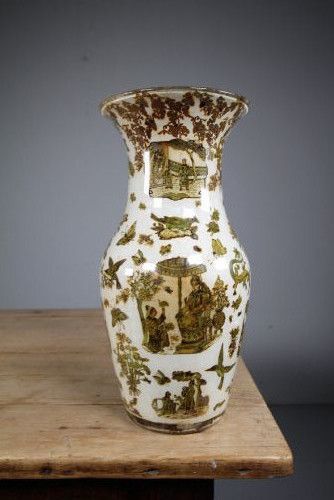
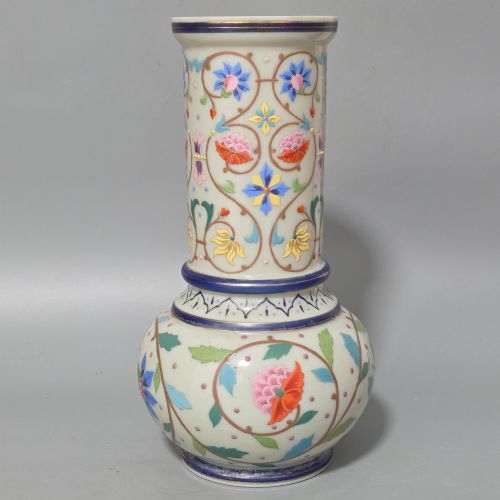


Large Glass Vase
When you search for a large glass vase, you encounter substantial vessels spanning Victorian ruby glass, Art Nouveau cameo pieces, and clean Art Deco lines.
Large Glass Vase
A large glass vase encompasses substantial vessels created across the nineteenth and twentieth centuries for display and containment. Pieces range from heavy Victorian cut crystal and ruby glass lustres to fluid Art Nouveau cameo forms and geometric Art Deco designs.
The selection reflects diverse manufacturing centres spanning England, France, Bohemia, and Austria. Buyers encounter domestic table centrepieces, floor-standing trumpet vases, and robust carboys originating from distinct stylistic movements.
Victorian examples often feature cased layers, enamel painting, or delicate Mary Gregory motifs, whilst later twentieth-century output embraces studio techniques, aventurine inclusions, and acid-etched surfaces.
Materials and technique
Makers utilised free-blowing, optical moulding, and heavy casting to form the primary vessel before applying surface decoration. Many nineteenth and early twentieth-century examples involve cased glass, where layers of different coloured metals are fused together.
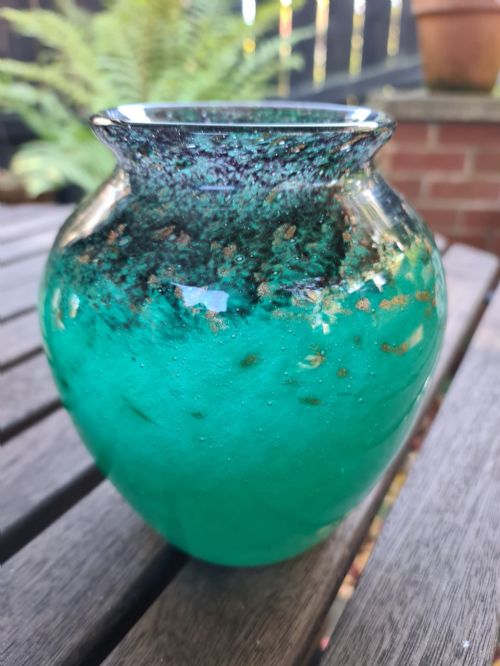
Surface ornamentation relied on sophisticated chemical and mechanical processes, including acid-etching for cameo layers, direct enamelling, and silver or pewter overlays applied directly to the warm metal. Techniques such as aventurine inclusions introduced metallic shimmer within the viscous material during cooling.
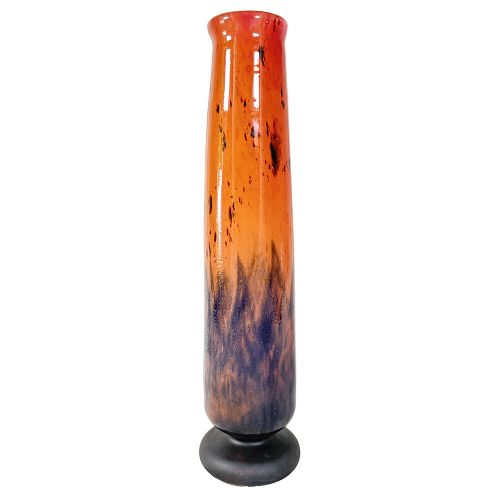
Some nineteenth-century trumpet vessels stand an impressive forty inches tall, demanding quite the sturdy mantelpiece.
Evaluating craftsmanship
Quality rests in the weight, clarity, and precision of the vessel walls, alongside the crispness of any cut or etched surface decoration. Superior pieces maintain uniform thickness and balance despite their scale, displaying intentional control over cooling and annealing.
The distinction between standard production and exceptional output lies in the execution of secondary materials like ormolu mounts, silver overlays, and hand-painted enamel details. Master workshops achieved finer relief in cameo layers and more harmonious integration of metallic stands.
Rene Lalique·Thomas Webb·Emile Galle·Loetz·Daum Nancy·Karl Palda·James Powell·LCT Tiffany
The Large Glass Vase Glossary
- Cameo glass
- Glass formed with multiple distinct layers of different colours, allowing carvers to cut away the exterior layer to reveal a contrasting design in relief.
- Ruby glass
- A deep red decorative glass achieved by adding gold compounds to the molten batch during production, popular in Victorian interiors.
- Lustre
- A decorative glass vessel featuring hanging crystal prisms or pendants around the rim, frequently used on Victorian mantelpieces.
- Aventurine
- Glass containing suspended metallic crystals that produce a glittering effect, often seen in studio art glass from the early twentieth century.
- Carboy
- A large, bulbous glass container traditionally used for holding liquids, often found in heavy green or clear blown glass.
Large Glass Vase: Frequently Asked Questions
How do I clean a large antique glass vase safely?
Wash the interior with warm water and mild soap, avoiding harsh brushes that might scratch aged surfaces or delicate gilding. Support heavy bases firmly during handling to prevent accidental impact against sinks.
Dry the vessel thoroughly with a lint-free cloth to prevent water spots, particularly on pieces with cut facets or engraved details.
Can these vases hold water for fresh flowers?
Many solid nineteenth and twentieth-century vessels tolerate water, though pieces with metallic overlays, internal silver linings, or delicate enamel work require caution. Prolonged moisture exposure can harm vulnerable painted or gilded elements.
Utilise a secondary inner container if you suspect the antique material is porous or sensitive to mineral deposits from standing water.
How do I distinguish Victorian from Art Nouveau examples?
Victorian vessels typically display symmetrical cut patterns, cased ruby or cranberry colours, and applied floral enamelling. They lean towards formal decorative symmetry and rich ornamentation.
Art Nouveau pieces embrace asymmetrical floral motifs, iridescent Favrile surfaces, and stylised organic forms derived from nature, reflecting the design shifts around nineteen hundred.
What is cased glass?
Cased glass consists of two or more distinct layers of differently coloured glass fused together while molten. This technique allowed makers to create striking contrast when cutting through the outer layer.
The resulting depth enhances the visual impact of the vessel, particularly in cameo and opaline decorative pieces.