


Large Giltwood Mantel Mirror
When you search for a large giltwood mantel mirror, you are looking at substantial antique looking-glasses designed to sit above a fireplace.
Large Giltwood Mantel Mirror
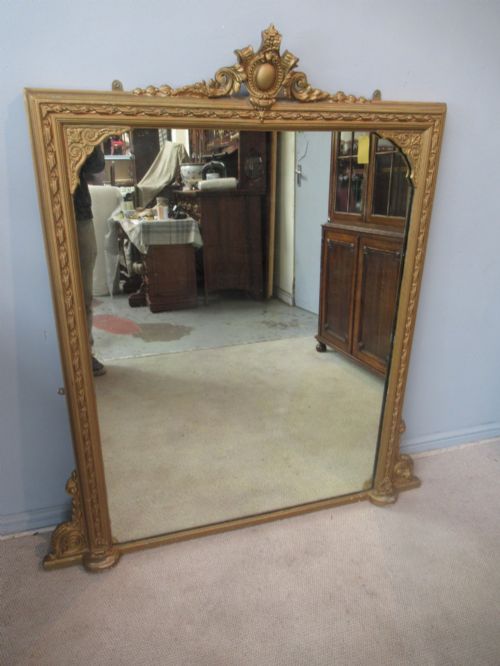
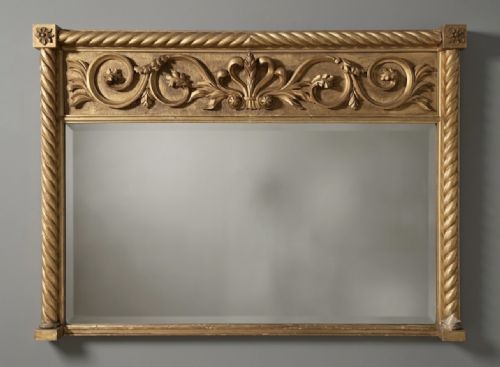
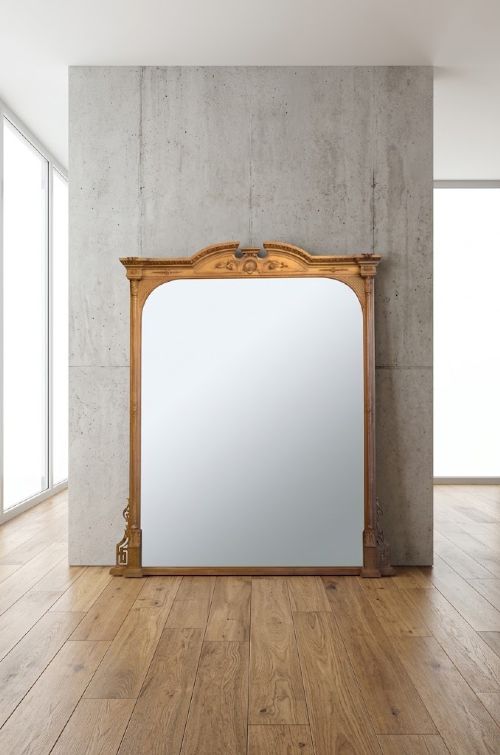
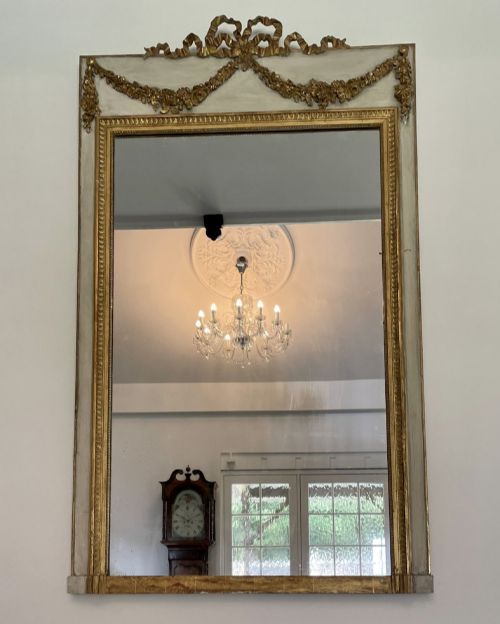
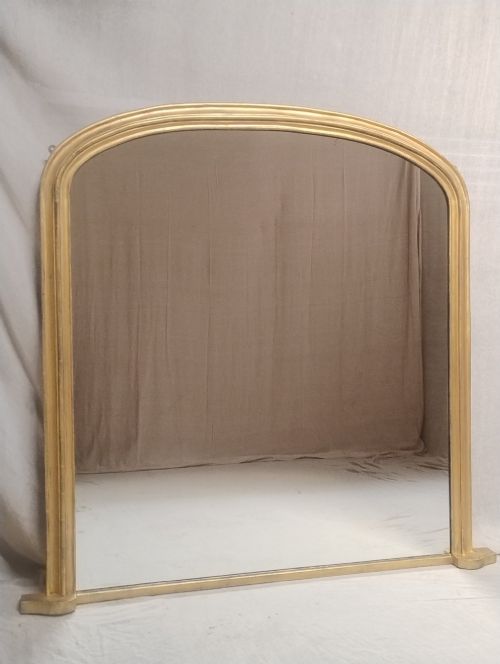
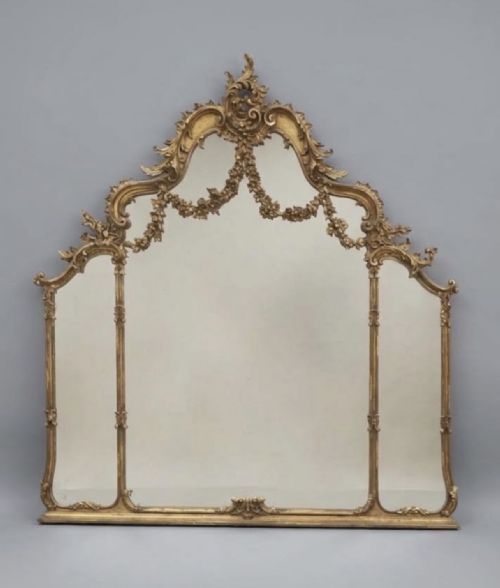
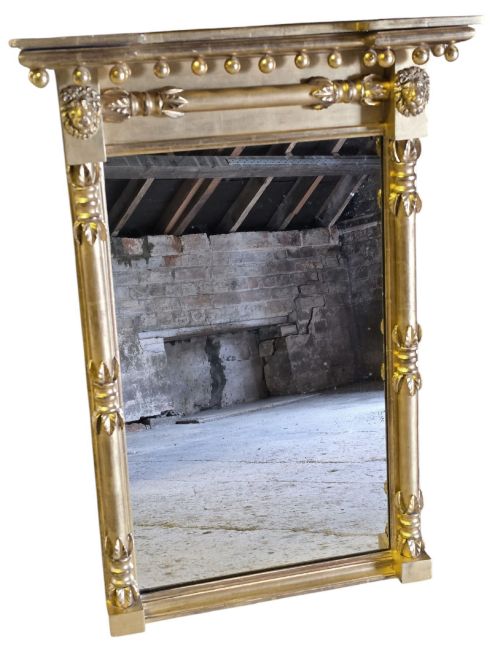
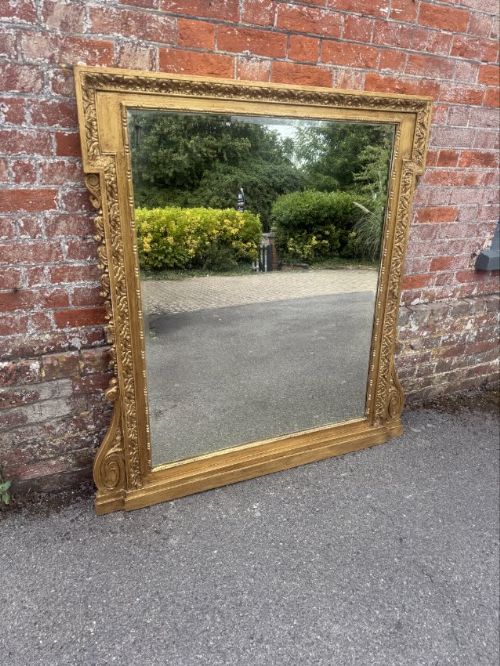
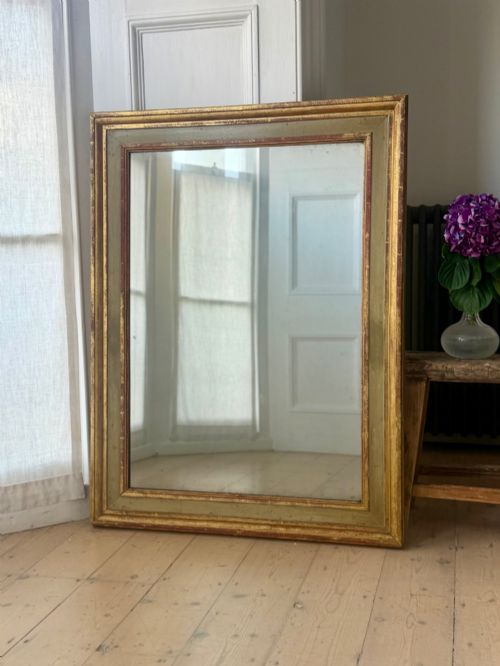
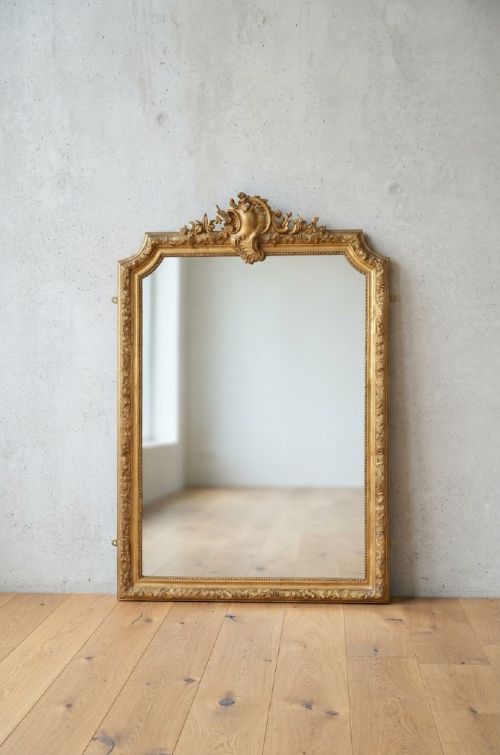
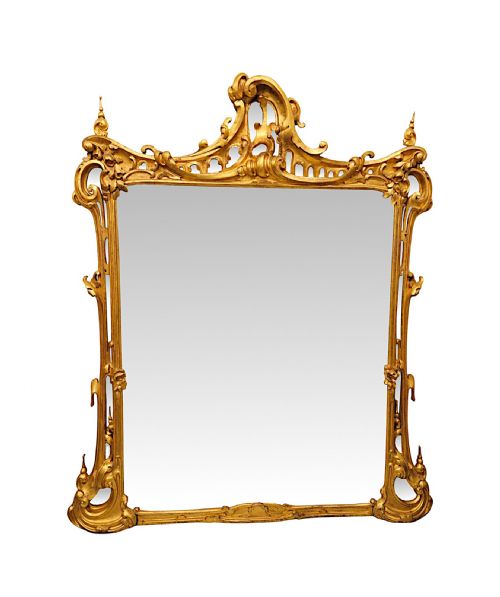
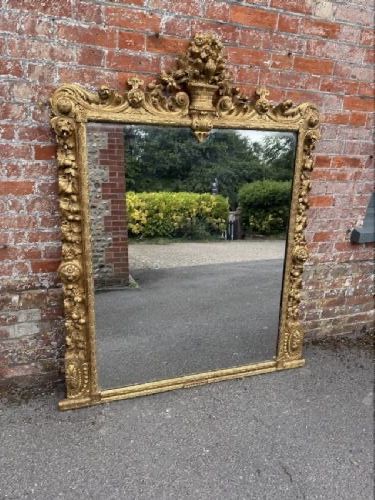
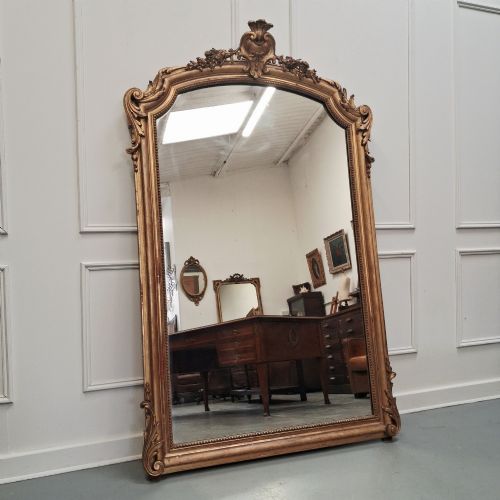
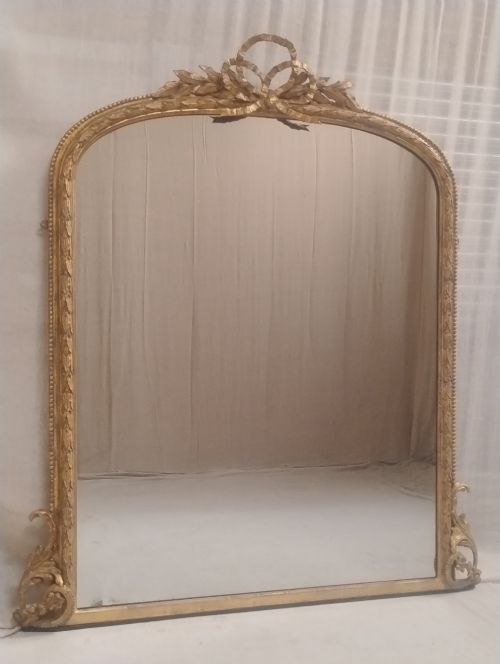
A large giltwood mantel mirror is a commanding decorative object designed to anchor the space above a fireplace. The pieces seen here span the Georgian, Regency, and Victorian periods, alongside continental French models from the nineteenth century.
Most examples function as overmantel mirrors, pier mirrors, or expansive wall mirrors. They frequently appear in architectural forms featuring arched tops, cartouches, or ornate carved frames intended to reflect light deep into a room.
How they were made
The construction of these mirrors relies heavily on carved wood and gesso, forming intricate relief ornament across the frame. Artisans applied gold leaf or composition material over the wooden carcass to achieve the characteristic metallic finish.
Many surviving plates consist of original mirror glass or early mercury glass, which exhibits natural foxing and age spots from long exposure to the elements.
Listings feature eighteenth and nineteenth-century examples utilising carved wood, gesso, composition, and original mirror glass.
What varies in quality
The depth and crispness of the hand-carved wooden ornament separate standard production from superior examples. Finely executed frames retain sharp detail in the gesso and foliage, whereas lesser pieces show softer, moulded composition details.
The preservation of the original gilt surface and the character of the mirror plate itself determine the overall integrity of the object. Retaining original mercury glass or untouched gold leaf elevates the historical weight of the piece.
The Large Giltwood Mantel Mirror Glossary
- Giltwood
- Wood that has been coated with gold leaf. This surface treatment gives the frames their bright, reflective golden appearance.
- Gesso
- A plaster-like mixture applied to wooden frames as a base for carving and gilding. It allows artisans to model fine decorative details before applying gold leaf.
- Overmantel mirror
- A large looking-glass specifically proportioned to hang above a mantelpiece. These mirrors often feature horizontal or arched formats to suit chimney breasts.
- Pier mirror
- A tall mirror designed to hang on the wall between two windows, often placed above a pier table. They emphasise vertical space in nineteenth-century interiors.
- Mercury glass
- An early type of silvered glass created by pouring a mercury amalgam behind the glass plate. It produces a mottled, dark reflection known as foxing.
Large Giltwood Mantel Mirror: Frequently Asked Questions
Where should I hang a large mantel mirror?
These mirrors traditionally anchor the wall directly above a fireplace hearth, where their scale balances the architectural weight of the chimney breast. They also function effectively on principal living room walls to amplify natural daylight.
Ensure the wall construction and fixings can support the substantial weight of a carved wood and gesso frame before installation.
How do I identify a Victorian mantel mirror?
Victorian examples frequently display heavy carved wood and gesso frames with arched or shaped tops, reflecting the revival styles popular during the nineteenth century. They often present broader proportions designed to suit larger domestic hearths.
Look for nineteenth-century construction traits in the timber backing and the composition of the frame ornaments.
What is foxed glass?
Foxed glass refers to the natural ageing of antique mirror plates, where the reflective backing degrades over time into dark spots or cloudy patches. This process occurs as moisture interacts with the original silvering or mercury behind the glass.
Collectors value light foxing as an authentic indicator of age and original nineteenth-century manufacture.
Are these mirrors French or English?
The inventory includes both English and French pieces, distinguished by their regional design vocabulary. French models often feature Rococo Revival curves, painted elements, or Napoleonic styling, whilst English pieces lean towards architectural Georgian and Victorian proportions.
Examining the underlying woods and framing techniques helps clarify the geographic origin of each specific looking-glass.