




Large Gilded Mantelpiece Mirror
A large gilded mantelpiece mirror centres a room, bringing depth and reflected light above a hearth.
Large Gilded Mantelpiece Mirror
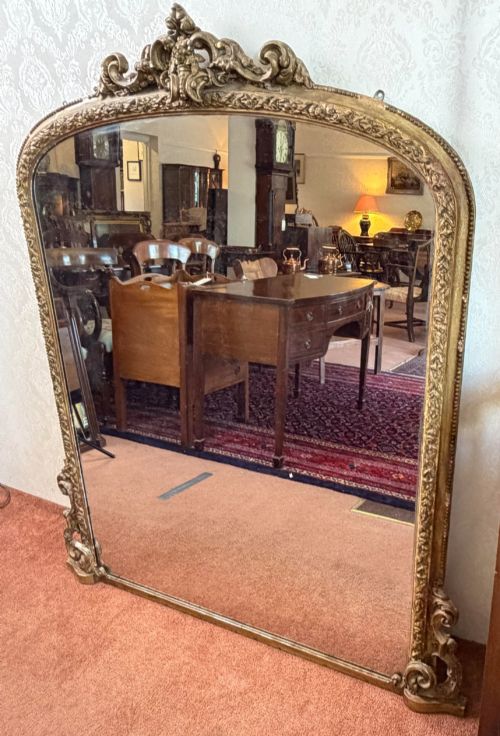
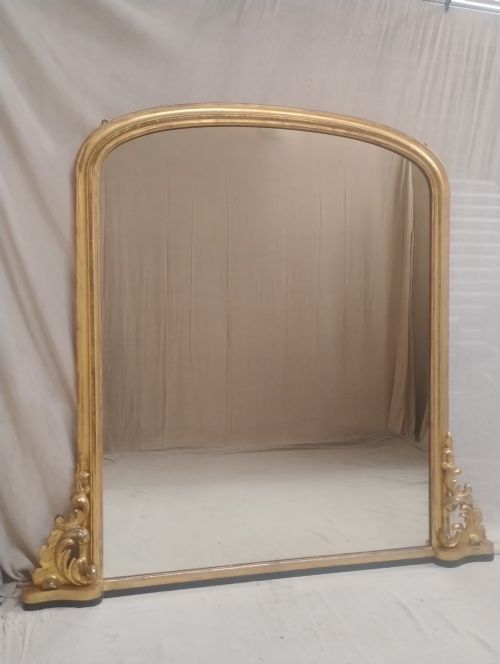
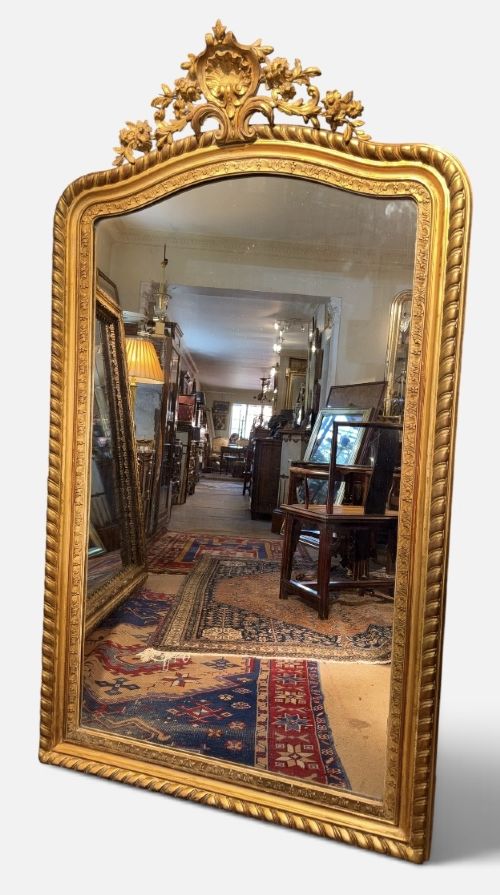
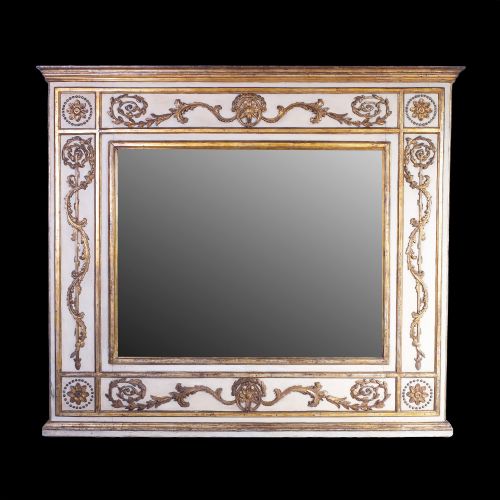
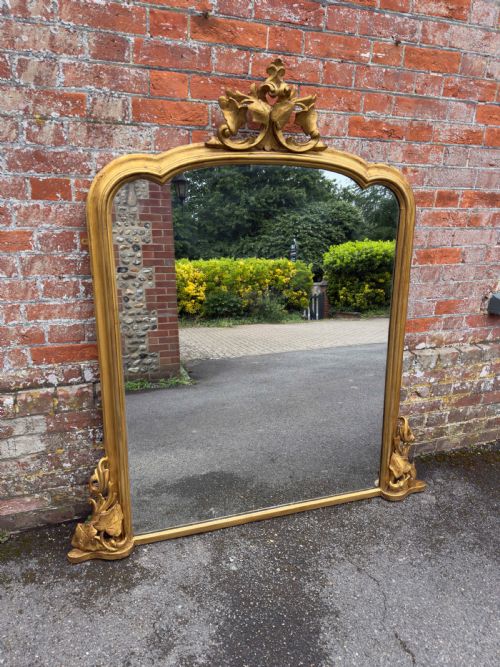
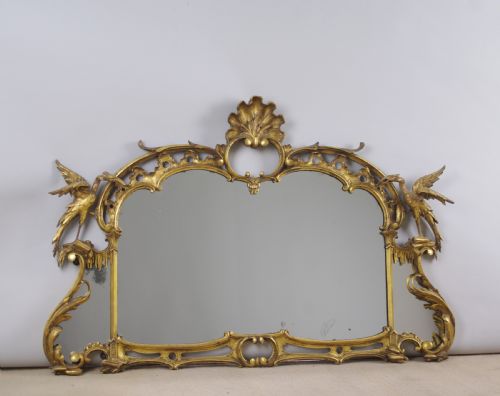
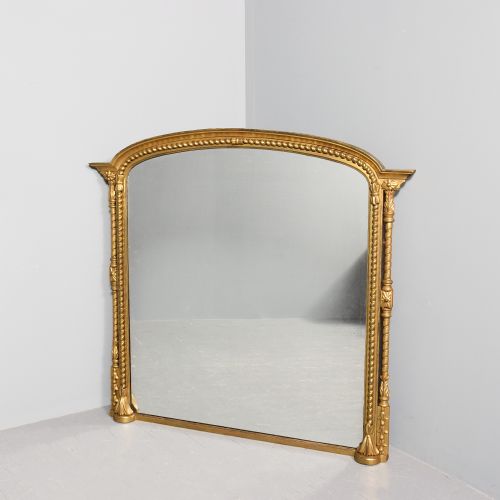
A large gilded mantelpiece mirror sits above a fireplace, designed to fill the chimney breast with reflected light and architectural presence. You meet these pieces mostly in 19th-century forms, spanning Victorian, Regency, and French regional styles.
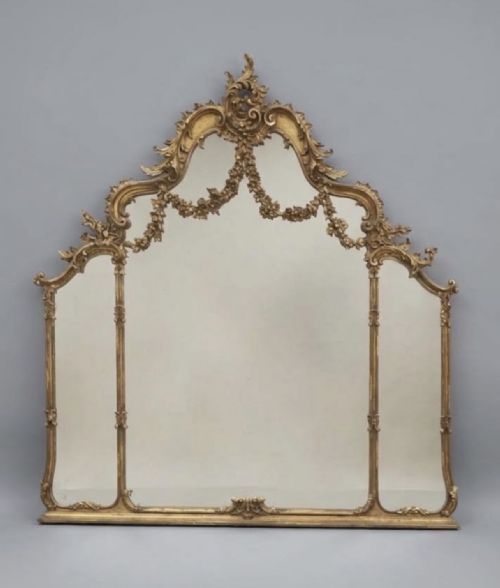
The format covers arched tops, shaped frames, and tripartite layouts intended specifically to sit horizontally over a mantel shelf. They function as both wall mirrors and overmantels, using their scale to alter the proportions of a reception room.
How they were made
Frames rely on carved wood, gesso, and composition applied over wooden foundations to build up ornate surface relief. Artisans then applied gold leaf or paint directly onto the prepared mouldings to create the gilded finish.
Mirror glass plates are set within these heavy frames, occasionally featuring etched details or grouped into larger sectional layouts. The combination of plaster, wood, and gilt creates substantial weight requiring robust hanging hardware.
Look closely to find spirited lions peering out from the gesso ornament on select frames.
What varies in quality
The crispness of the carved wood and gesso ornamentation distinguishes standard production from finer artisan work. Sharp, deep relief in the moulding indicates superior handling of the composition material before gilding.
The integrity of the original mirror plate and the depth of the gold leaf application determine the overall presence of the piece. Uniformity in the gilding and the retention of early glass surfaces separate balanced examples from later restorations.
The Large Gilded Mantelpiece Mirror Glossary
- Giltwood
- Wood carved and coated with gold leaf. This finish provides a warm, reflective surface that ages with a soft patina.
- Gesso
- A plaster-like mixture applied to wood frames. Artisans carve and mould this material to create intricate decorative details before gilding.
- Composition
- A moulded material made from whiting, resin, and glue. Workshops pressed this substance into decorative ornaments for faster frame production.
- Overmantel
- A mirror designed specifically to hang above a mantelpiece. These pieces are typically wide in format to match the width of the fireplace below.
- Tryptic
- A mirror divided into three distinct glass panels. This layout appears in Regency and 19th-century designs to break up large expanses of reflection.
Large Gilded Mantelpiece Mirror: Frequently Asked Questions
How do I hang a large mantelpiece mirror safely?
These frames carry considerable weight due to the combination of wood, gesso, and thick glass plates. Secure the piece directly into structural wall studs using appropriate heavy-duty brackets.
Rest the bottom edge securely on the mantel shelf if the weight distribution requires additional support. Professional installation is advisable for larger 19th-century formats.
Can I place these mirrors above a working fireplace?
Historically, these pieces sat above active hearths for centuries, designed specifically for that architectural placement. The materials withstand normal room temperatures encountered in domestic settings.
Exercise caution if excessive heat or smoke rises directly from an uncontained fire, as this can affect the gilt surface and frame construction over time.
How do I clean a antique gilded frame?
Dust the carved and gilded surfaces gently with a soft, dry brush to remove particulate matter without disturbing the gold leaf. Avoid liquid cleaners and chemical solvents entirely.
Moisture can damage the underlying gesso and composition mouldings, causing them to soften or flake away from the wooden foundation.
What is the difference between an overmantel and a wall mirror?
An overmantel mirror is proportioned specifically to sit horizontally above a fireplace opening. Its width usually matches or complements the mantel shelf below.
Standard wall mirrors are engineered for vertical or balanced square placement on open wall expanses rather than anchoring a hearth.