

Large Extendable Dining Table
A large extendable dining table is the centrepiece of a grand room, designed to seat many guests through clever mechanical leaves and solid pedestals.
Large Extendable Dining Table
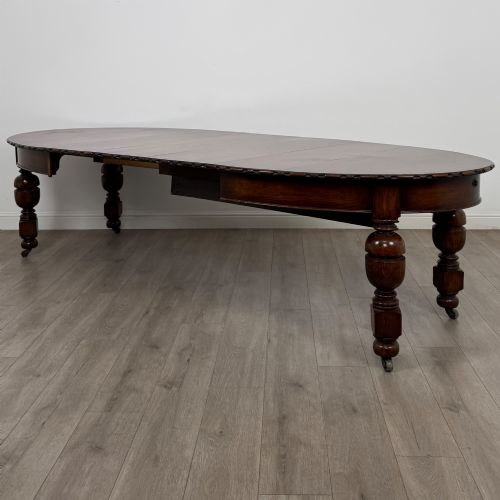
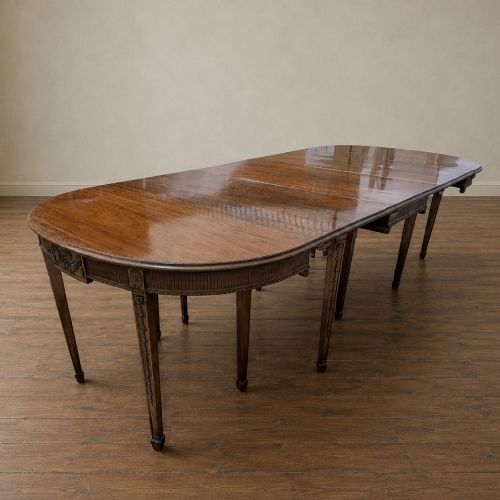
A large extendable dining table provides the scale and adaptability required for hosting dinner parties, utilising added leaves or drop mechanisms to alter its length. Buyers seeking a large extendable dining table will find substantial timber constructions spanning from the Georgian and Regency periods through to the Victorian and Edwardian eras.
The most common formats on this page rely on multi-pedestal bases or wind-out mechanisms to support extra leaves, accommodating anywhere from ten to over twenty guests. These pieces originate primarily from British workshops, though oak gateleg forms and painted Swedish drop-leaf variants also appear.
Materials and construction
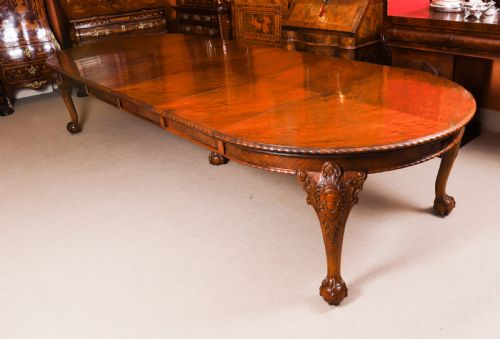
Cabinet makers built these large extendable dining tables predominantly using dense hardwoods, with figured mahogany and oak forming the vast majority of the frames. Walnut and burr walnut also feature heavily, offering rich grain patterns across the table tops.
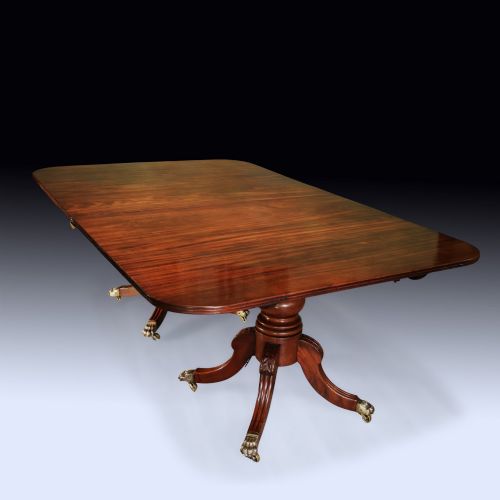
Structural integrity relied on heavy central pillars, split bases, or gateleg supports to bear the weight of extended timber leaves. Brass hardware often reinforces the winding mechanisms and castor wheels, whilst subtle inlay and carved details decorate the borders.
Large Extendable Dining Table Retail Price Guide 2026
Typical asking prices for large extendable dining table among the pieces listed under this phrase on Sellingantiques today, from the lower quarter to the upper quarter. They describe what is for sale here now, not the wider market.
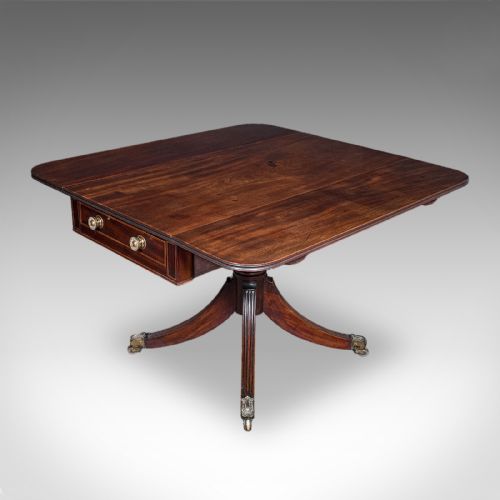
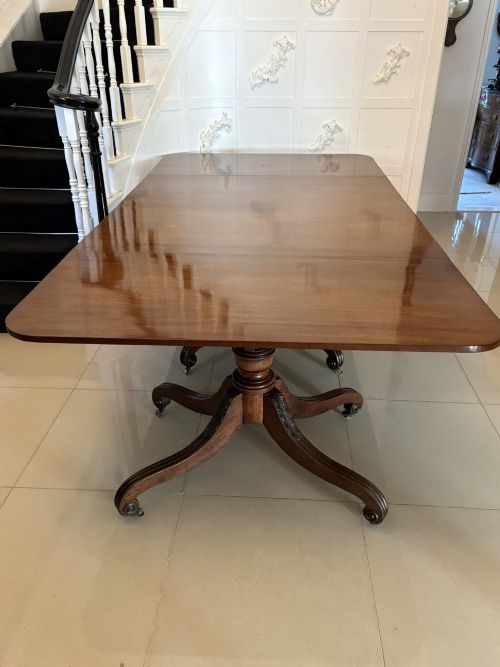
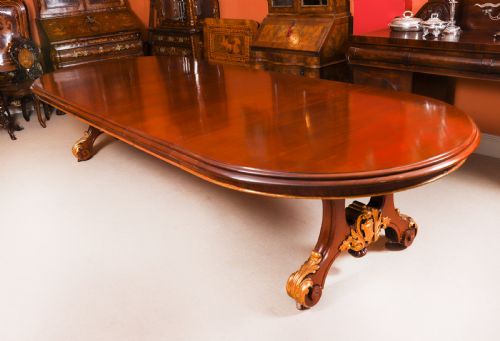
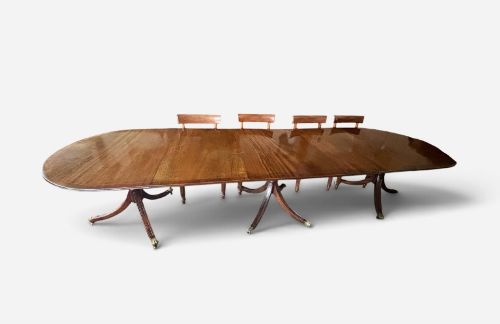
Pedestal formats range from single drop-leaf Pembroke tables up to four-pedestal giants capable of seating twenty-four people.
Factors determining quality
The distinction between standard furniture and exceptional craftsmanship lies in the selection of timber figures, such as flame mahogany or burr walnut, matched symmetrically across multiple leaves. Superior examples maintain stability and smooth operation across vast spans without sagging.
Carved detailing on the pedestals and legs, alongside robust brass winding mechanisms that operate smoothly after a century of use, separate simpler workshop pieces from those produced by notable makers.
Wylie & Lochead·Whytock & Reid·F & J Smith·Maple & Co
The Large Extendable Dining Table Glossary
- Wind-Out Table
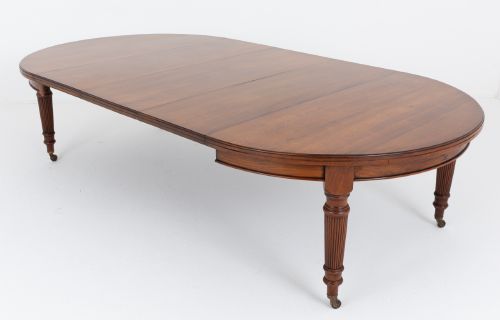
- A dining table utilising an internal screw mechanism operated by a crank handle to separate the halves and insert extra leaves. This system became popular during the nineteenth century for heavy mahogany tables.
- Pedestal Base
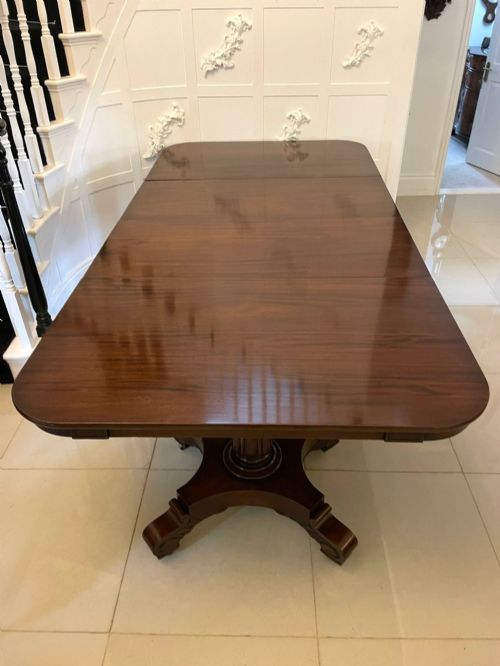
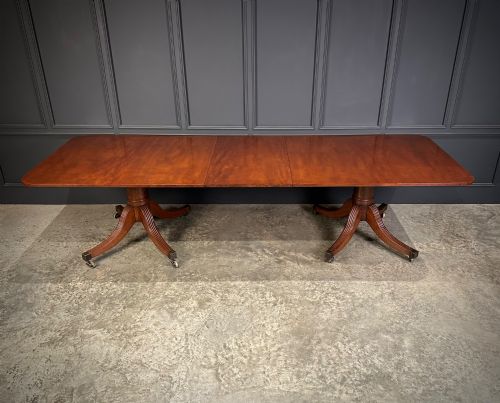
- A central column support resting on carved legs, typically numbering two to four on longer tables to distribute weight evenly. Multi-pedestal designs allow large dining tables to seat many guests without obstructive corner legs.
- D-End Table
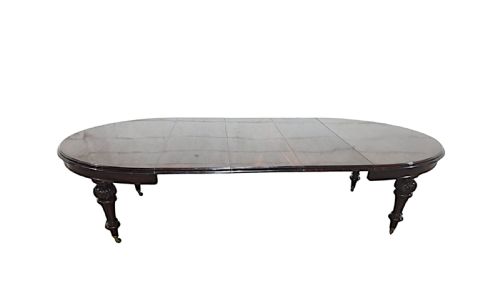
- A dining table whose ends are semicircular, resembling the letter D, which can be detached or separated from central leaf sections. These sections often double as console tables when the dining table is fully closed.
- Draw-Leaf
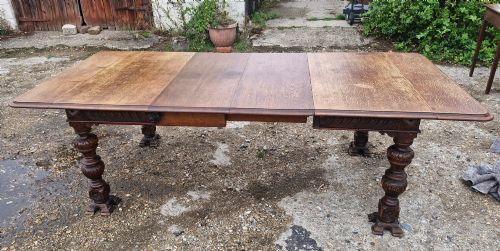
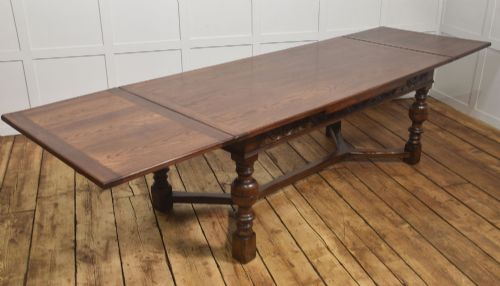
- An extension system where subsidiary leaves slide out from beneath the main top, dropping into place as the main top is raised. This mechanism appears frequently on oak tables from the early twentieth century.
- Gateleg Table
- A table with hinged drop leaves supported by swing-out legs that resemble a gate swinging open. This form allows the table to fold down compactly when not in use.
Large Extendable Dining Table: Frequently Asked Questions
How do you operate a wind-out dining table?
A metal crank handle inserts into a discreet socket beneath the table edge, turning an internal screw thread. Rotating the handle draws the two main sections apart to create the precise gap needed for extra timber leaves.
Once the leaves drop securely into place, the handle turns in reverse to lock the top tight. This mechanism requires regular lubrication with appropriate wax or oil to keep the internal wooden runners moving smoothly.
How many people can these tables seat?
Capacities vary significantly depending on the number of additional leaves and the overall length of the timber top. Standard configurations comfortably seat ten to twelve guests, while triple and quadruple pedestal models extend to accommodate sixteen or even twenty-four people.
When buying, consider both the fully closed length for daily use and the maximum extended length with all leaves inserted. Ensure adequate clearance around the room for chairs to pull out comfortably.
How do I care for a mahogany table top?
Polishing timber surfaces with traditional beeswax maintains the moisture and natural lustre of old mahogany. Avoid placing hot dishes or wet glasses directly onto the polished wood to prevent permanent staining or ring marks.
Direct sunlight can fade rich flame mahogany over time, so positioning the table away from intense windows preserves the depth of colour. Use felt pads beneath serving items and table runners for daily protection.
What is the difference between Regency and Victorian tables?
Regency tables, dating from the early nineteenth century, favour clean architectural lines, brass paw castors, and finely figured mahogany veneers. Their pedestals often feature reeded columns and classical proportions.
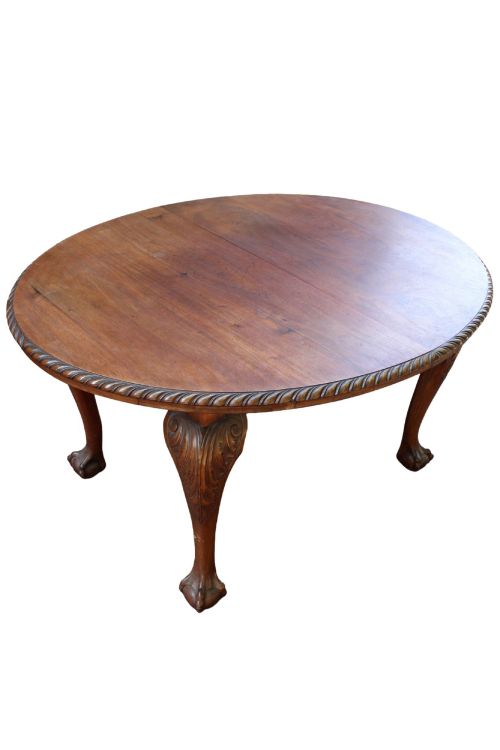
Victorian tables generally offer heavier proportions with more elaborate carving, such as ball and claw feet or heavier turned pillars. They frequently incorporate advanced winding mechanisms to manage the weight of multiple extension leaves.