







Large Dog Statues
Large dog statues bring presence and character to a room, standing as commanding focal points shaped in bronze, ceramic, and terracotta.
Large Dog Statues
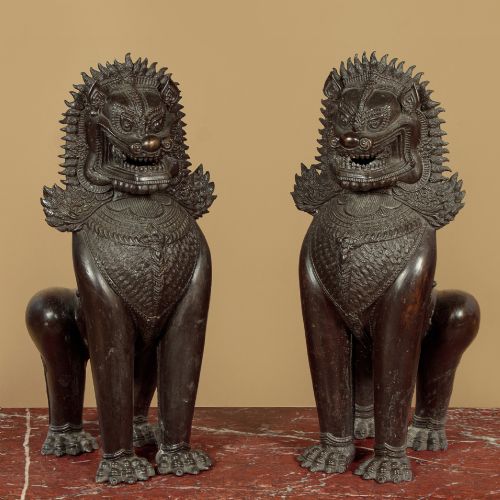
Large dog statues encompass robust figures and sculptural groups created across the nineteenth and early twentieth centuries. When searching for large dog statues, buyers encounter domestic hounds, guardian temple lions, and decorative animalier studies.
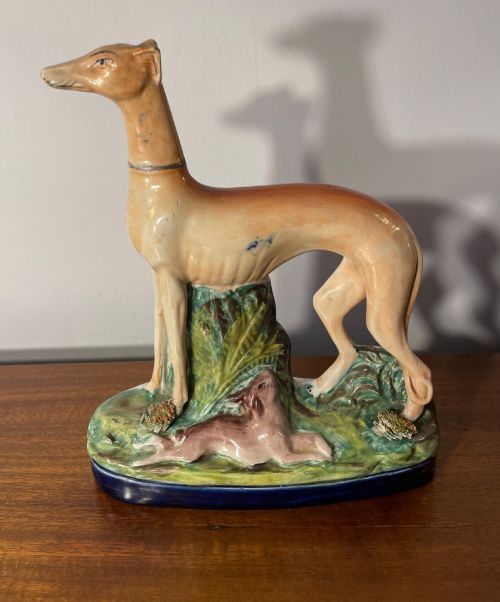
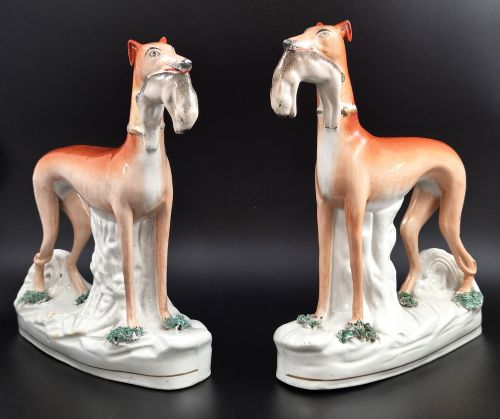
The nineteenth-century examples lean heavily towards Staffordshire earthenware pairs, often depicting greyhounds with hares or seated spaniels. Bronze figures from the same era and later decades bring animalier realism and substantial weight to interiors.
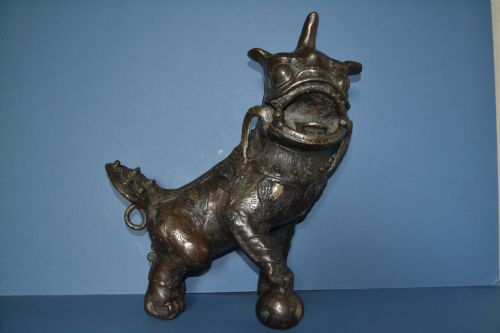
Ceramic works from continental potteries introduce colour and glazed finishes, while cast iron and terracotta provide durable options for larger garden or hallway placement. These pieces reflect diverse cultural traditions, ranging from English pottery to Tibetan and Japanese metalwork.
Materials and Techniques
Foundry casting captures anatomical detail in bronze, spelter, and cast iron, utilising lost-wax or sand-casting methods depending on the workshop. Metal surfaces receive patination or applied colour to enhance depth and texture.
Pottery figures rely on earthenware bodies formed in moulds before receiving lead glazes, enamel decoration, or Parian porcelain finishes. Terracotta works are shaped and fired to produce porous, robust bodies suited to substantial sculptural forms.
Large Dog Statues Retail Price Guide 2026
Typical asking prices for large dog statues among the pieces listed under this phrase on Sellingantiques today, from the lower quarter to the upper quarter. They describe what is for sale here now, not the wider market.
Several hounds carry unfortunate hares in their mouths, reminding visitors that these ceramic pets were bred for the chase.
Judging Quality
Surface finish and glaze consistency reveal much about the origin and ambition of the piece, with subtle patination or controlled enamel application elevating the object. Proportion and balance across pairs demonstrate the maker's skill in handling heavy materials without distortion.
Georges Gori·John Durham·Christophe Fratin·Bernard Bloch·Henri Jaquesmart
The Large Dog Statues Glossary
- Animalier
- A nineteenth-century artistic focus on the realistic depiction of animals, particularly in bronze sculpture. Practitioners captured dynamic movement and anatomical precision.
- Parian ware
- A fine-grained, unglazed porcelain developed in the nineteenth century to imitate carved marble. It provides a smooth, matte surface ideal for figural statuary.
- Okimono
- A Japanese decorative object intended for display on a shelf or in a tokonoma alcove. These finely detailed carvings and metal castings showcase exceptional craftsmanship.
- Spelter
- A zinc alloy used as a less expensive alternative to bronze for decorative figures. It is frequently patinated to simulate heavier metals.
- Staffordshire figure
- Pottery figures produced in the Staffordshire potteries in England. These earthenware pieces were moulded, hand-painted, and glazed for domestic mantelpieces.
Large Dog Statues: Frequently Asked Questions
Where should I place a large dog statue?
These substantial pieces demand space to command a room properly, making them well-suited for entrance halls, wide landings, or garden conservatories depending on their material.
Heavier bronze and cast iron versions stand securely on stone floors, while ceramic and earthenware pairs sit comfortably upon sturdy wooden sideboards or low tables.
How do I clean ceramic dog figures?
Dust glazed earthenware and porcelain gently with a dry, soft brush to prevent accumulation in recessed moulded details.
Avoid using water or chemical cleaners on antique ceramic glazes, as old pottery bodies can absorb moisture through micro-fissures in the surface.
Are bronze and spelter statues different?
Bronze is a durable copper alloy that maintains structural integrity and develops a rich patination over centuries of handling.
Spelter is a softer zinc-based alternative that feels lighter and requires careful handling to avoid surface dents or structural stress.