

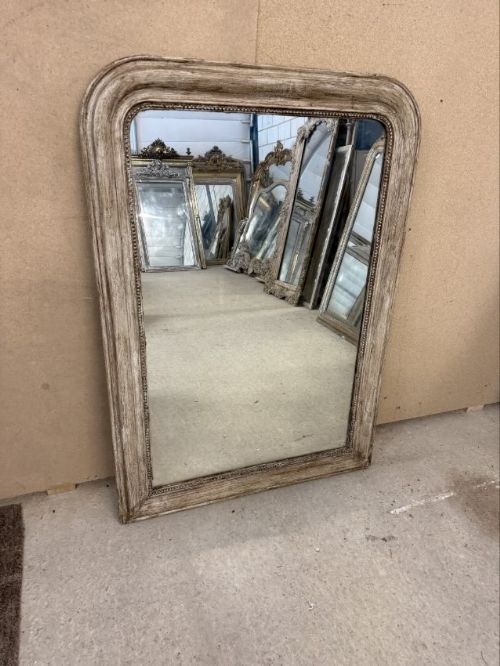
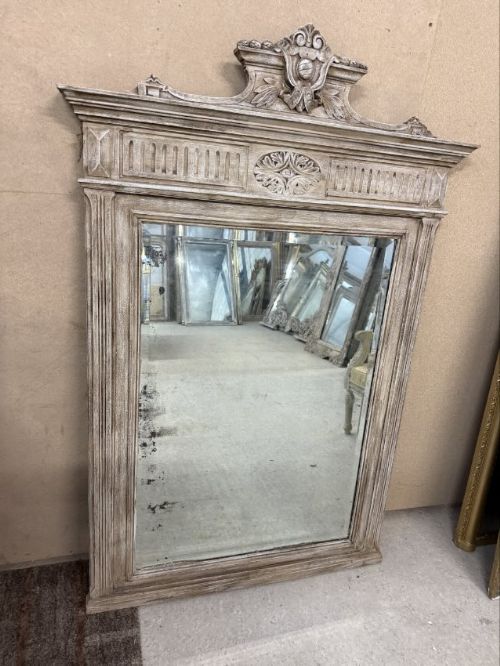
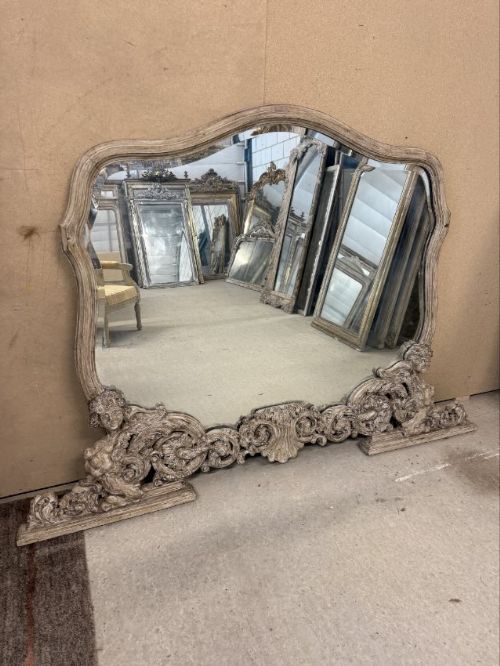
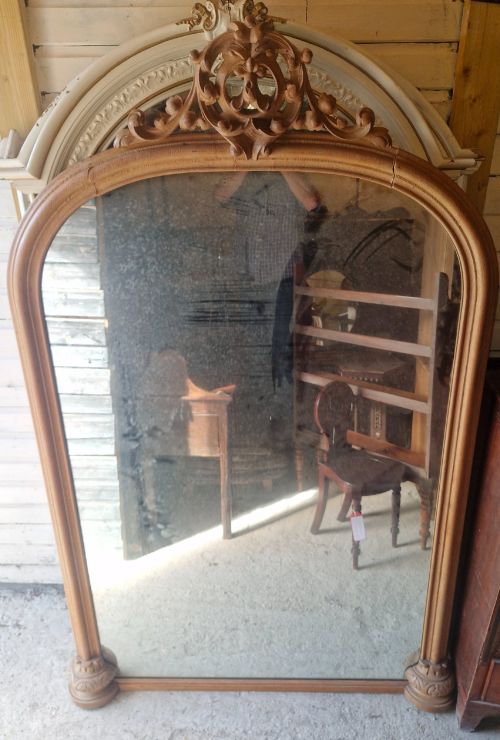
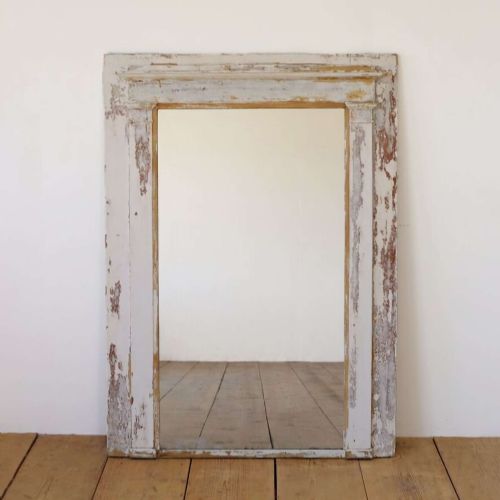
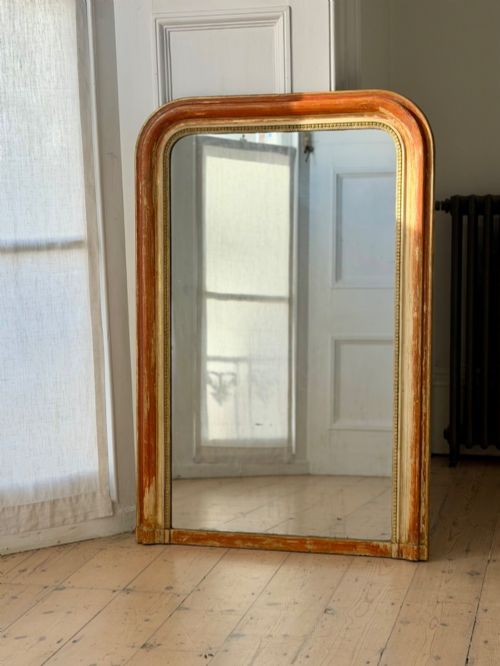


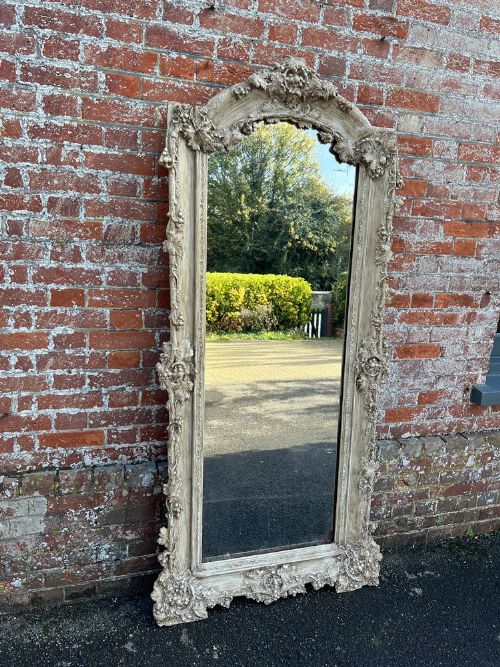


Large Distressed Mantle Mirror
A large distressed mantle mirror brings monumental scale and weathered character to a room, anchoring a fireplace with period presence.
Large Distressed Mantle Mirror
A large distressed mantle mirror is fundamentally a substantial wall hanging designed to sit above a fireplace, though many function equally well as general wall mirrors. When you search for a large distressed mantle mirror, you encounter impressive nineteenth-century forms originating from English and French workshops.
The pieces appearing on this page span several decades of the nineteenth century, ranging from the mid-Victorian era through to nineteen hundred. You will find overmantel mirrors alongside broader wall mirror categories, often featuring architectural proportions suited to high ceilings.
English and French regional styles dominate the selection, encompassing Rococo Revival curves, Neoclassical restraint, and rustic provincial finishes. The version you are most likely to meet is an English or French nineteenth-century overmantel mirror rendered in painted wood with a distressed surface.
Materials and construction methods
Makers constructed these frames predominantly from carved wood and gesso, applying layers of paint, gold leaf, or silvering to achieve the desired decorative effect. The underlying wooden carcases provide the necessary structural strength to support substantial expanses of mirror glass.
Surface patination is achieved through historic wear on paint, gesso, and gilt layers, which creates the characteristic distressed aesthetic valued by collectors. Craftsmen shaped frames into arched tops, column-framed rectangles, and shaped profiles using traditional joinery and carving techniques.
Large Distressed Mantle Mirror Retail Price Guide 2026
Typical asking prices for large distressed mantle mirror among the pieces listed under this phrase on Sellingantiques today, from the lower quarter to the upper quarter. They describe what is for sale here now, not the wider market.
Listings feature nineteenth-century pieces from eighteen-fifty through to nineteen hundred, utilising carved wood, gesso, paint, and gold leaf.
Distinguishing quality across the range
Quality in these mirrors rests primarily in the ambition of the carving and the integrity of the original gesso and paint surfaces. Pieces featuring complex shaped tops, column framing, or intricate Rococo detailing demonstrate superior craftsmanship compared to plain or straightforward rectangular frames.
The distinction between ordinary examples and exceptional pieces lies in the depth of the hand-carved wood and the retention of original, undisturbed patination rather than modern repainting. Heavier gesso application that survives intact without extensive modern stabilization elevates a piece within the range.
The Large Distressed Mantle Mirror Glossary
- Overmantel mirror
- A large mirror specifically proportioned to hang on the wall directly above a fireplace mantle. These pieces frequently incorporate architectural framing to suit high-ceilinged nineteenth-century reception rooms.
- Gesso
- A plaster-like mixture applied to wooden frames as a smooth base for gilding and painting. Artisans built up layers of gesso to carve fine decorative relief details before finishing.
- Louis Philippe
- A nineteenth-century French style characterised by restrained curves and arched tops, blending classical simplicity with gentle ornamentation. This aesthetic appears frequently in French mirrors from the middle decades of the era.
- Rococo Revival
- A decorative nineteenth-century style reviving the flowing, asymmetrical curves and natural motifs of the eighteenth-century French movement. Mirrors in this style often display exuberant carved wood foliage and scrollwork.
Large Distressed Mantle Mirror: Frequently Asked Questions
Where should I hang a large mantle mirror?
These mirrors were traditionally designed to hang directly above a fireplace mantle, where their grand scale reflects light and fills the vertical space of a chimney breast.
They also function effectively on any principal wall in a high-ceilinged room, provided the wall structure can support the considerable weight of carved wood and glass.
How do I identify a nineteenth century mirror?
Nineteenth-century mirrors reveal their age through heavy timber carcases, hand-applied gesso layers, and the specific proportions associated with Victorian and French regional designs.
Examination of the materials often shows period-appropriate paint layers, silvering degradation on the glass, and traditional hand-carved joinery rather than modern manufacturing marks.
What is a French Chateau style mirror?
French Chateau style mirrors reflect the grand, decorative traditions of domestic architecture found in historic French residences. They typically feature graceful arched tops and sophisticated painted or gilt wooden frames.
These pieces bring a distinct continental elegance to a room, balancing substantial scale with refined decorative carving.
How should I clean a distressed antique mirror?
Care for the glass using a soft cloth and a gentle glass cleaner, taking care to avoid harsh chemical agents that might seep behind the edges. Prevent any moisture from contacting the wooden frame, gesso, or historic painted surfaces.
Dust the carved wood frame periodically with a dry, soft brush to protect the delicate original patination and distressed finish.