

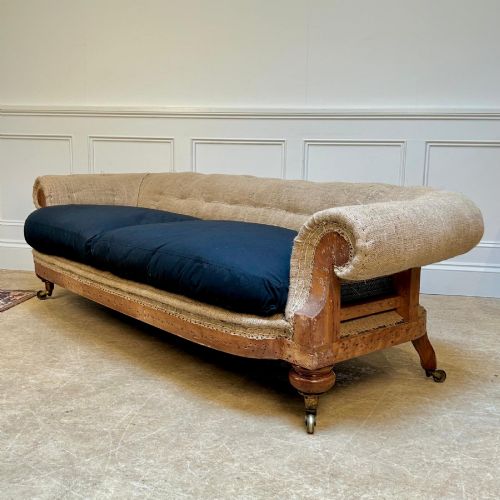
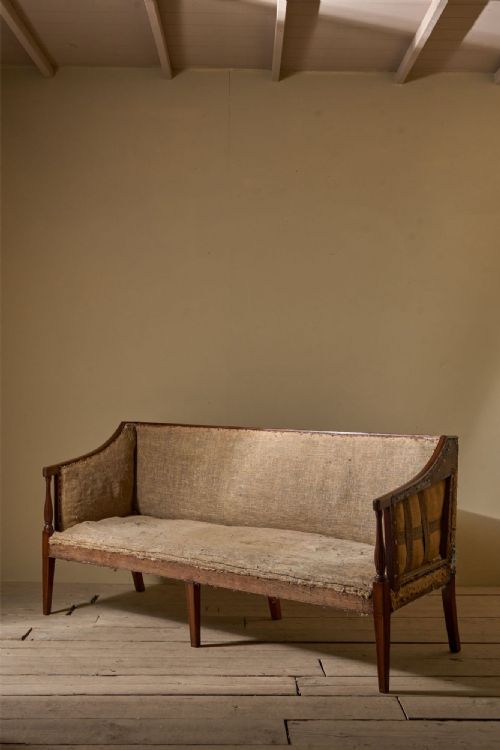


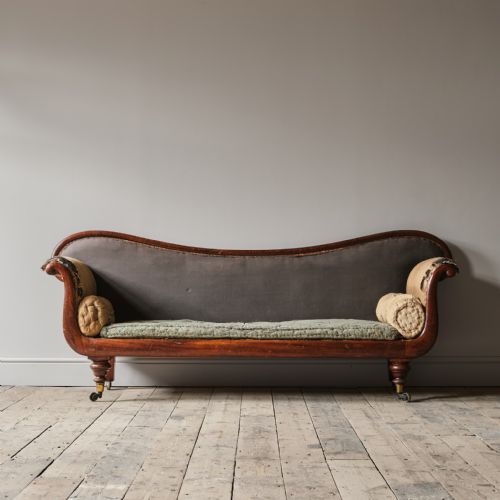
Large Country House Sofa
A large country house sofa provides deep seating and generous proportions, built for comfort in substantial drawing rooms.
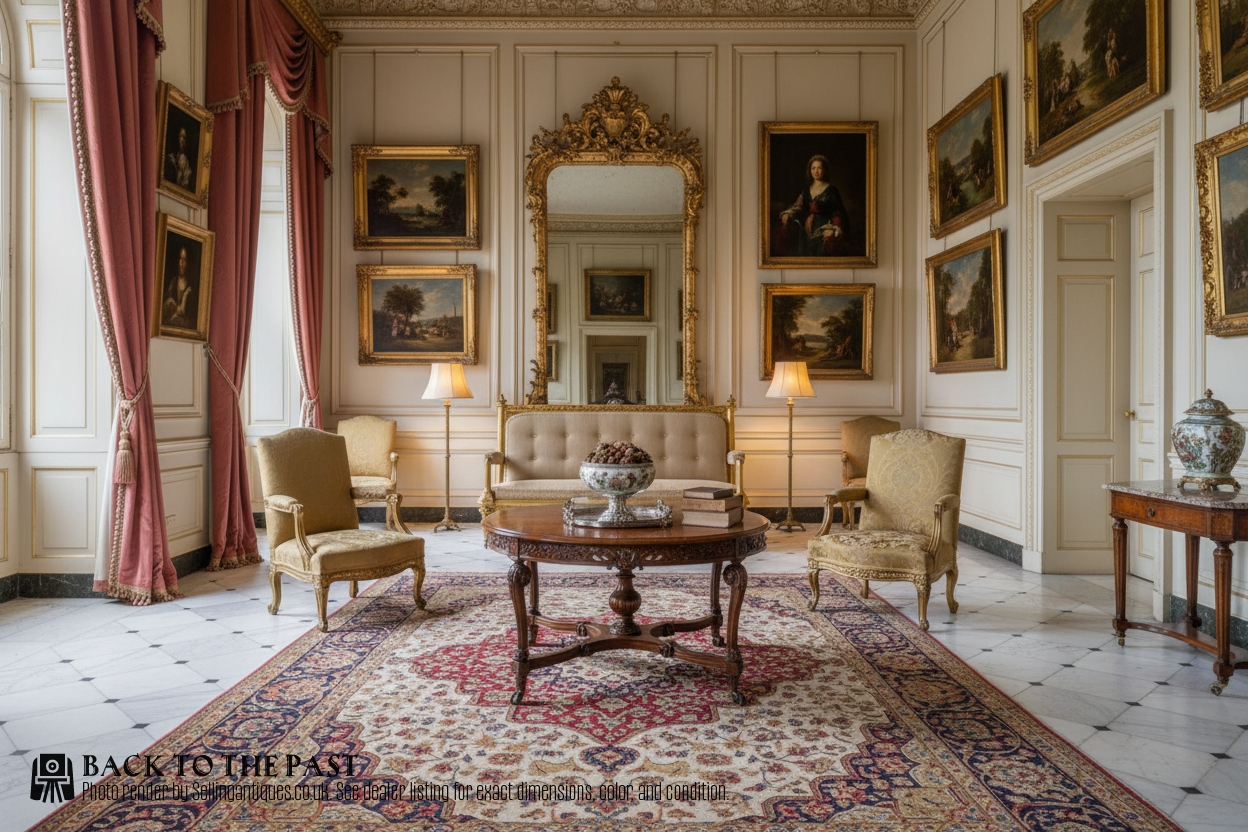
Large Country House Sofa
A large country house sofa is a substantial seating piece designed for country estates and grand drawing rooms. These items offer deep seats and generous proportions intended for relaxed, long-term sitting.
The versions most common on this page span the eighteenth, nineteenth, and early twentieth centuries. They appear in styles such as Georgian, Victorian, Edwardian, and Regency, reflecting the changing tastes of British domestic interiors.
Framed in hardwoods and upholstered in fabrics like damask, calico, or leather, these seating pieces anchor a large room. Many examples carry specific maker attributions or retail histories from firms that supplied elite households.
How they were made
Makers built the structural frames using solid timbers such as mahogany, beech, walnut, and rosewood. These dense woods provided the necessary strength to support deep, heavy upholstery and frequent use.
Upholstery techniques relied on traditional stuffing materials, hessian, and ticking to create firm yet springy cushions. Outer coverings ranged from damask and fabric to hand-dyed brown leather and original ticking.
Decorative elements included carved mahogany details, reeded frames, brass accents, and giltwood finishes. Drop-arm mechanisms and button-backed styling also appeared on specific Victorian and Edwardian iterations.
Large Country House Sofa Retail Price Guide 2026
Typical asking prices for large country house sofa among the pieces listed under this phrase on Sellingantiques today, from the lower quarter to the upper quarter. They describe what is for sale here now, not the wider market.
Several sofas retain their original rough ticking, proving that historic furniture occasionally preferred practical hidden linen over flashy display.
What varies in quality
The integrity of the underlying timber frame and the retention of original upholstery components dictate the upper tier of the range. Pieces retaining their initial ticking, springs, and maker stamps command particular attention from collectors.
Proportion and carving execution distinguish finer examples from standard workshop output. Subtle details in the mahogany framing and the balance of the roll arms or drop arms indicate superior craftsmanship.
Howard & Sons·Gregory & Co·Harrods
The Large Country House Sofa Glossary
- Chesterfield
- A large upholstered sofa characterised by equal height arms and back, traditionally featuring deep button tufting. This form provides formal yet comfortable seating.
- Drop-arm
- A sofa mechanism allowing one or both arms to be lowered into a horizontal position. This feature offers flexibility for reclining.
- Ticking
- A durable, tightly woven cotton or linen fabric traditionally used as a base cover to contain internal stuffing. Original ticking indicates untouched upholstery.
- Giltwood
- Timber treated with gold leaf or gold paint for decorative effect. This finish appears on grander drawing room pieces from the nineteenth century.
- Reeded
- A decorative moulding consisting of parallel convex strips resembling parallel reeds. Cabinet makers carved these patterns directly into the solid mahogany framing.
Large Country House Sofa: Frequently Asked Questions
How do I identify a Howard and Sons sofa?
Howard and Sons pieces often feature stamped markings on the castors or legs, alongside specific ticking signatures.
Their work is known for exceptional upholstery depth and refined Edwardian or Victorian proportions.
What is a drop arm sofa?
A drop arm sofa includes a mechanical hinge that allows one side to lower.
This design function lets the sitter lie down fully without needing a separate daybed.
Are these sofas suitable for modern daily use?
These large seating pieces offer deep proportions well-suited to contemporary living spaces.
Many examples retain robust internal framing that supports everyday seating comfort.
How do I date a nineteenth century sofa?
Dating relies on stylistic shifts from Regency mahogany frames through early Victorian walnut to late Victorian Chesterfield forms.
Turning styles on the legs and the choice of show-wood also help narrow the period.