


Gilt Frame Sofa
These gilt frame sofa examples bring undeniable presence into a room, offering grand seating shaped by Regency, Victorian, and French revival designs.
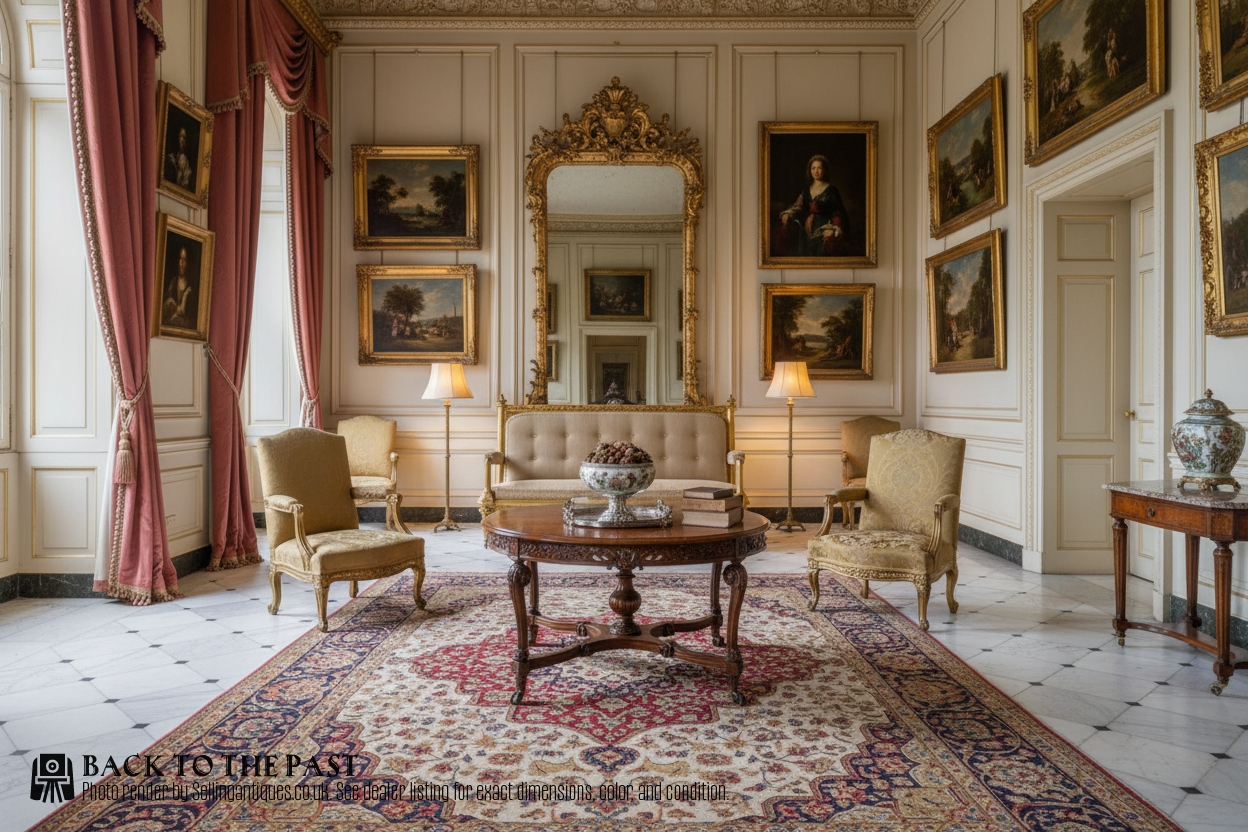
Gilt Frame Sofa
A gilt frame sofa represents a grand seating form built to command attention in reception rooms, salons, and boudoirs. When you browse for a gilt frame sofa, you encounter distinct stylistic lineages ranging from French Louis XV and XVI revivals to English Regency and Victorian Chinoiserie.
The pieces on this page span the nineteenth and early twentieth centuries, appearing as two-seat settees, three-seater sofas, and larger country house couches. French painted and gilded pieces sit alongside English giltwood creations, offering carved woodwork paired with generous upholstered seating.
How they were made
Makers constructed these frames primarily from timber such as beech and standard wood before applying fine layers of gilding or paint. Artisans shaped the structural frames with carved details, framing the upholstered sections carefully.
Textiles completed the construction, utilising traditional materials including damask, velvet, and various decorative fabrics secured to the wooden and gilt frames. Brass accents occasionally reinforced the structural integrity and decorative appeal of these seating forms.
Gilt Frame Sofa Retail Price Guide 2026
Typical asking prices for gilt frame sofa among the pieces listed under this phrase on Sellingantiques today, from the lower quarter to the upper quarter. They describe what is for sale here now, not the wider market.
Aesthetic Movement examples occasionally feature hand-painted sunflowers, proving that nineteenth-century makers enjoyed botanical themes just as much as formal gilding.
What varies in quality
The depth and refinement of the carved woodwork separate standard pieces from the finest examples. Crisp lines in the giltwood and sophisticated execution of styles like French Rococo or the Aesthetic Movement indicate superior workshop execution.
The integrity of the original surface finish and the harmony between the carved frame and the upholstered textiles dictate the overall standard. Pieces retaining their early gilding and cohesive period upholstery display greater artistic cohesion.
The Gilt Frame Sofa Glossary
- Giltwood
- Wood that has been coated with gold leaf or a gold-coloured metallic finish. This surface treatment gives the frame its characteristic luminous appearance.
- Settee
- A long upholstered seat with a back and arms, designed for more than one person. It serves a similar function to a modern sofa.
- Canapé
- A traditional French term for a decorative sofa or settee, often featuring an exposed carved wooden frame. These pieces frequently reflect Louis XV or XVI design influences.
- Damask
- A reversible figured fabric woven on a loom, commonly utilised for historical upholstery. Its patterned surface adds texture to the seating area.
Gilt Frame Sofa: Frequently Asked Questions
What is a gilt frame sofa?
A gilt frame sofa is a historical seating piece defined by its wooden structure coated in gold leaf or paint. These pieces were built primarily during the nineteenth and early twentieth centuries for formal reception spaces.
They combine structural woodwork with upholstered textiles such as velvet and damask to create decorative furniture. Makers adopted various regional styles, including French revival and English Regency designs.
Where did people place them?
These sofas traditionally occupied principal reception rooms, salons, and private boudoirs where visual impact mattered most. Their grand proportions made them suitable for entertaining guests or displaying social standing.
Today, they function as statement pieces in large living areas or hallways. Their decorative frames allow them to anchor a room's aesthetic layout.
How do I date a piece?
Dating relies on identifying the characteristic stylistic markers and construction methods of specific periods. Pieces from the Regency era display distinct neoclassical restraint, while nineteenth-century French models often show elaborate Louis XV curves.
Materials and decorative motifs, such as Aesthetic Movement sunflowers or Victorian Chinoiserie details, help narrow down the decade of production. Comparing the carved ornamentation to documented pieces clarifies the timeline.
How do I live with one?
Living with a historical sofa involves placing it away from direct sunlight to protect fragile textiles and the underlying gilt surface. Regular dusting with a soft, dry cloth helps preserve the delicate finish of the carved wood.
Positioning the piece where it receives minimal physical friction prevents unnecessary wear on the upholstery. Handling the furniture with care ensures the historical frame remains stable.