
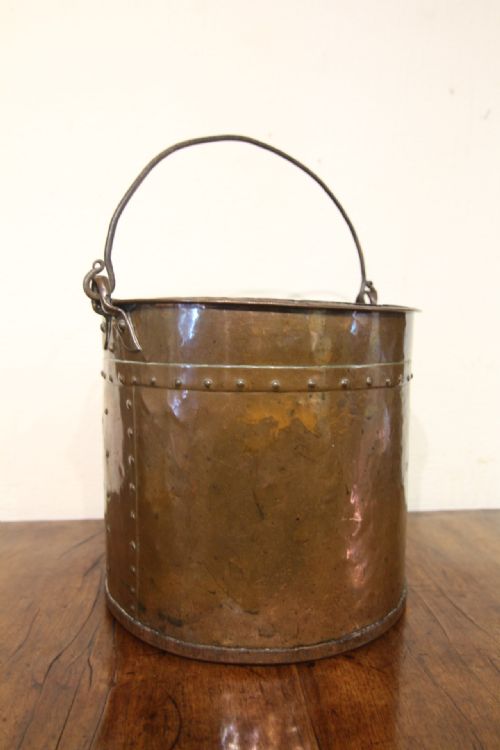


Large Copper Container
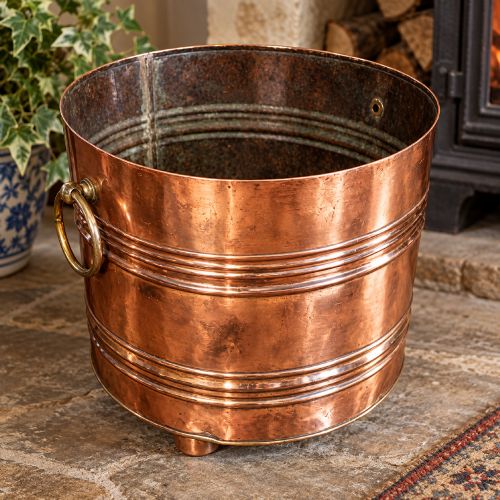
A large copper container brings substantial metalwork into a room, serving as a practical log bin, planter, or water vessel from past centuries.
Large Copper Container
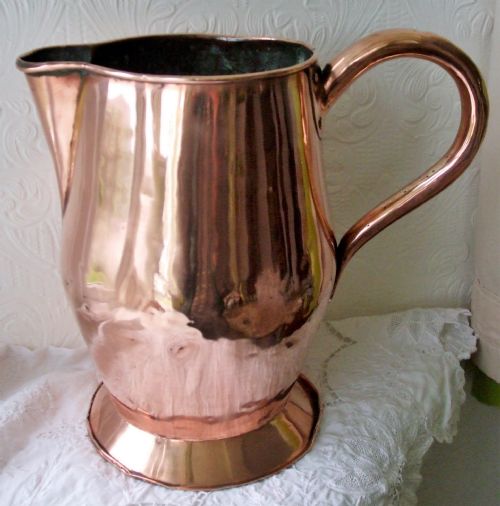
A large copper container encompasses heavy vessels made for utility and display across the nineteenth century and earlier. Buyers searching for a large copper container encounter forms ranging from log bins and coal buckets to jardinières, wash tubs, and cooking vessels.
The most common examples on this page date from the nineteenth century and Victorian periods, often showing utilitarian origins as farm measures, boiling pots, or hearth accessories. Many pieces bridge the gap between heavy-duty domestic work and decorative display.
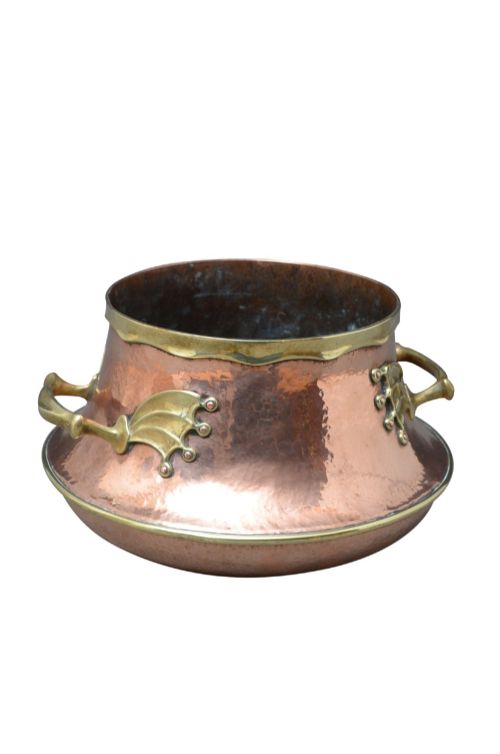
Forms vary from straightforward riveted buckets to structured pots set in iron frames or fitted with brass handles. Their scaling makes them suitable for holding logs beside a fireplace or planting large indoor greenery.
Materials and construction
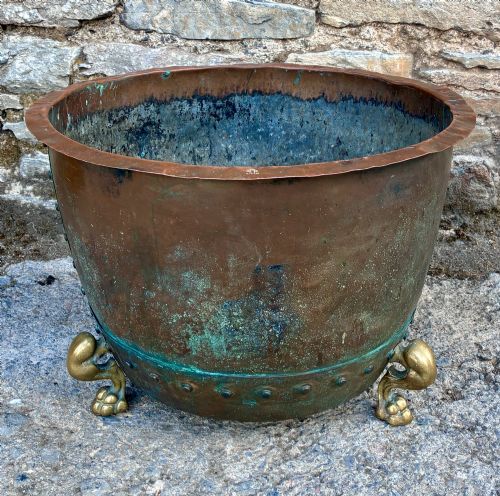
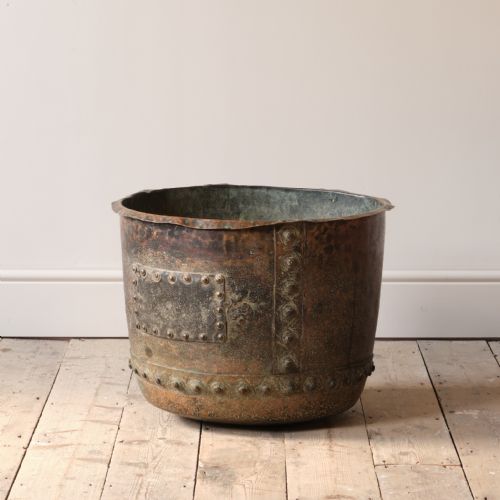
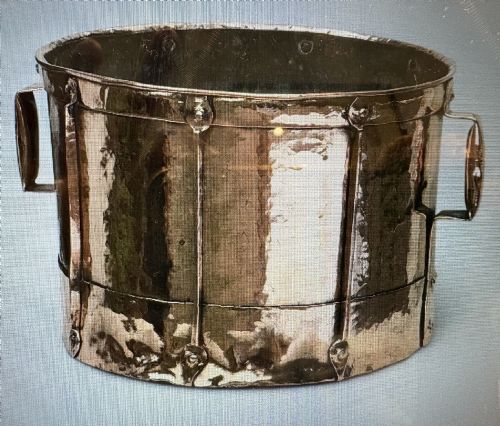
These pieces are built primarily from beaten or sheet copper, frequently reinforced with hand-hammered rivets that secure overlapping seams. Workshops paired the copper body with contrasting elements such as wrought iron handles, brass rims, and iron frames.
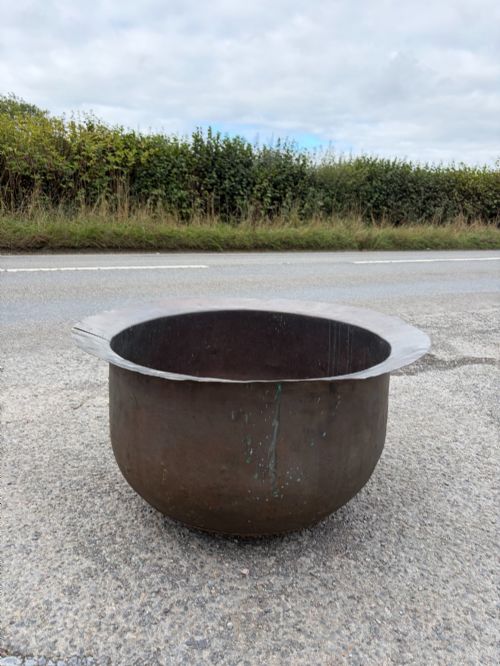
Utility pieces relied on sturdy fabrication methods designed to withstand heat and weight, utilising heavy-gauge metal sheets folded and joined manually. Over time, exposure to moisture and handling created natural patinas on the exterior surfaces.
Some of these heavy vessels spent decades quietly measuring grain in French barns before finding new life as grand fireside log holders.
Judging quality and character
Quality rests in the integrity of the metalwork, the weight of the copper sheet, and the crispness of the riveting. Stronger examples display purposeful construction where iron handles and brass mounts remain original to the vessel.
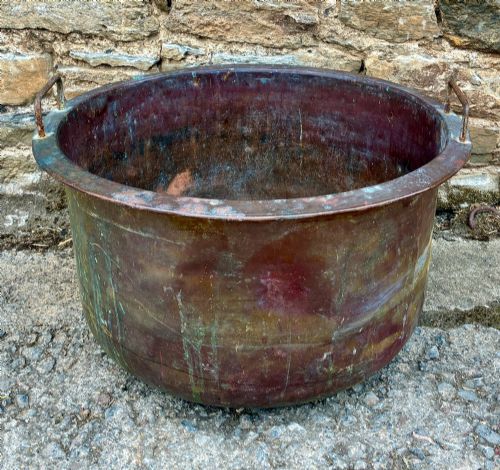
The character of the surface also dictates standing, with undisturbed patinas and honest wear carrying more appeal than over-polished finishes. Pieces that retain their original structural supports, such as iron frames or fitted lids, hold distinct presence.
The Large Copper Container Glossary
- Riveted
- Joined with metal pins that are hammered flat to hold overlapping copper sheets securely together. This technique provides both structural strength and visible industrial detail.
- Jardiniere
- An ornamental pot or stand designed to hold a live plant or floral arrangement. These vessels often feature decorative brass mounts or handles.
- Perdonium
- A specialised coal scuttle or container used in the nineteenth century for hearth maintenance. They frequently include hinged lids and sturdy carrying handles.
- Ferrat
- A traditional French grain measure adapted from agricultural utility into decorative household use. These heavy copper vessels display distinct cylindrical proportions.
- Patina
- The surface oxidation and mellowing accumulated on copper and brass over decades of exposure. This gradual colour change indicates age and handling.
Large Copper Container: Frequently Asked Questions
How do I clean a large copper container?
Maintenance depends entirely on whether you prefer a bright polished finish or a dark aged patina. Most owners simply dust the surface and wipe it down with a dry cloth to preserve the historical appearance.
Using harsh chemical cleaners will strip away decades of oxidation. Gentle soap and water suffice for removing interior dust if the container holds plants or logs.
Can I use these containers outdoors?
Many of these vessels function well as garden planters or patio log storage because copper withstands outdoor conditions. The metal naturally adapts to weather by developing a deeper green or brown surface oxidation.
Ensure that any container used outdoors has proper drainage if planting directly into the vessel. Standing water over long periods can compromise historical rivets and internal seams.
Were these vessels originally made for firesides?
A significant portion of these large containers served practical roles in nineteenth-century domestic life as coal scuttles, wash tubs, or cooking pots. Their robust construction made them ideal for hauling heavy materials near the hearth.
Over generations, their robust scale and warm metallic tones led to their reuse as decorative log bins and plant holders. This transition from utility to interior decoration defines many surviving examples.
How do I date a copper container?
Dating relies on examining construction methods, such as hand-beaten panels and heavy iron riveting typical of the nineteenth century. Earlier pieces often display irregular hand-formed seams, whereas later industrial examples show more uniformity.
Associated hardware like wrought iron handles and brass rims provide further clues. Stylistic markers from Georgian or Victorian periods help narrow down the decade of origin.