


Large Carved Mahogany Buffet
A large carved mahogany buffet grounds a dining room with dense timber grain and confident architectural presence.
Large Carved Mahogany Buffet
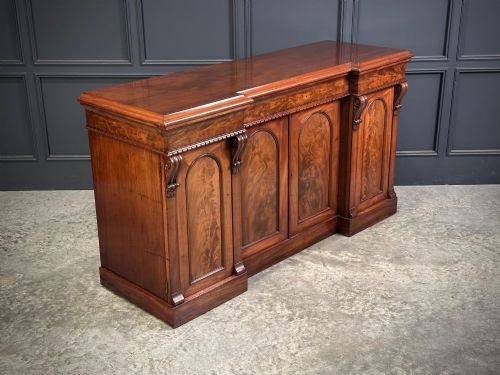
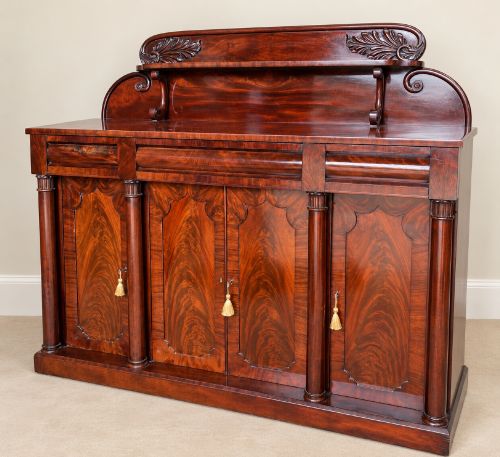
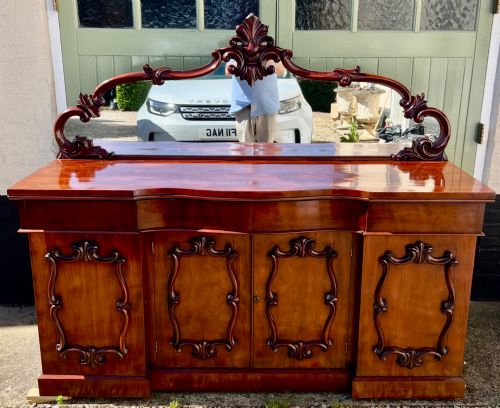
Buyers seeking a large carved mahogany buffet encounter substantial dining room furniture originating primarily from the nineteenth century, including Victorian, William IV and Edwardian periods. These forms frequently appear as breakfront sideboards, pedestal servers and mirror-backed chiffoniers designed for grand domestic service. The most common format on this page is the Victorian flame mahogany four-door sideboard, often displaying rich figuring and deep carved mouldings.
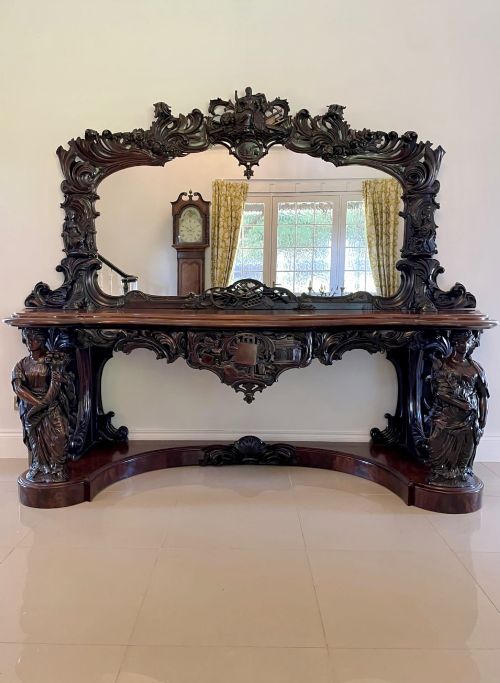
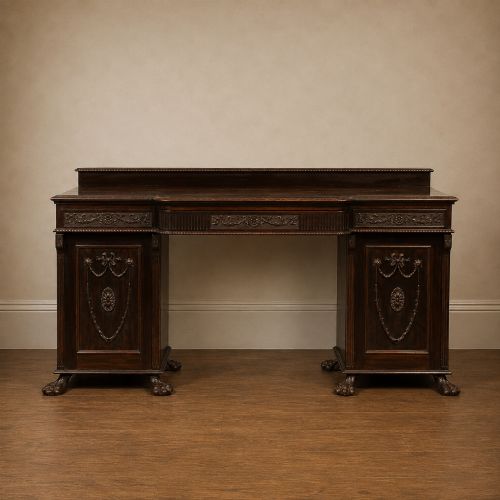
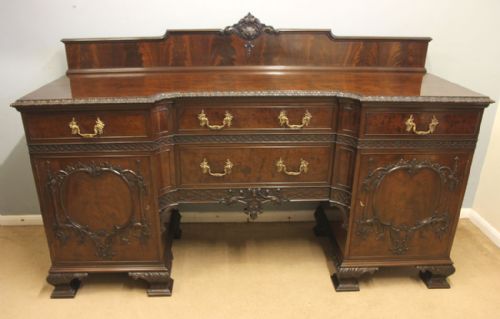
Makers and workshops of the era employed robust timbers to construct these heavy serving pieces, incorporating pedestals, drawers and cupboards for dining silver and linen. Pieces range from austere architectural revival designs to heavily embellished mirror-backed consoles with paw feet and panelled doors. Each variant serves the traditional purpose of display and storage within large dining spaces, relying on scale and timber quality for effect.
What varies in quality
The visual strength of a large carved mahogany buffet depends heavily on the grain selection within the mahogany veneer and the crispness of the hand carving. Pieces featuring matched flame mahogany panels across four doors or a breakfront facade demonstrate a higher grade of material sourcing by the original cabinet maker. Finer examples exhibit deeply undercut carved flourishes and well-integrated mirror backs that balance the massive proportions of the base.
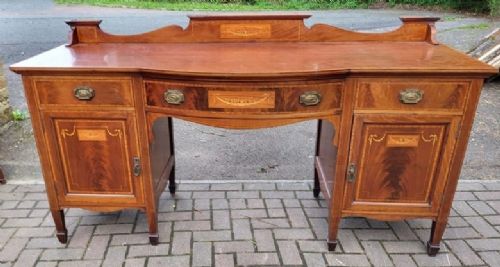
Proportional harmony and structural integrity separate standard utility pieces from exhibition-grade furniture. Superior examples maintain alignment across massive pedestal doors and heavy top boards without undue sagging, supported by robust internal framing. The integration of secondary woods and the precision of inlaid satinwood details further distinguish workshops of distinction from mass-produced regional items.
One grand serving table carries the provenance of Lord Leverhulme, proving that even sideboards occasionally rub shoulders with historical peerage.
Maple & Co
The Large Carved Mahogany Buffet Glossary
- Flame mahogany
- A veneer cut from timber where the grain pattern resembles flickering flames or feathers. This highly decorative figure is prized for central door panels and drawer fronts.
- Breakfront
- A cabinet design where the central section projects forward from the flanking wings. This architectural arrangement creates depth and shadow on large sideboards.
- Pedestal sideboard
- A heavy dining room base featuring two substantial cupboards or pedestals flanking a central recess or drawers. They frequently incorporate cellarets or extensive shelving within.
- Chiffonier
- A low sideboard or cabinet, often surmounted by a mirror and shelf superstructure. Victorian examples combined display space with enclosed storage for dining ware.
- Satinwood
- A yellowish exotic timber utilised for contrasting stringing and inlay work on Edwardian and revival furniture. It provides a bright visual edge against dark mahogany surfaces.
Large Carved Mahogany Buffet: Frequently Asked Questions
Where did people use a large carved mahogany buffet?
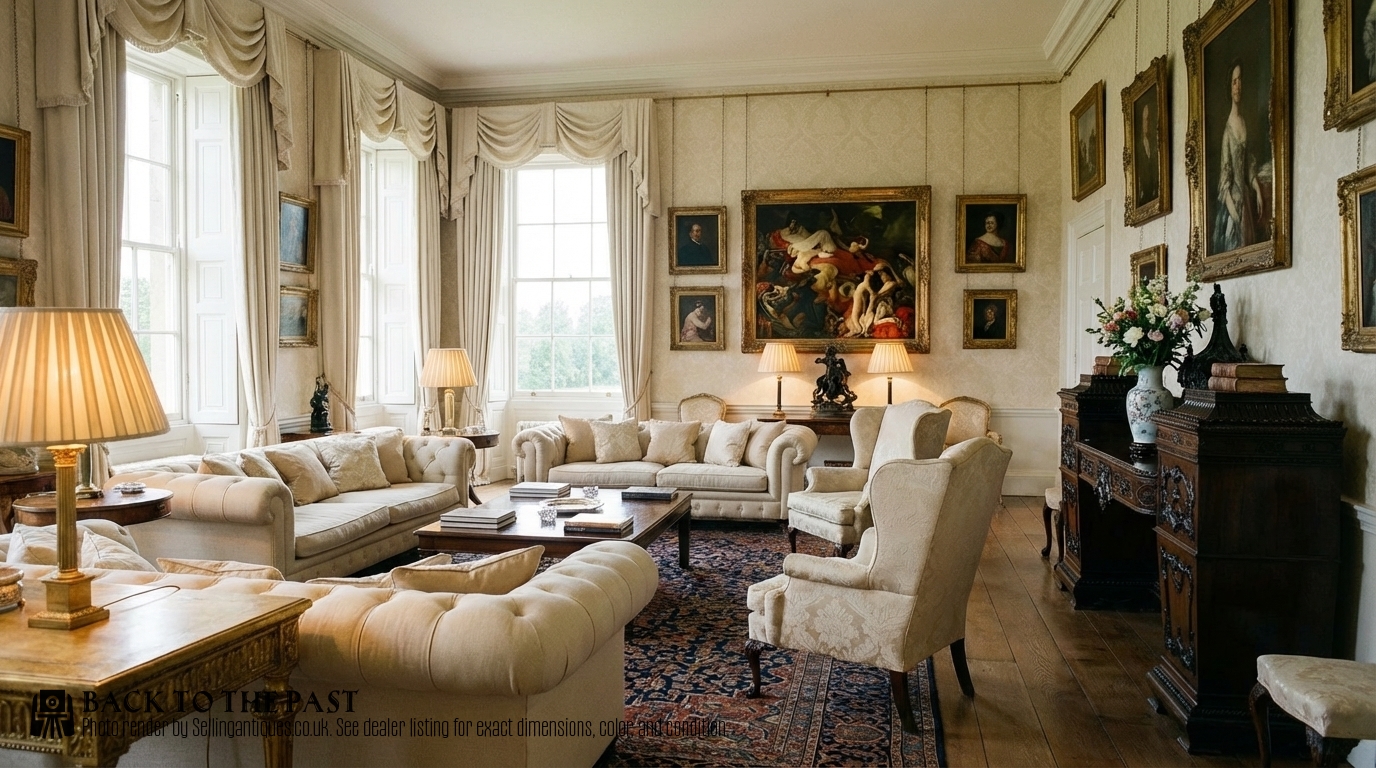
These substantial pieces stood principally in formal dining rooms of large country houses and town residences. Servants utilised the expansive top surfaces for carving meats and staging dishes during large meals.
Cupboards and drawers below stored heavy silver, linen and dining accessories close to the dining table. Their grand scale required spacious rooms with high ceilings to balance their visual weight.
How do I care for a mahogany surface?
Maintain the timber by keeping the piece away from direct heat sources and strong sunlight, which can dry out the old polish and fade the grain. Regular dusting with a soft, dry cloth prevents particulate build-up in the carved recesses.
Apply traditional beeswax sparingly when the wood appears dry, buffing gently to preserve the soft lustre of the historic finish. Avoid modern silicone sprays that penetrate the timber pores and damage antique polish.
What is the difference between a sideboard and a buffet?
Sideboards traditionally feature a long, low surface with a combination of drawers and cupboards designed specifically for dining room service and storage. Buffets often emphasise serving functions, sometimes incorporating upper display shelves or mirror backs for china and glass.
In nineteenth-century usage, the terms frequently overlap, particularly regarding large architectural pieces fitted with pedestals or breakfront facades. Both forms prioritise heavy mahogany construction and decorative carving.
How can I tell the Victorian period from Edwardian pieces?
Victorian examples generally display heavier proportions, darker finishes, and robust carvings influenced by Rococo, Gothic or classical revivals. Mirror backs on Victorian pieces are often deeply framed with heavy scrollwork and pediments.
Edwardian furniture tends to feature lighter construction, brighter mahogany tones, and refined inlay work such as satinwood banding. Revival styles in the Edwardian era frequently look back to eighteenth-century Chippendale or Adam proportions with greater restraint.