
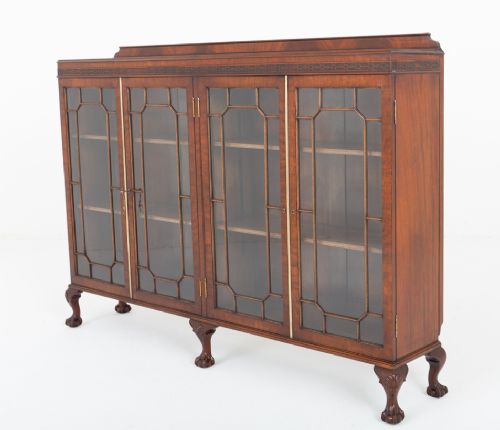
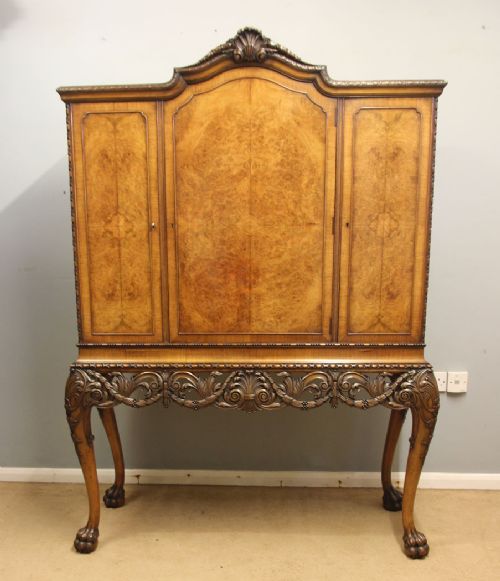

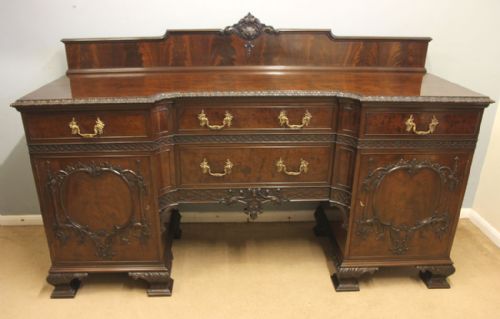


Chippendale Style Credenza
These Chippendale style credenza pieces bring serious mahogany grain and period presence into a dining room or hall.
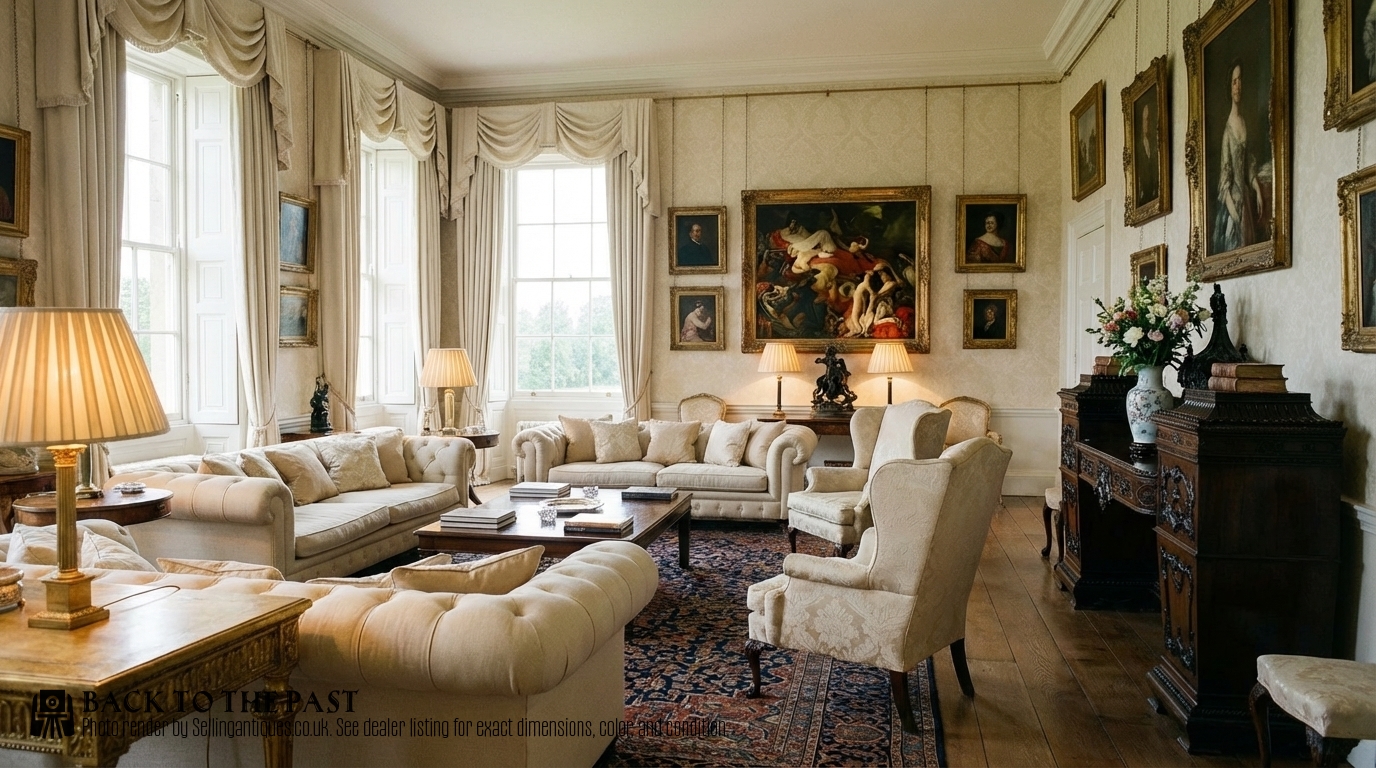
Chippendale Style Credenza
When you search for a chippendale style credenza, you are looking at substantial timber storage furniture built as sideboards, side cabinets, display cabinets, and bookcases. The forms on offer span revival eras from the late nineteenth century up to 1920, alongside eighteenth century pieces.
You will most commonly meet revival pieces from the early twentieth century or late Victorian decades. These items take inspiration from Georgian cabinet making, often incorporating serpentine fronts, breakfront shapes, and glazed doors.
Makers adapted classic vocabulary into functional dining room furniture, ranging from simple server buffets to large display cabinets. Origin points and influences draw heavily on British Georgian design, with occasional Chinoiserie details.
Materials and construction methods
Construction relies heavily on solid mahogany and carefully selected veneers, including flame mahogany and burr walnut. Workshops applied these decorative veneers to larger surfaces to create striking grain patterns.
Cabinet makers incorporated brass hardware, such as handles and escutcheons, alongside glass panels for glazed doors and display sections. Carving appears directly on the timber framework to accent the fronts and borders.
Listings span periods from the 18th Century through to 1920, utilising mahogany, burr walnut veneer, satinwood, and brass.
Judging the standard of manufacture
Quality separates through the depth of timber selection and the precision of the cabinet work. Pieces featuring book-matched flame mahogany veneer or burr walnut display a higher grade of material sourcing than plain timber equivalents.
The sophistication of the carving and the intricacy of the serpentine or inverted breakfront shapes determine the tier of the piece. Crisp lines in the moulding and well-fitted doors distinguish finer workshop output from standard production.
The Chippendale Style Credenza Glossary
- Serpentine front
- A furniture front that curves outward in the centre and inward at the sides, creating a fluid wave shape. This curved profile requires advanced woodworking skill.
- Breakfront
- A large cabinet form where the central section projects forward from the side sections. It adds architectural depth to sideboards and bookcases.
- Flame mahogany
- A prized timber veneer cut from timber forks where the grain creates a flickering, flame-like pattern. It was utilised on statement furniture surfaces.
- Chinoiserie
- European decorative style reflecting Chinese artistic motifs, appearing in nineteenth century revival pieces. It brings characteristic decorative motifs to traditional timber forms.
- Demi lune
- A half-moon shaped furniture design, often seen on console side cabinets. This format fits flush against a wall while offering surface space.
Chippendale Style Credenza: Frequently Asked Questions
What rooms suit a sideboard?
These cabinets work naturally in dining rooms to store tableware, linen, and dining accessories. Their surface also provides a practical platform for serving food or displaying decorative objects.
In larger entrance halls or living spaces, a serpentine or breakfront cabinet functions as a focal point. The glazed display variants also allow for the secure presentation of collected ceramics or glassware.
How do I date these cabinets?
Dating relies on examining the timber preparation, hardware fixings, and overall construction characteristics. Pieces from the eighteenth century show different interior timber framing compared to late Victorian or 1920s revival items.
Revival furniture often adopts older Georgian design codes while employing machinery methods typical of the twentieth century. Comparing the veneer types, such as burr walnut or flame mahogany, against known period styles helps narrow the decade.
What is a serpentine front?
A serpentine front is a cabinet profile that curves outward at the middle and sweeps inward toward the outer edges. This sophisticated shaping requires skilled timber bending and custom joinery.
Cabinet makers used this technique on high-end sideboards to catch the light across figured mahogany grain. It remains a hallmark of better quality revival and period pieces alike.
Are these pieces solid mahogany?
Many examples utilise solid mahogany for structural frames, legs, and carved mouldings, while applying specialised veneers to larger flat areas. Flame mahogany veneer and burr walnut veneer appear frequently on door panels and drawer fronts.
This combination allowed craftsmen to showcase dramatic grain patterns without risking the warping that large solid boards might suffer. Examining the interior reveals the underlying construction timbers used by the workshop.