
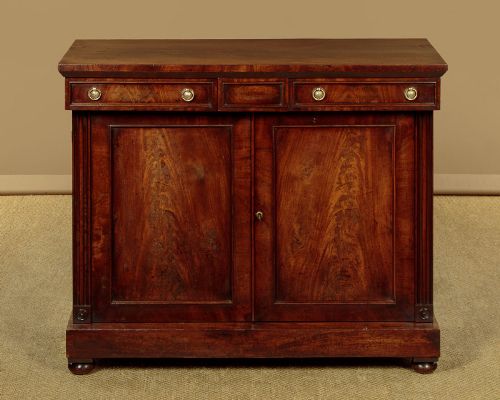
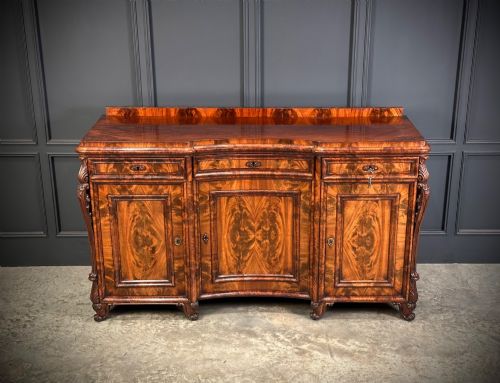
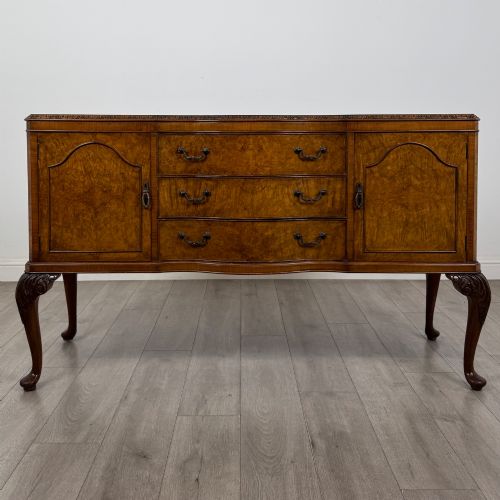
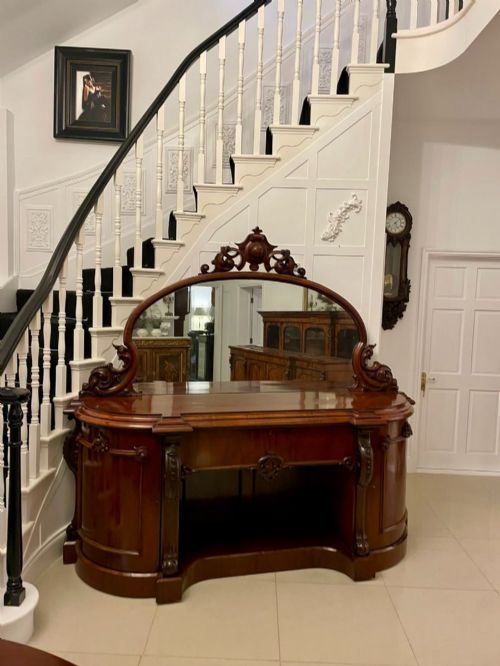
Dark Wood Buffet Credenza
A dark wood buffet credenza provides generous dining room storage while anchoring a room with rich timber tones and period character.
Dark Wood Buffet Credenza
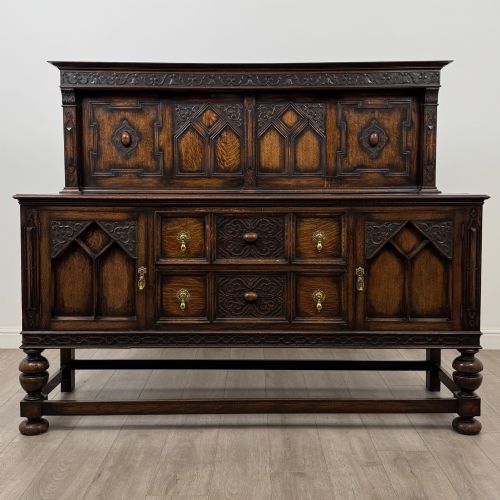
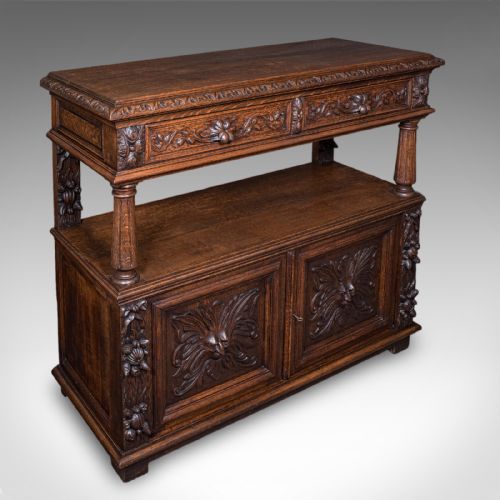
A dark wood buffet credenza encompasses substantial dining furniture designed for serving food and storing tableware. These pieces primarily appear as sideboards, chiffoniers, and dresser bases across this selection.
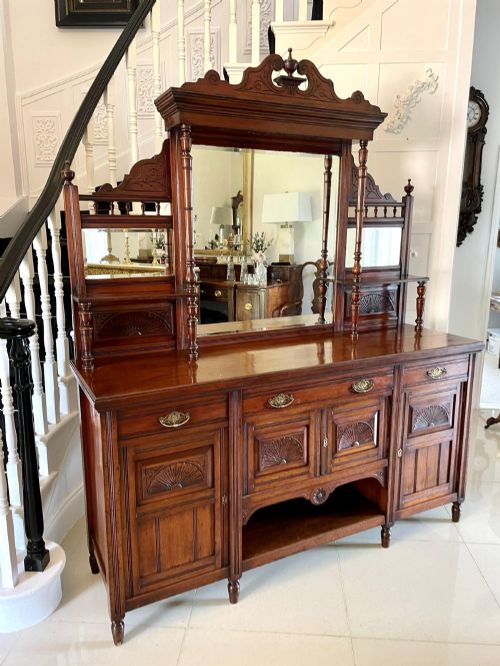
Makers shaped these forms throughout the eighteenth, nineteenth, and early twentieth centuries. Buyers frequently encounter Victorian and Edwardian examples featuring cupboards, drawers, and sometimes mirror backs.
The objects serve dining rooms and living spaces alike, functioning as servers or side cabinets. Their robust construction and dark timber finishes suit traditional and period interiors.
Materials and Construction
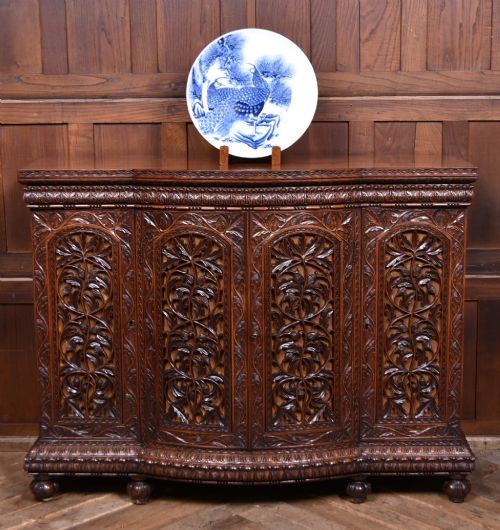
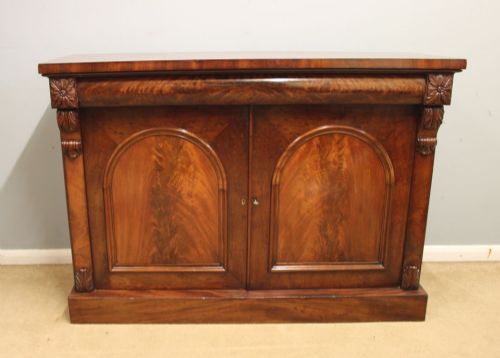
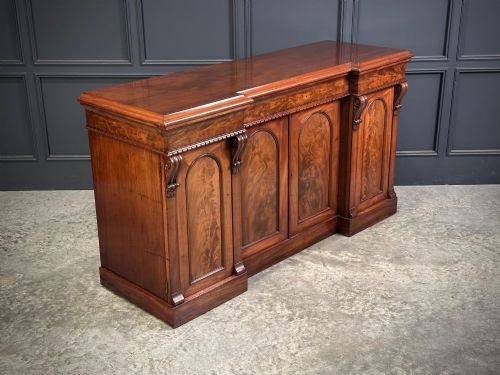
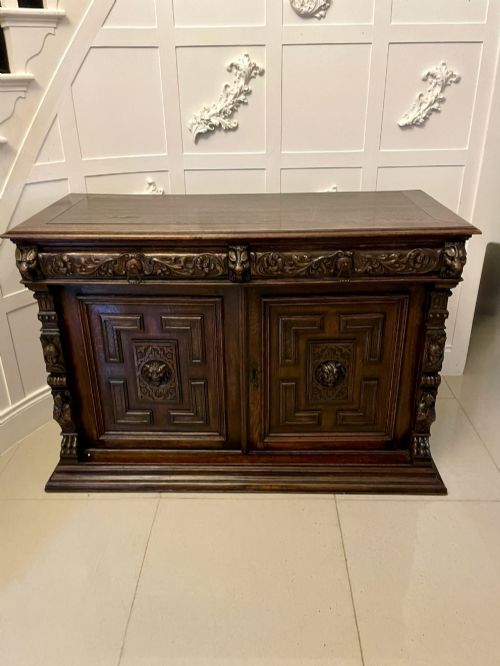
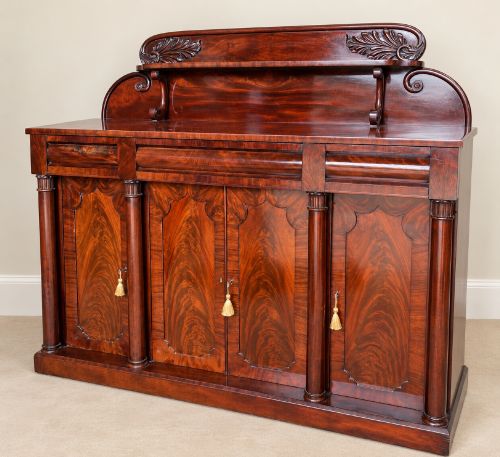
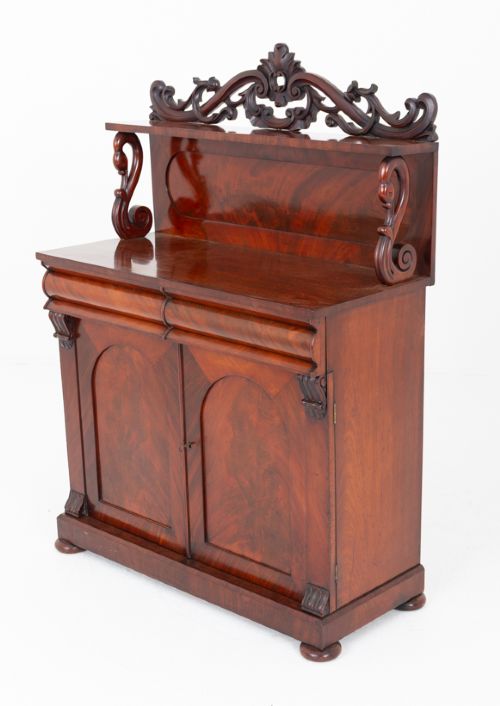
Cabinetmakers built these pieces using dense hardwoods such as mahogany, oak, rosewood, and padouk. Flame mahogany veneer added dramatic grain patterns to drawer fronts and doors.
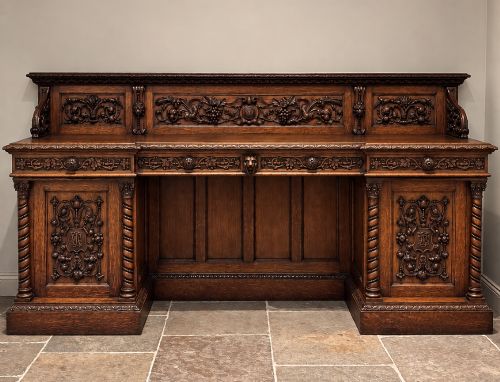
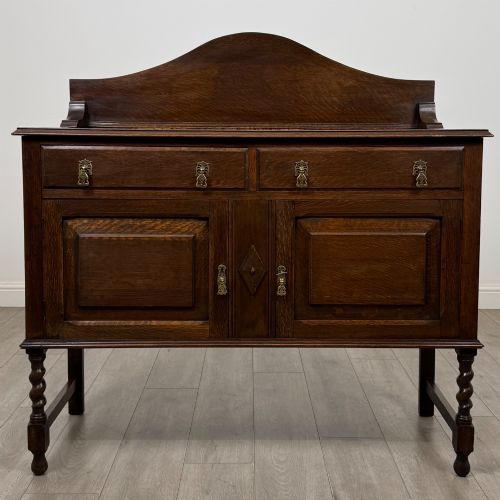
Craftsmen incorporated structural metal elements like brass handles and iron hardware alongside glass doors. Carving, inlay, and barley twist turnings defined the decorative styles of the Victorian and Edwardian eras.
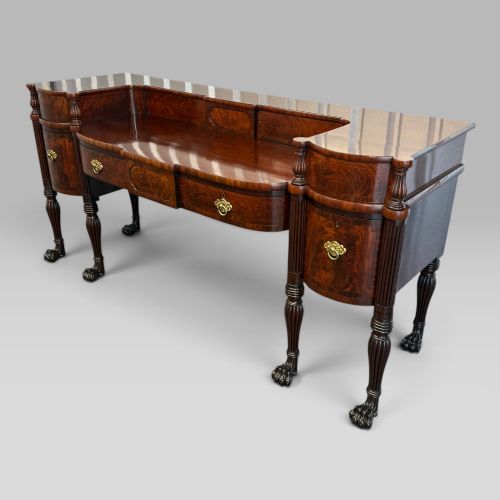
Several Victorian sideboards stand firmly on fierce lion paw feet, guarding the dining room floor.
Judging Quality and Craftsmanship
Superior examples display careful timber selection, particularly in matched flame mahogany veneers and solid oak structures. Deep, crisp hand-carving distinguishes exhibition pieces from standard production.
The Dark Wood Buffet Credenza Glossary
- Credenza
- A sideboard or buffet used for storing and serving food in a dining room. It typically sits low against a wall.
- Chiffonier
- A small sideboard or cabinet popular in the nineteenth century, often featuring enclosed shelving and a raised superstructure.
- Flame Mahogany
- Mahogany timber cut to reveal a flammiform or rippled grain pattern, frequently utilised as a decorative veneer.
- Dresser Base
- The lower section of a kitchen or dining dresser, fitted with drawers and cupboards beneath a flat top.
- Mirror Back
- A tall wooden framework mounted to the rear of a sideboard, incorporating a bevelled or plain mirror plate.
Dark Wood Buffet Credenza: Frequently Asked Questions
What is a dark wood buffet credenza used for?
These pieces serve primarily in dining rooms for storing plates, cutlery, and glassware while providing a surface to serve food during meals.
Today they function equally well in living spaces as credenzas or side cabinets for general storage and display.
How do I identify a Victorian sideboard?
Victorian sideboards typically feature dark timbers like mahogany or oak with heavy, deep relief carving and substantial proportions.
Many examples from this period incorporate mirror backs or four-door cabinet configurations supported by plinths or paw feet.
What is the difference between an Edwardian and a Victorian piece?
Edwardian sideboards often display lighter decorative touches, such as delicate inlay or Arts and Crafts styling, alongside traditional oak and mahogany.
Victorian counterparts lean toward heavier ornamentation, including Gothic revival elements, mirror backs, and bold architectural carvings.
Are these credenzas made of solid wood?
Construction varies between solid timbers like oak and mahogany and pieces utilising quality veneers over secondary woods.
Flame mahogany surfaces are typically applied as veneers over stable timber bases to showcase dramatic grain figures.