



Large Carved Library Desk
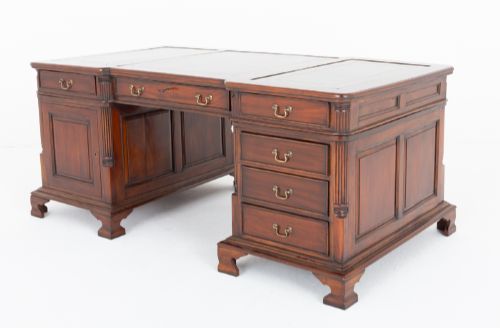
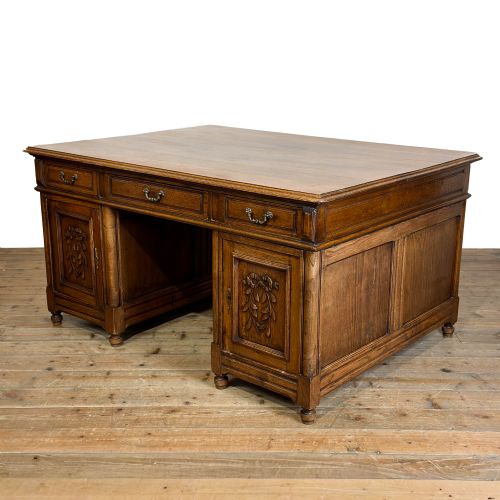
A large carved library desk is a substantial workspace designed for serious study, built in oak, mahogany, walnut or burr walnut during the Victorian, Edwardian and Georgian periods.
Large Carved Library Desk
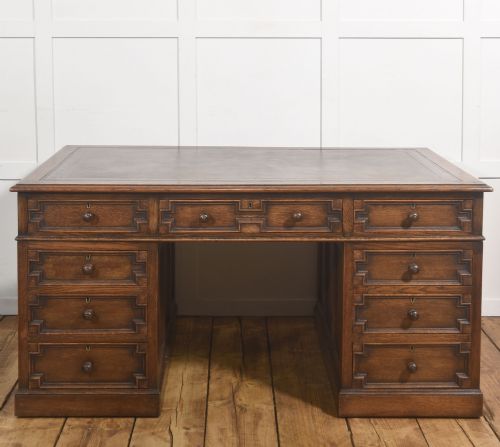
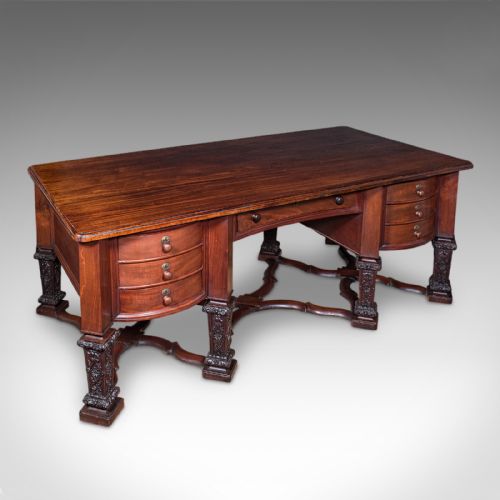
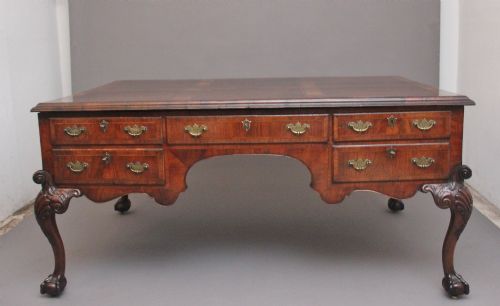
A large carved library desk is the primary piece around which a grand study or home office is organised. When you search for this phrase, you encounter grand partners desks, pedestal desks and writing tables designed to command a spacious room.
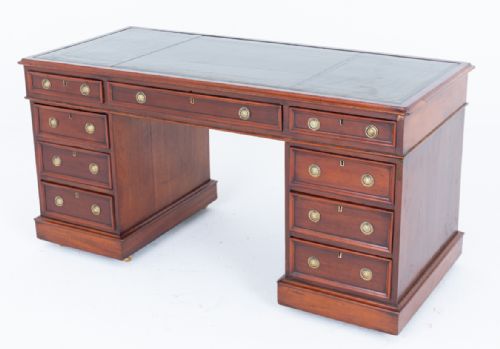
The versions most frequently met on this page date from the nineteenth century, spanning Victorian, Edwardian and William IV eras. These heavy timber pieces often feature deep pedestals, banks of drawers and inset leather writing surfaces.
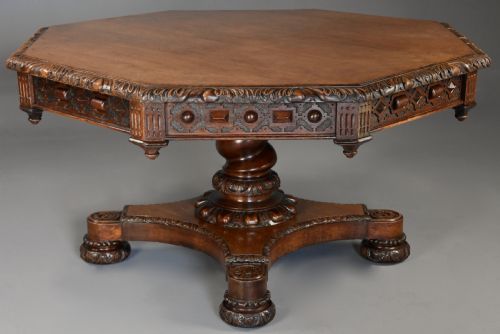
Makers such as Gillows and T Wilson produced these forms alongside anonymous cabinetmakers working in oak, mahogany and walnut. Revival styles including Jacobean, Gothic and Louis XIV heavily influence the carved decoration found on these desks.
How they were made
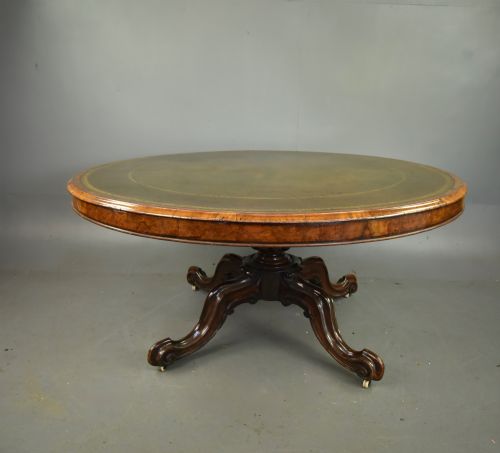
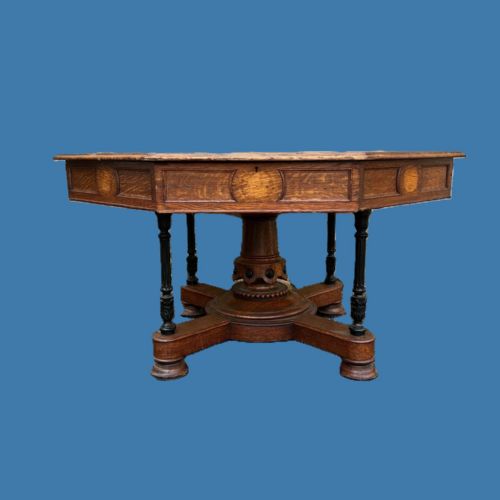
These desks rely on dense hardwoods such as oak, mahogany and walnut, chosen for structural stability and handsome grain. Cabinetmakers frequently utilised burr walnut, burr pollard oak and flame mahogany for drawer fronts and primary display surfaces to create striking visual patterns.
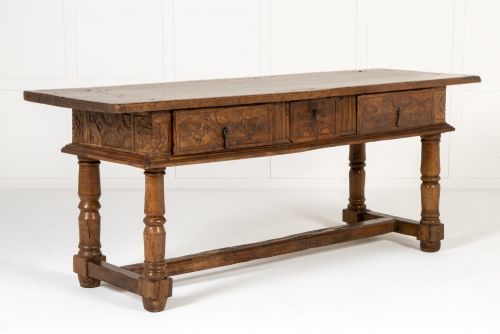
Carving is executed directly into the solid timber framing, displaying blind fretwork, linenfold or religious panels depending on the revival style. Writing surfaces are traditionally inset with hand-dyed leather, often tooled with blind or gilt borders.
Large Carved Library Desk Retail Price Guide 2026
Typical asking prices for large carved library desk among the pieces listed under this phrase on Sellingantiques today, from the lower quarter to the upper quarter. They describe what is for sale here now, not the wider market.
Some nineteenth-century desks hide secret compartments within their pedestals for storing private documents out of sight.
What varies in quality
The distinction between standard commercial production and exceptional cabinet work rests in the handling of the secondary timbers and the depth of the carved enrichment. Finer desks employ solid mahogany or oak throughout their internal drawer linings rather than cheaper conifers.
The crispness and ambition of the carved details dictate the standing of a desk. Hand-chisel work on borders, mouldings and pedestals exhibits sharp relief and individual character that machine-cut decoration simply cannot replicate.
T Wilson·Gillows·Whytock and Reid
The Large Carved Library Desk Glossary
- Partners desk
- A large double-sided pedestal desk designed with matching drawers and cupboards on both faces so two people could work opposite each other. These pieces form the core of large library furnishings.
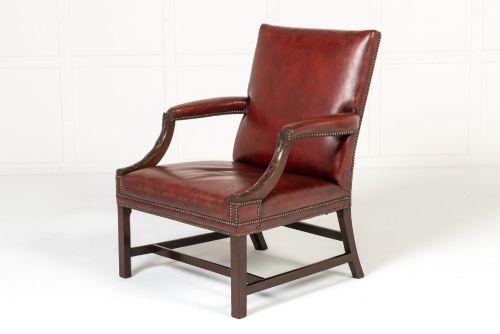
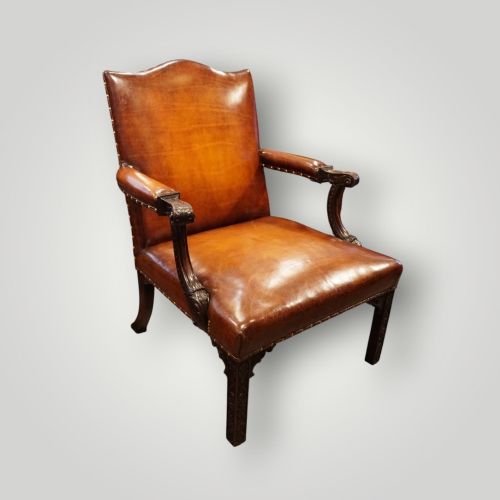
- Gainsborough armchair
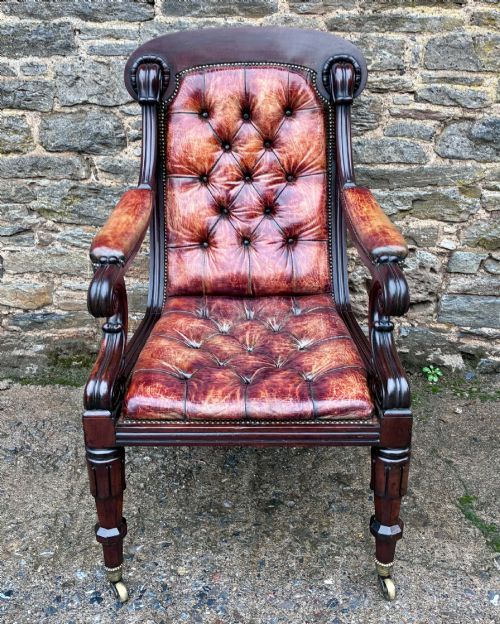
- A wide, upholstered seat with open arms and a low back, designed specifically for desk use during the eighteenth and nineteenth centuries. These chairs frequently accompany large library tables.
- Bureau Mazarin
- An elaborate cabinet desk featuring a central recessed cupboard flanked by banks of drawers, resting on grouped legs. This form reflects seventeenth-century continental influences.
- Blind carving
- Decorative relief work carved directly into the surface without piercing the timber or projecting outwards excessively. Chippendale revival pieces frequently utilise this subtle technique.
Large Carved Library Desk: Frequently Asked Questions
What is a partners desk?
A partners desk is a large double-sided writing table built with drawers and cupboards accessible from both the front and the back. This configuration allowed two individuals to sit opposite one another in a shared study or library.
These pieces typically feature a central pedestal on each side with a large inset leather writing surface spanning the top. They represent some of the most substantial workspace furniture produced in the nineteenth century.
How do I care for the leather top?
The leather writing surface requires periodic conditioning with specialised leather balms or neutral waxes to prevent cracking and drying. Avoid exposing the leather to direct sunlight or excessive heat from desk lamps.
When writing on the surface, utilise blotters or pads to protect the hand-dyed hide from ink spills and sharp impressions. Gentle dusting with a dry cloth keeps the leather free from abrasive particles.
Where should I place a large desk?
These large desks require generous floor space and look best positioned centrally within a room rather than pushed directly against a wall. Because partners desks are finished on all sides, they serve as striking room dividers.
Ensure the room has sufficient clearance around the pedestals to allow chairs to pull out fully. Heavy timbers also require stable indoor humidity to prevent wood movement.
How do I identify a Victorian desk?
Victorian desks are generally characterised by heavy proportions, dense timbers like mahogany and walnut, and deep pedestals. Cabinetmakers during this era frequently drew inspiration from earlier Gothic, Elizabethan and Jacobean styles.
Internal construction details, such as hand-cut dovetails on drawer boxes and the use of secondary woods like oak or pine, help confirm the nineteenth-century origin of the piece.