



Oak Double Sided Desk
An oak double sided desk is a working piece meant to stand clear in a room, offering workspace from both sides.
Oak Double Sided Desk
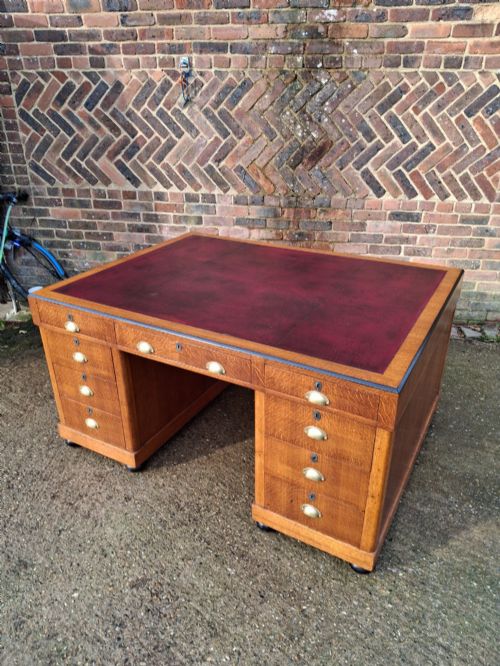
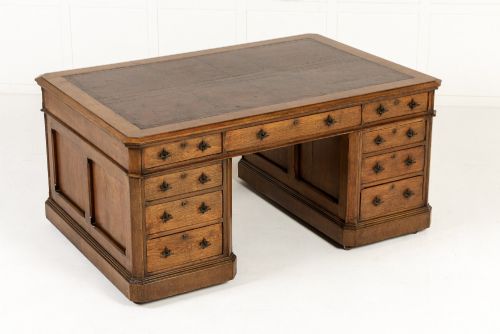
An oak double sided desk, frequently called a partners desk, provides drawers and cupboards accessible from both faces so two people can work opposite one another. These large pedestal forms appear across several periods including the Victorian era, Edwardian period, and Regency era.
The materials recorded in these pieces include solid oak, burr oak, and ebonised wood, often fitted with inset leather writing surfaces and brass handles. Styles span from French Provincial and Arts and Crafts to Gothic Revival and Victorian campaign designs.
Most examples found here are substantial pedestal desks and writing tables designed for central placement in a library or study. They range from nineteenth-century English workshop pieces to early twentieth-century interpretations.
Construction and materials
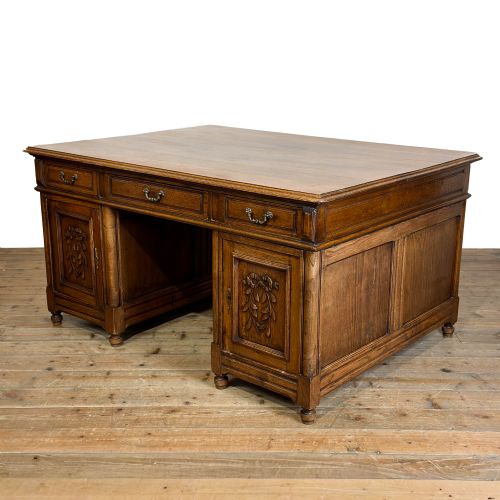
Carpenters built these desks predominantly from solid oak and burr oak timbers, utilising panelled construction for the pedestals and drawers. The primary timber is frequently paired with contrasting ebonised wood details or hand-carved religious panels.
Working surfaces are traditionally inset with leather panels, while drawer banks and cupboards incorporate brass hardware, including campaign handles on specific military-influenced examples. Construction methods range from standard nineteenth-century joinery to bespoke hand-carved ornamentation.
Oak Double Sided Desk Retail Price Guide 2026
Typical asking prices for oak double sided desk among the pieces listed under this phrase on Sellingantiques today, from the lower quarter to the upper quarter. They describe what is for sale here now, not the wider market.
Materials recorded on these desks include solid oak, burr oak, ebonised wood, inset leather, and brass hardware.
Factors of quality
Quality in these desks rests upon the selection of timber, particularly the grain and figuring found in burr oak surfaces, alongside the crispness of any hand carving. Desks featuring matched panelling and substantial pedestals demonstrate superior cabinet-making standards.
The integration of functional elements, such as smoothly operating drawers on both opposing sides and well-fitted brass campaign hardware, distinguishes standard production items from finer workshop creations.
T Wilson
The Oak Double Sided Desk Glossary
- Partners desk
- A large double-sided desk designed with drawers and cupboards on opposing faces for two users. These pieces typically feature twin pedestals supporting a wide top.
- Pedestal desk
- A freestanding desk comprising a top surface supported by two independent stacks of drawers or cupboards. They form the structural base for most double-sided writing furniture.
- Burr oak
- Timber taken from a tree growth where the grain has swirled in a deformed manner, producing intricate patterns. It is sliced into veneers for decorative furniture surfaces.
- Campaign handles
- Recessed metal handles inset flush into the drawer face to prevent catching during transport. They appear on military-style campaign furniture.
- Kneehole desk
- A desk with a central recess for the user's legs, flanked by pedestals containing drawers. This layout forms the inner core of many partner configurations.
Oak Double Sided Desk: Frequently Asked Questions
What is a partners desk?
A partners desk is a large double-sided desk built with drawers and cupboards facing both directions. This layout allows two people to sit opposite each other and work at the same time.
These pieces were traditionally used in offices, banks, and large libraries where colleagues needed shared access to workspace and storage.
How do I care for the leather top?
The leather inset on the top requires occasional cleaning with a damp cloth and mild soap. Avoid harsh chemical cleaners that can dry out the material.
Applying a specialist leather balm helps maintain suppleness and protects the surface from ink stains and everyday wear.
Where should I place it in a room?
Because drawers and panels are accessible from both sides, these desks are designed to stand away from walls. Placing the piece in the centre of a study allows it to function as intended.
Ensure there is sufficient clearance around all sides to pull out chairs and open lower cupboards without restriction.
How do I identify the period?
Dating relies on examining construction techniques, timber selection, and hardware styles. Regency and Victorian examples show specific joinery traits and mouldings distinct from Edwardian pieces.
Stylistic markers such as Gothic Revival panels or campaign brasses offer further clues to the decade of manufacture.