



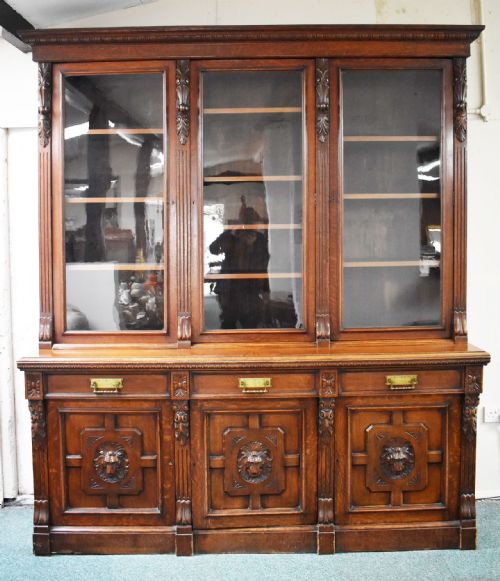


Large Carved Library Cabinet
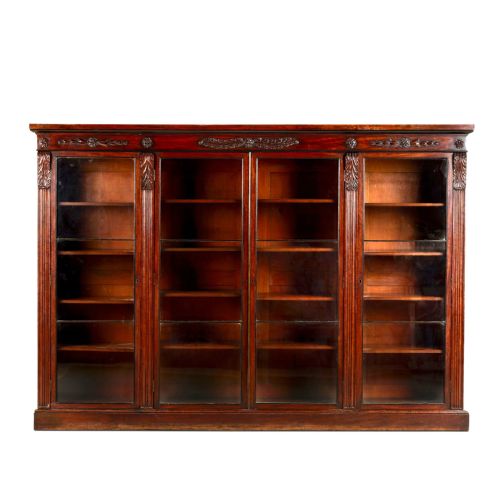
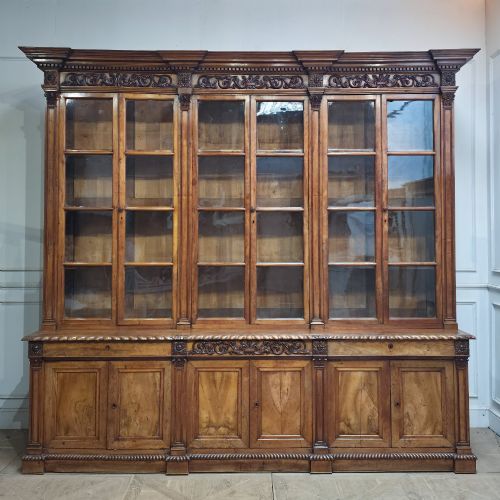
A large carved library cabinet holds volumes behind glazed or open timber doors, bringing architectural presence and storage to a study.
Large Carved Library Cabinet
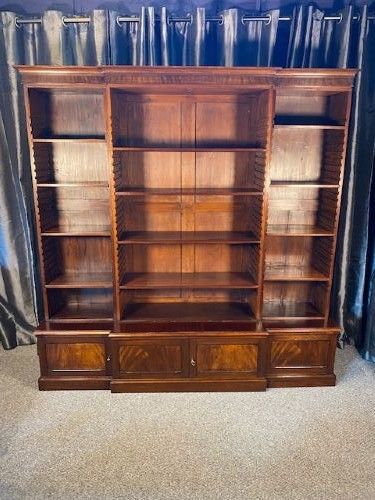
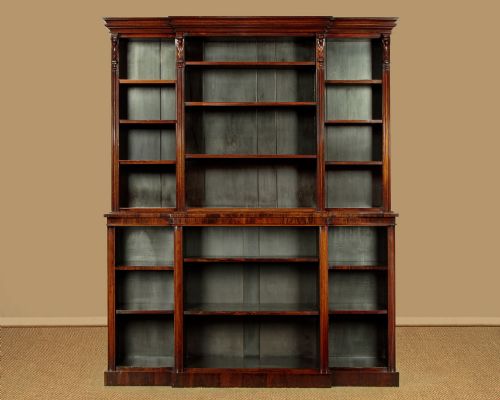
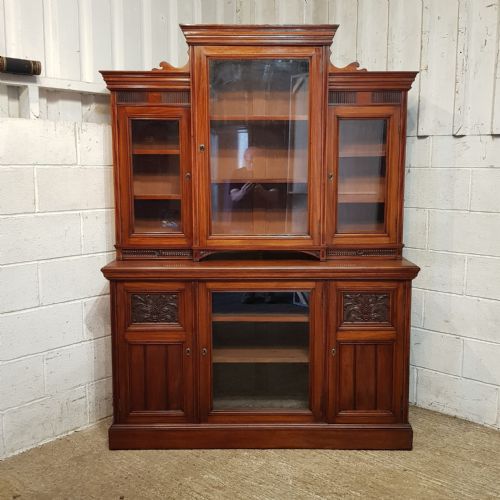
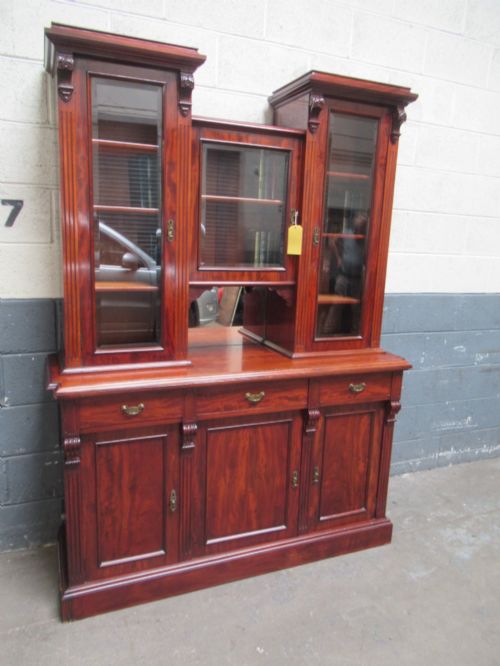
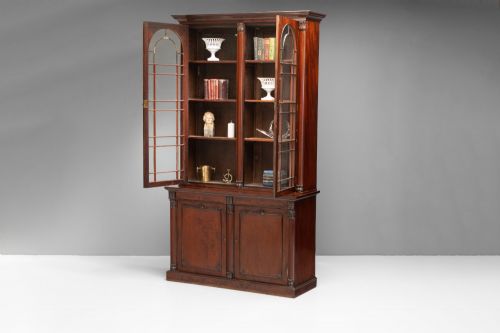
A large carved library cabinet typically appears as a substantial bookcase, breakfront bookcase, or display cabinet rooted in nineteenth-century British and Continental craftsmanship. These pieces originate largely from the Victorian era, alongside Regency, Edwardian, and earlier eighteenth-century examples, reflecting the heavy demand for domestic and institutional book storage.
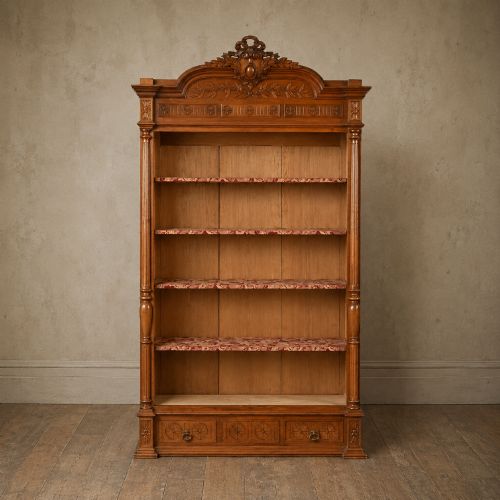
Buyers encounter numerous variations on this page, ranging from monumental carved oak breakfront library bookcases to open walnut shelving and multi-door mahogany cabinets. Many incorporate glass doors, brass hardware, and specialised compartments designed specifically to house substantial collections of literature and historical volumes.
Materials and Construction
Cabinetmakers utilised robust hardwoods such as oak, mahogany, walnut, and rosewood, often selecting figured veneers like flame mahogany or pollard oak for prominent display surfaces. Secondary timbers provided internal framing, while glass panels and brass fittings completed the functional requirements of large-scale storage.
Carving was executed by hand directly into the solid timber or applied as carved friezes, embellishing structural elements like pilasters and cornices. Joinery relied on traditional breakfront construction, accommodating large proportions without sacrificing stability.
Some nineteenth-century oak library cabinets still bear the faint, chalked initials of Victorian carpenters scribbled on hidden shelf undersides.
Judging the Workmanship
The distinction between tiers of production lies in the depth and crispness of the hand carving, the choice of timber figuring, and the integration of architectural proportions. Finer pieces demonstrate seamless alignment across breakfront sections and superior handling of dense hardwoods like Spanish mahogany or pollard oak.
Simpler examples rely on standard commercial production with minimal ornamentation, whereas superior items integrate intricate architectural motifs, specialised internal shelving, and robust two-part construction designed for heavy domestic use.
Gillows·Maple & Co.·Goodhall, Lamb and Heighway·Holland & Sons·Hille
The Large Carved Library Cabinet Glossary
- Breakfront
- A cabinet design where the central section projects forward from the flanking wings. This configuration creates visual depth and breaks up the linear mass of large storage furniture.
- Frieze
- The flat or decorated horizontal band situated immediately beneath the cornice of a cabinet. Carved details and applied mouldings frequently appear in this prominent zone.
- Pollard oak
- Timber taken from trees that have been pollarded, producing a tightly clustered, highly decorative grain pattern. Cabinetmakers prized this wood for its distinctive swirling appearance.
- Glazed door
- A timber frame fitted with glass panes to allow the contents of the cabinet to remain visible while protected from dust. These doors often feature wooden glazing bars dividing the glass into geometric sections.
Large Carved Library Cabinet: Frequently Asked Questions
How do I place a large library cabinet in a room?
These imposing timber pieces require a solid wall capable of supporting their substantial weight and height. Ensure adequate floor clearance before positioning a breakfront or multi-door bookcase.
Keep the cabinet away from direct heat sources and strong sunlight to protect aged wood veneers and prevent the timber from warping over time.
What is the difference between open and glazed bookcases?
Open bookcases provide direct, unobstructed access to shelves and display volumes without physical barriers. They suit frequently handled books in private studies.
Glazed cabinet doors incorporate glass panes held by wooden bars, shielding fragile bindings from dust, moisture, and handling. They function well for retaining heat-sensitive or valuable collections.
How do I care for nineteenth-century cabinet timber?
Maintain a stable indoor humidity level to prevent nineteenth-century hardwoods like mahogany, oak, and walnut from splitting or contracting. Sudden environmental shifts damage polish and joinery.
Apply traditional wax sparingly and polish with a soft cloth to preserve the natural sheen of the wood without building up heavy chemical residues.