

Large Buffet Server
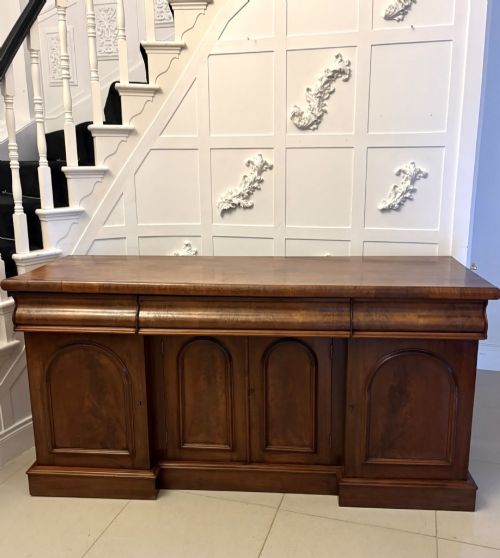
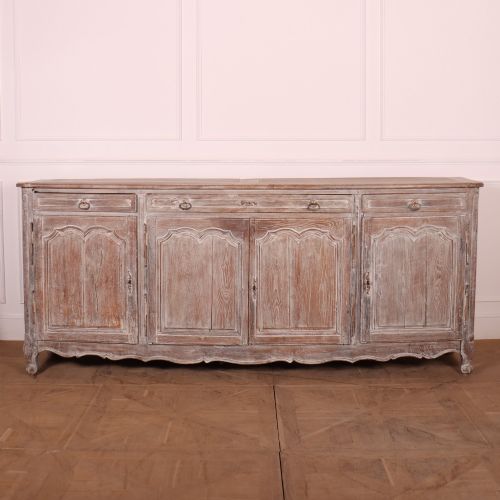
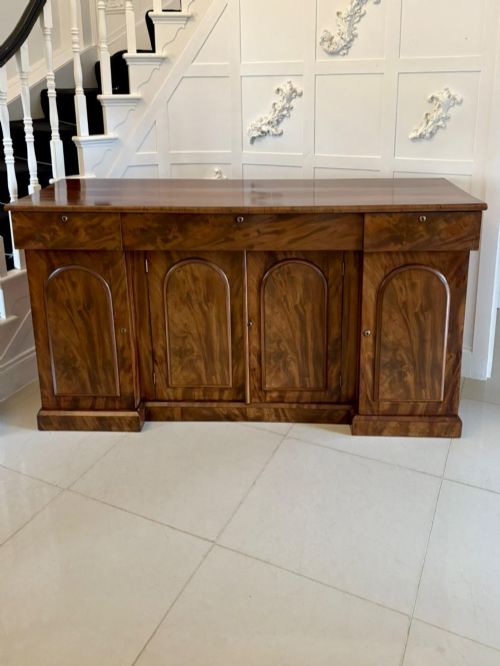
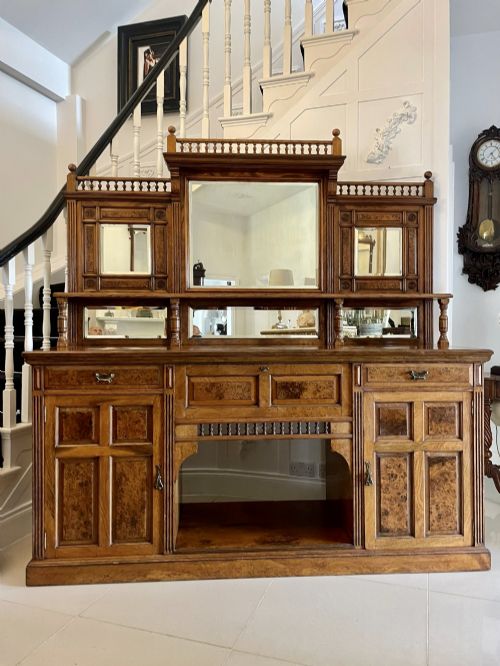
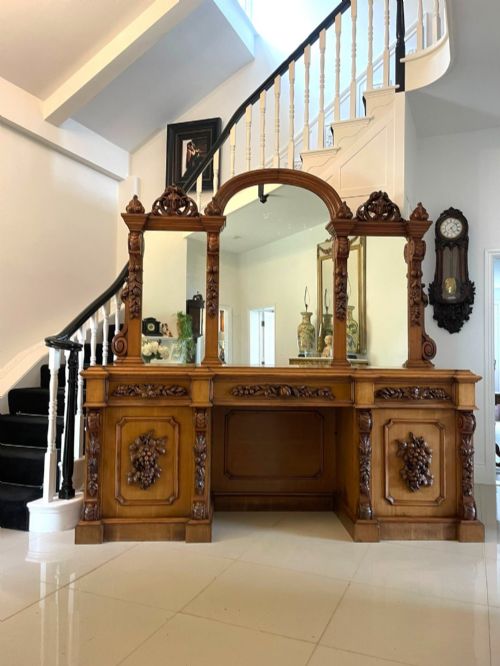
A large buffet server brings substantial presence to a room, offering generous surface area for serving and deep storage for dining ware.
Large Buffet Server
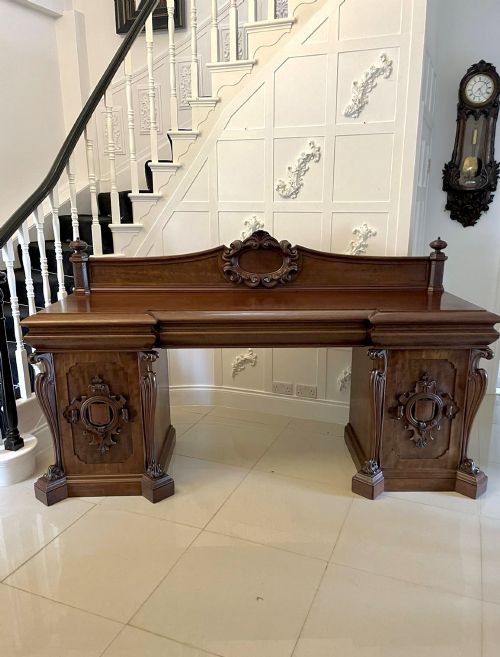
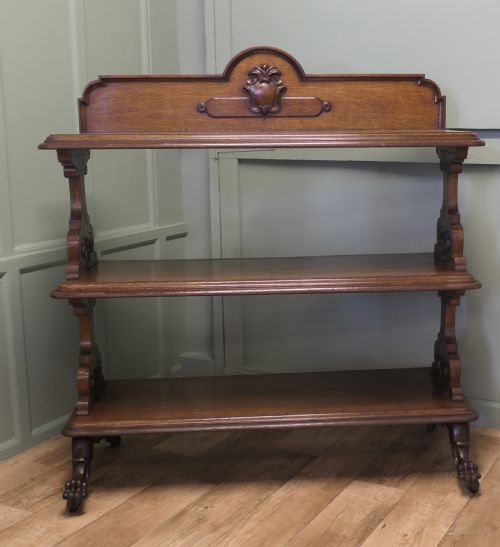
A large buffet server encompasses various substantial dining furniture forms, including sideboards, dresser bases, console tables, and serving pieces. The pieces appearing under this search span multiple periods, most notably the Victorian era, the Georgian period, and the Edwardian years.
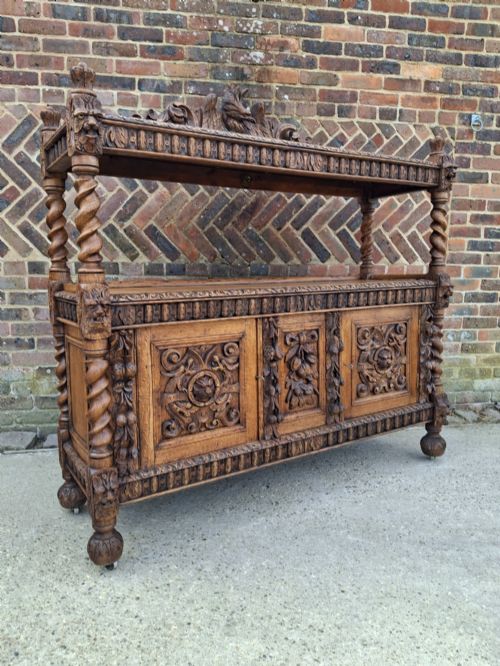
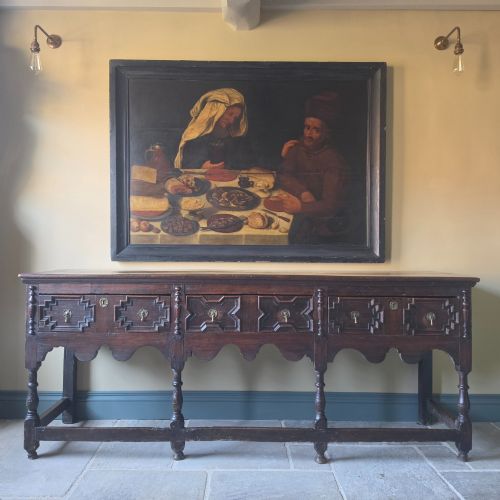
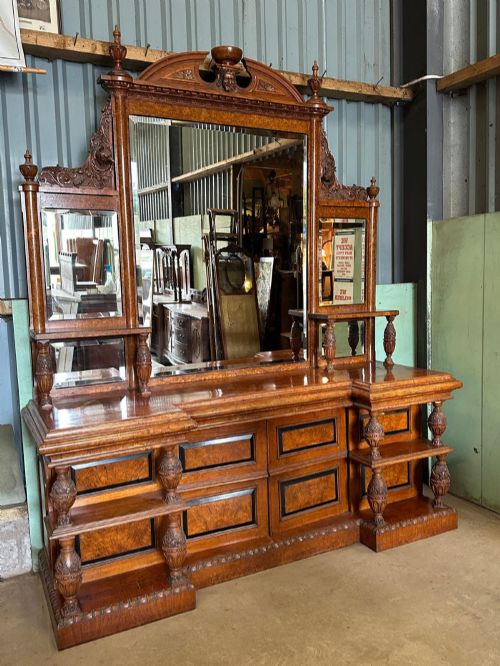
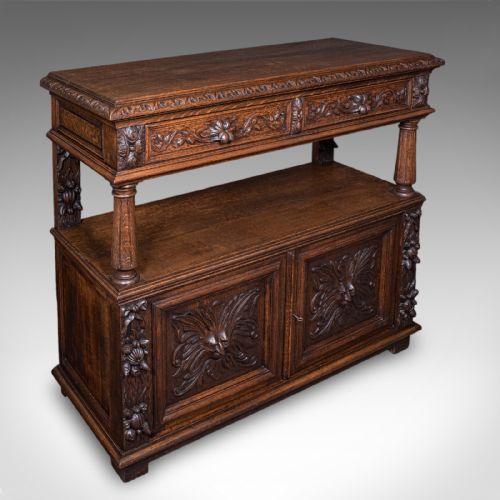
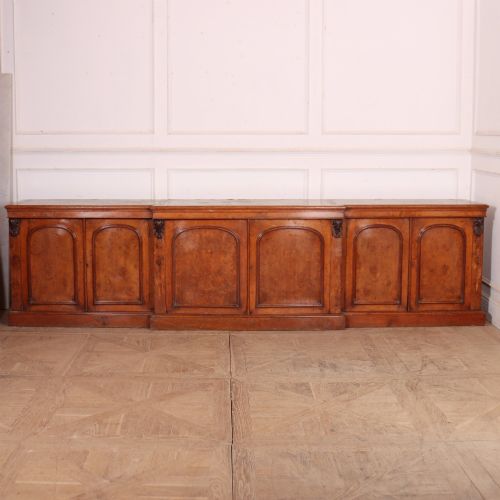
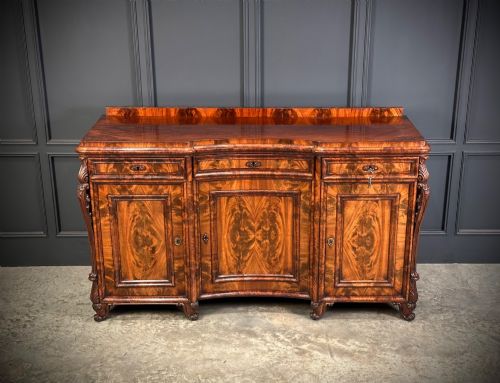
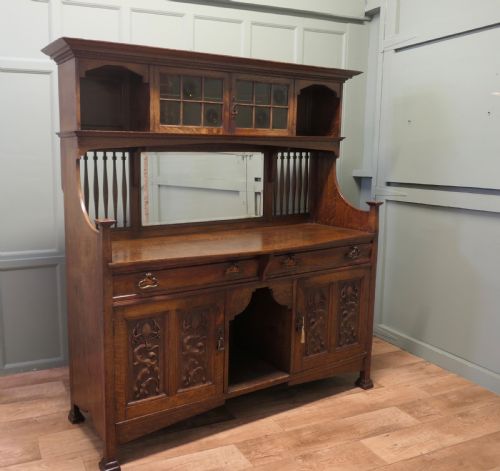
Buyers frequently encounter mahogany and oak formats, ranging from formal George III and Regency designs to robust Victorian country and Jacobean revival styles. These items often feature multi-drawer arrangements, cupboards with multiple doors, and occasional mirror backs or stretcher bases.
Scottish workshops and English country houses both contributed notable examples to this group, spanning centuries of cabinet making from seventeenth-century dresser bases to nineteen-twenty productions.
Materials and Construction
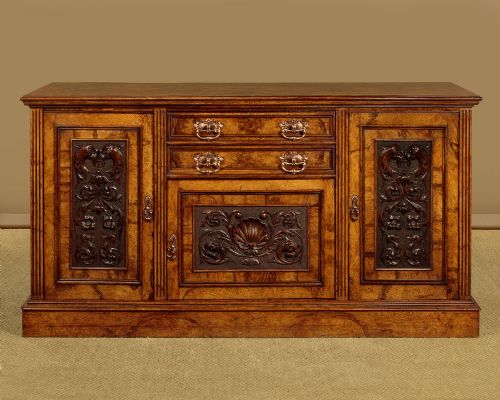
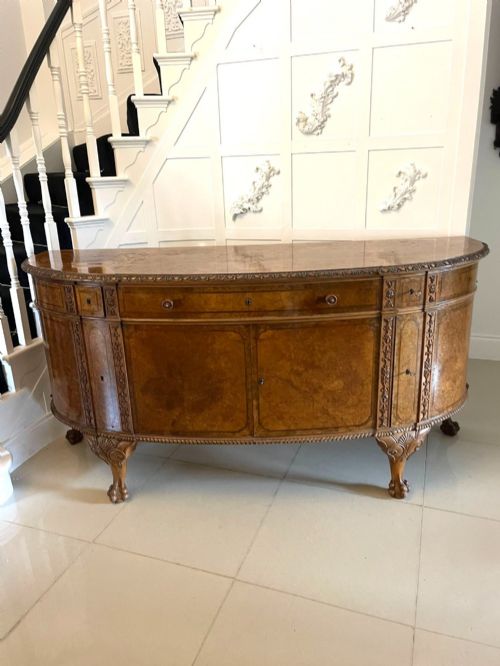
Makers utilised solid timbers alongside specialised veneers, applying flame mahogany, burr walnut, and pollard oak to primary display surfaces. Pine and oak served structural roles in dresser bases and country house pieces, while brass hardware and mother-of-pearl inlay provided decorative contrast.
Joinery techniques included deep carvings on oak panels, inlaid stringing on mahogany surfaces, and structural stretcher bases. Furniture makers employed breakfront configurations, pedestal columns, and paw feet to anchor the scale of these large servers.
Large Buffet Server Retail Price Guide 2026
Typical asking prices for large buffet server among the pieces listed under this phrase on Sellingantiques today, from the lower quarter to the upper quarter. They describe what is for sale here now, not the wider market.
Current listings feature furniture from the seventeenth century through to nineteen-twenty, constructed in mahogany, oak, pine, and walnut.
Evaluating Construction and Material
The distinction between tiers of quality rests upon the selection of timber figures and the crispness of hand-carved details. Flame mahogany veneers and burr walnut selections indicate a higher grade of manufacture than plain utility surfaces.
Structural integrity and the retention of original brass fittings or mirrors separate standard regional pieces from superior workshop productions, such as those associated with documented makers.
Shapland and Petter
The Large Buffet Server Glossary
- Dresser base
- A low wooden sideboard or cabinet featuring drawers and cupboards, historically used in country houses for food preparation and serving.
- Breakfront
- A cabinet or sideboard whose central section projects forward from the flanking sections, creating architectural depth.
- Pollard oak
- Oak timber taken from trees that were cut back to the trunk, producing a dense, knotty grain pattern prized for decorative veneers.
- Stretcher base
- A lower framework of horizontal wooden bars connecting the legs of a table or sideboard to provide structural rigidity.
- Flame mahogany
- A veneer cut from the fork of the mahogany tree, displaying a characteristic rippled flame pattern across the surface.
Large Buffet Server: Frequently Asked Questions
Where should I place a large buffet server?
These substantial pieces anchor dining rooms or spacious hallways where their length and depth can be fully appreciated. Ensure adequate clearance around the unit for doors and drawers to open completely.
Position the server away from direct heat sources to protect timber veneers and solid wood surfaces from drying out.
How do I clean and maintain antique wood?
Dust the surfaces regularly with a soft, dry cloth along the grain to prevent particulate accumulation. Apply traditional beeswax periodically to nourish mahogany, oak, and walnut finishes.
Avoid silicone-based sprays and keep moisture away from unsealed interior timber and antique mirrors.
What is the difference between a sideboard and a dresser base?
Sideboards generally developed as formal dining room furniture with dedicated storage for silver and linen. Dresser bases originated in country kitchens and utility spaces, featuring open boards or simpler drawer arrangements.
Both serve similar functions in modern interiors as large serving stations.
How can I date a wooden server?
Examine the secondary woods inside drawers and the style of the hardware or joinery. Georgian pieces often display different proportions and inlay work compared to Victorian or Edwardian revivals.
Check for tool marks and construction methods that correspond to documented periods of manufacture.