
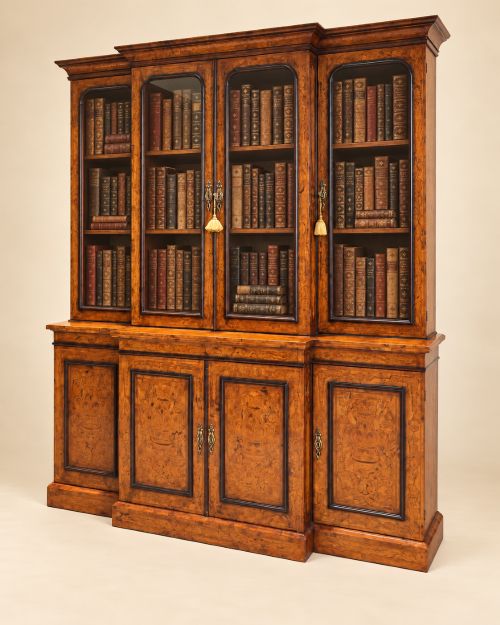
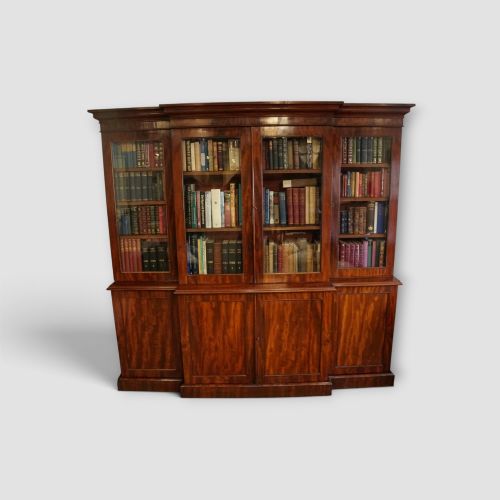
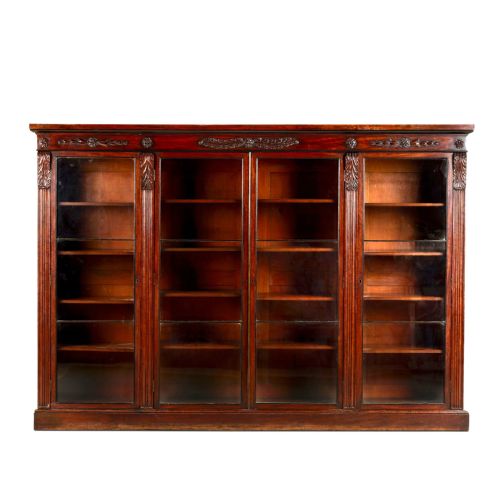
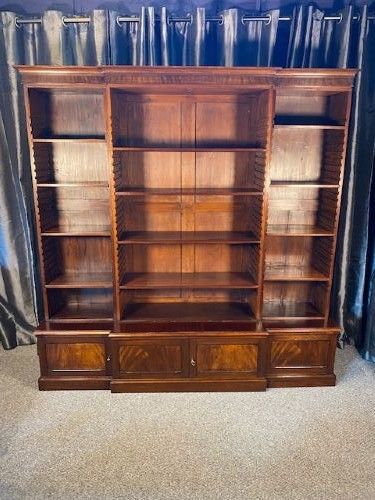
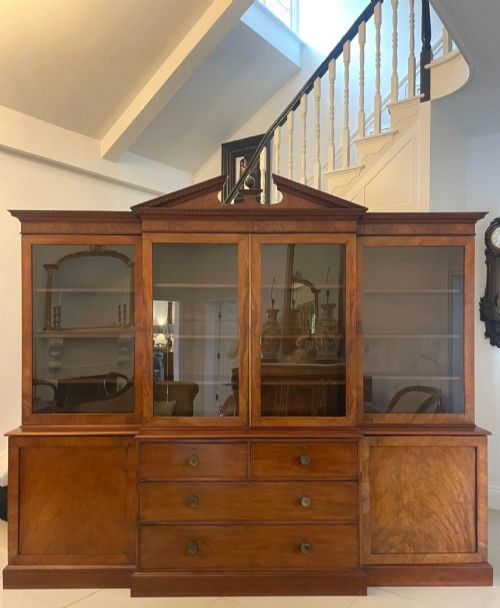
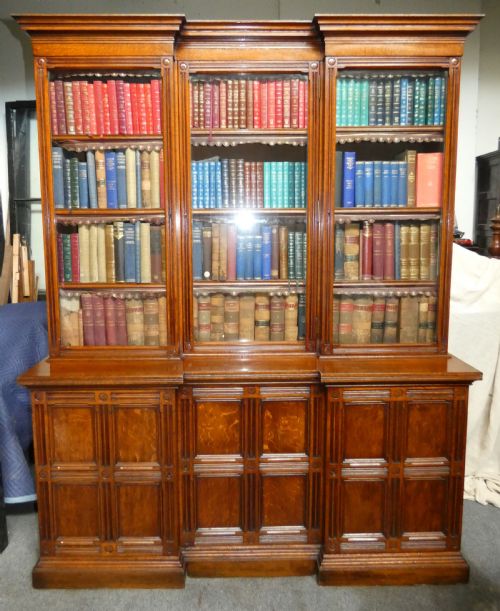
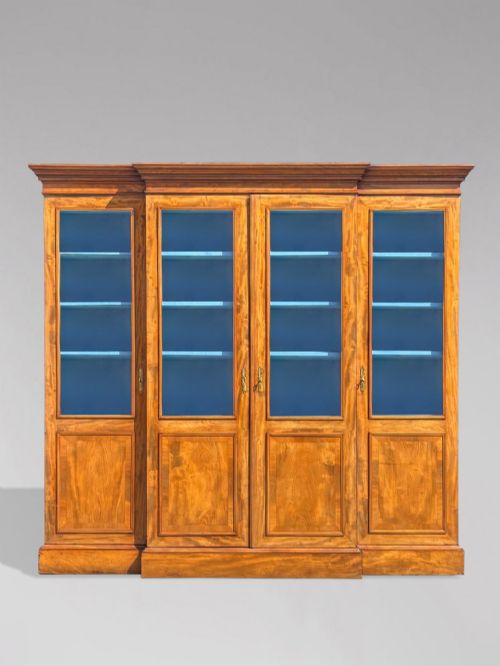
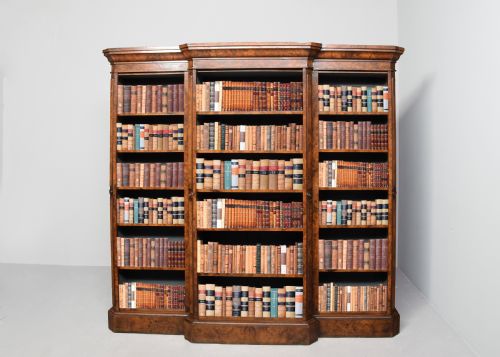
Large Breakfront Library Cabinet
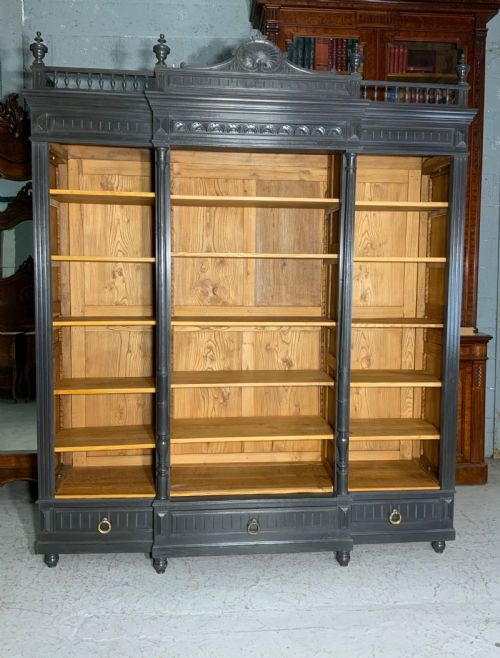
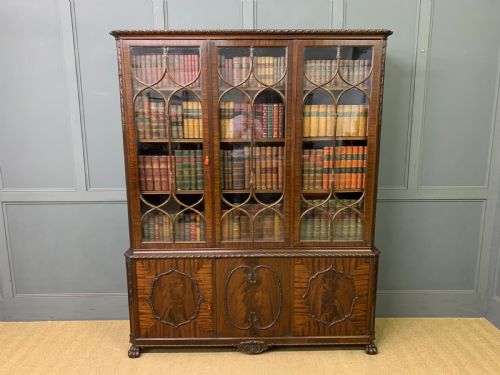
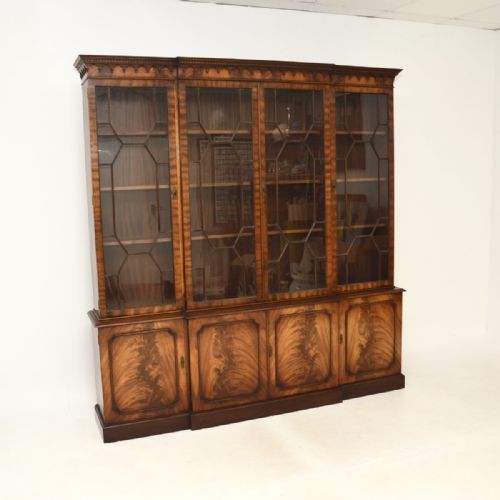
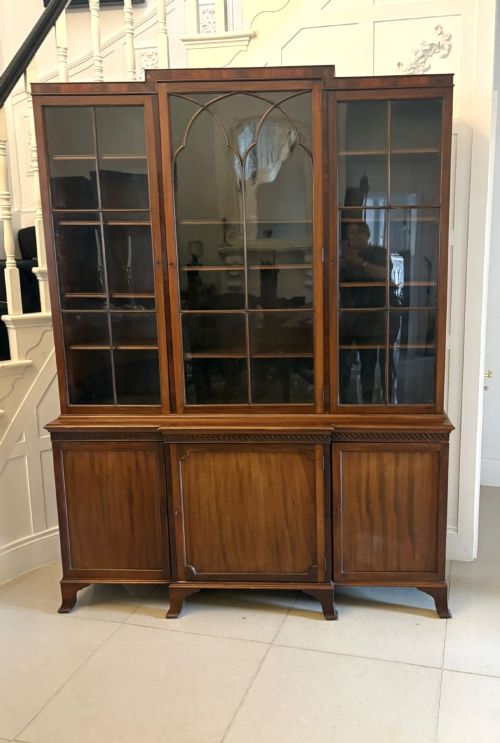
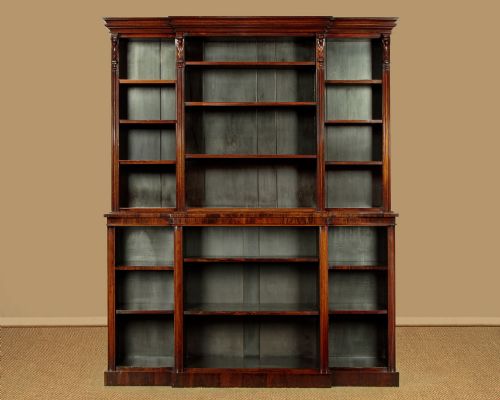
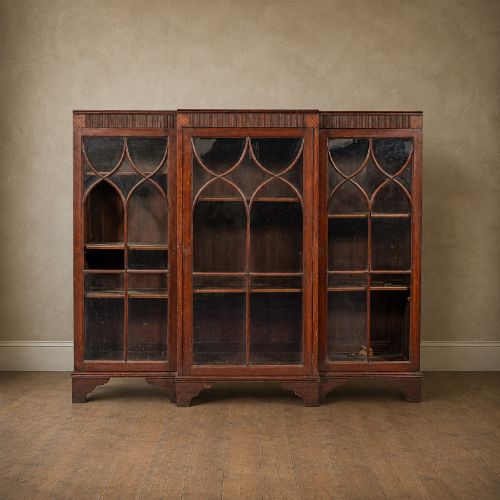
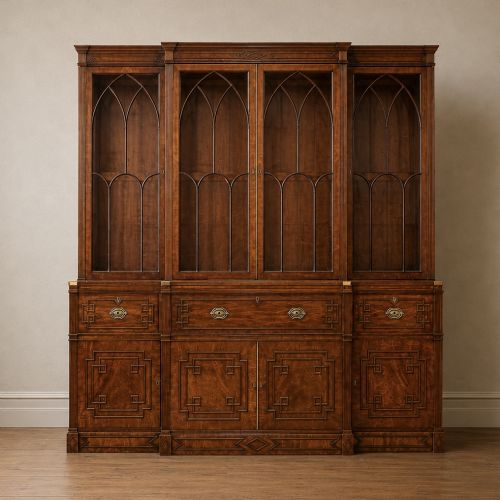
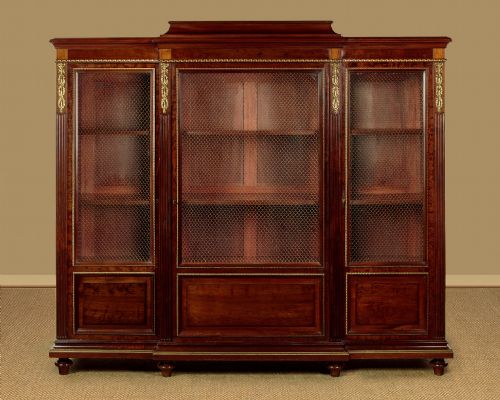
A large breakfront library cabinet commands a room with architectural scale and stores hundreds of volumes behind impressive glazed doors.
Large Breakfront Library Cabinet
Most examples encountered on this page date from the nineteenth century, spanning the Regency, Victorian, and Edwardian periods. Mahogany remains the dominant timber, though walnut, pollard oak, and burr walnut appear alongside architectural styles referencing George III and Gothic revivals.
Buyers find both glazed door bookcases that protect valuable volumes from dust and open shelf variations designed for easier access. These pieces often incorporate lower wooden cupboards or drawers, grounding the monumental height with practical enclosed storage beneath the main display tiers.
Construction and Materials
Cabinetmakers utilised dense hardwoods like mahogany, walnut, and oak to support the immense weight of large volumes and heavy structural cornices. Flame mahogany veneers and burr walnut figured timbers provide rich surface patterns on the prominent front doors and drawers.
Glass panels are fitted into wooden tracery or plain glazed frames, while brass mounts and adjustable shelving systems offer mechanical refinement. Carpenters constructed these multi-section carcasses to dismantle for transport before final assembly in grand libraries.
The listings here feature nineteenth-century examples predominantly built from mahogany, walnut, and oak.
Understanding Quality Variations
The distinction between standard commercial production and exceptional cabinetmaking lies in the handling of timber figure and architectural proportion. Master workshops selected deeply figured flame mahogany or pollard oak veneers that align symmetrically across multiple doors, creating a cohesive visual plane.
Carved details, brass hardware embellishments, and finely moulded cornices separate standard utility bookcases from grand commission pieces. The integration of adjustable shelving mechanisms and sturdy internal carcass construction dictates the long-term endurance of these substantial structures.
Gillows
The Large Breakfront Library Cabinet Glossary
- Breakfront
- An architectural cabinet design where the central section projects forward from the recessed side wings. This formation creates visual depth and breaks up the horizontal line of a long wall.
- Glazed
- Fitted with glass panels to protect books from dust while allowing full visibility of the library contents. These doors often feature wooden glazing bars arranged in geometric or gothic patterns.
- Pollard Oak
- Timber harvested from trees that were pollarded, resulting in dense, highly knotted growth rings with intricate figuring. It appears on prominent nineteenth-century library furniture.
- Burr Walnut
- Wood taken from the abnormal growths on walnut trees, yielding turbulent and highly decorative grain patterns. Cabinetmakers utilised these veneers on focal panels of high-status bookcases.
- Cornice
- The decorative moulded projection running along the top of a large bookcase. It crowns the architectural composition and conceals structural joinery.
Large Breakfront Library Cabinet: Frequently Asked Questions
How do I fit a large breakfront library cabinet into a modern room?
These monumental pieces require substantial wall space and high ceilings to balance their architectural presence properly. Measure both the floor footprint and the vertical clearance carefully before placement.
Position the cabinet away from direct sunlight to protect antique timber finishes and paper bindings. The modular construction of many multi-section pieces allows for easier manoeuvrability during installation.
Were these cabinets used exclusively for books?
While designed primarily for housing extensive private library collections, large cabinets often served multiple domestic purposes. Lower wooden cupboards provided secure storage for documents, papers, and household ledgers.
Glazed upper sections frequently doubled as display spaces for ceramics, curiosities, and scientific instruments. The combination of open shelving, glazed compartments, and enclosed cupboards offered versatile storage for a gentleman's study.
How do I distinguish between Regency and Victorian examples?
Regency library cabinets generally exhibit restrained classical proportions influenced by Greek and Roman architecture, often featuring simpler mahogany surfaces and brass inlay. The lines lean toward clean architectural geometry with understated elegance.
Victorian pieces frequently display heavier proportions, more assertive carved ornamentation, and darker finishes such as burr walnut or pollard oak. Gothic revival elements and elaborate architectural cornices also point toward Victorian production.
What is the function of adjustable shelves in these bookcases?
Adjustable shelving allowed owners to accommodate volumes of varying heights, from small duodecimo poetry books to massive folio atlases. Wooden peg supports or rackwork strips set into the interior carcass walls made repositioning straightforward.
This adaptability ensured the library remained functional as collections expanded and changed over generations. Original adjustable shelving systems indicate a thoughtful, high-quality commission.