

Large Serving Tray
When you search for a large antique serving tray, you seek a substantial piece of craftsmanship designed to carry, pour, and display with formal grace.
Large Serving Tray
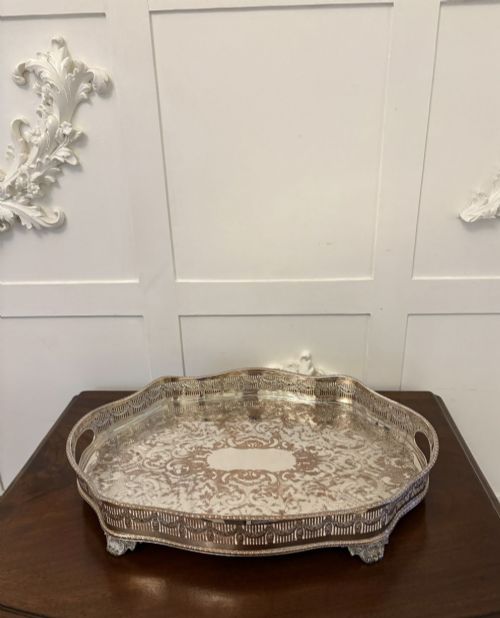
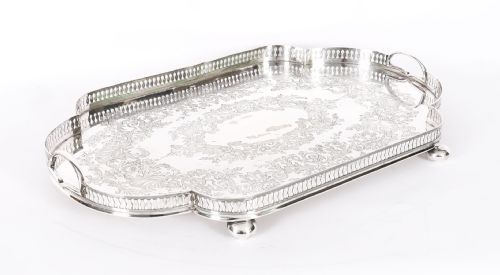
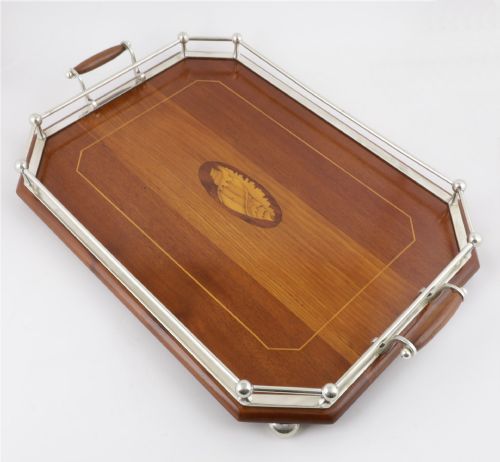
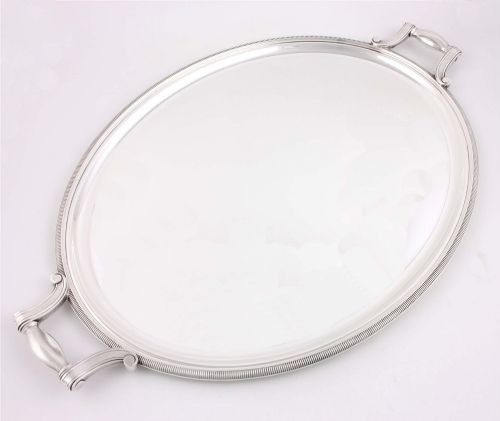
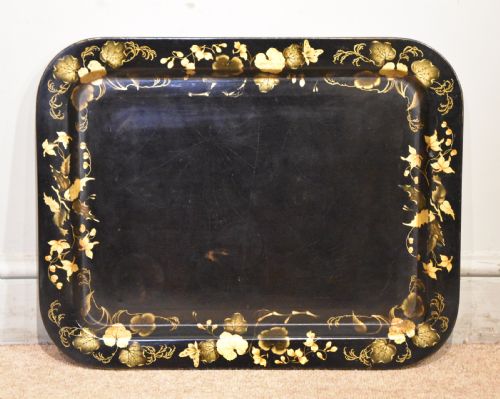
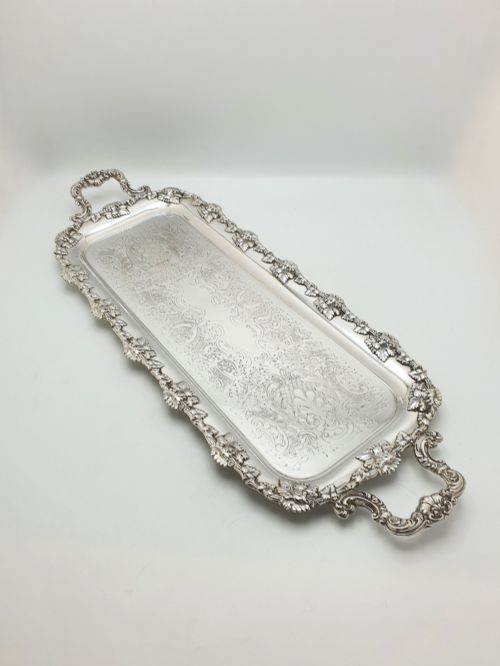
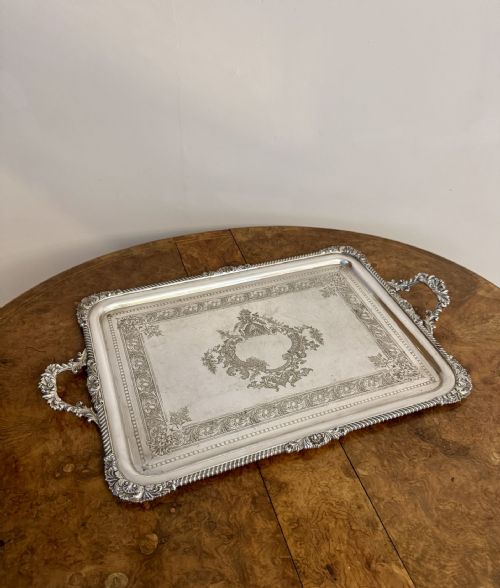
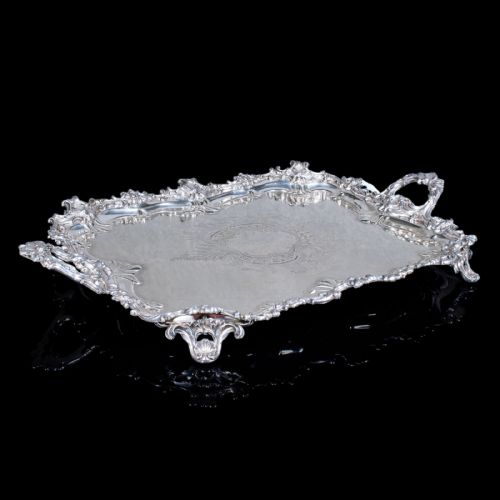
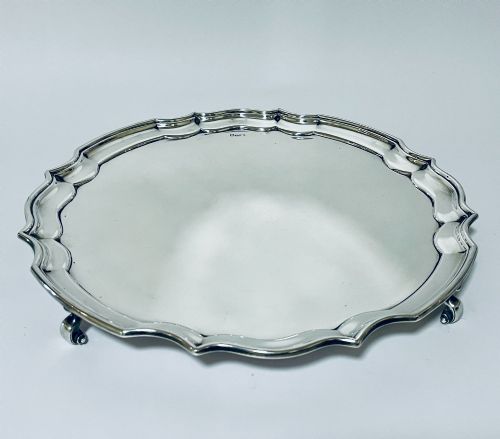
A large antique serving tray encompasses a wide variety of domestic and decorative platters spanning the Georgian, Victorian, and Edwardian periods. Buyers encounter heavy silver plated tea trays, oak and mahogany butler's trays, and papier mache or tole ware pieces intended for formal entertaining.
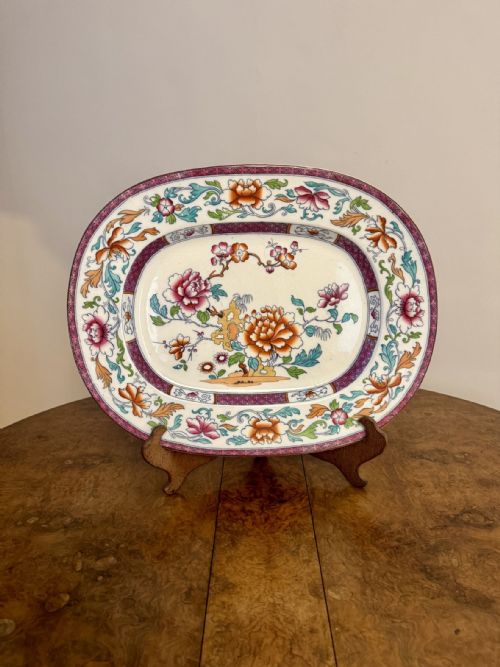
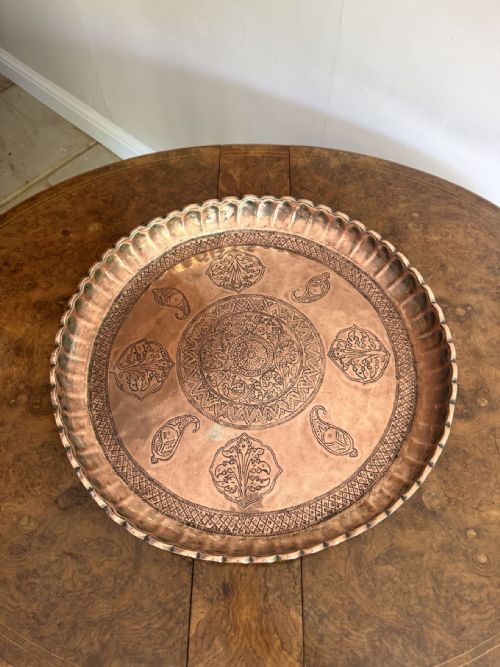
The selection frequently includes Edwardian gallery trays with pierced rails, heavy copper repousse platters from the Arts and Crafts movement, and substantive meat platters in earthenware or ceramic. These vessels reflect the changing dining habits and social rituals of the nineteenth and early twentieth centuries.
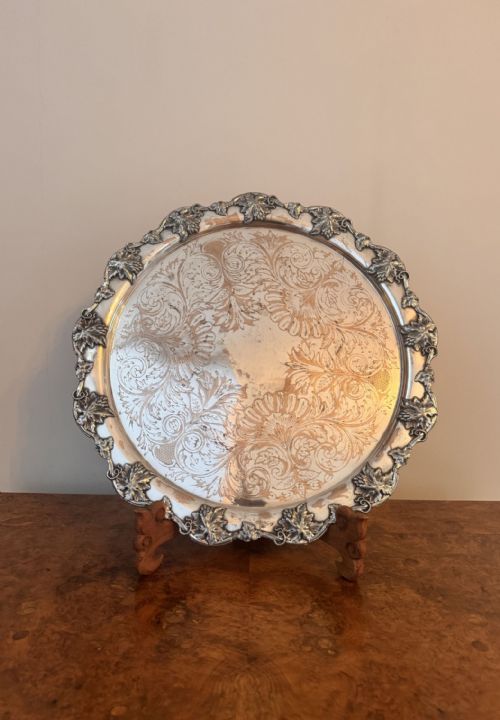
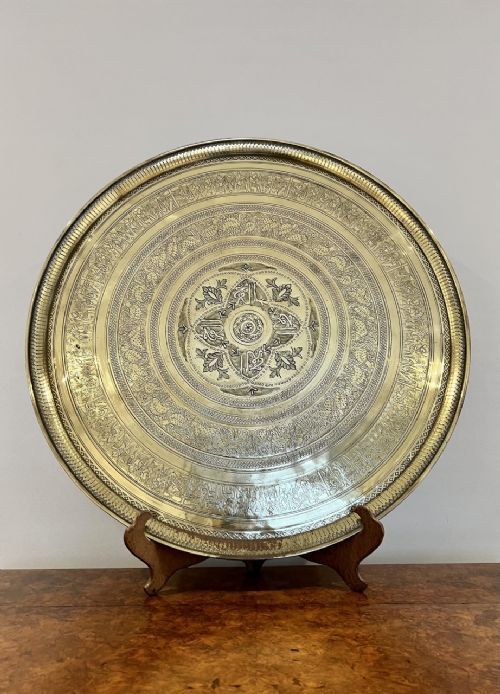
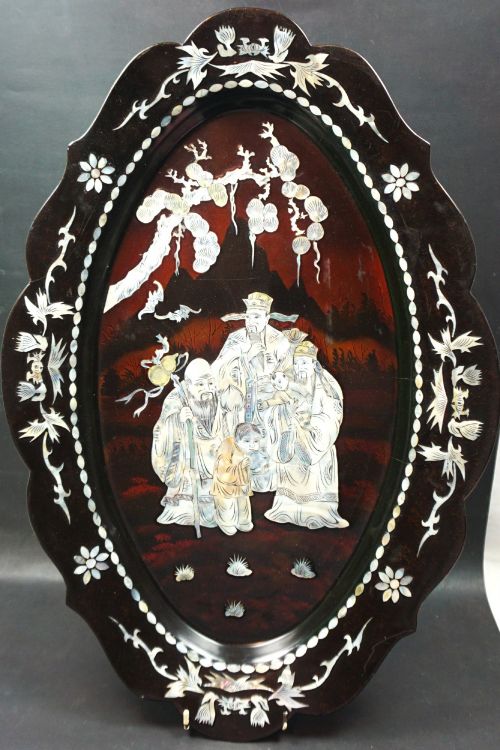
Originating from English workshops, continental makers, and Asian export centres, these trays range from formal silver platters with engraved surfaces to lacquered wood and brass serving dishes. Each form demonstrates specific regional materials and period-typical ornamentation suited for display or service.
Materials and Construction
Makers utilised silver plate over copper bases, solid mahogany, oak, and papier mache to achieve rigidity and visual weight. Metal pieces often display chased or engraved borders, repousse work, and applied cast handles.
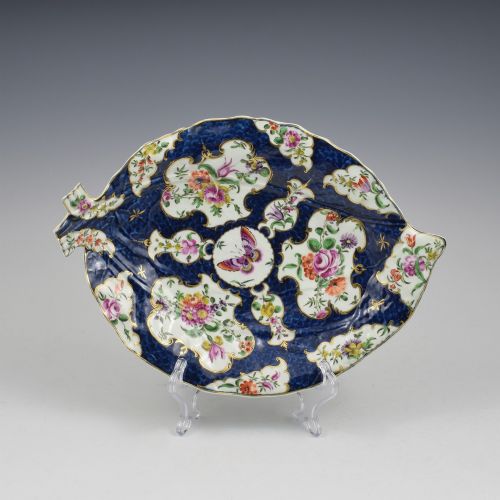
Wooden examples combine turned galleries, inlaid shell motifs, and dovetailed joints, while papier mache trays receive layers of lacquer and gold leaf or mother of pearl inlay. Ceramic and earthenware platters rely on transfer-printed blue and white glazes or hand-painted details.
Several trays include dedicated spaces for decanters, ensuring the afternoon gin stays upright during turbulent transit.
Assessing Craftsmanship
The distinction between tiers rests upon the depth of hand-engraving, the crispness of pierced galleries, and the structural integrity of joints or applied borders. Superior examples maintain the original silver plating without base metal showing through, alongside unwarped wooden bases.
Material selection dictates the overall presence, with heavy gauge metals, dense hardwoods, and finely finished lacquer outlasting lighter, mass-produced alternatives. Maker attribution and well-preserved surface decoration elevate the standing of individual pieces within their respective styles.
James Deakin·Christofle·Hugh Wallis·Harrison Bros·Mappin & Webb·John Grinsell
The Large Serving Tray Glossary
- Gallery tray
- A tray featuring a raised metal or wooden rim around the perimeter, often pierced with openwork patterns to secure glassware and decanters.
- Papier mache
- A composite material made from paper pulp or reinforced sheets mixed with glue, pressed into moulds, and heavily lacquered to form durable trays.
- Sheffield plate
- An early form of silver plating produced by fusing a thin sheet of silver to a thicker copper ingot before rolling them into sheets.
- Repousse
- A metalworking technique where the artisan hammers the design from the reverse side to form raised ornamentation on the front.
- Tole ware
- Painted or lacquered sheet metal articles produced in various European centres during the eighteenth and nineteenth centuries.
Large Serving Tray: Frequently Asked Questions
How were large antique serving trays used?
These trays served primarily during afternoon tea, formal dinners, and cocktail hours to transport tea sets, decanters, and heavy meat platters between rooms.
Servants used butler's trays and large carriers to clear tables or present dishes directly to guests in formal households.
Can I use an antique tray for daily serving?
Sturdy silver plated, copper, and wooden trays remain functional for modern entertaining when handled with appropriate care.
Delicate papier mache, lacquer, and porcelain pieces are better suited for decorative display to preserve their aged finishes.
How do I tell Victorian trays from Georgian ones?
Georgian trays often feature simpler mahogany or silver designs with restrained classical proportions and minimal decoration.
Victorian and Edwardian examples lean toward heavier ornamentation, including elaborate floral engraving, pierced galleries, and mixed metals.
What is the difference between a tray and a salver?
A salver generally refers to a flat, footed serving platter traditionally used for presenting letters, calling cards, or smaller drinks.
Trays are typically larger, unfooted vessels with handles or raised rims designed for carrying multiple items across a room.